
On this page
Start here
Quick answer
An odor in an attic with suspected rodents can come from urine, droppings, nesting material, a dead rodent, or another hidden moisture or animal source, so smell alone cannot locate or size the infestation. From the attic access point or another safe position, record where the odor is strongest and look for droppings, gnaw marks, nests, disturbed insulation, and entry gaps. Do not sweep or vacuum dry waste, handle a carcass, disturb insulation, or enter a cramped, poorly ventilated, or heavily contaminated attic. A licensed pest professional should remove rodents, trace and close entry routes, and coordinate cleanup when the smell persists, signs are extensive, ducts are involved, or the source is concealed.
Before you begin
Safety first
- The homeowner scope is floor-level or access-point observation, documentation, and ordinary food and shelter control. Do not sweep or vacuum dry waste, handle nests or carcasses, disturb insulation, enter a confined or heavily contaminated attic, open ducts, climb roofs, or seal utility penetrations without qualified guidance.
Work through in order
Diagnostic checks
Use only checks that match the exact appliance or system and its official guide.
-
Check 1
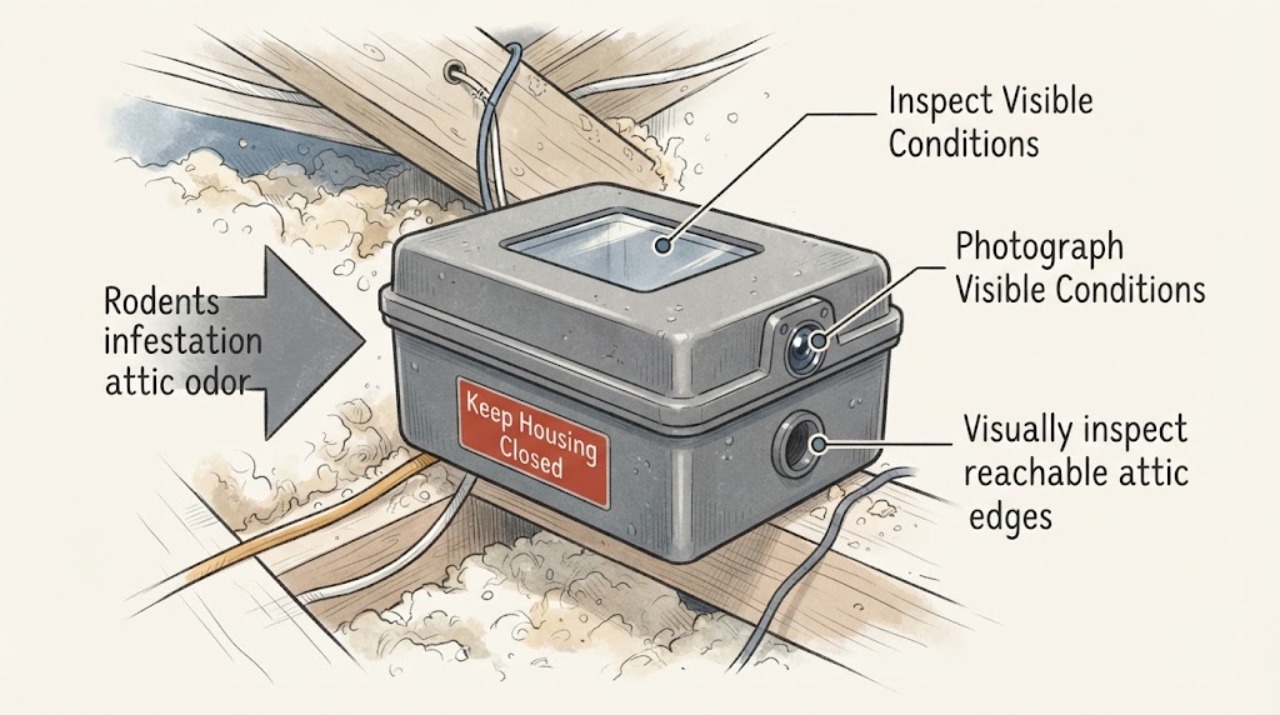
From the attic hatch or another stable, well-ventilated position, record the odor's location, intensity, timing, airflow direction, and whether it is strongest near eaves, insulation, ducts, roof penetrations, or the ceiling below. Photograph only accessible, undisturbed evidence.
Expected result: The odor is localized near one accessible area, shifts with HVAC or weather, is strongest in a closed cavity or duct, or is widespread throughout the attic.
Next step: Keep the log and provide it to a licensed pest or building professional. If the odor is widespread, strong, or connected to a duct or closed space, stop attic entry and arrange professional assessment.
Stop if: Stop for dizziness, breathing irritation, poor ventilation, unstable flooring, heat, electrical concerns, or any need to crawl or disturb insulation to locate the smell.
Why this matters
Why: A localized pattern can guide an inspection, while odor that follows airflow or fills the attic can indicate a hidden source, contaminated insulation, a duct pathway, or a larger infestation; smell alone cannot identify the cause.
-
Check 2
Visually inspect reachable attic edges and the area around the access opening for droppings, gnaw marks, shredded nesting material, rub marks, damaged screening, and holes around roof eaves, soffits, vents, chimneys, and utility lines. Do not touch or move any material.
Expected result: Signs cluster near one opening, appear in several parts of the attic, are absent despite odor, or include a carcass or a large amount of waste.
Next step: Photograph and map the findings, then ask a professional to inspect the full exterior and attic route. Leave contaminated or inaccessible material in place until the cleanup method is selected.
Stop if: Stop if evidence is heavy, a carcass or nest must be handled, the floor is not safely supported, or inspection requires moving insulation, entering a void, or reaching electrical or HVAC equipment.
Why this matters
Why: A cluster near an opening supports a route-focused inspection; widespread signs or a carcass with substantial waste make an established or higher-risk infestation more likely, while odor without visible signs may indicate a concealed source or non-rodent cause.
-
Check 3
Compare the attic observations with safe exterior views of the roofline, eaves, soffits, attic and crawl-space vents, foundation, and openings around plumbing, electrical, gas, cable, and HVAC lines. Look for a torn screen, gap, gnawing, or a route that aligns with the odor without climbing or removing a cover.
Expected result: An accessible gap or damaged screen aligns with the attic signs, or no exterior route is visible from the ground.
Next step: Document the route and request rodent removal and durable exclusion as one plan. Do not seal an opening while an animal may be inside or improvise repairs around utilities, vents, or roof work.
Stop if: Stop for roof or ladder access, exposed wiring, gas equipment, unstable soffits, an occupied nest, or any repair that requires dismantling building components.
Why this matters
Why: An aligned gap is a plausible entry route but does not prove that all animals have left; no visible route leaves concealed roof, wall, vent, or utility paths possible.
-
Check 4
Check accessible indoor and outdoor conditions that can sustain rodents: food or pet feed, open trash, bird seed, compost, water leaks, standing water, dense vegetation, wood piles, debris, or clutter against the building. Secure or remove only ordinary reachable attractants without entering the attic or handling contaminated material.
Expected result: One or more food, water, or shelter sources remain near the building, or these sources are controlled with no obvious attractant.
Next step: Use tight-lidded containers for food and waste, remove accessible debris, and correct plainly visible leaks through the appropriate repair path. Continue the odor and sign log while arranging service if activity persists.
Stop if: Stop if source removal requires entering the attic, moving heavy material, touching droppings or nests, or disturbing a contaminated or unstable area.
Why this matters
Why: Continuing food, water, and shelter can support rodents even after an entry gap is repaired; persistent activity after source control increases the need for route and population assessment.
-
Check 5
After professional removal and cleanup, keep a dated record of odor, new droppings, gnaw marks, and sounds and check only safe accessible areas for recurrence. Ask the provider to document the entry route, excluded openings, contaminated insulation or materials, and any duct or HVAC involvement.
Expected result: The odor and signs decline and remain absent, or odor, new waste, sounds, or gnawing return after removal and exclusion work.
Next step: Send the log and photographs back to the same provider for a follow-up inspection rather than adding more poison or opening the attic yourself.
Stop if: Stop monitoring inside the attic for heavy waste, renewed strong odor, a carcass, HVAC contamination, respiratory symptoms, or any unsafe access condition.
Why this matters
Why: A sustained decline supports that the immediate source and route were addressed; recurrence suggests a remaining animal, missed opening, hidden contamination, or another moisture or animal source.
Use your observations
Decision map
Find the observation that best matches what you see, then follow the next safe action.
-
PATH 01Safety boundary
What you see
The odor is mild and localized, no fresh droppings or nesting are visible from the access point, and no current moisture or entry gap is found.
Do this next
Keep a dated odor and sign log, maintain food and shelter controls, and arrange identification if the odor persists or new evidence appears.
Why this path and its safety boundary
Safety stop: Do not enter deeper into the attic or disturb insulation merely because the source is not immediately visible.
-
PATH 02Safety boundary
What you see
Droppings, gnaw marks, nesting material, or a carcass are concentrated near an attic edge, vent, soffit, or utility penetration.
Do this next
Treat the pattern as possible active rodent use of a specific route and arrange professional removal, cleanup, and exclusion while preserving the location evidence.
Why this path and its safety boundary
Safety stop: Do not sweep, vacuum, handle, or seal the evidence before a safe removal and exclusion plan is established.
-
PATH 03Safety boundary
What you see
Signs or odor are widespread, insulation is heavily contaminated, the attic is poorly ventilated or difficult to enter, or the source cannot be classified.
Do this next
Keep people and pets out and call a licensed pest professional and local or state health department for appropriate cleanup and protective guidance.
Why this path and its safety boundary
Safety stop: Do not enter, disturb insulation, use a household vacuum, or attempt a large cleanup without professional controls.
-
PATH 04Safety boundary
What you see
The odor is strongest at a heating or cooling duct, return, air handler, or other ventilation path.
Do this next
Stop disturbing the area and arrange a professional rodent and duct assessment so contaminated material is removed without distributing it through the building.
Why this path and its safety boundary
Safety stop: Do not run equipment to mask the odor or remove a duct cover and clean inside it as a DIY test.
-
PATH 05Safety boundary
What you see
An opening is found at the roofline, eave, attic vent, or utility penetration, but a rodent may still be inside or the repair area is not safely reachable.
Do this next
Give the location and photographs to a qualified pest or building professional and request coordinated removal, exclusion, and confirmation that no animal is trapped inside.
Why this path and its safety boundary
Safety stop: Do not close the gap blindly, climb to the roof, or work around gas, electrical, or HVAC penetrations.
-
PATH 06Safety boundary
What you see
The odor and activity return after removal, cleanup, and visible exclusion work appear complete.
Do this next
Request a documented follow-up inspection for a missed entry, remaining animal, hidden contaminated insulation, duct pathway, moisture problem, or alternate source.
Why this path and its safety boundary
Safety stop: Do not escalate by adding unlabelled chemicals, opening walls or ceilings, or repeatedly disturbing the attic.
Helpful context
Understand the symptom
What an attic odor can and cannot tell you
A stale, ammonia-like, or decaying odor may be associated with rodent urine, droppings, nesting material, or a carcass, but it can also come from damp insulation, a roof leak, or another animal. Use the odor to choose where to observe, not to assume a species, count, or treatment. The strongest smell may be below or beside the actual source because air moves through insulation and framing.
An attic is a higher-risk inspection area
Attics combine limited footing, insulation that can hide waste, low ventilation, electrical and HVAC equipment, and possible roof or ceiling damage. Stay at the access opening unless the space is clearly safe and the evidence is light and reachable. Do not step between framing members, disturb insulation, touch wiring, or use a fan that could spread contaminated dust.
Removal, exclusion, and cleanup must work together
Removing a visible carcass or placing a trap does not close the route that allowed rodents into the attic. A lasting plan combines identification, safe removal, inspection of roofline, soffits, vents, utility penetrations, and other gaps, plus reduction of nearby food and shelter. Ask for the entry route and contamination scope to be documented before insulation or other porous material is disturbed.
Only after diagnosis
Potential parts
- rodent-proof vent or utility-opening mesh
Consider this category only after a qualified inspection confirms an accessible opening and identifies the correct vent or utility-safe exclusion method; odor alone does not establish the repair point.
Match opening size, ventilation function, corrosion exposure, and surrounding construction; do not cover a gas, electrical, HVAC, or roof defect without qualified assessment. - replacement attic insulation
Consider this category only when a qualified cleanup assessment confirms that insulation is contaminated, damaged, or cannot be safely cleaned and dried.
Match the existing assembly, moisture condition, fire and ventilation requirements, and local building guidance; do not disturb contaminated insulation as a simple DIY replacement.
When checks do not resolve it
Need a professional?
Escalate before entering or cleaning for strong or widespread odor, heavy droppings, nests, carcasses, poor ventilation, unsafe footing, duct involvement, recurrent signs, or any need to alter roofline, utility, or attic structures.
Safety scope: The homeowner scope is floor-level or access-point observation, documentation, and ordinary food and shelter control. Do not sweep or vacuum dry waste, handle nests or carcasses, disturb insulation, enter a confined or heavily contaminated attic, open ducts, climb roofs, or seal utility penetrations without qualified guidance.
Have this ready
- Provide the odor map and timing, photographs from safe positions, droppings or gnaw-mark locations, entry-point observations, attic access and ventilation details, HVAC or duct proximity, occupant health concerns, and any prior trapping, exclusion, or chemical treatment.
Common questions
FAQ
Does an attic odor prove there is a dead rodent?
No. Urine, droppings, nesting material, damp insulation, a dead animal, or another hidden source can create an odor. Record where it is strongest and look only from a safe access point for corroborating signs; do not disturb insulation or enter an unsafe area to search.
Can I sweep or vacuum rodent droppings in the attic?
No. CDC advises against sweeping or vacuuming dry rodent urine, droppings, and nesting materials because contaminated dust can become airborne. Light, accessible cleanup must follow the official wet-disinfectant procedure; heavy, enclosed, or uncertain attic contamination needs professional guidance.
Should I seal the attic opening immediately?
Not blindly. First have a professional determine whether rodents remain inside and whether the opening is truly the route. Sealing should be coordinated with removal and inspection of nearby roof, eave, vent, and utility penetrations so an animal is not trapped and an alternate route is not missed.
When does attic rodent activity require professional cleanup?
Use professional help for strong or widespread odor, heavy droppings, nests, carcasses, contaminated insulation, poor ventilation, uncertain contamination, or rodents in ducts or HVAC equipment. People with respiratory disease, immune suppression, or significant sensitivity should not perform mold or rodent cleanup themselves.
What should I give the pest professional?
Provide the odor map and timing, photographs from safe positions, sign locations, attic access and ventilation details, nearby roof or utility openings, HVAC or duct proximity, occupant health concerns, and any prior trapping, exclusion, or chemical treatment.
Read the exact guide
Official sources
- Hantavirus PreventionCenters for Disease Control and Prevention · CDC public-health guidance explaining exposure from disturbed rodent waste and the need for safe cleanup and exclusion.
- Controlling Wild Rodent InfestationsCenters for Disease Control and Prevention · CDC overview supporting inspection for droppings and gnaw marks, safe recurrence monitoring, and removal of food, water, and shelter sources.
- How to Seal Up to Prevent RodentsCenters for Disease Control and Prevention · CDC guidance listing attic, roof, eave, vent, foundation, door, and utility penetrations as inspection points and recommending durable exclusion and source reduction.
- Identify and Prevent Rodent InfestationsUnited States Environmental Protection Agency · EPA consumer guidance for recognizing droppings, nests, chewing, holes, and stale smells from hidden areas and reducing nearby food, water, and shelter.
- Hantavirus Pulmonary SyndromeNational Park Service · NPS public-health guidance supporting exclusion, attic or enclosed-space precautions, monitoring, and professional escalation for heavy or uncertain infestation.
- How to Clean Up After RodentsCenters for Disease Control and Prevention · CDC guidance for light accessible cleanup, ventilation before cleaning, avoiding dry sweeping or vacuuming, heavy-infestation precautions, and professional help for rodents in ducts.
Community feedback
Share a repair observation
Share a plain-text repair observation. Accepted observations are published automatically; this page may take a moment to update.