
On this page
Start here
Quick answer
Scratching in an attic is a clue, not proof of rodents; confirm it with droppings, gnaw marks, nesting material, urine odor, or a repeatable path of activity. Start with a safe observation from the living space, attic hatch, or ground, then check likely entry points around eaves, vents, roof joints, and utility penetrations without climbing onto the roof or disturbing waste. Keep people and pets away from contaminated insulation, nests, dead animals, and damaged wiring or ducts. Do not sweep or vacuum rodent waste, handle a live or dead animal, use loose poison, or enter an attic that is unsafe or heavily infested. Arrange pest-control service for inaccessible or heavy activity, contamination in heating or cooling ducts, chewed electrical wiring, repeated noise after trapping, or any cleanup that exceeds a small, accessible area.
Before you begin
Safety first
- Do not enter unsafe attic areas, disturb dry waste, touch rodents or nests, sweep or vacuum contamination, handle chewed wiring, block ventilation, or seal an opening while an animal may still be inside.
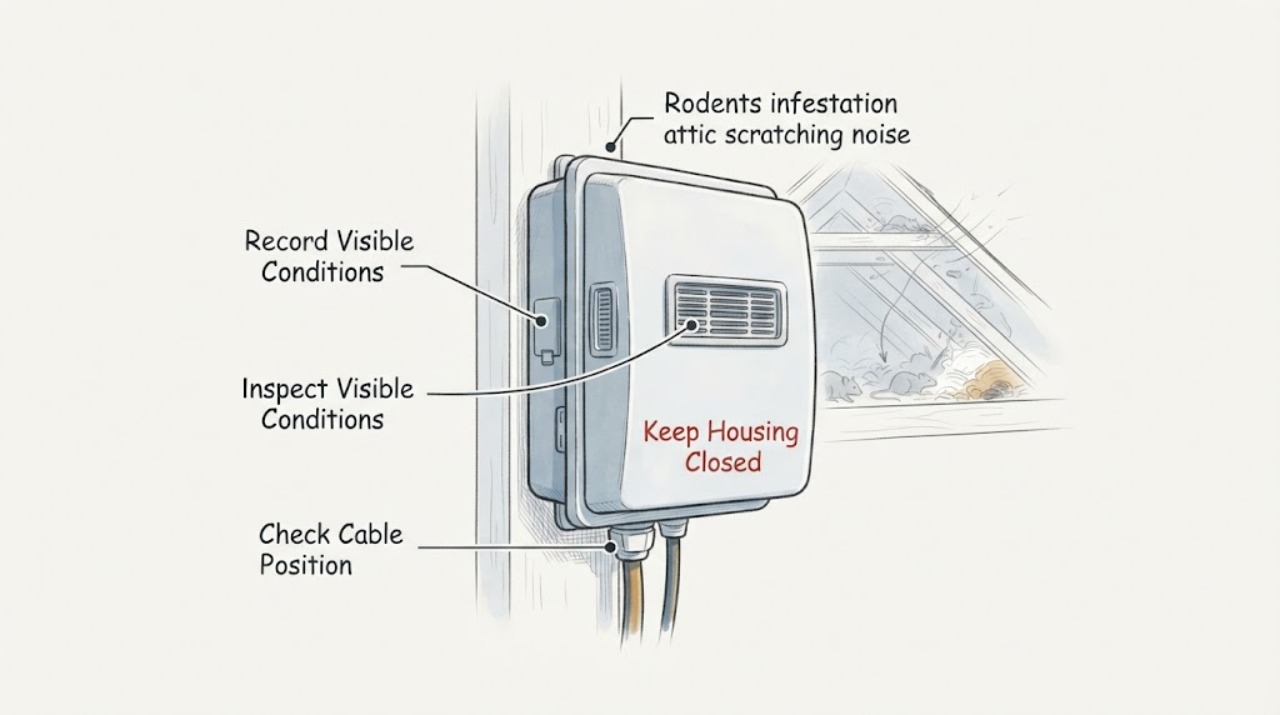
Work through in order
Diagnostic checks
Use only checks that match the exact appliance or system and its official guide.
-
Check 1
From the living space, attic hatch, or another stable location, record when and where the scratching occurs and compare it with other sounds such as birds, squirrels, ducts, fans, or roof movement; do not enter a dark or unstable attic to follow the noise.
Expected result: Note whether the sound is nocturnal, repeats along a wall or roof edge, moves between locations, or is accompanied by odor, gnawing, or movement visible from the access opening.
Next step: Photograph and log the location and timing. Continue only with safe visual checks; arrange pest-control service if the sound is inside an inaccessible cavity or the attic cannot be entered safely.
Why this matters
Why: A repeatable path and rodent evidence make an infestation more likely than an isolated building noise, but sound alone cannot identify the species or the number of animals.
-
Check 2
Using a flashlight from the attic hatch or a safe, supported floor area, look for droppings, urine staining, gnaw marks, nesting material, tracks, rub marks, or disturbed insulation without touching or moving the material.
Expected result: Record whether signs are fresh-looking or old, concentrated near a wall or penetration, spread across insulation, or located near ductwork, stored items, or electrical wiring.
Next step: Keep the hatch closed and restrict access when contamination is heavy or near ducts, wiring, or occupied rooms. Do not sweep, vacuum, or handle the material; arrange qualified pest and cleanup service.
Why this matters
Why: Multiple sign types in a connected path support active rodent use. Droppings or nesting in heating and cooling ducts, heavy accumulation, or widespread contaminated insulation increases both health and cleanup risk.
-
Check 3
Inspect likely exterior entry routes from the ground or another safe position, including roof edges, eaves, gables, soffits, attic vents, and openings around electrical, plumbing, cable, or gas lines; do not climb onto the roof or reach into a vent.
Expected result: Look for gaps, gnawing, displaced screens, damaged flashing, missing vent covers, or a route that aligns with the attic signs and scratching location.
Next step: Photograph and mark the suspected route for the pest professional. Leave repairs until the provider confirms that no animal is trapped inside and that the repair will not damage ventilation or utility penetrations.
Why this matters
Why: A path that connects an exterior opening to the attic makes entry more likely. A sealed-looking exterior does not rule out a hidden wall, duct, or roof cavity route.
-
Check 4
From a safe position, check whether the activity is near heating or cooling ducts, electrical wiring, lighting, stored items, or insulation, and look for visible damage without touching any cable, duct, or contaminated material.
Expected result: Record chewed wire insulation, damaged duct lining, displaced insulation, airflow or odor changes in occupied rooms, or signs that debris can enter the ventilation system.
Next step: Stop accessing the area and arrange pest-control plus the appropriate electrical, HVAC, or cleanup professional. Do not energize visibly damaged equipment or start a fan to test the duct.
Why this matters
Why: Rodent access to wiring can create a fire or shock risk, and contamination in a duct can distribute particles through the home. These conditions exceed a simple noise investigation.
-
Check 5
If signs are limited, accessible, and the location is safe, discuss or use only label-directed snap-trap control placed where rodents travel and kept away from children and pets; do not use glue or live traps and do not handle a trapped animal bare-handed.
Expected result: Track whether new droppings, urine spots, gnawing, or scratching continue after traps are placed and whether activity shifts to another part of the attic.
Next step: Continue only according to the trap label and safe access conditions. Use a pest professional for rats, repeated activity, inaccessible placements, children or pets that cannot be kept away, or any need for poison or specialized control.
Why this matters
Why: Continuing fresh signs indicate that rodents remain or that another entry route is active. A quiet period without new signs is useful evidence but does not by itself prove that every animal or nest is gone.
-
Check 6
Choose the cleanup boundary before touching attic material: identify whether the waste is a small, accessible area or a heavy infestation, and ventilate the space from outside before any approved cleanup; do not sweep or vacuum dry waste.
Expected result: Record whether there are piles of droppings, multiple nests or dead animals, contaminated insulation, poor ventilation, or signs that dust can enter the home.
Next step: For a limited area, follow the CDC disinfectant, wetting, wiping, disposal, and hand-hygiene guidance. For heavy or inaccessible contamination, leave the area and contact pest-control, cleanup, or health-department support.
Why this matters
Why: Small accessible contamination can follow CDC wet-disinfection guidance, while heavy infestation, contaminated insulation, or an inaccessible attic calls for specialized protective equipment and professional cleanup.
-
Check 7
After rodent activity is controlled and a professional or safe access check confirms the cavity is empty, inspect the suspected exterior route for a repair that will exclude rodents while preserving required venting and utility clearances.
Expected result: The opening is either sealed with durable rodent-resistant material and the attic shows no new signs, or fresh scratching and waste continue after the repair.
Next step: Ask the pest professional to re-inspect the route and nearby roof, vent, wall, and utility penetrations; do not keep sealing random openings while an animal may be trapped.
Why this matters
Why: No new signs after exclusion supports that the entry route was corrected. Continued activity suggests another opening, an animal still inside, or a different source of the sound.
Use your observations
Decision map
Find the observation that best matches what you see, then follow the next safe action.
-
PATH 01Next step
What you see
Scratching repeats at night and is accompanied by fresh droppings, gnaw marks, nesting material, or a connected entry opening.
Do this next
Restrict access, document the route, and use safe, label-directed trapping or qualified pest control; correct the confirmed entry route only after animals are controlled.
Why this path and its safety boundary
Why it matters: Active rodent use of the attic is more likely than an isolated building sound.
-
PATH 02Next step
What you see
The sound is present but no rodent evidence is visible from a safe observation point, and it follows ducts, fans, roof movement, birds, or another building system.
Do this next
Keep the area undisturbed and have the appropriate pest, roofing, or HVAC professional identify the source rather than sealing or poisoning blindly.
Why this path and its safety boundary
Why it matters: Rodents are not confirmed; another animal or building source remains plausible.
-
PATH 03Next step
What you see
Fresh signs are concentrated around ducts, electrical wiring, insulation, or a cavity that cannot be reached without unsafe attic access.
Do this next
Stop DIY access and arrange coordinated pest-control, cleanup, electrical, or HVAC service as the observed damage requires.
Why this path and its safety boundary
Why it matters: The issue includes contamination, fire or shock exposure, ventilation risk, or inaccessible removal work.
-
PATH 04Next step
What you see
A limited, safe-to-reach area has been treated using wet disinfectant methods and no new signs appear after control and exclusion.
Do this next
Keep food and waste secured, monitor for new signs, and have the exterior route checked if scratching or waste returns.
Why this path and its safety boundary
Why it matters: The activity may be controlled, but continued monitoring is needed because a hidden nest or secondary route can remain.
-
PATH 05Next step
What you see
New droppings, urine spots, gnawing, or scratching continue after trapping or an apparent seal-up.
Do this next
Stop adding traps or sealant at random and request a professional re-inspection of the attic, roof edges, vents, wall cavities, and utility penetrations.
Why this path and its safety boundary
Why it matters: A rodent remains, another entry route is active, or the original sound was misidentified.
Helpful context
Understand the symptom
Confirm the animal before sealing or trapping
Night scratching can come from mice, rats, squirrels, birds, or building movement. Rodent evidence is stronger when the sound is accompanied by droppings, gnaw marks, nesting material, urine odor, or a hole that leads into the attic. Photograph what is visible and note the time and location; do not pull insulation apart or chase an animal to identify it.
Attic contamination changes the cleaning method
Rodent urine, droppings, saliva, and nesting material can expose people to disease when contaminated dust becomes airborne. CDC guidance says not to sweep or vacuum rodent waste and provides a wet-disinfection method for small accessible areas. Heavy infestation, contaminated insulation, or an inaccessible attic needs a professional cleanup plan and may also warrant local health-department advice.
Exclusion is what prevents the scratching from returning
Trapping without correcting the entry route can produce a temporary quiet period followed by another animal. Inspect roof edges, gables, soffits, vents, and utility penetrations from the ground or a safe access point. Once activity is controlled and the area is safe, seal the opening with rodent-resistant materials appropriate to the surface; do not seal an opening while an animal may still be inside.
Safety boundary
Stop conditions
- Do not sweep or vacuum dry droppings, urine, nesting material, or contaminated insulation; do not handle live or dead rodents, nests, or traps bare-handed.
- Stop and leave the attic for heavy accumulation, multiple nests or carcasses, contaminated insulation, poor ventilation, respiratory symptoms, or any need for specialized protective equipment.
- Do not enter unstable or elevated areas, reach into vents, touch chewed wiring, disturb ducts, or use poison where children or pets could reach it.
- Use qualified pest-control or cleanup service for inaccessible activity, rodents in heating or cooling ducts, repeated signs after control, or contamination that cannot be safely limited to a small area.
Only after diagnosis
Potential parts
- snap trap
Consider a snap trap only when rodent signs are confirmed, placement is safe and accessible, and children and pets can be kept away; a professional should handle heavy or persistent activity.
Choose and place the trap according to its label and the identified rodent type; do not use glue or live traps and do not substitute loose poison for a controlled product. - rodent-resistant metal mesh
Consider metal mesh or another durable exclusion material only after the animal is controlled and the actual opening is confirmed.
Match the material and repair to the roof, vent, utility penetration, and required airflow; a qualified roofer or pest professional should handle unsafe or elevated access.
When checks do not resolve it
Need a professional?
Contact a pest professional for confirmed or persistent attic activity, an inaccessible cavity, suspected rats, a heavy infestation, or any need for poison or specialized removal. Add cleanup, electrical, HVAC, roofing, or health-department support when the observed condition crosses those boundaries.
Safety scope: Do not enter unsafe attic areas, disturb dry waste, touch rodents or nests, sweep or vacuum contamination, handle chewed wiring, block ventilation, or seal an opening while an animal may still be inside.
Have this ready
- Provide the sound timing and location, photos of droppings or gnaw marks from a safe position, suspected entry route, whether traps changed activity, any contaminated insulation or ducts, visible wiring damage, and the date of the last new sign.
Common questions
FAQ
Does scratching in the attic prove there are rodents?
No. Birds, squirrels, ducts, fans, and roof movement can sound similar. Confirm the noise with droppings, gnaw marks, nesting material, odor, or a repeatable entry path before trapping or sealing.
Can I vacuum the droppings in the attic?
No. CDC advises not to sweep or vacuum dry rodent urine, droppings, or nesting material because contaminated particles can become airborne. Use the CDC wet-cleaning boundary for a small accessible area and hire specialized cleanup for heavy or inaccessible contamination.
What should I check outside for an attic entry?
From the ground or a safe access point, inspect roof edges, eaves, gables, soffits, attic vents, and openings around electrical, plumbing, cable, or gas lines. Do not climb onto the roof or reach into a vent.
Should I seal the hole as soon as I find it?
Not if an animal may still be inside. Document the route, control the activity, and then have the opening sealed with durable material that preserves required venting and utility clearances.
When should I call a pest professional?
Call for inaccessible or unsafe attic access, heavy droppings or nests, contaminated insulation or ducts, suspected rats, chewed wiring, fresh signs after trapping, or any need for poison or specialized removal.
Read the exact guide
Official sources
- Hantavirus PreventionCenters for Disease Control and Prevention · Government health guidance used to explain avoiding rodent urine, feces, saliva, and nesting-material exposure and to justify safe cleanup boundaries; it does not identify the cause of a particular attic sound.
- How to Seal Up to Prevent RodentsCenters for Disease Control and Prevention · Government public-health guidance used for attic and exterior entry-point checks, exclusion materials, and reducing food and water attractants.
- How to Clean Up After RodentsCenters for Disease Control and Prevention · Government public-health guidance used for safe wet cleanup and escalation of heavy or inaccessible contamination; local health and occupational requirements may add precautions.
- Identify and Prevent Rodent InfestationsU.S. Environmental Protection Agency · Government pest-management guidance used for identifying droppings, nesting, gnawing, odors, entry holes, and removing attractants; pesticide labels and local requirements control product use.
- How to Trap Up to Remove RodentsCenters for Disease Control and Prevention · Government guidance used for label-directed snap-trap placement, monitoring fresh signs, and keeping traps and bait away from children and pets.
Community feedback
Share a repair observation
Share a plain-text repair observation. Accepted observations are published automatically; this page may take a moment to update.