
Repair problem
Split Tree Trunk Troubleshooting Guides
Published FixGraph guidance for diagnosing and responding to split tree trunk.
Matching published guides
Choose a guide that matches the service, equipment, and conditions you are seeing.
-
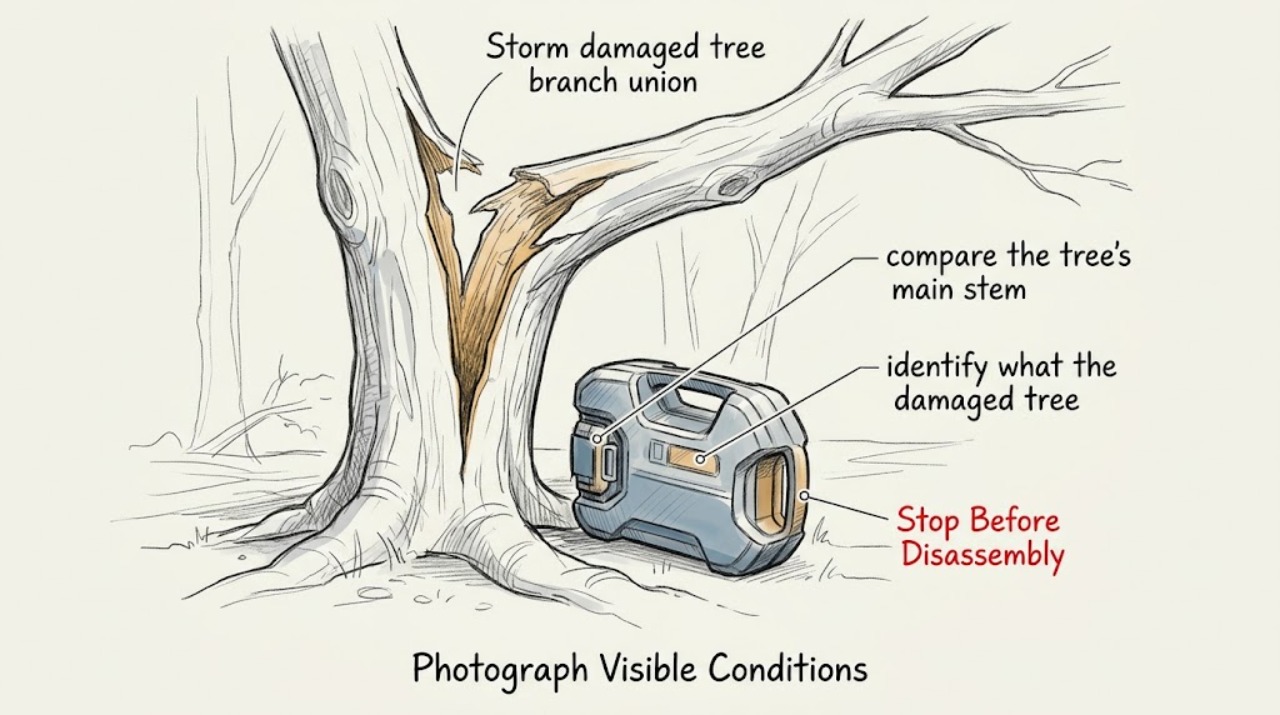
Storm damaged tree branch union split trunk: What to Check and What to Do Next
Treat a storm-split branch union or trunk as an urgent falling-tree hazard. From a distant, sheltered position, observe the split, tree lean, lifted soil or root plate, hanging limbs, threatened structures, and any nearby utility lines.
-
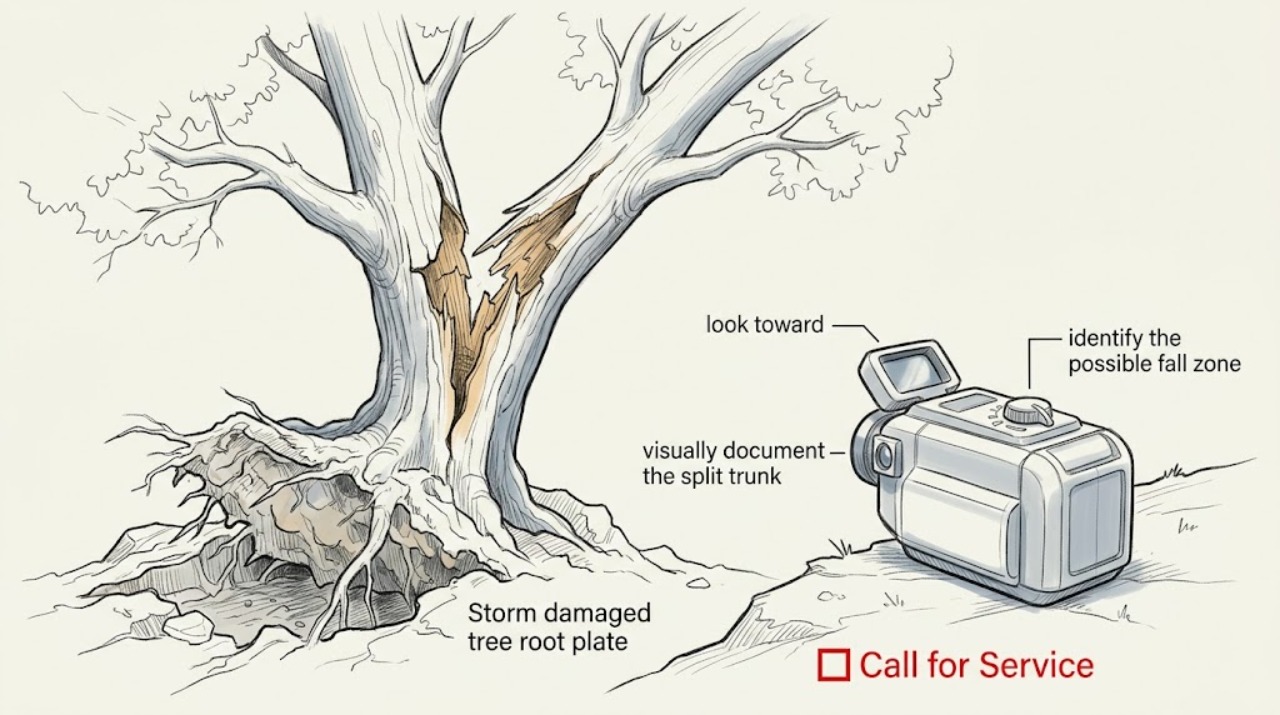
Storm damaged tree root plate split trunk: What to Check and What to Do Next
Treat a storm-damaged tree with a lifted or split root plate and split trunk as an urgent hazard, not a homeowner repair. From a distant, stable location, record soil cracking or lifting, the tree's lean and trunk split, the fall zone, nearby buildings and utilities, and any movement or noise.
-
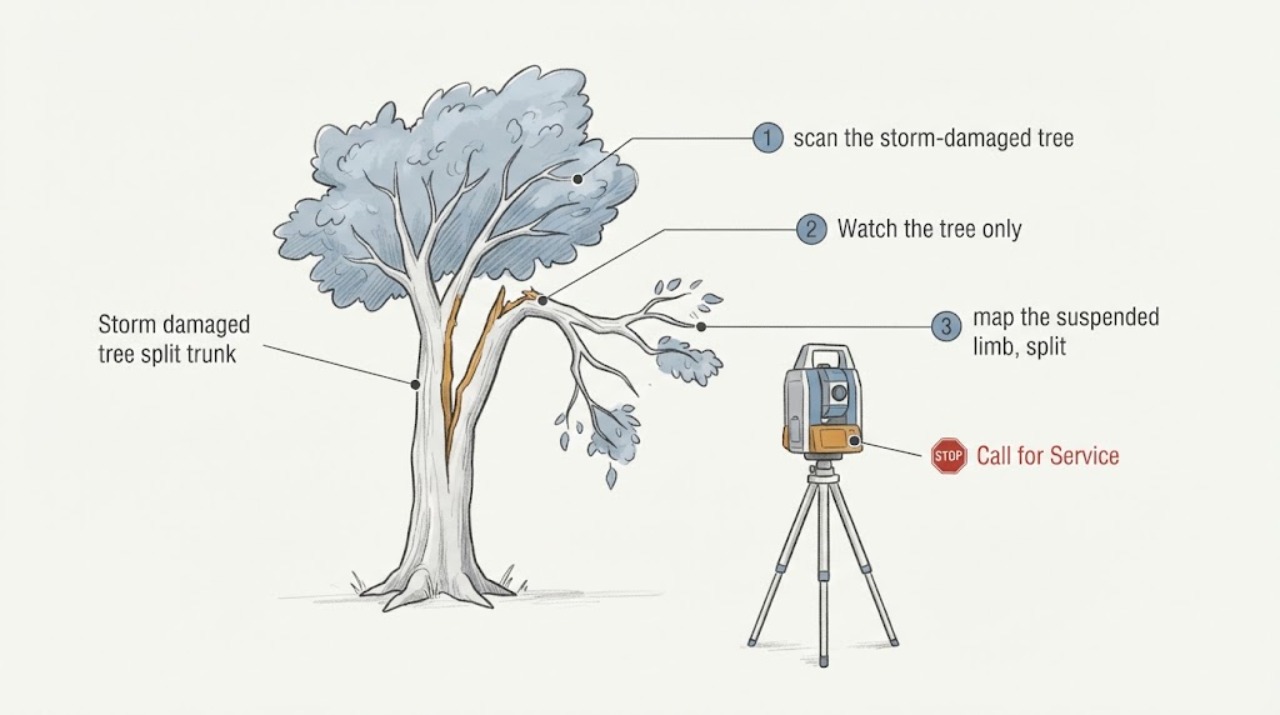
Storm damaged tree split trunk hanging limb: What to Check and What to Do Next
For a storm-damaged tree with a split trunk and hanging limb, first isolate the entire likely fall area from a distant ground position. Look for movement or falling debris, people and property below, blocked routes, and contact with overhead lines; assume any line or touching object is energized.
-
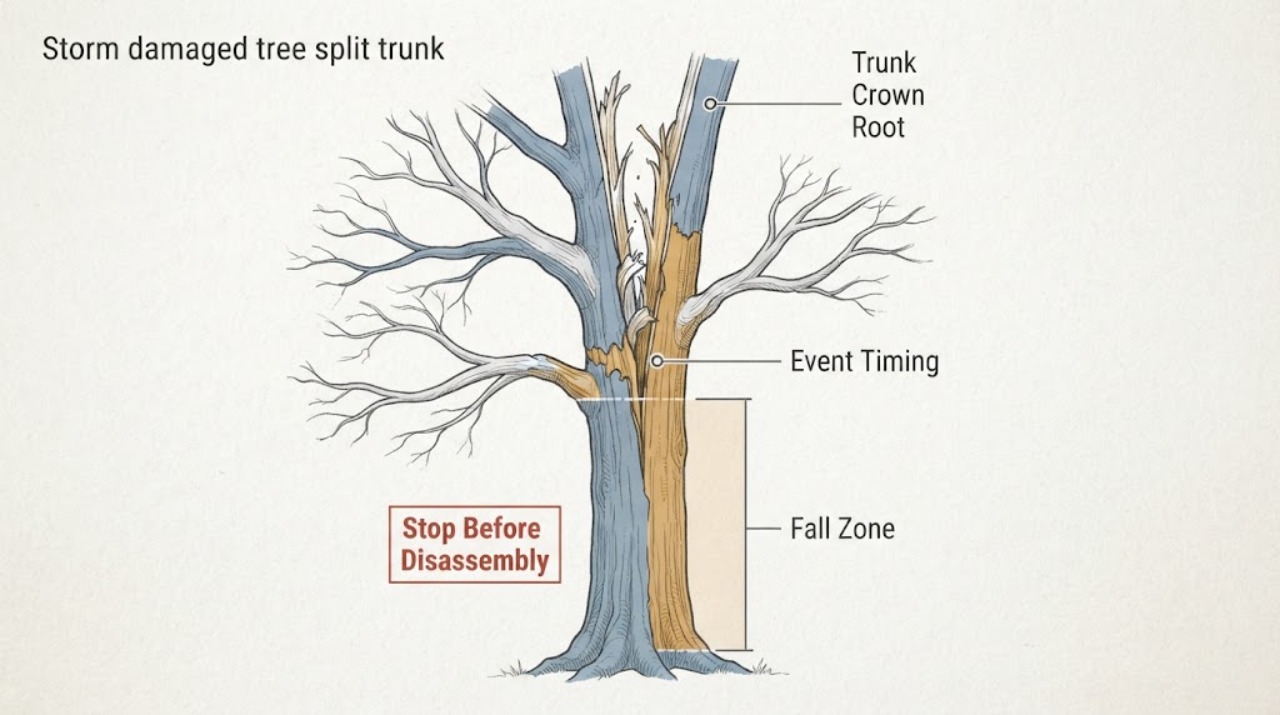
Storm damaged tree split trunk wind damage: What to Check and What to Do Next
A storm-damaged tree with a split trunk is a fall-zone and structural-stability emergency assessment, not a hanging-limb trimming job. From far away at ground level, record when the wind event occurred, whether the trunk or crown is still moving, the split's height and direction, the root plate and crown condition, overhead wires, nearby buildings, roads, and people or pets in the potential fall zone.
-
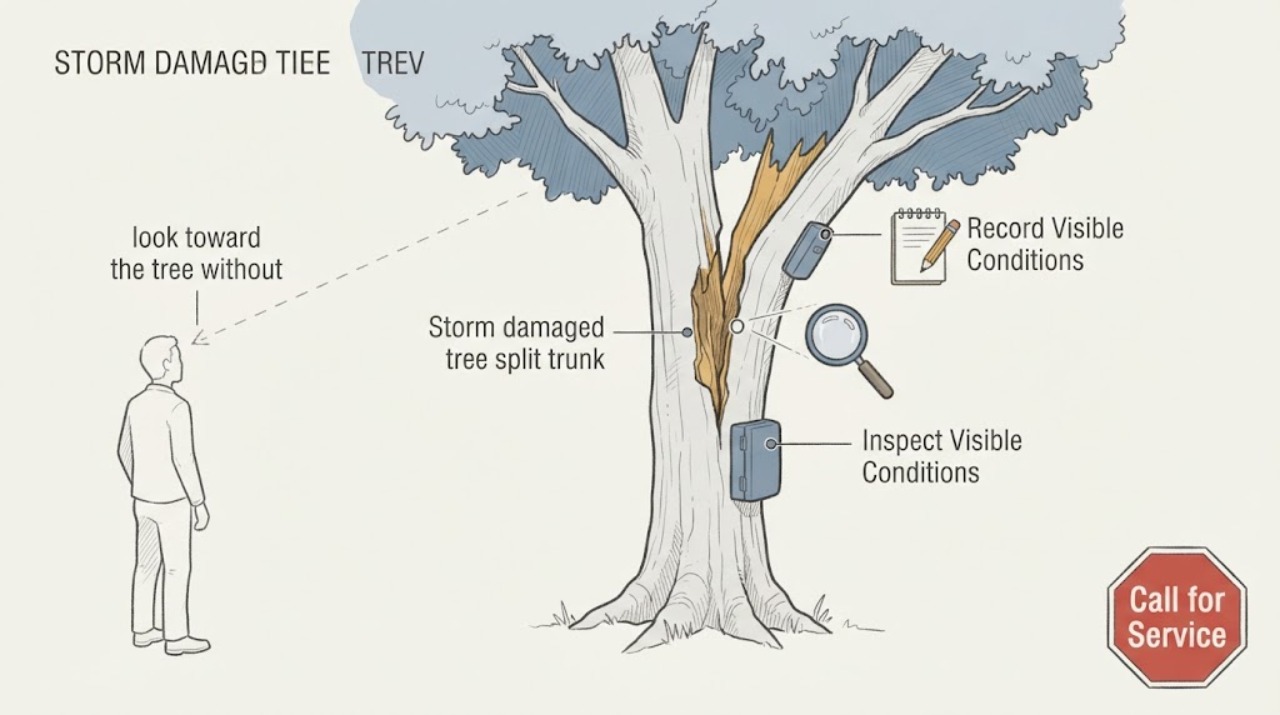
Storm damaged tree split trunk: What to Check and What to Do Next
Do not try to repair or remove a storm-damaged tree with a split trunk yourself. From inside a building or another already safe location, check only whether the tree or hanging parts are near people, structures, roads, or utility lines, and note whether the split trunk is leaning or still attached.