
Repair problem
Vinyl Siding Loose Troubleshooting Guides
Published FixGraph guidance for diagnosing and responding to vinyl siding loose.
Matching published guides
Choose a guide that matches the service, equipment, and conditions you are seeing.
-
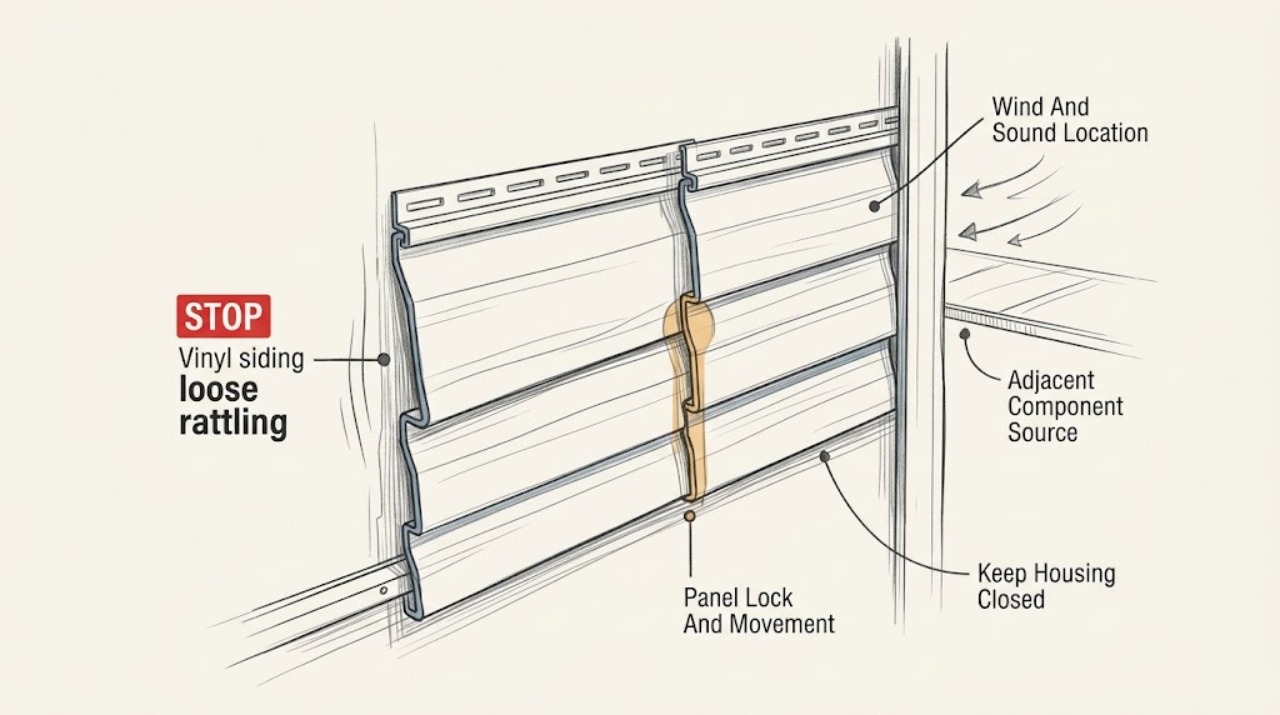
Vinyl siding loose rattling: What to Check and What to Do Next
For vinyl siding that rattles, start from the ground by recording wind direction and approximate strength, the exact sound location, and whether the noise follows gusts, sun or temperature changes, or calm weather. Visually note panel sliding, an unlocked lower edge, bowing, or lifted ends, then compare trim, soffit, fascia, gutter, downspout, shutter, and fixture movement.
-
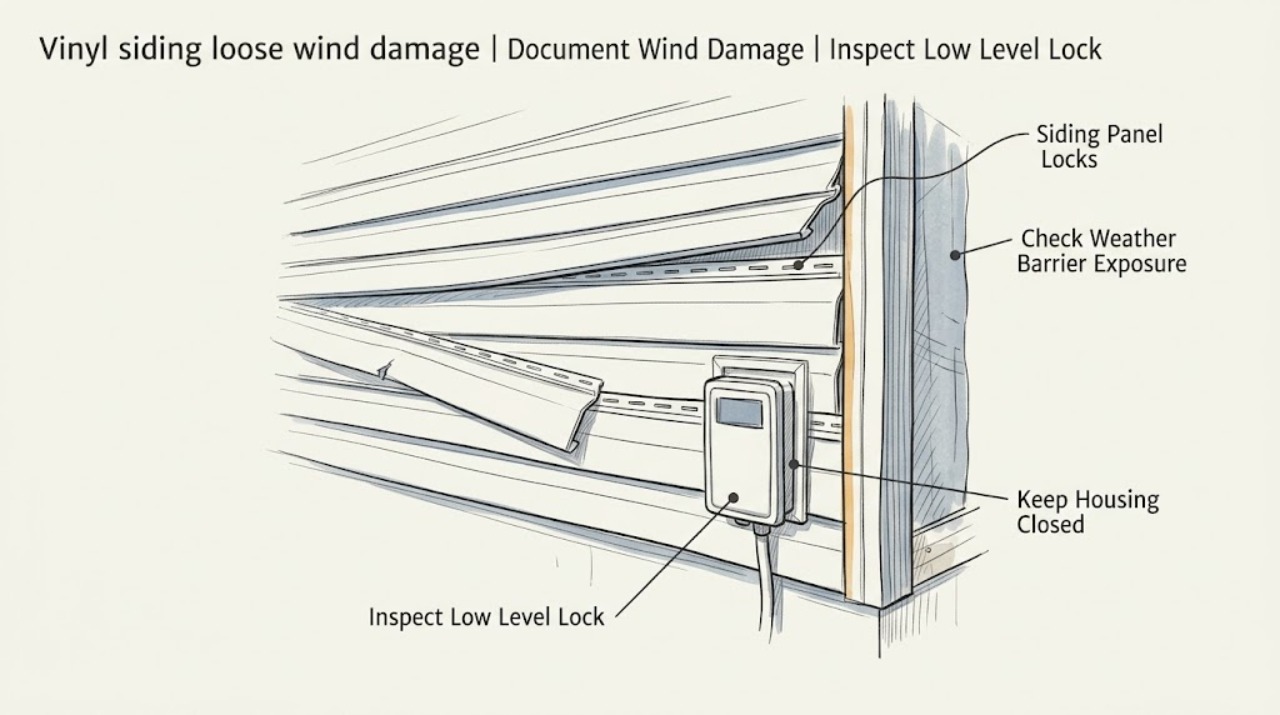
Vinyl siding loose wind damage: What to Check and What to Do Next
After strong wind, loose vinyl siding can mean that a panel has disengaged from its lock, a trim or corner connection has moved, fasteners no longer hold correctly, or the underlying wall or weather barrier has been damaged. Start from the ground after the wind has subsided and photograph the exact panel, direction of movement, missing or cracked pieces, exposed underlayment, and any water entry.
-
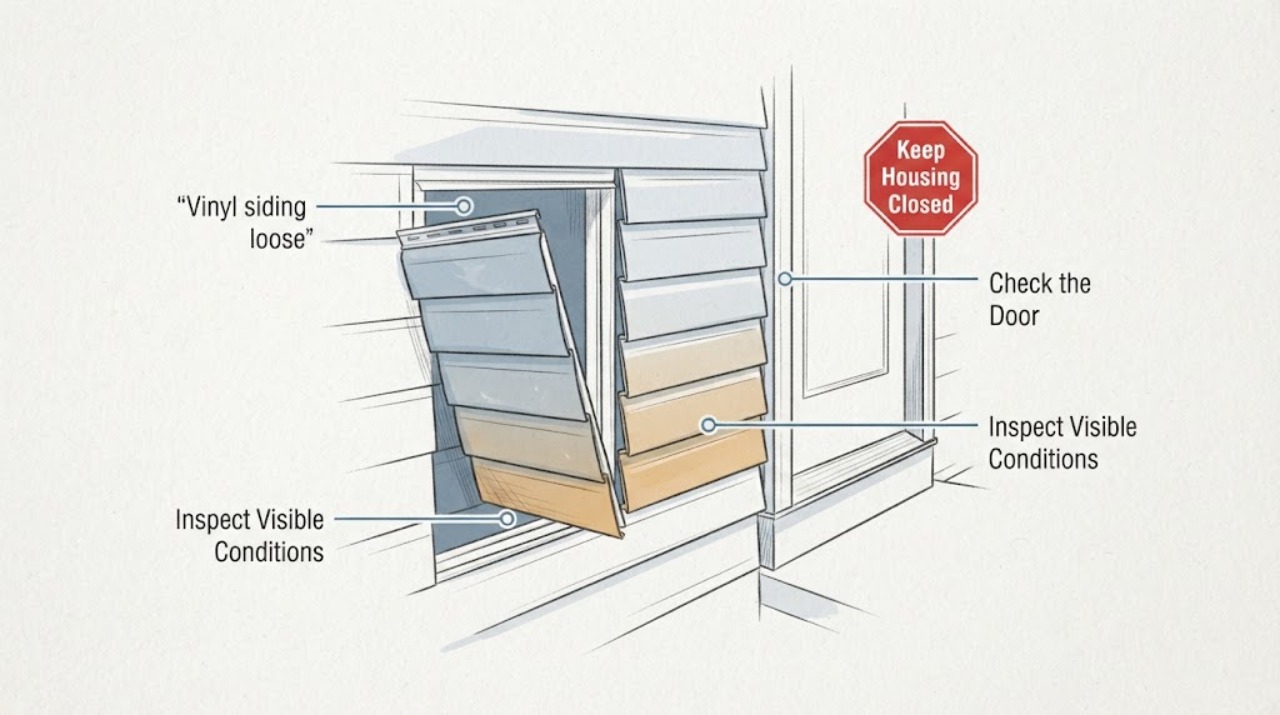
Vinyl siding loose: What to Check and What to Do Next
A loose vinyl-siding panel should be assessed from a safe ground-level or window view and then referred to a siding professional, especially if it moves in ordinary wind, has a visible gap near a window or door, has fallen pieces, or is associated with dampness. Record the location and visible pattern without touching the panel.
-
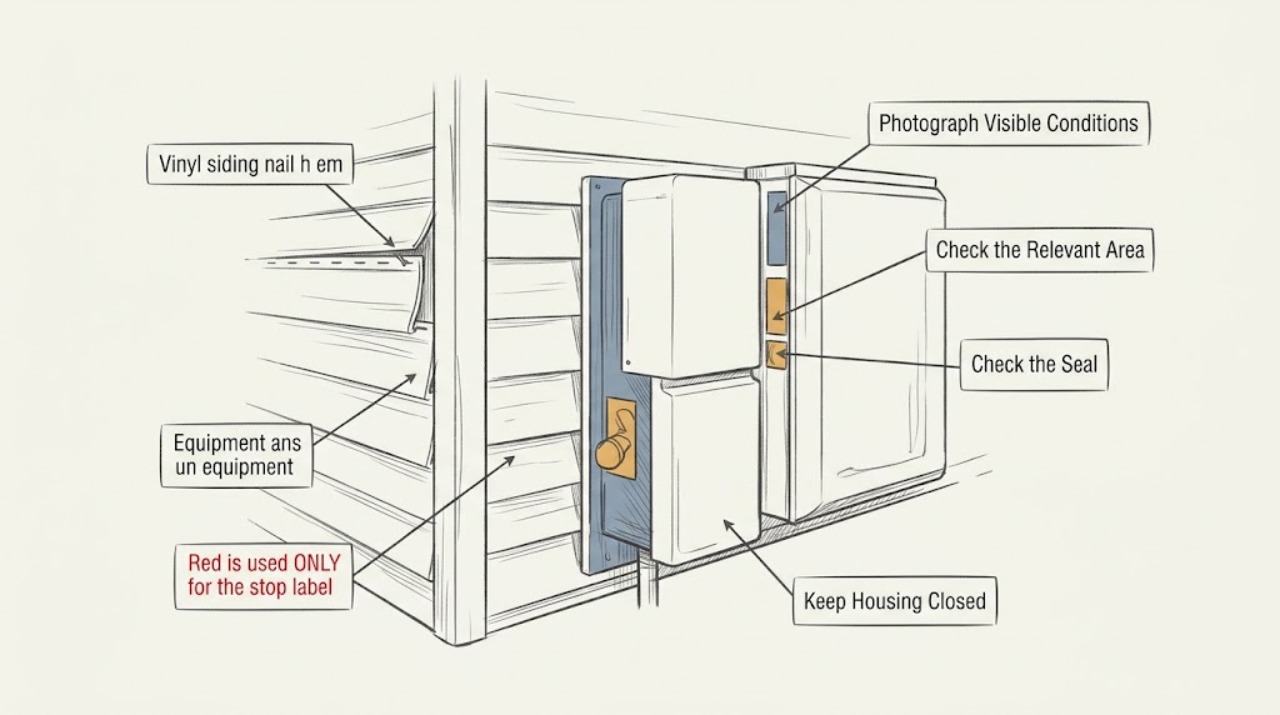
Vinyl siding nail h em loose: What to Check and What to Do Next
Treat a loose vinyl siding nail h em as a ground-level observation and storm-damage triage issue, not as a reason to fasten the panel tight. The label appears to mean the nailing hem or flange, where the panel's slots and fasteners are located.
-
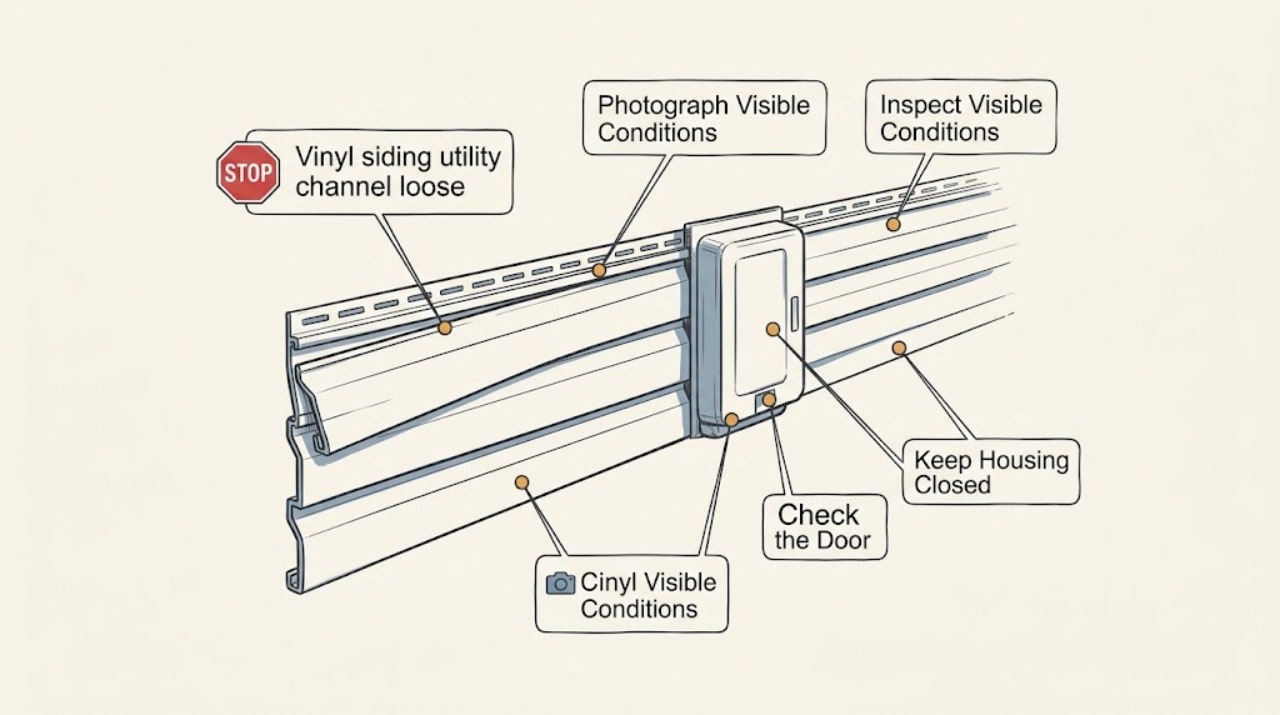
Vinyl siding utility channel loose: What to Check and What to Do Next
Treat a loose vinyl siding utility channel as a siding-system and water-management issue, not as a reason to drive a fastener tight or force the channel back into place. From stable ground or a safely accessible window, document whether the channel is separating, bowing, cracked, open at a joint, or allowing the cut siding edge to move, and compare it with adjacent trim.