
On this page
Start here
Quick answer
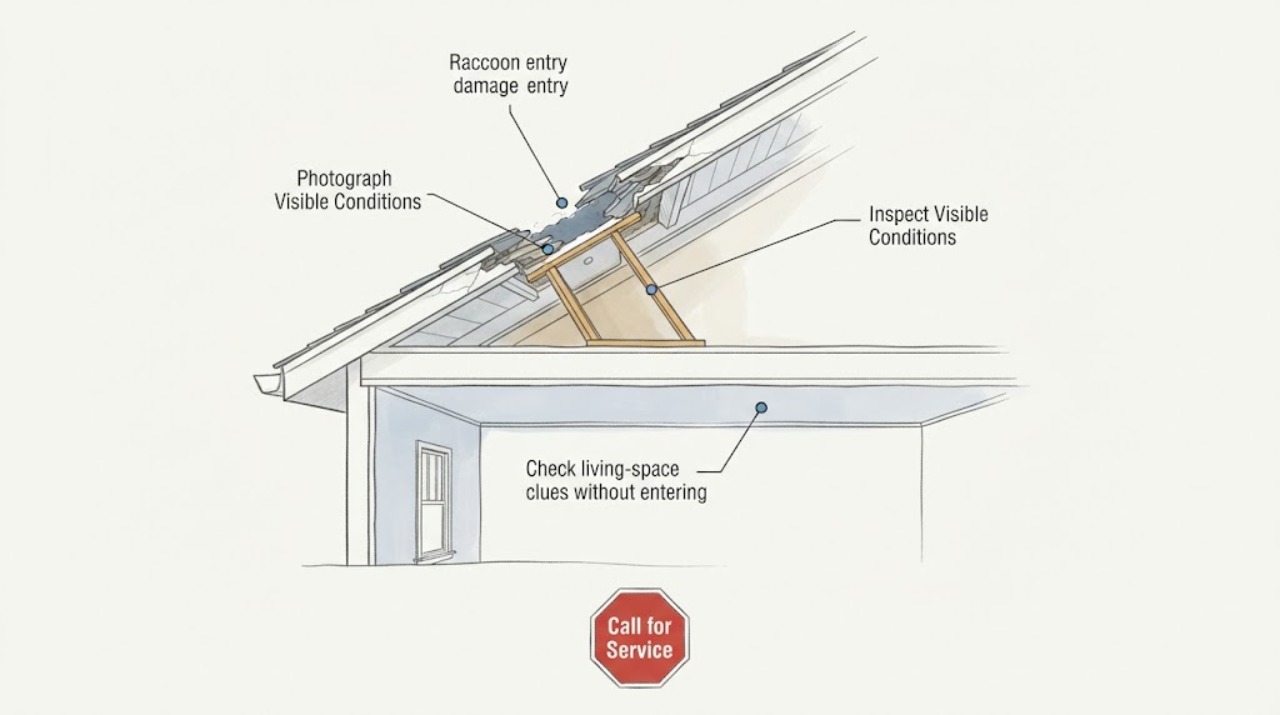
Keep away from the raccoon, any entry opening, attic access, and droppings. From the ground or an occupied-space boundary, document visible damage, animal activity, sounds, odors, stains, and possible exposure without approaching, climbing, entering, touching, trapping, sealing, or cleaning. Do not close an opening while an animal may be inside. Contact local animal control or a qualified wildlife professional for humane assessment and exclusion planning; contact a health department, veterinarian, or healthcare professional promptly if a person or pet may have had contact.
Work through in order
Diagnostic checks
Use only checks that match the exact appliance or system and its official guide.
-
Photograph visible exterior damage from the ground
From ground level and without a ladder, roof access, or close approach, photograph any visible damage around roof edges, vents, soffits, fascia, screens, or other openings and note its location and approximate timing.
Expected result: The exterior may show a loose or torn cover, displaced screen, chewed or widened opening, damaged shingles or trim, or no clearly visible damage.
Next step: Keep people and pets away from the area and provide the photographs to animal control or a qualified wildlife professional. Do not reach into, cover, or seal the opening.
Stop if: Stop if inspection would require climbing, entering a roof or attic area, approaching the animal, moving material, or touching the opening.
Why this matters
Why: The location and type of visible damage help a wildlife professional plan an assessment, but they do not show whether an animal is inside or whether young are present.
-
Observe animal activity only from a safe distance
From inside a secure area or another distant location, note whether a raccoon is visible, when sounds occur, whether activity is repeated, and whether an animal appears injured, trapped, unusually active during daylight, or accompanied by smaller animals; do not approach, illuminate closely, feed, or pursue it.
Expected result: There may be no animal in view, intermittent movement or scratching, repeated entry/exit activity, or an animal that appears sick, injured, trapped, or accompanied by young.
Next step: Keep the area quiet and isolated and contact animal control or a qualified wildlife professional. Report any suspected young, injury, or trapped animal immediately.
Stop if: Stop observing if the raccoon approaches, becomes aggressive, is within reach, or the only view would require entering its space or blocking its movement.
Why this matters
Why: Activity timing and unusual behavior help professionals assess urgency, but behavior cannot establish that a raccoon is safe to approach or that an opening is empty.
-
Check living-space clues without entering hidden areas
From occupied rooms and without opening attic or crawlspace access, note ceiling or wall stains, new odors, scratching above the ceiling, damaged interior trim, insects, or visible water entry near the suspected exterior damage.
Expected result: The living space may look unchanged, show noise or odor without visible damage, or show staining, water intrusion, damaged finishes, or other signs of building impact.
Next step: Keep the access closed and provide the observations to the wildlife professional; request appropriate building or water-damage service if the home is wet or damaged. Do not open the hidden area to investigate.
Stop if: Stop if there is sagging material, active water, electrical damage, a strong odor, suspected contamination, or any need to enter or disturb the attic, crawlspace, or wall.
Why this matters
Why: Moisture or structural clues can require prompt building, roofing, plumbing, or restoration attention in addition to wildlife service. Noise or odor does not prove the animal's location.
-
Record possible exposure without touching contaminated material
From a distance, note whether a person or pet may have touched the raccoon, been bitten or scratched, contacted saliva, or entered an area with raccoon droppings or contaminated material; do not touch the animal, feces, insulation, or affected surfaces.
Expected result: There may be no known contact, possible contact, a bite or scratch, pet exposure, or visible droppings/latrine material in an attic, roof, deck, or other area.
Next step: For a bite or scratch, wash the wound with soap and water and contact healthcare and public-health professionals promptly. For pet contact, contact a veterinarian and the health department. For droppings or contaminated material, keep everyone away and request professional cleanup guidance.
Stop if: Stop all inspection if exposure, droppings, contaminated insulation, or an injured/dead animal is found; do not clean, bag, move, or handle anything.
Why this matters
Why: Known or possible contact changes the response to an urgent public-health or veterinary risk assessment. Droppings can present a separate contamination concern even when no animal is visible.
Use your observations
Decision map
Find the observation that best matches what you see, then follow the next safe action.
-
PATH 01Next step
What you see
A person may have been bitten, scratched, touched, exposed to saliva, or otherwise contacted the raccoon, or exposure cannot be ruled out.
Do this next
Wash a known wound with soap and water and contact healthcare and the local or state health department promptly for a rabies risk assessment. Do not handle the raccoon or wait for exclusion service.
-
PATH 02Next step
What you see
A pet may have contacted the raccoon, droppings, or contaminated material.
Do this next
Keep the pet separated without handling its mouth or the contaminated area and contact a veterinarian and public-health authority for instructions.
-
PATH 03Next step
What you see
A raccoon is visible, trapped, injured, aggressive, unusually active during daylight, or may be accompanied by young.
Do this next
Keep people and pets away, do not block or approach the animal, and contact animal control or a qualified wildlife professional urgently.
-
PATH 04Next step
What you see
Droppings, a latrine, contaminated insulation, strong odor, or suspected animal waste is present.
Do this next
Do not enter, sweep, vacuum, mist, or clean the area. Isolate it and request professional wildlife contamination assessment and cleanup guidance.
-
PATH 05Next step
What you see
Visible entry damage exists but no raccoon is currently seen and no exposure is known.
Do this next
Keep the opening and hidden spaces undisturbed, do not seal or cover the opening, and arrange qualified wildlife assessment before any exclusion or repair.
Helpful context
Understand the symptom
Treat entry damage as an active wildlife situation
A damaged roof edge, vent, soffit, or other opening does not show whether a raccoon is still inside or whether young may be present. The safe homeowner role is to keep distance and record what can be seen from ground level or from an occupied room. A wildlife professional should decide how to assess occupancy and when exclusion or repair is safe.
Do not enter or clean contaminated areas
Attics, crawlspaces, roof areas, and animal latrines can contain fall hazards, contaminated material, and hidden animals. Do not enter, disturb insulation, handle a raccoon, trap it, touch droppings, or clean the area. Keep children and pets away and route the situation to animal control or a qualified wildlife-remediation professional.
Exposure changes the urgency
Raccoons are among the wildlife species associated with rabies risk, and raccoon feces can carry roundworm eggs that are not visible to the naked eye. A bite, scratch, saliva contact, pet contact, or contact with feces or contaminated material should be reported promptly to the appropriate health or veterinary professional.
When checks do not resolve it
Need a professional?
Call urgently for a visible, injured, trapped, aggressive, or daytime-active raccoon, suspected young, an unsecured occupied space, structural or water damage, droppings, or any possible person or pet contact. Contact health or veterinary professionals promptly for exposure concerns.
Common questions
FAQ
What should I do if a raccoon damaged an attic or roof entry?
Keep away from the opening and hidden space, document visible damage from the ground, and contact animal control or a qualified wildlife professional. Do not climb, enter, seal, or repair the opening while an animal may be inside.
Can I seal the raccoon entry hole now?
No. Sealing can trap an animal or young inside. A qualified wildlife professional should assess occupancy and plan humane exclusion before building repair.
Can I clean raccoon droppings from the attic?
Do not enter or clean an attic latrine or contaminated insulation yourself. Keep people and pets away and request professional wildlife contamination assessment and cleanup guidance.
When should I seek medical or veterinary advice?
Contact healthcare and public-health professionals promptly after a bite, scratch, saliva contact, or uncertain direct contact. Contact a veterinarian and public health if a pet may have contacted the raccoon or contaminated material.
Read the exact guide
Official sources
- Requesting Wildlife Services SupportUSDA Animal and Plant Health Inspection Service · Property damage or wildlife conflict requiring professional assessment
- Preventing Raccoon RoundwormCenters for Disease Control and Prevention · Raccoon entry damage involving attic, roof, deck, garage, or suspected droppings
- Rabies Prevention and ControlCenters for Disease Control and Prevention · Possible raccoon contact or raccoon activity around a home
Community feedback
Share a repair observation
Share a plain-text repair observation. Accepted observations are published automatically; this page may take a moment to update.