
On this page
Start here
Quick answer
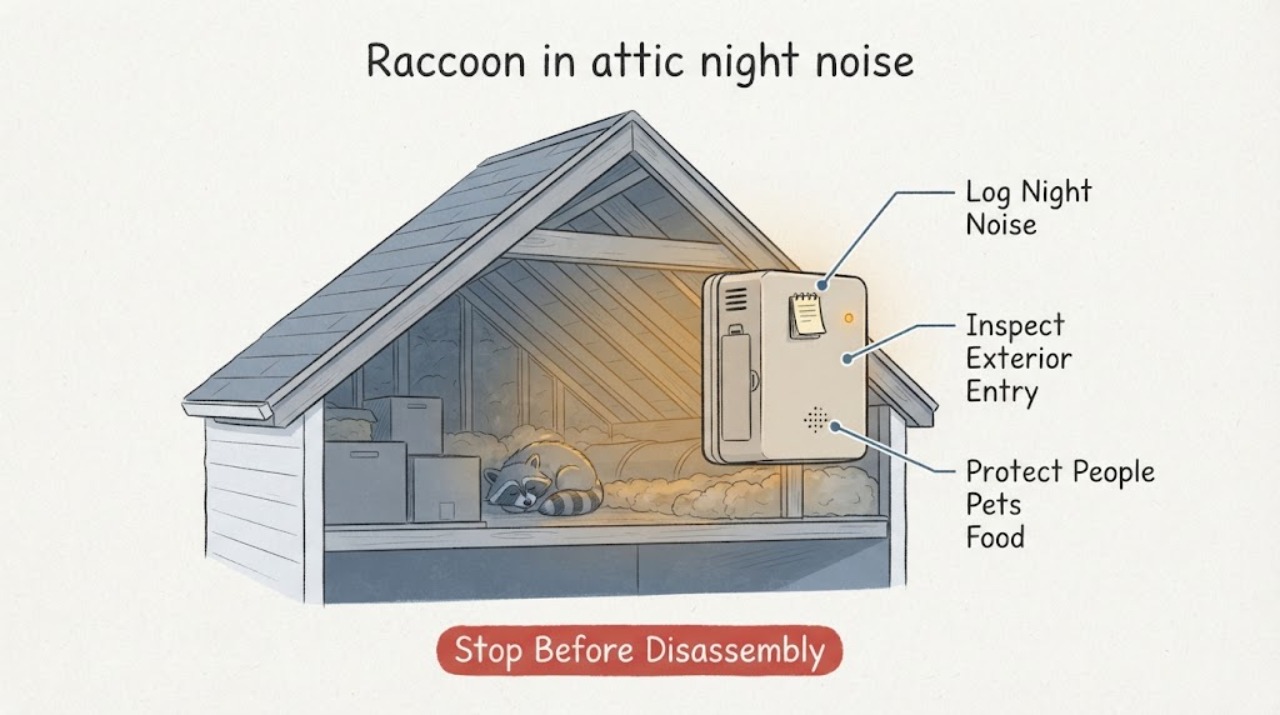
Nighttime thumping, scratching, or movement above a ceiling can be consistent with a raccoon, but sound alone does not identify the animal or show whether young are present. Keep people and pets away from the attic, record the time and location of the noise, and inspect only from the living area or ground for visible entry damage, droppings, or roof and vent problems. Do not enter the attic, touch the animal or nest, disturb droppings, or close an opening while an animal may still be inside. Arrange a qualified wildlife-control assessment; after the animal and any young are confirmed out, have the entry repaired and contaminated material evaluated safely.
Work through in order
Diagnostic checks
Use only checks that match the exact appliance or system and its official guide.
-
Check 1
From an occupied room or another safe position outside the attic, log when the sound starts and stops, where it is loudest, and whether it sounds like scratching, heavy footsteps, chattering, squealing, or repeated movement.
Expected result: Note whether the noise repeats after dark, shifts along the roofline, is accompanied by daylight entry, odors, or ceiling marks, and whether it occurs after weather or a change near the roof.
Next step: Save the timeline and a recording made from a safe location if practical, then continue with an exterior-only evidence check rather than opening the attic.
Stop if: Stop listening or moving closer if the ceiling, roof, or attic access appears damaged, if an animal enters the living space, or if there is smoke, gas odor, electrical damage, or structural movement.
Why this matters
Why: A repeatable nighttime pattern supports an active wildlife or roof-space investigation, but it cannot identify a raccoon by itself. A sound that follows wind, rain, or building equipment may have a non-wildlife cause.
-
Check 2
From the ground or a normal accessible doorway, inspect the roof edge, soffit, fascia, attic vent screens, chimney cap, and nearby branches without using a ladder or entering the attic.
Expected result: Look for a torn or displaced screen, a gap at a vent or soffit, rub marks, disturbed insulation visible from an existing opening, droppings, or a branch that reaches the roof. Do not insert a hand, tool, camera, or material into a suspected entry.
Next step: Photograph the exterior condition from the ground, keep the suspected entry open, and provide its location to a qualified wildlife-control or roofing professional.
Stop if: Stop if the inspection requires climbing, walking on the roof, touching an animal or nest, moving a chimney cap, handling wires, or approaching unstable roofing or damaged structure.
Why this matters
Why: A visible access defect makes wildlife entry plausible and gives the professional a repair target. No visible defect does not rule out an entry at a roof, chimney, wall, or utility penetration that requires elevated or enclosed-space access.
-
Check 3
Keep children and pets away from the attic access, roofline, and any animal sign; remove accessible food attractants such as outdoor pet food, unsecured trash, fallen fruit, or open compost without approaching the attic or animal.
Expected result: Check whether food or water sources are available near the building and whether a pet door, bird feeder, branch, or open vent could be helping wildlife reach or remain near the home.
Next step: Secure attractants from a normal standing position and tell the wildlife professional about pets, children, food sources, and any direct or indirect contact.
Stop if: Stop if securing the area requires entering the attic, approaching the raccoon, handling feces or nesting material, climbing, or moving an unstable container or structure.
Why this matters
Why: Removing accessible attractants can reduce repeat visits, but it does not remove an animal already denning in the attic and does not replace exclusion. A pet or child that touched the animal or feces creates a separate health or veterinary question.
-
Check 4
From outside the attic and from the living area below, check only for secondary signs such as ceiling staining, sagging, damaged insulation visible without entry, gnawed wiring, strong odor, droppings, or a change in indoor air quality.
Expected result: Record whether the issue is limited to noise or includes water intrusion, exposed electrical material, damaged ducts, feces, nesting debris, stains, mold-like growth, or a ceiling that is soft or moving.
Next step: Isolate the affected room or area as appropriate, do not disturb contaminated material, and tell the wildlife-control provider which additional professional may be needed.
Stop if: Leave the area and seek urgent qualified or emergency help for a sagging ceiling, active leak, exposed wiring, smoke, fire, gas odor, severe contamination, or an animal inside the living space.
Why this matters
Why: Noise alone can wait for a planned wildlife assessment when everyone is safe. Feces, damaged building materials, water, electrical damage, or structural changes expand the job to remediation, roofing, electrical, or urgent building safety.
-
Check 5
Prepare a wildlife-service handoff with the sound timeline, safe photos, suspected entry location, visible damage, droppings or contact concerns, and whether the noise could involve young; do not seal, trap, relocate, or handle anything yourself.
Expected result: Confirm whether a qualified provider can assess the attic or roof safely, determine whether the animal and young are present, coordinate humane removal or exclusion under local rules, and arrange follow-up repair and cleanup.
Next step: Arrange qualified wildlife-control service and follow the provider's written instructions; have the entry repaired only after the provider confirms that no animals or young remain.
Stop if: Stop the DIY path if anyone proposes entering an active den, touching wildlife or young, disturbing feces, using unsafe roof access, or sealing a suspected active opening.
Why this matters
Why: The entry repair is only effective after the animal family is out and the contamination or building damage is addressed. An unresolved opening, trapped young, or untreated feces can make the night noise recur or create a health risk.
Use your observations
Decision map
Find the observation that best matches what you see, then follow the next safe action.
-
PATH 01Next step
What you see
Night noise repeats, but there is no safe visual confirmation or the exterior evidence could also fit a bird, squirrel, rodent, roof movement, or equipment.
Do this next
Use the timeline, safe recording, and ground-level photos for a qualified wildlife or building inspection, and do not place hands or objects into the entry.
Why this path and its safety boundary
Why it matters: The sound is a roof-space symptom rather than proof of a raccoon; opening the attic to identify it would add risk.
-
PATH 02Next step
What you see
A raccoon is seen, the entry is active, repeated animal movement is heard, or young may be present in the attic, eaves, or chimney.
Do this next
Keep people and pets away and arrange qualified wildlife-control or local animal-control guidance for removal and exclusion; repair the entry only after all animals are confirmed out.
Why this path and its safety boundary
Why it matters: This is an active den or wildlife-occupancy problem; sealing the opening now could trap an animal or separate a mother from young.
-
PATH 03Next step
What you see
Droppings, a suspected latrine, nesting debris, direct animal contact, or contamination in the attic or living space is present.
Do this next
Isolate the area, keep children and pets away, avoid disturbing the material, and contact qualified wildlife-remediation or public-health support; seek medical or veterinary advice for a bite, scratch, or exposure.
Why this path and its safety boundary
Why it matters: The problem includes a public-health or veterinary exposure risk; disturbing dry feces or debris can spread contaminated dust.
-
PATH 04Next step
What you see
The noise is accompanied by a sagging ceiling, active water, damaged wiring, smoke, fire, gas odor, unstable roof material, or an animal inside the living area.
Do this next
Leave the unsafe area, keep others clear, and contact local emergency services or the appropriate qualified building, electrical, roofing, or wildlife professional.
Why this path and its safety boundary
Why it matters: The wildlife issue is now part of an immediate building or life-safety hazard.
Helpful context
Understand the symptom
Night noise is a clue, not proof
Raccoons are generally more active at night and can use an accessible attic or chimney as a den, but squirrels, birds, rodents, building movement, and roof equipment can also make nighttime sounds. Record where and when the sound occurs instead of opening the attic to confirm it. A safe observation helps the wildlife professional distinguish an active animal, a family with young, an entry problem, and secondary building damage.
Do not seal an active den
An entry hole should be repaired only after a qualified person has confirmed that the raccoon and possible young are out. Sealing too early can trap an animal or separate a mother from young, leading to additional damage and an unsafe encounter. Keep the attic and roofline undisturbed, and use local wildlife or animal-control guidance for exclusion and repair.
Treat attic droppings as a health concern
Do not sweep, vacuum, or stir up suspected raccoon feces or nesting debris. Raccoon feces can contain organisms that are not identifiable by sight, and dry contaminated material can become a dust exposure. Isolate the area from children and pets and tell the wildlife professional about any droppings, odor, stains, or contact; use public-health or remediation guidance for cleanup.
Safety boundary
Stop conditions
- Do not enter the attic, climb onto the roof, reach into an opening, touch a raccoon or young, move a nest, or disturb suspected feces or contaminated debris.
- Do not seal, cap, trap, relocate, or otherwise close a suspected entry until a qualified provider confirms that all animals and possible young are out.
- Keep children and pets away from the attic access, roofline, animal, droppings, and contaminated materials; do not feed or approach the raccoon.
- Leave the area and seek urgent help for smoke, fire, gas odor, exposed wiring, active water, structural movement, a sagging ceiling, an animal in living space, or a bite or scratch.
Only after diagnosis
Potential parts
- wildlife exclusion screen or vent cover
Consider this category only after a qualified provider confirms that all raccoons and possible young are out and identifies the actual entry point.
Match the vent, soffit, chimney, roof, and local wildlife requirements; do not use a cover to seal an active den. - chimney cap or roof-entry repair material
Consider this category only when the inspection identifies a chimney or roof penetration as the entry and the animal has been safely excluded.
Have the roofing or chimney configuration and ventilation needs verified; elevated or roof work belongs to a qualified professional.
When checks do not resolve it
Need a professional?
Arrange qualified wildlife-control service when night noise repeats, an animal or active entry is seen, young may be present, or the cause is unclear. Add qualified roofing, electrical, remediation, or structural support when damage is found. Leave the area and contact emergency services for smoke, fire, gas odor, exposed wiring, a sagging ceiling, severe contamination, or an animal inside the living space.
Common questions
FAQ
Does nighttime attic noise prove I have a raccoon?
No. Raccoons are commonly active at night and can use attics, but other wildlife, roof movement, and equipment can sound similar. Record the timing and location and arrange an exterior or wildlife inspection without entering the attic.
Can I seal the hole while the raccoon is out for the night?
Not until a qualified provider has confirmed that the raccoon and any young are out. Sealing an active den can trap an animal or separate a mother from young. Keep the entry undisturbed and obtain local wildlife-control guidance.
Should I go into the attic to look for the raccoon or its nest?
Do not enter as a casual check. An attic may contain an animal, young, feces, damaged wiring, unstable flooring, or contaminated dust. Observe from safe occupied areas or the ground and let a qualified wildlife professional assess the space.
What should I do about raccoon droppings in the attic?
Keep children and pets out and do not sweep, vacuum, or stir up the material. Tell the wildlife provider about the suspected latrine and request safe cleanup or public-health guidance. Seek medical or veterinary advice after a bite, scratch, or direct exposure.
What information should I give wildlife removal service?
Provide the sound timeline and location, safe exterior photos, suspected entry point, visible roof or vent damage, whether young may be present, any droppings or odor, pets or children in the home, food attractants, and any water, wiring, ceiling, or structural concern.
Read the exact guide
Official sources
- Fish and Wildlife: RaccoonIndiana Department of Natural Resources · Indiana wildlife guidance; licensing and removal rules vary by jurisdiction.
- Preventing Raccoon RoundwormCenters for Disease Control and Prevention · U.S. public-health guidance; medical, veterinary, and local remediation authorities control exposure-specific advice.
- Raccoon | Keep Wildlife WildWisconsin Department of Natural Resources · Wisconsin wildlife guidance; local wildlife rules and the actual building condition control the response elsewhere.
- Deterring WildlifeNational Park Service · National Park Service urban-wildlife guidance; private-property rules and a qualified provider's site assessment control.
Community feedback
Share a repair observation
Share a plain-text repair observation. Accepted observations are published automatically; this page may take a moment to update.