
On this page
Start here
Quick answer
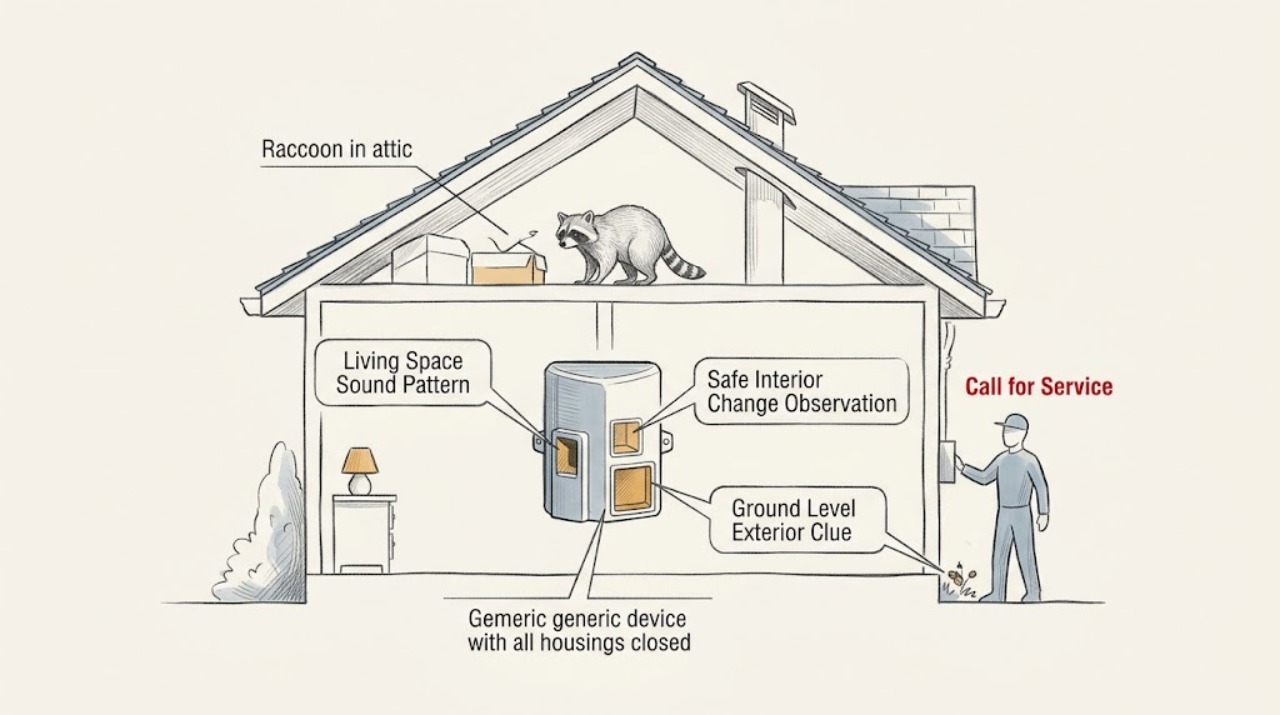
Do not enter the attic, approach or handle the raccoon, set a trap, place bait or poison, clean feces, seal an opening, or attempt an exclusion while an animal may be inside. From the living space and safe ground-level viewpoints, record the time and location of noises, any visible ceiling or wall changes, and any roofline, vent, or opening clues that can be seen without a ladder. Keep people and pets away from the affected area and arrange urgent professional wildlife service; contact animal control or public-health authorities for unusual animal behavior or any bite, scratch, or possible contact. A professional must determine whether an adult, young, or more than one animal is present before deciding what happens next.
Work through in order
Diagnostic checks
Use only checks that match the exact appliance or system and its official guide.
-
Record sounds from occupied living space
From a normal room or hallway, listen without opening the attic hatch or entering a ceiling void, and write down the room, approximate time, duration, and character of any scratching, thumping, chittering, or movement sounds.
Expected result: Note whether activity is above one room or several, occurs at night or daytime, repeats in a predictable route, or stops when the household becomes active; do not infer a species from sound alone.
Next step: Keep the record and share it with a wildlife-removal professional. Keep occupants and pets away from the suspected attic access and do not create noise or use smoke to force a response.
Stop if: Stop listening and leave the area if there is a strong odor, falling ceiling material, visible animal access into the room, or any sign of an electrical or structural hazard.
Why this matters
Why: A repeated location-and-time pattern gives a wildlife professional a safe starting point and may indicate movement within the structure, but it cannot show whether the animal is an adult, young, or a different species.
-
Observe indoor changes without touching them
From a doorway or other safe living-space position, look for new ceiling stains, sagging, damaged trim, unusual odor, or visible debris beneath the suspected attic area; do not touch, press, open, clean, or move anything.
Expected result: Record whether there is a new mark, falling material, odor, or evidence of moisture, and whether the change is near a light, outlet, HVAC opening, or other building service.
Next step: Keep the room closed to children and pets, photograph from a safe dry position if possible, and tell the wildlife professional and property manager about the change. Request qualified building or electrical help for any service hazard.
Stop if: Stop immediately if the ceiling sags, material falls, water is present, wiring is exposed, or odor or debris causes symptoms; do not touch or clean the area.
Why this matters
Why: Indoor changes can show that the issue is affecting the building envelope or that contaminated material may be present, but they cannot identify the animal or confirm a safe route into the attic. CDC advises staying away from wildlife-contaminated areas and materials.
-
View roofline and vents from safe ground
From stable ground and a safe distance, look toward the eaves, soffit, roofline, vents, and nearby trees or branches using ordinary vision or a camera zoom; do not use a ladder, climb, approach the roof, or reach toward an opening.
Expected result: Note only clearly visible displaced material, a damaged screen or vent, a gap, fresh exterior disturbance, or branches that touch the roofline; do not probe, pull, or confirm an opening by placing a hand near it.
Next step: Photograph the exterior from the ground and provide the side of the building and approximate location to the wildlife professional. Leave all repairs, exclusion decisions, and access work to that professional.
Stop if: Stop if the weather is windy, icy, stormy, or dark, if material may fall, or if seeing the area requires a ladder, roof access, tree climbing, or entering a restricted space.
Why this matters
Why: A visible exterior clue can help a professional plan an inspection, but it does not confirm that the opening is active or that sealing it would be safe. An unseen adult or young animal may still be inside.
-
Record safe food, water, and access context
From normal ground-level areas, note visible outdoor trash, pet food, bird feeders, standing water, brush, or nearby building gaps that a professional may want to know about; do not approach the animal, move attractants near a suspected den, or enter an attic or crawlspace.
Expected result: Record whether food, water, shelter, or an attached structure is close to the suspected entry side, and whether the home is a rental or multi-unit property with a manager or shared roofline.
Next step: Share the context with the wildlife professional and property manager. Keep pets indoors or supervised and do not move, bait, trap, poison, or seal anything while the animal's presence is unresolved.
Stop if: Stop if the raccoon is visible, acting unusually, blocking a path, or near people or pets; move away without approaching and contact animal control or qualified wildlife help.
Why this matters
Why: These observations provide context for a wildlife assessment, but they do not prove why the raccoon entered or authorize a homeowner to alter the site. CDC recommends keeping distance and not feeding or handling wildlife; property access may require coordinated professional and manager action.
Use your observations
Decision map
Find the observation that best matches what you see, then follow the next safe action.
-
PATH 01Next step
What you see
Sounds or safe observations suggest a raccoon may be in the attic, but no person or pet has touched it.
Do this next
Keep the attic and affected rooms closed off, do not seal or disturb the opening, and arrange urgent professional wildlife inspection and removal.
-
PATH 02Next step
What you see
A raccoon is visible in the living area, is cornered, injured, sick-appearing, active in daytime, or behaving unusually.
Do this next
Move people and pets away without approaching or blocking the animal, close interior doors only if this can be done without getting near it, and contact animal control or qualified wildlife professionals.
-
PATH 03Next step
What you see
Anyone or any pet was bitten, scratched, or had possible direct contact with the raccoon or its saliva.
Do this next
Wash a human wound with soap and water immediately and contact a healthcare or public-health professional urgently; contact a veterinarian for a pet exposure. Do not capture or handle the animal for testing.
-
PATH 04Next step
What you see
Feces, a latrine, nesting material, or contaminated insulation is suspected in the attic or another area.
Do this next
Keep everyone and pets away and do not clean, sweep, vacuum, or move material. Ask the wildlife professional or a qualified remediation service to assess and handle the contamination.
-
PATH 05Next step
What you see
The attic, roofline, or access route belongs to a landlord, HOA, or multi-unit building.
Do this next
Notify the authorized property manager and request coordinated wildlife and building inspection. Do not enter shared areas or perform exclusion work yourself.
Helpful context
Understand the symptom
Treat attic activity as a wildlife-safety issue
Attic noises can come from more than one species, and a sound alone cannot confirm a raccoon. The safest useful information is a time-and-location record and a few observations from occupied rooms or the ground. CDC advises keeping distance from wildlife and contacting animal control when an animal behaves unusually; USDA Wildlife Services also directs people with wildlife-damage concerns to professional support.
Do not close an occupied animal inside
Do not seal a roof or vent opening, block a suspected route, smoke, flush, bait, poison, trap, or try to drive the animal out. A raccoon may have young or may be unable to leave, and attic entry or a quick repair can create contact and contamination risks. Leave building work to a qualified wildlife professional after the situation is assessed.
Keep contamination and exposure boundaries clear
Raccoon feces may be present in attics, and CDC warns that contaminated areas and materials can create health risks. Do not sweep, vacuum, pick up, or move suspected feces, nesting material, dead animals, or damaged insulation. Keep children and pets out and tell the professional exactly what was observed without disturbing it.
When checks do not resolve it
Need a professional?
Arrange urgent professional help for repeated attic activity, visible roofline damage, an animal inside the living space, daytime or unusual behavior, suspected young, or suspected feces or nesting material. Contact animal control or public-health authorities for unusual wildlife behavior or any possible rabies exposure; use emergency services for an immediate threat to life or property.
Common questions
FAQ
Can I enter the attic to see whether it is a raccoon?
No. Stay in the living space and use only safe ground-level or window views. A professional must assess the attic, animal presence, young, access route, and contamination.
Should I seal the hole or vent immediately?
No. Do not seal or block a suspected route while an animal may be inside. Closing an opening can trap an animal or young and should be handled only after professional assessment.
What if I see raccoon feces in the attic?
Keep everyone and pets away. Do not clean, sweep, vacuum, or move feces, nesting material, or insulation; request qualified wildlife and contamination-remediation help.
What if someone was bitten or scratched?
Wash the wound with soap and water immediately and contact a healthcare or public-health professional urgently. Contact a veterinarian for a pet exposure and do not handle or capture the raccoon.
Read the exact guide
Official sources
- Rabies Prevention and ControlCenters for Disease Control and Prevention · Public-health safety guidance for avoiding raccoon contact and responding to possible bites or scratches; it is not wildlife-removal instructions.
- Wildlife: Healthy Pets, Healthy PeopleCenters for Disease Control and Prevention · General wildlife-safety context for keeping people and pets away from a raccoon and avoiding contact with dead animals or contaminated areas.
- Preventing Raccoon RoundwormCenters for Disease Control and Prevention · Safety context for leaving suspected attic feces and contaminated material undisturbed and requesting qualified assistance; no cleanup procedure is provided here.
- Requesting Wildlife Services SupportU.S. Department of Agriculture Animal and Plant Health Inspection Service · Official route for wildlife-damage information and professional support; it does not authorize homeowner trapping or exclusion work.
Community feedback
Share a repair observation
Share a plain-text repair observation. Accepted observations are published automatically; this page may take a moment to update.