
Repair service
Wildlife Removal Guides
Wildlife concerns, exclusion, and property protection.
Published wildlife removal guides
Choose the guide that best matches the service and problem you are seeing.
-
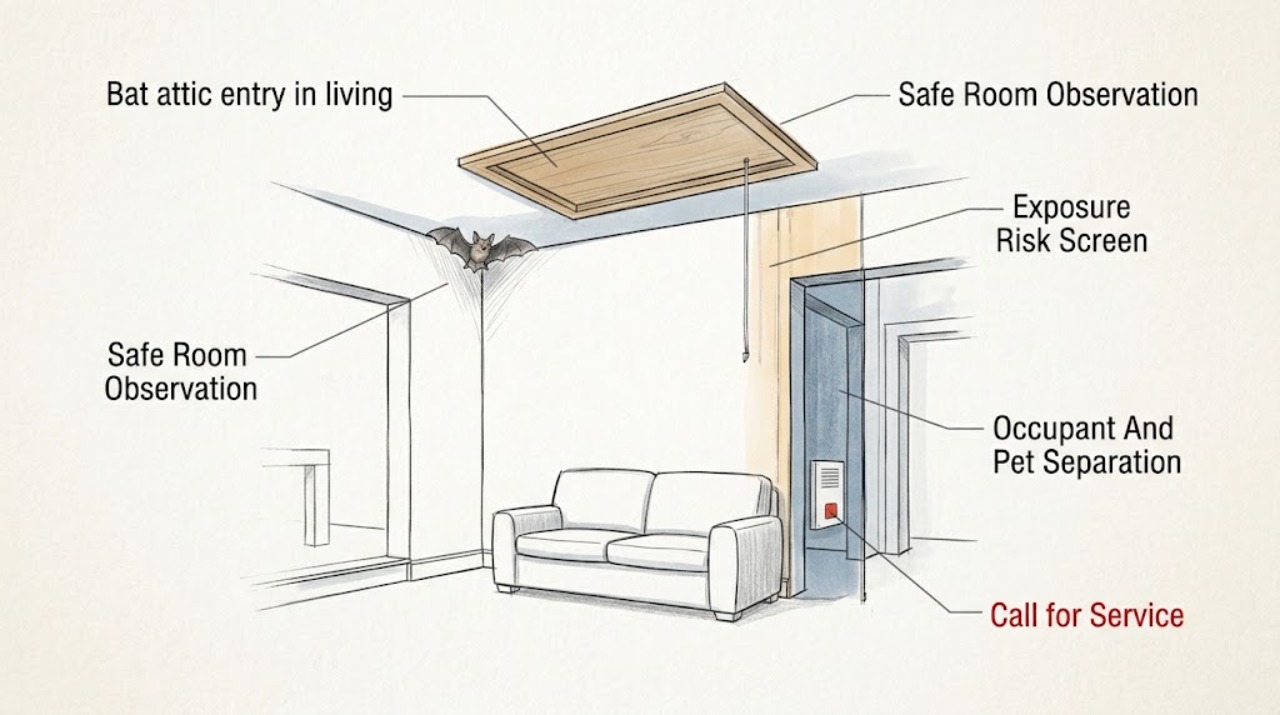
Bat attic entry in living space: What to Check and What to Do Next
Treat a bat that has entered a living space as a safety and public-health issue, not a do-it-yourself capture or sealing job. From a safe position, keep people and pets away, note whether anyone was asleep, unattended, very young, or unable to rule out contact, and contact your local or state health department promptly for rabies-risk guidance.
-
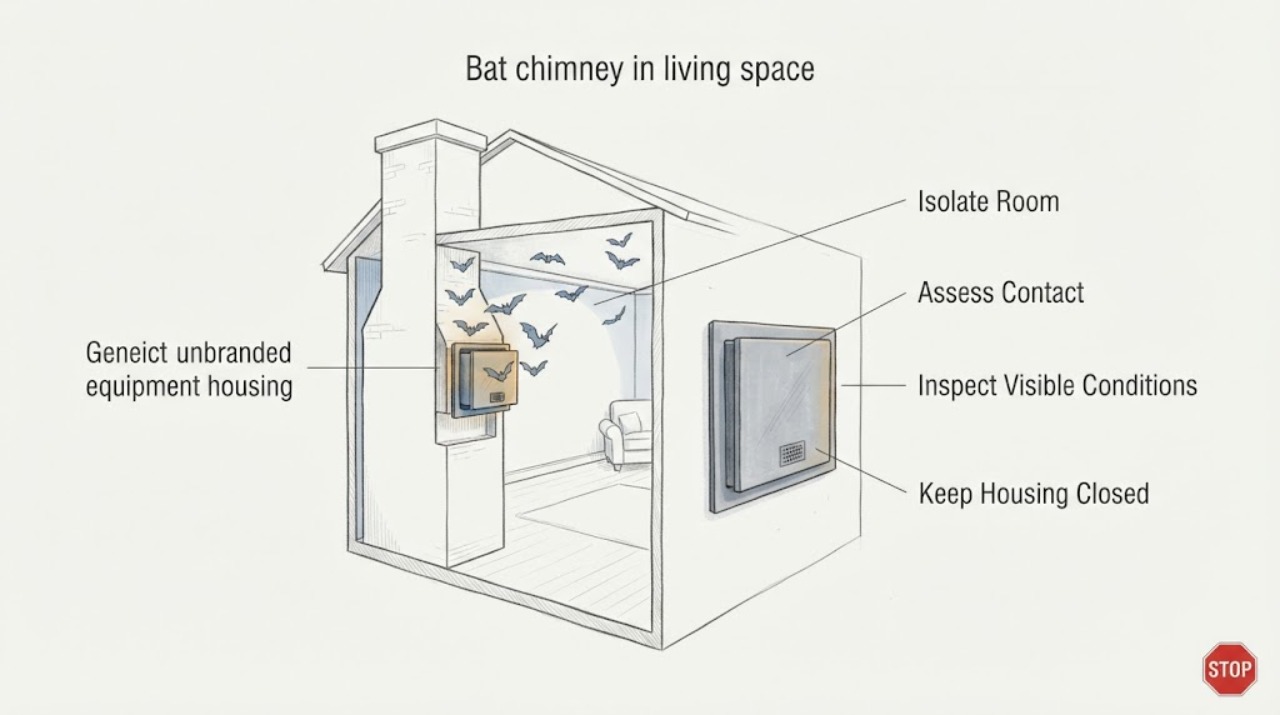
Bat chimney in living space: What to Check and What to Do Next
Treat a bat in a living space or a bat emerging from a chimney as an urgent professional wildlife and public-health matter. Keep people and pets out of the room, close interior doors if you can do so without approaching the bat, stop using the fireplace, and record what you can see from a safe distance.
-
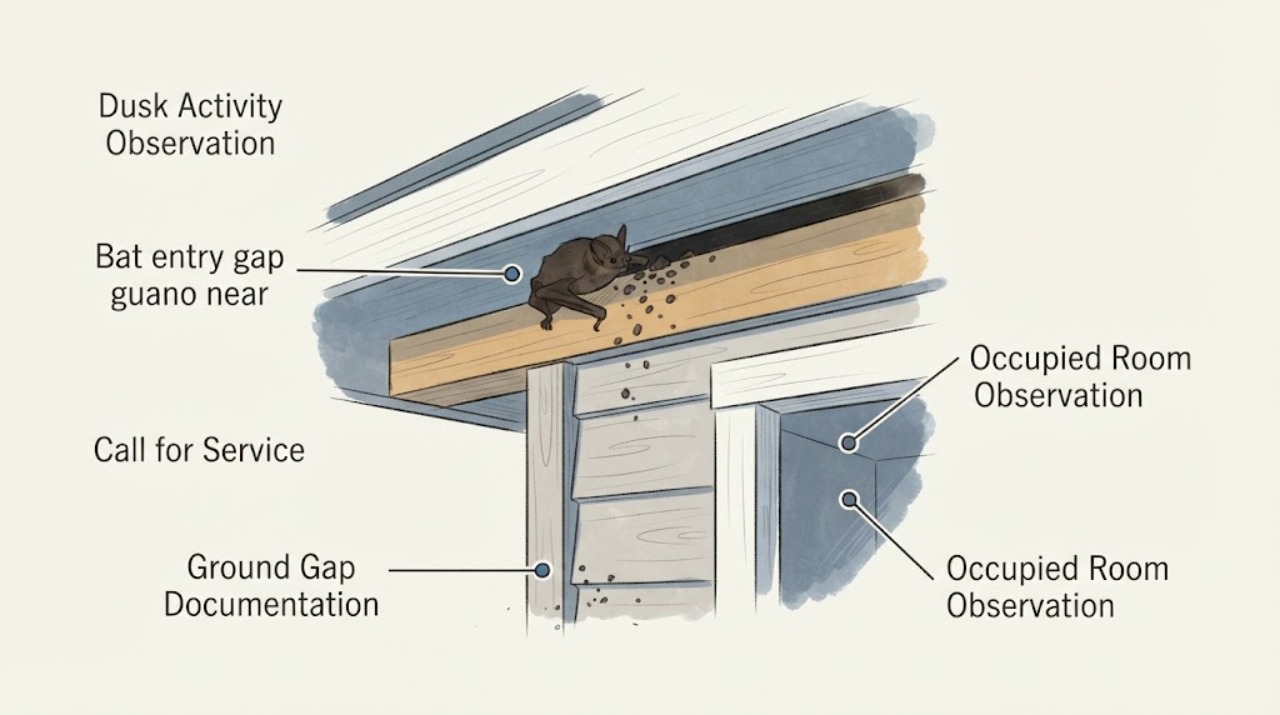
Bat entry gap guano near: What to Check and What to Do Next
Guano near a gap is evidence that bats may be using an entry route, but it does not tell you whether the opening is active, how many bats are inside, or whether young are present. From the ground and ordinary occupied rooms, document the gap, droppings, sounds, and dusk activity without entering an attic, touching guano or bats, climbing, trapping, or sealing the opening.
-
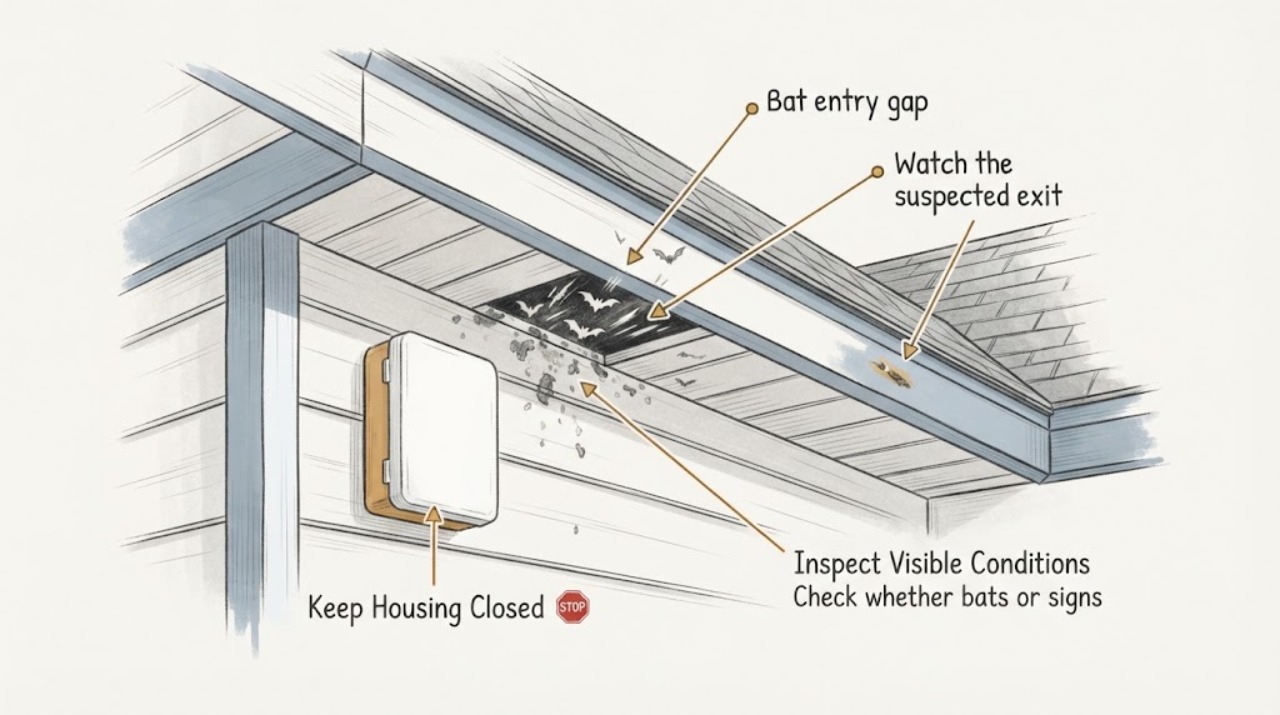
Bat entry gap: What to Check and What to Do Next
Do not seal a suspected bat entry gap while bats may still be inside, and do not handle a bat or climb onto a roof to investigate. From the ground, note where bats appear at dusk, whether the opening leads toward an occupied room, and whether there are droppings, staining, or repeated exits.
-
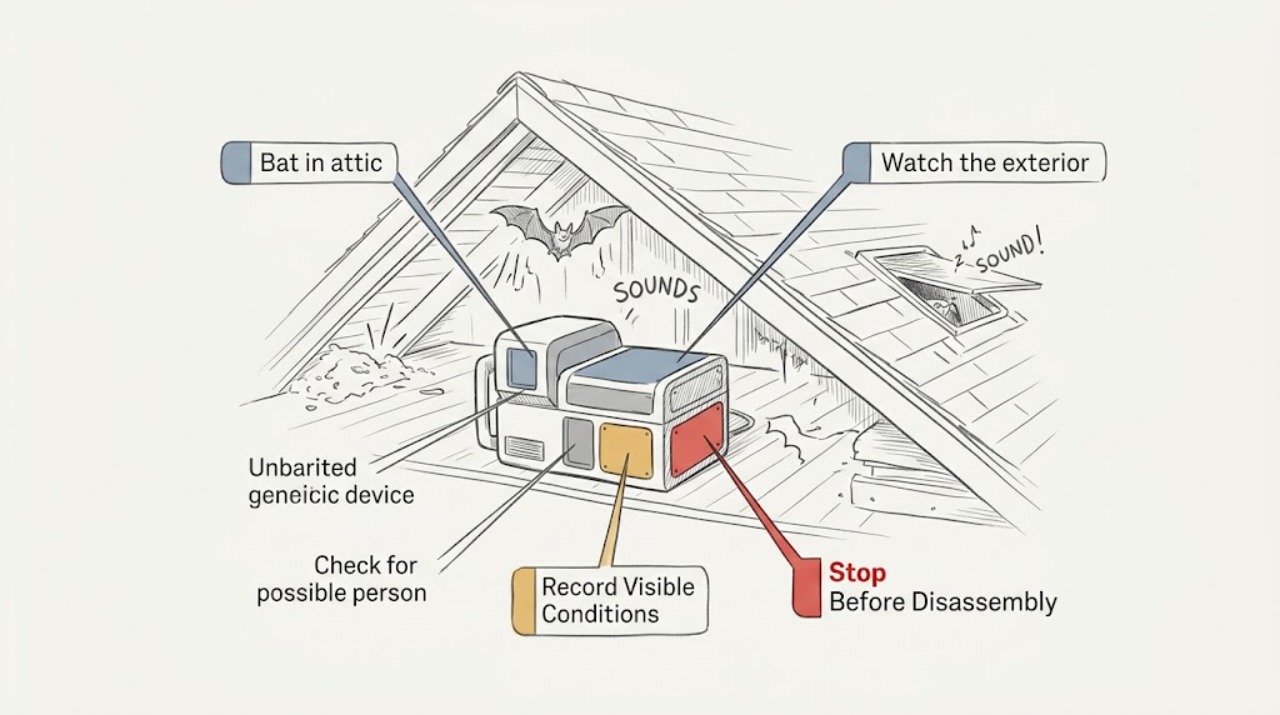
Bat in attic: What to Check and What to Do Next
Do not enter the attic, handle a bat, set a trap, poison wildlife, or close an opening yourself. Keep people and pets away from the attic access and any room where a bat appears.
-
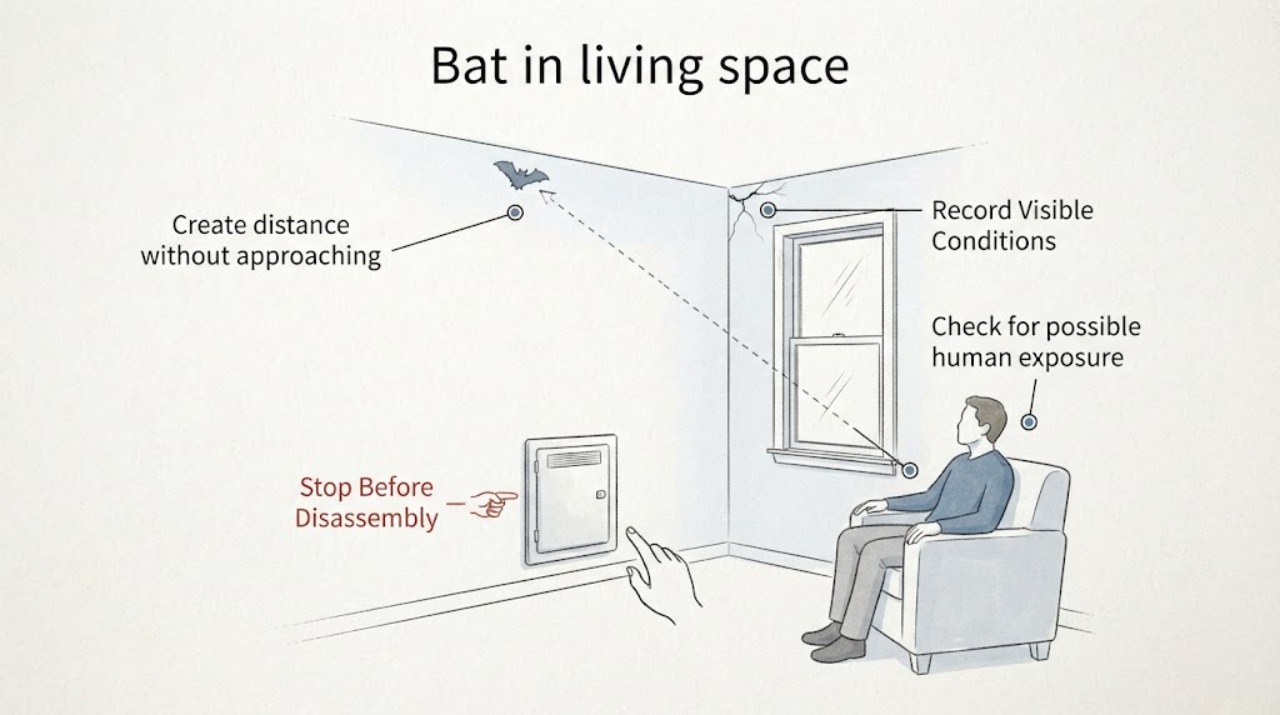
Bat in living space: What to Check and What to Do Next
Keep people and pets away from the bat and do not touch, capture, release, feed, or corner it. From a safe distance, note where it is and whether anyone may have had direct contact, was asleep in the room, or is a child or otherwise unable to report contact.
-
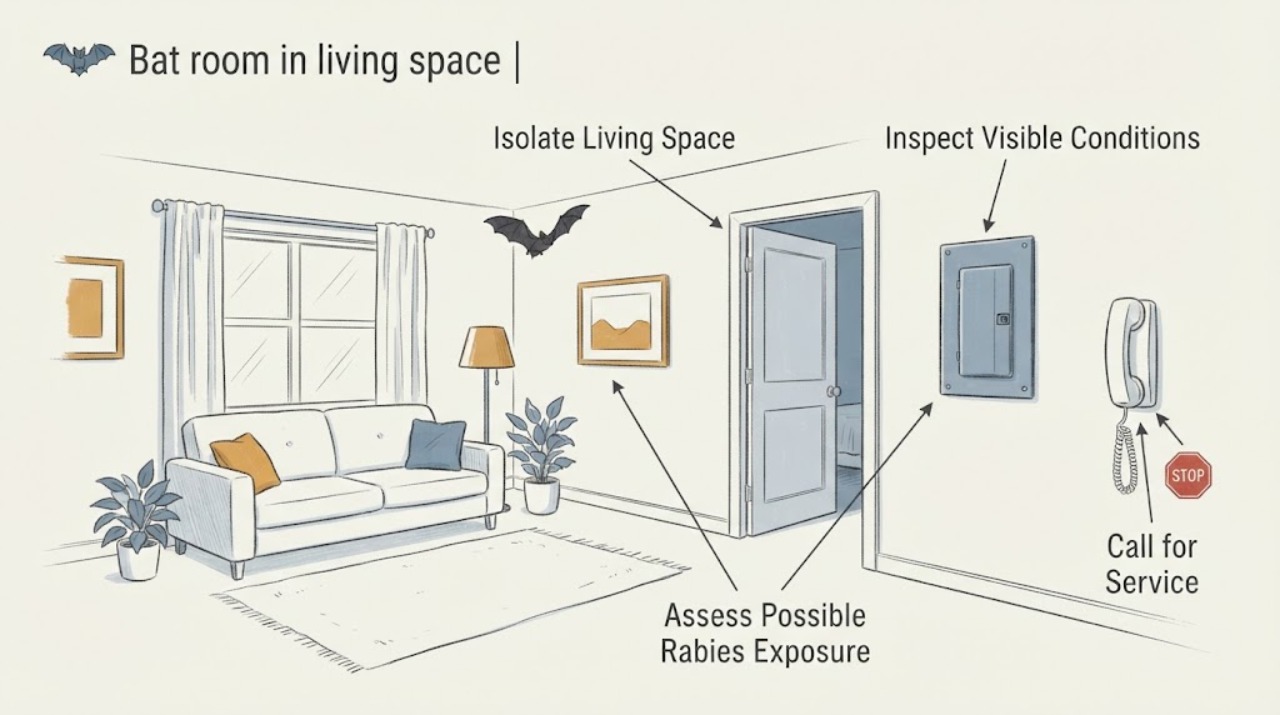
Bat room in living space: What to Check and What to Do Next
If a bat is in a living space, do not touch, chase, poison, trap, or manually capture it. Move people and pets away, close interior doors if that can be done without approaching the bat, and observe from a safe distance.
-
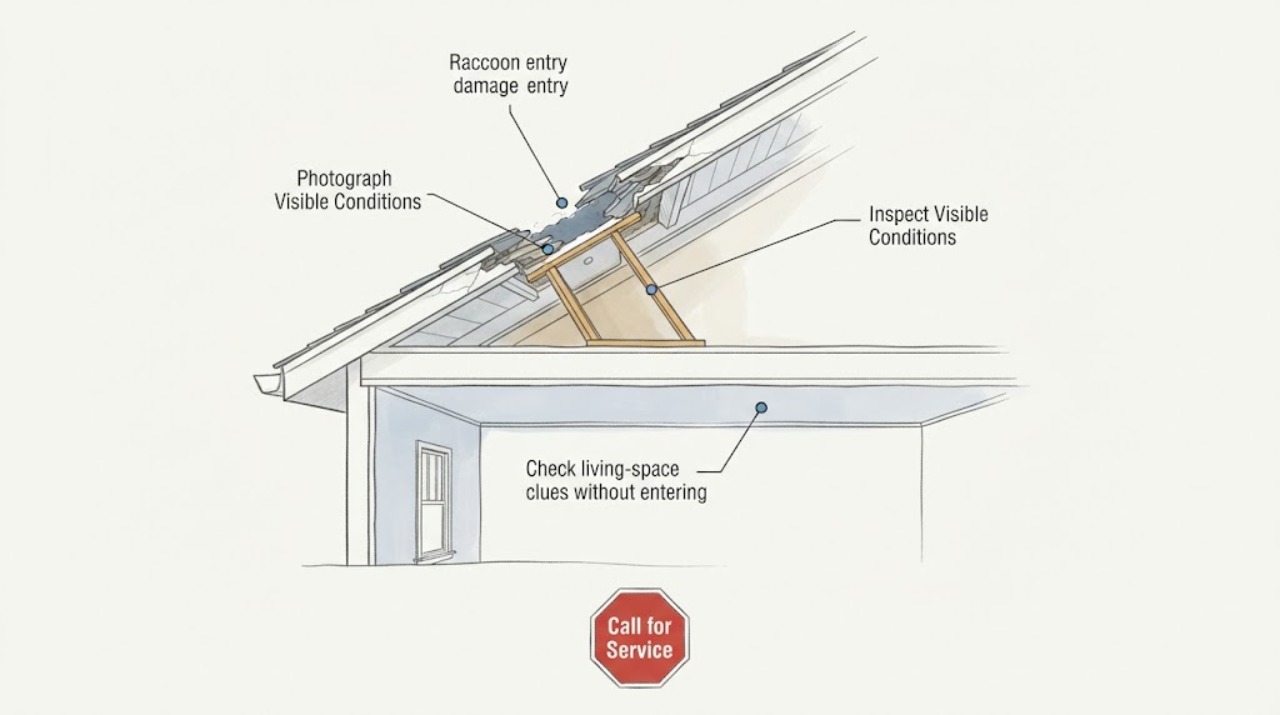
Raccoon entry damage: What to Check and What to Do Next
Keep away from the raccoon, any entry opening, attic access, and droppings. From the ground or an occupied-space boundary, document visible damage, animal activity, sounds, odors, stains, and possible exposure without approaching, climbing, entering, touching, trapping, sealing, or cleaning.
-
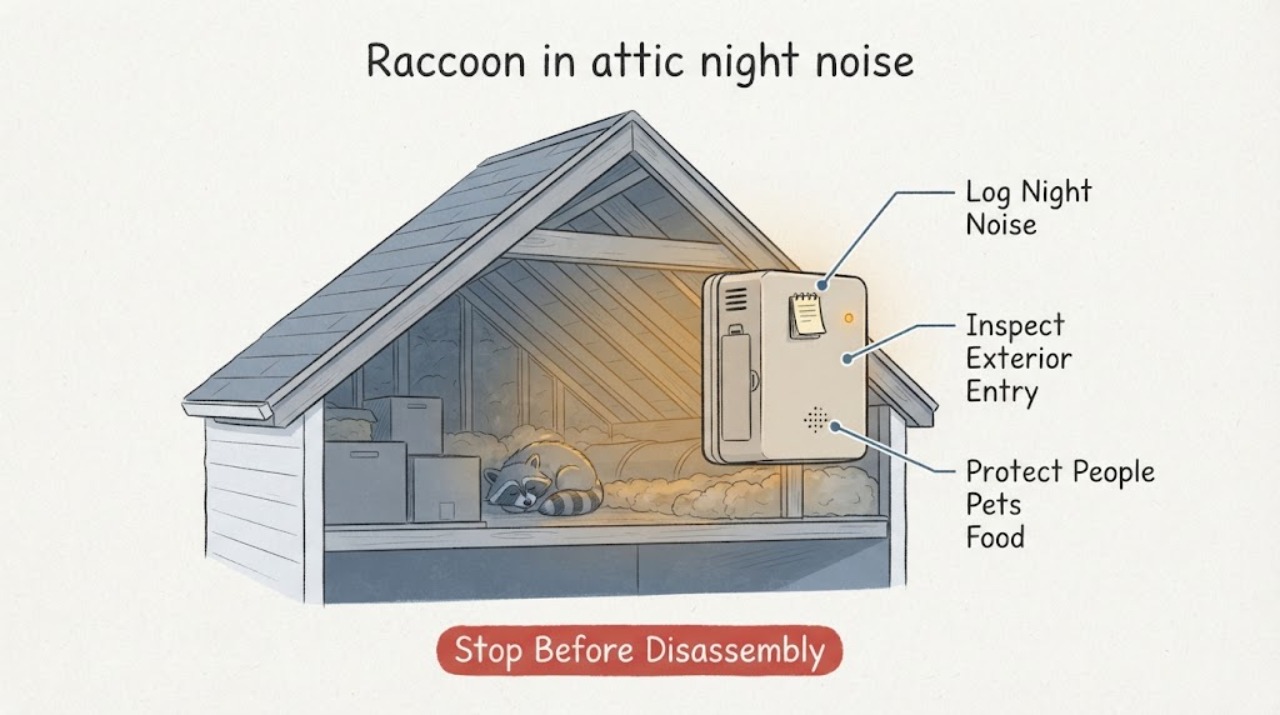
Raccoon in attic night noise: What to Check and What to Do Next
Nighttime thumping, scratching, or movement above a ceiling can be consistent with a raccoon, but sound alone does not identify the animal or show whether young are present. Keep people and pets away from the attic, record the time and location of the noise, and inspect only from the living area or ground for visible entry damage, droppings, or roof and vent problems.
-
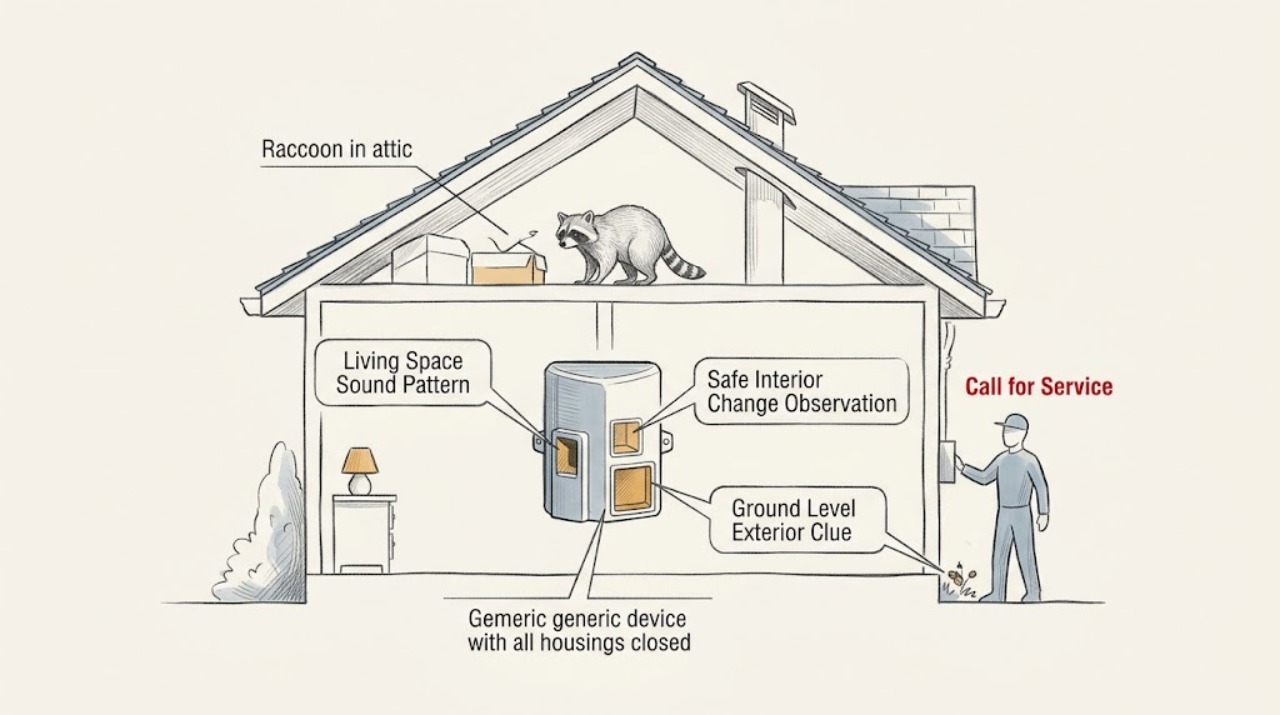
Raccoon in attic: What to Check and What to Do Next
Do not enter the attic, approach or handle the raccoon, set a trap, place bait or poison, clean feces, seal an opening, or attempt an exclusion while an animal may be inside. From the living space and safe ground-level viewpoints, record the time and location of noises, any visible ceiling or wall changes, and any roofline, vent, or opening clues that can be seen without a ladder.
-
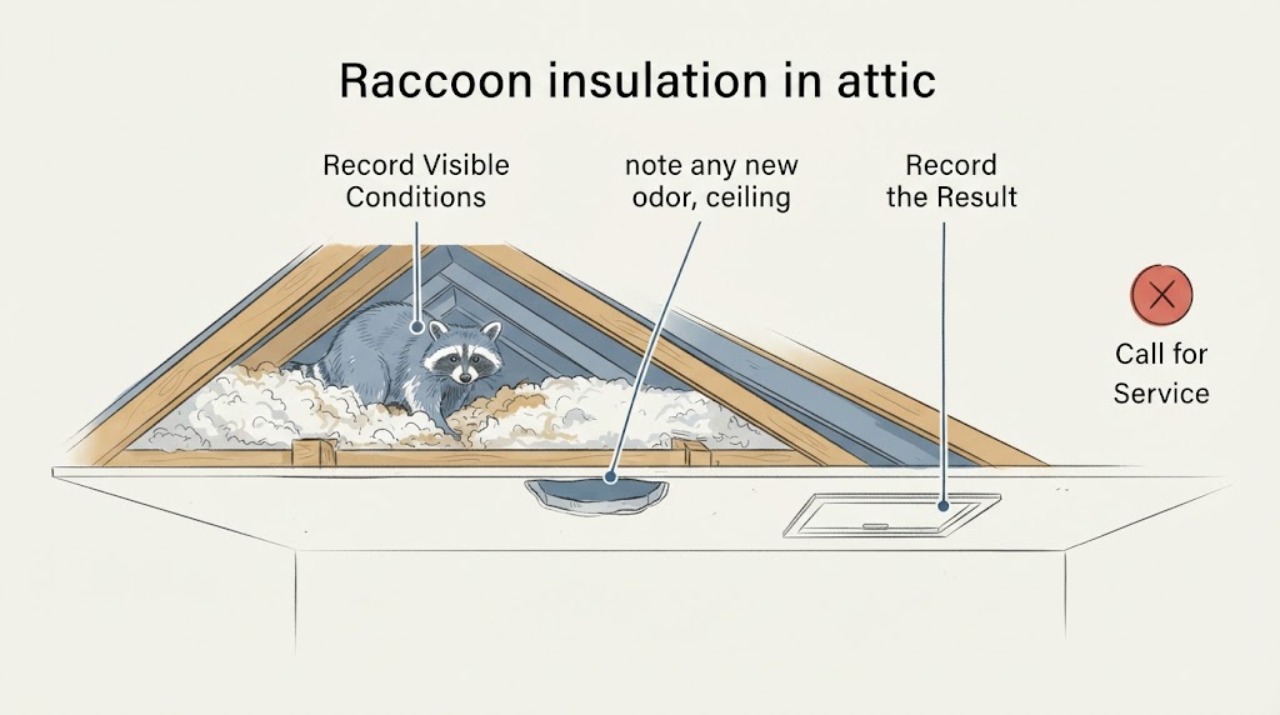
Raccoon insulation in attic: What to Check and What to Do Next
Do not enter the attic, move insulation, approach a raccoon, or block an opening yourself. From a safe living-space or ground position, record when you hear movement, where odor or visible staining appears, and whether you can see damage near a vent, soffit, roof edge, or wiring without climbing.
-
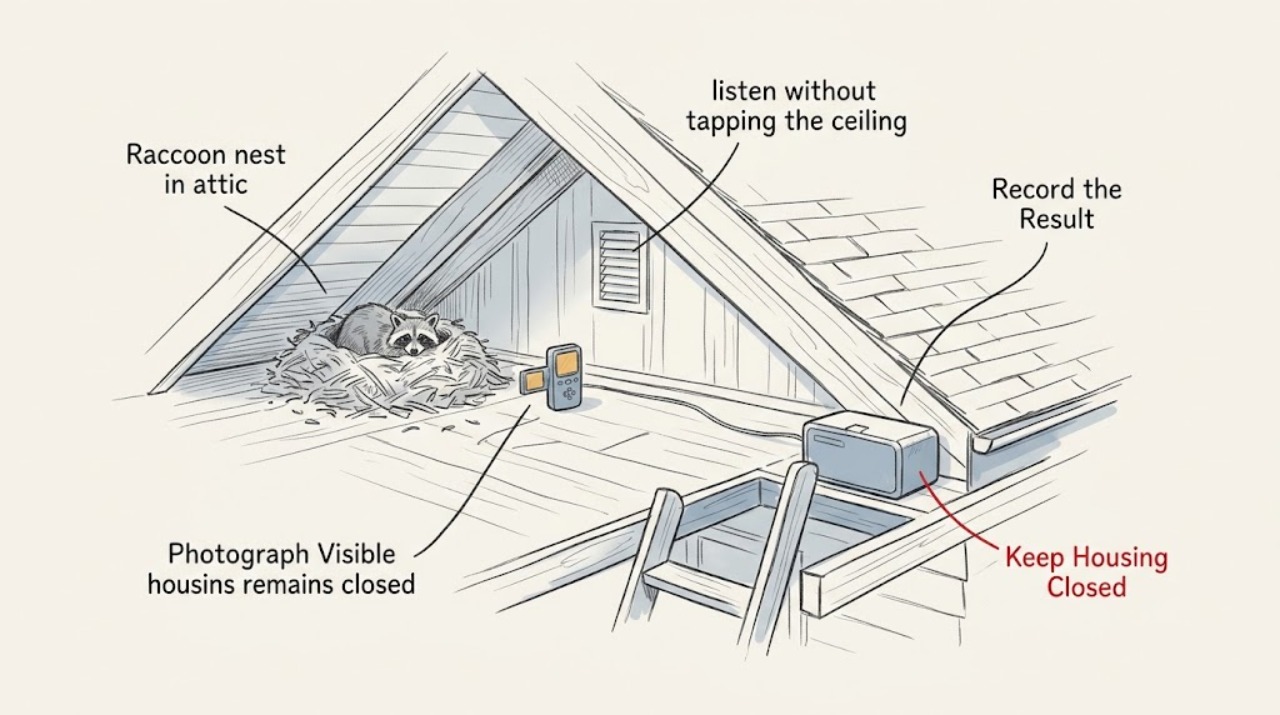
Raccoon nest in attic: What to Check and What to Do Next
Treat a suspected raccoon nest in an attic as an urgent wildlife-service call, not a DIY attic job. From the living space and from ground level only, record when the noise occurs, where signs appear, and whether a possible entry point or food attractant is visible.
-
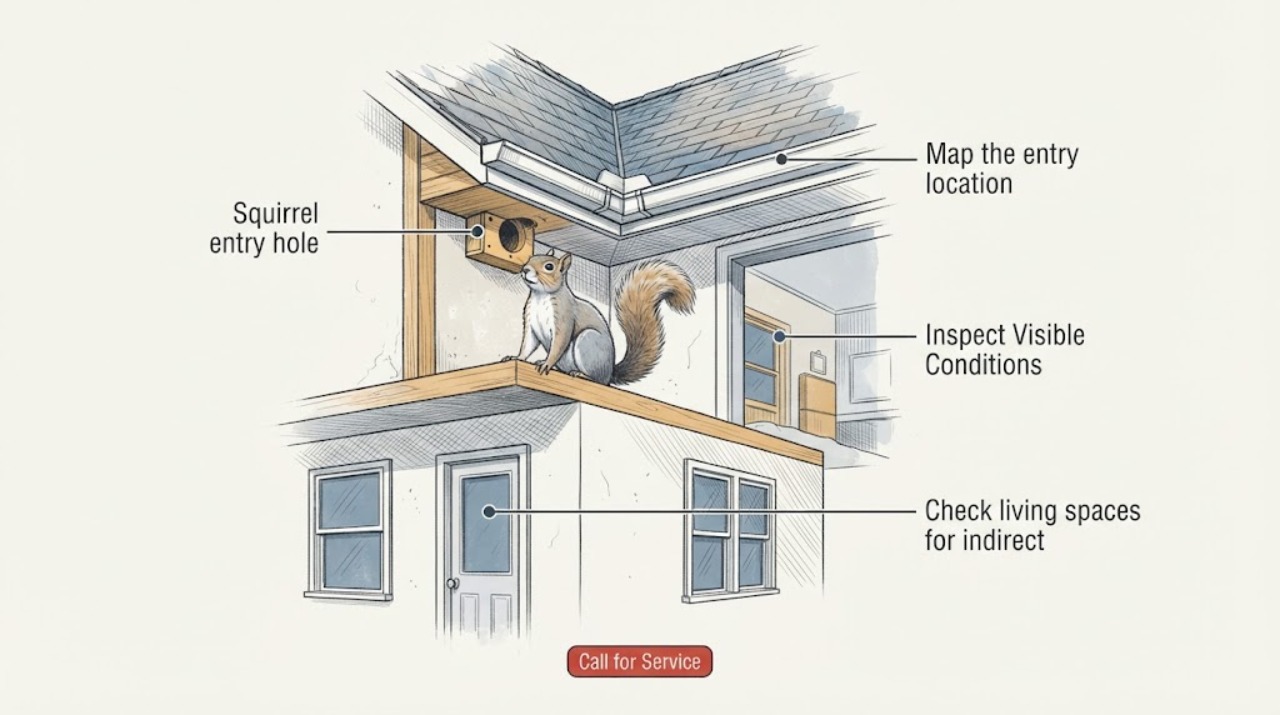
Squirrel entry hole: What to Check and What to Do Next
Treat a suspected squirrel entry hole as an active wildlife-occupancy question, not a simple hole-patching job. From the ground and from safe living spaces, record the opening's location, fresh gnawing or track marks, sounds, activity timing, signs of young, and any visible utility or structural damage.