
On this page
Start here
Quick answer
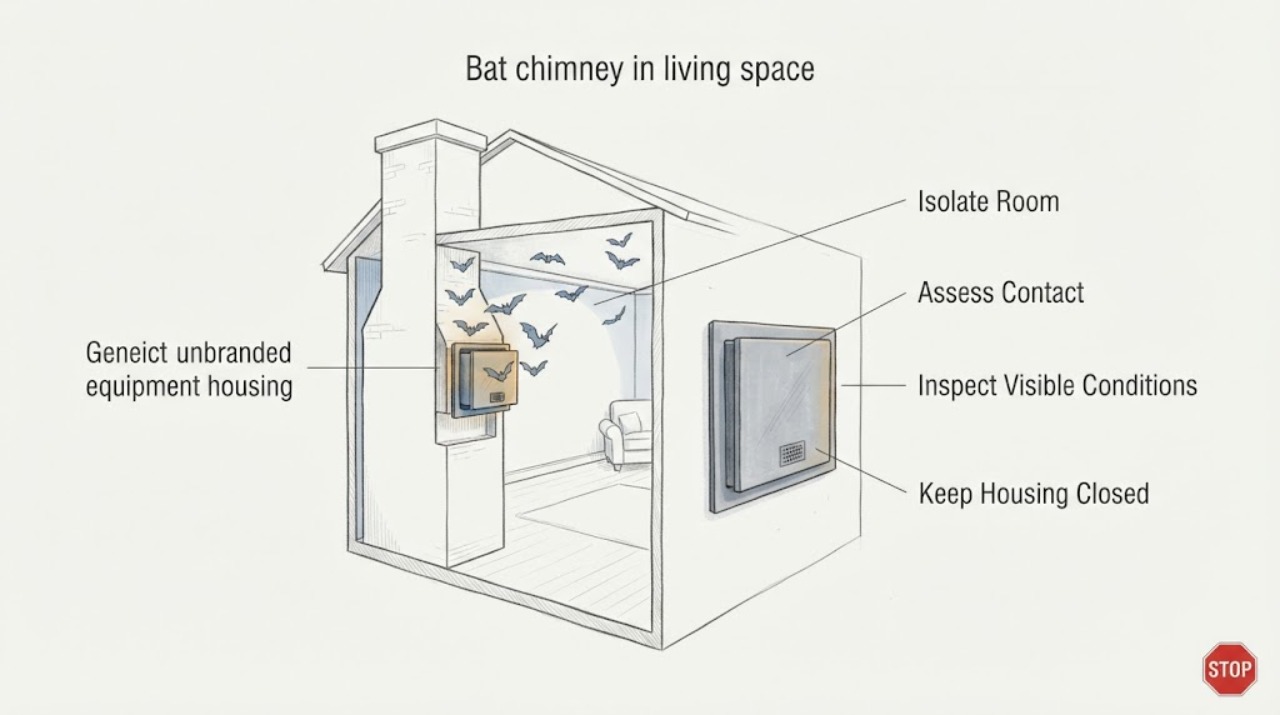
Treat a bat in a living space or a bat emerging from a chimney as an urgent professional wildlife and public-health matter. Keep people and pets out of the room, close interior doors if you can do so without approaching the bat, stop using the fireplace, and record what you can see from a safe distance. Do not touch, catch, poison, chase, smoke out, or seal the chimney or opening. If anyone or any pet may have touched the bat, or if a bat was in a room with a sleeping person or unattended child, contact your health department or a medical professional promptly for exposure guidance. Arrange qualified bat-removal service before anyone enters the chimney, attic or flue.
Before you begin
Safety first
- Do not handle, capture, poison, smoke out, chase, release, seal, or otherwise disturb the bat or roost. Do not enter the chimney, attic or roof, clean droppings, open the fireplace damper, or use the fireplace until qualified professionals clear the situation.
Work through in order
Diagnostic checks
Use only checks that match the exact appliance or system and its official guide.
-
Check 1
From a safe position, note where the bat is and keep people and pets away. If the interior door is nearby and can be closed without passing the bat, close it; otherwise leave the room and keep others out.
Expected result: A bat flying or resting in the living space is different from an unseen sound or a bat that has already left through an opening.
Next step: Stay out of the room, leave the fireplace unused, and contact qualified wildlife removal and local animal-control or health authorities.
Stop if: Stop immediately if the bat approaches, lands on a person or pet, becomes trapped near someone, or cannot be isolated without passing it.
Why this matters
Why: A live bat in the occupied area creates a direct-contact risk and needs wildlife or public-health guidance, not a homeowner capture attempt.
-
Check 2
Without touching the bat or searching the room, ask whether any person or pet may have had contact, whether the bat was present with someone sleeping or unattended, and whether anyone noticed a bite, scratch or saliva contact.
Expected result: Known contact, uncertain contact, or a bat in a room with a sleeping person or unattended child is different from a bat observed behind a closed barrier with no possible contact.
Next step: Report possible exposure promptly to the local health department or medical professional, and contact a veterinarian for a potentially exposed pet. Do not release or handle the bat while awaiting guidance.
Stop if: Stop all room investigation if contact is possible, a wound is present, or saliva may have reached eyes, mouth or broken skin; seek urgent exposure guidance.
Why this matters
Why: Bat bites can be difficult to notice, so uncertainty should be handled by a health department or medical professional rather than dismissed from appearance alone.
-
Check 3
From the living-space side and without opening the fireplace, look only at visible signs around the hearth or chimney face: droppings, staining, an unusual odor, repeated movement, soot displacement or a gap visible from normal standing height.
Expected result: A clean visible surround with a single sighting differs from droppings, odor, repeated bat activity, or material that appears to extend into a void.
Next step: Photograph the area from a safe distance and tell the wildlife professional exactly what was visible. Leave all covers, dampers, screens and masonry undisturbed.
Stop if: Stop if droppings are present, dust is disturbed, the chimney face is damaged, or anyone would need to enter the flue, attic or roof to see more.
Why this matters
Why: These signs can help a professional plan an inspection, but they cannot confirm the number of bats, a roost, contamination or a safe entry route.
-
Check 4
Record the time, room, direction of movement and whether the bat was seen near the chimney, while observing only from a protected location. Do not follow it, shine lights at it, block its path or attempt to make it leave.
Expected result: A repeated appearance at the same chimney area is different from an isolated sighting elsewhere in the home.
Next step: Give the activity record and any photographs to the wildlife-removal provider and public-health contact.
Stop if: Stop observing if the bat enters an occupied room, approaches a person or pet, or cannot be watched without moving closer.
Why this matters
Why: A pattern can indicate a connected entry route or roost, but only a qualified professional should determine the route and exclusion timing.
-
Check 5
Confirm from a safe position that no one is using the fireplace or chimney, and note whether there is smoke, heat, an obstruction alarm or a damaged screen. Do not light a fire, open the damper, test the flue, or place anything in the chimney.
Expected result: A cold, unused fireplace with no active smoke is different from heat, smoke, a blocked flue or any sign of combustion.
Next step: Keep the fireplace out of service and tell both the wildlife professional and a qualified chimney or fireplace professional what was observed.
Stop if: Leave the building and contact emergency services if smoke, fire, a carbon-monoxide alarm or another combustion emergency is present.
Why this matters
Why: Heat, smoke or a blocked flue can add fire and carbon-monoxide hazards; a bat issue also means the chimney needs professional inspection before use.
Use your observations
Decision map
Find the observation that best matches what you see, then follow the next safe action.
-
PATH 01Next step
What you see
If a bat is currently in the living space or cannot be isolated without approaching it
Do this next
Leave the room, keep people and pets away, and contact animal control, public health and a qualified wildlife-removal professional. Do not catch, touch, chase or poison the bat.
-
PATH 02Next step
What you see
If anyone or any pet may have touched the bat, or if it was in a room with a sleeping person or unattended child
Do this next
Contact the local health department or medical professional promptly for a rabies exposure assessment, and contact a veterinarian for a pet. Do not assume no exposure because no mark is visible.
-
PATH 03Next step
What you see
If bat droppings, odor, dust or a suspected roost is visible around the chimney
Do this next
Restrict the area and do not sweep, vacuum, spray, scrape or disturb the material. Request professional wildlife removal and hazardous-cleanup guidance.
-
PATH 04Next step
What you see
If there is smoke, heat, a blocked-flue sign, a carbon-monoxide alarm or fireplace damage
Do this next
Leave the building if needed and contact emergency services for the immediate hazard. Keep the fireplace out of service until a qualified chimney professional clears it after wildlife assessment.
-
PATH 05Next step
What you see
If the bat is no longer visible but activity repeatedly returns near the chimney
Do this next
Keep the chimney unused and arrange professional wildlife inspection and exclusion planning. Do not seal a suspected opening while bats may still be inside.
Helpful context
Understand the symptom
Why the living-space location changes the response
A bat seen beside a fireplace, hearth or chimney opening may have entered through a flue, damper gap, masonry joint or another connected void. The visible animal does not reveal whether more bats, young, droppings or a blocked flue are present. Because handling can create rabies exposure and disturbing droppings can create an inhalation hazard, the useful homeowner contribution is isolation, documentation and prompt escalation.
Protect the room while help is arranged
Keep the door closed when this can be done without approaching the bat, move people and pets away, and keep the fireplace completely unused. Do not sweep droppings, open the damper, remove a screen, inspect the chimney from the roof, or attempt an exclusion repair. A wildlife professional and, when needed, the local public-health authority can coordinate the next safe step.
When checks do not resolve it
Need a professional?
Call qualified wildlife-removal service urgently for any bat in a living space, repeated chimney activity, suspected roost, or a bat that cannot be safely isolated. Contact local public health or medical professionals promptly after possible contact, and use emergency response for fire, smoke or carbon-monoxide hazards.
Safety scope: Do not handle, capture, poison, smoke out, chase, release, seal, or otherwise disturb the bat or roost. Do not enter the chimney, attic or roof, clean droppings, open the fireplace damper, or use the fireplace until qualified professionals clear the situation.
Have this ready
- Provide the room and chimney location, photographs from a safe distance, activity timing and direction, whether anyone or any pet may have had contact, visible droppings or odor, fireplace use history, and any smoke or alarm event.
Common questions
FAQ
Can I catch the bat with a box or gloves?
Do not attempt capture in this living-space scenario. Keep away, isolate the room if safe, and ask animal control, public health or qualified wildlife professionals for the correct response.
Should I light the fireplace to make the bat leave?
No. Do not use the fireplace or manipulate the damper. Heat, smoke and an unknown flue condition can create a fire or carbon-monoxide hazard and can drive the animal into another part of the home.
What if I only saw droppings and no bat?
Treat the material as potentially contaminated. Keep people and pets away, do not sweep or vacuum it, and arrange professional wildlife and cleanup guidance.
Does a possible bat bite require medical advice?
Yes. Contact a health department or medical professional promptly after direct or uncertain contact, because bat bites can be difficult to notice. Contact a veterinarian if a pet may have been exposed.
Read the exact guide
Official sources
- Reducing Risk for HistoplasmosisCenters for Disease Control and Prevention · Suspected bat droppings or contaminated material around a chimney or living space
- Clinical Overview of RabiesCenters for Disease Control and Prevention · Possible contact with a bat, including uncertain bites or scratches
- Preventing Rabies from BatsCenters for Disease Control and Prevention · Bat observed inside a home or near a chimney when species, location and exposure history are not yet known
Community feedback
Share a repair observation
Share a plain-text repair observation. Accepted observations are published automatically; this page may take a moment to update.