
On this page
Start here
Quick answer
Do not enter the attic, move insulation, approach a raccoon, or block an opening yourself. From a safe living-space or ground position, record when you hear movement, where odor or visible staining appears, and whether you can see damage near a vent, soffit, roof edge, or wiring without climbing. Raccoons may damage insulation and can leave contaminated feces, and a mother or young may be present. Keep children and pets away, avoid disturbing the material, and arrange an urgent inspection by a qualified wildlife-removal professional plus appropriate contamination cleanup. If there is smoke, sparking, exposed damaged wiring, structural instability, or a raccoon inside the living area, leave the affected area and use the appropriate emergency service.
Before you begin
Safety first
- Do not enter the attic, handle or approach the raccoon, move insulation or feces, use poison or a trap, block an entry, or perform exclusion or cleanup yourself. Keep children and pets away and leave professionals to determine occupancy, young, removal, exclusion, contamination handling, and insulation disposition.
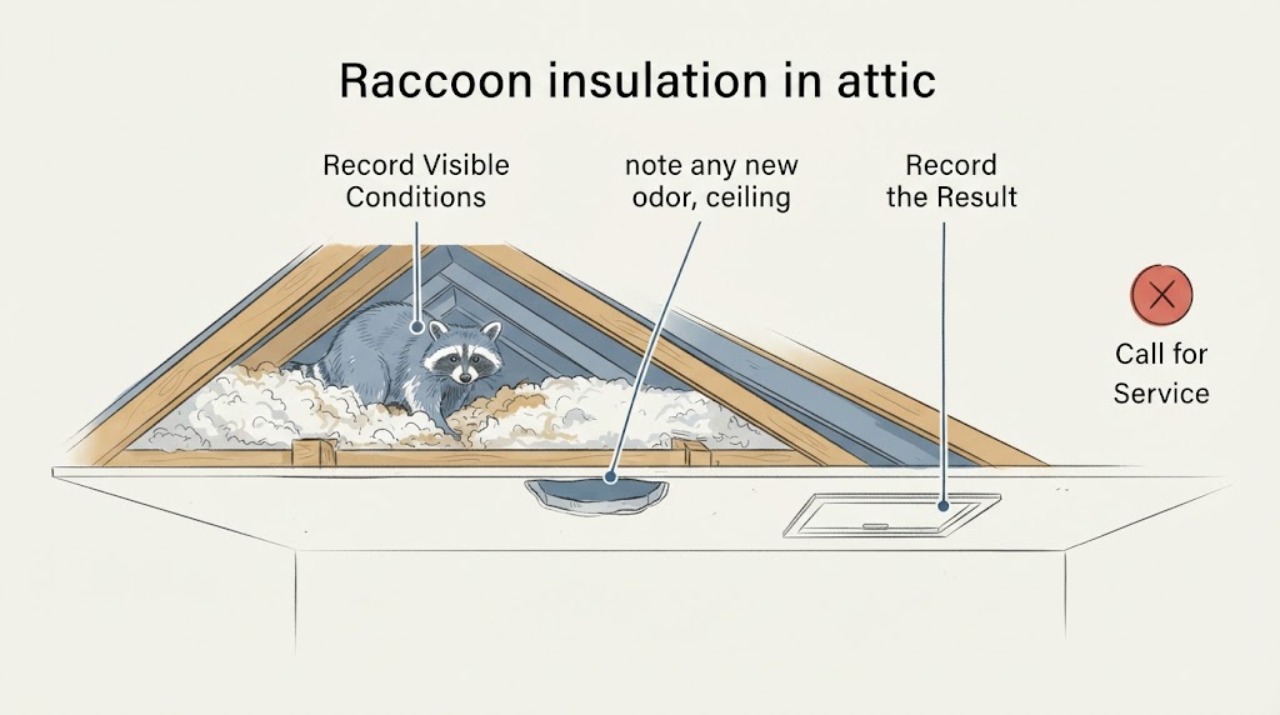
Work through in order
Diagnostic checks
Use only checks that match the exact appliance or system and its official guide.
-
Check 1
From a safe position in the living area, record the time, duration, and location of scratching, heavy movement, chattering, or cries; do not open the attic access or follow the sound into the attic.
Expected result: The sound may be nocturnal and intermittent, concentrated near one ceiling or wall, or accompanied by signs of more than one animal or young.
Next step: Keep people and pets away from the access area and give the log to a qualified wildlife-removal professional.
Stop if: Stop observing and leave the area if an animal enters the living space, becomes aggressive, or anyone is at risk of contact.
Why this matters
Why: A repeatable time and location supports a wildlife assessment, while cries or multiple movement patterns raise concern for a den or young that must not be separated from an adult.
-
Check 2
From the floor below or another safe room-level position, note any new odor, ceiling or wall staining, falling insulation, or visible debris; do not touch, sweep, vacuum, sample, or move the material.
Expected result: The sign may be a localized odor or stain, a broader musty or fecal odor, loose insulation at an opening, or no visible change despite continued noise.
Next step: Isolate the area, keep children and pets away, photograph from a safe distance if possible, and request wildlife and contamination professionals.
Stop if: Stop immediately for visible feces, widespread contamination, respiratory irritation, or material falling from above; do not attempt cleanup.
Why this matters
Why: Odor, droppings, and disturbed insulation can indicate animal occupancy or contamination, but they do not establish that the space is safe to enter or that all material needs the same treatment.
-
Check 3
From ground level or a window, look only at safely visible roof-edge, soffit, vent, siding, or downspout areas and record apparent damage without using a ladder, roof access, or reaching.
Expected result: A vent screen, soffit, roof edge, or siding may appear torn or displaced, or no entry point may be visible from the ground.
Next step: Provide dated, distance photographs and the location to the professional; do not patch, seal, or block the suspected opening.
Stop if: Stop if inspection would require climbing, roof access, handling an animal, or approaching unstable material or a utility line.
Why this matters
Why: A visible opening or damage pattern supports a wildlife entry assessment, while no visible opening does not rule out another route or an animal still inside.
-
Check 4
Without touching fixtures or opening a panel, look from a safe position for flickering lights, an odor of burning, smoke, sparks, exposed wiring, or a ceiling that is sagging or shedding material near the suspected attic area.
Expected result: There may be no visible hazard, or there may be a sign of electrical, fire, or structural damage associated with the animal activity.
Next step: Leave the affected area and contact the appropriate emergency service or qualified electrician as applicable; separately tell wildlife professionals about the animal evidence.
Stop if: Stop all observation and leave immediately for smoke, fire, sparking, exposed energized wiring, collapse risk, or an animal in the living space.
Why this matters
Why: No visible hazard only supports staying clear while arranging inspection. Smoke, sparks, damaged wiring, active water, or instability can make the area an emergency rather than a routine wildlife visit.
-
Check 5
Before anyone considers exclusion or entry repair, confirm through the wildlife professional that the animal and any young are out and that contaminated insulation and droppings have been assessed; do not seal an opening based only on silence.
Expected result: The professional may find an active animal, dependent young, an empty but contaminated space, or an uncertain entry status.
Next step: Follow the professional's written plan for removal, exclusion, cleanup, and insulation assessment; keep the area isolated until then.
Stop if: Stop and do not block or enter the space if occupancy, young, contamination, or structural and electrical safety has not been resolved.
Why this matters
Why: An active animal or young requires humane professional handling. An empty space can still require contamination cleanup and an inspection for damaged insulation, ducts, vents, and wiring before repair.
Use your observations
Decision map
Find the observation that best matches what you see, then follow the next safe action.
-
PATH 01Next step
What you see
You hear repeated attic activity, especially cries or movement suggesting more than one animal.
Do this next
Treat the space as potentially occupied by a den or young, keep everyone away, and request qualified wildlife removal.
-
PATH 02Next step
What you see
You see droppings, strong odor, disturbed insulation, or contamination signs from a safe position.
Do this next
Do not touch or clean the area; isolate it and request wildlife assessment plus specialized contamination cleanup.
-
PATH 03Next step
What you see
A vent, soffit, roof edge, or siding appears damaged from ground level.
Do this next
Photograph the location from a safe distance and leave entry repair and exclusion sequencing to the professional.
-
PATH 04Next step
What you see
There is smoke, sparking, exposed damaged wiring, structural instability, or an animal in the living area.
Do this next
Leave the affected area and use the appropriate emergency service; do not continue wildlife observations.
Helpful context
Understand the symptom
Treat attic insulation as a protected area
Raccoon activity can tear or compress insulation, leave urine or feces, and damage vents, ceilings, or wiring. Because the attic is a confined space and a female may be protecting young, this page is an observation and handoff guide. Keep the attic hatch closed, keep people and pets away from the area, and do not disturb insulation or contamination.
Use timing and location to make the service call useful
From the living area, note the time and location of scratching, thumps, movement, or cries. From the ground, photograph only safely visible roof-edge, soffit, vent, or siding damage. These observations help a wildlife professional plan a species check, young-animal assessment, humane removal, exclusion, and a separate evaluation of damaged insulation.
Contamination changes the handoff
A dark, tubular dropping or strong pungent odor may be a raccoon sign, but do not touch, sweep, vacuum, sample, or move it. Raccoon feces and contaminated material can carry health risks. Keep the area isolated and tell the wildlife-removal and cleanup professionals exactly where the sign is located.
Why sealing first can make things worse
An apparent opening does not prove that the animal has left or that no young are inside. Blocking it prematurely can trap an animal or separate a mother from young. Leave exclusion, entry repair, and insulation removal or replacement to the qualified professionals after they establish that the space is clear and safe.
When checks do not resolve it
Need a professional?
Arrange urgent qualified wildlife-removal service when a raccoon may be in attic insulation, when activity repeats, when young may be present, or when an entry or insulation damage is visible. Arrange contamination cleanup for feces, urine, or materially affected insulation. Use emergency services for fire, smoke, sparks, exposed electrical damage, collapse risk, or an animal inside the living area.
Safety scope: Do not enter the attic, handle or approach the raccoon, move insulation or feces, use poison or a trap, block an entry, or perform exclusion or cleanup yourself. Keep children and pets away and leave professionals to determine occupancy, young, removal, exclusion, contamination handling, and insulation disposition.
Have this ready
- Provide the species suspected, sound and odor timing, room and ceiling locations, safe ground-level photos of roof-edge or vent damage, visible staining or contamination, whether anyone or a pet had contact, and any electrical or structural warning signs.
Common questions
FAQ
Can I go into the attic to see how much insulation the raccoon disturbed?
No. The attic may contain an animal, dependent young, contaminated feces, unstable surfaces, or damaged wiring. Record what is visible from a safe position and arrange a qualified wildlife and contamination assessment.
Should I seal the hole as soon as the raccoon gets quiet?
No. Silence does not confirm that the animal and young are out. Premature exclusion can trap an animal or separate a mother from young. A qualified professional should verify occupancy and sequence removal, cleanup, and entry repair.
Is damaged attic insulation automatically safe to keep?
Do not make that decision by touching or moving it. The extent of animal damage and contamination needs a professional assessment; the wildlife and cleanup plan should state whether affected material can remain or requires specialized handling.
What should I do if a raccoon enters the living space?
Keep people and pets away, do not corner or handle the animal, close off access to occupied rooms only if you can do so without approaching it, and contact appropriate qualified wildlife or emergency help. Leave the area if there is immediate danger or contact exposure.
Read the exact guide
Official sources
- Preventing Raccoon RoundwormCenters for Disease Control and Prevention · Supports avoiding raccoon and feces contact, keeping people away from contaminated areas, and seeking assistance; it does not authorize attic entry or wildlife handling.
- 11 tips and tricks to handle nuisance wildlife responsiblyIowa Department of Natural Resources · Supports professional removal and distance from protective raccoons or nests; local rules and professional availability vary.
- Evicting Animals From BuildingsMaine Department of Inland Fisheries and Wildlife · Supports safe observation and professional escalation; this article intentionally excludes the page's attic-entry and eviction instructions because the task scope is observation-only.
Community feedback
Share a repair observation
Share a plain-text repair observation. Accepted observations are published automatically; this page may take a moment to update.