
On this page
Start here
Quick answer
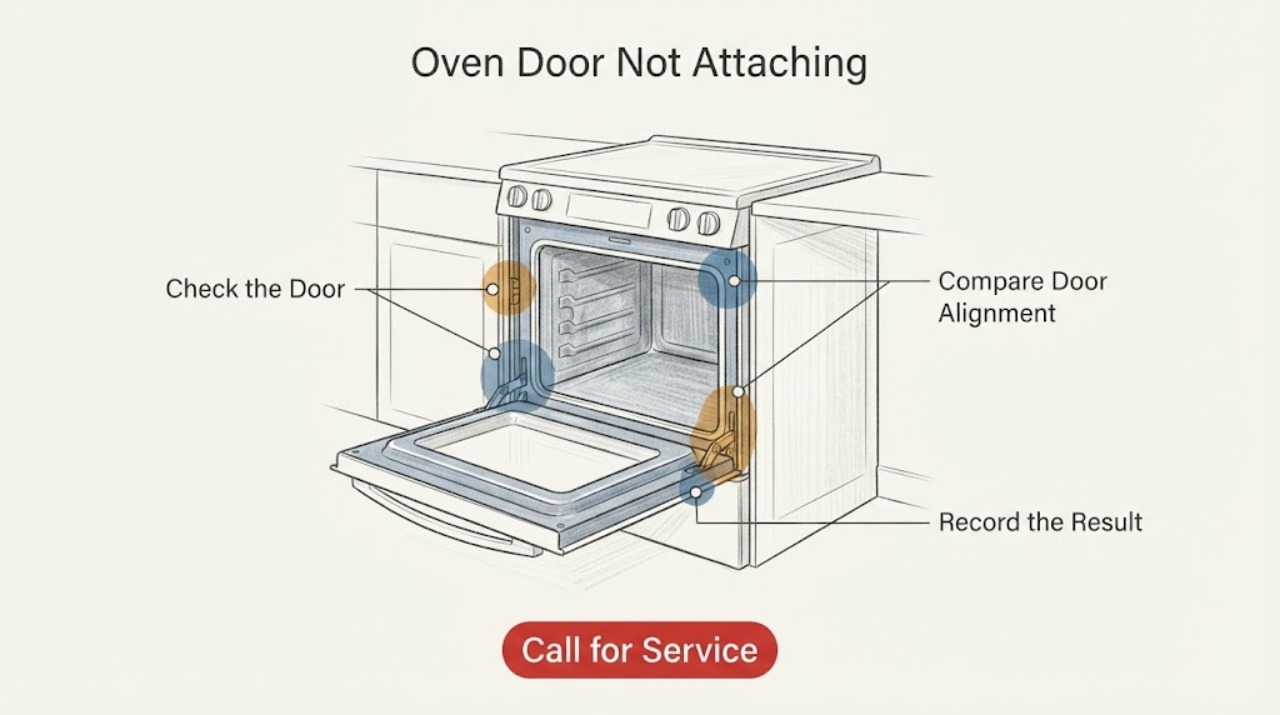
Turn the Amana oven off and let it cool before handling the heavy door. Use two hands on the side edges, never the handle, and identify whether the door has hinge latches. For a latch-style door, align both hinges with the cavity slots at the angle specified by Amana, lower the door until it is fully open, then move both hinge latches to their locked position. For a door without hinge latches, align the door slots with the hinge arms, slide the door down until seated and press the top corners down evenly. A click, even gap and door that is not crooked indicate seating; a gap, low side, loose door or latch that will not lock means stop and repeat the model-specific procedure or arrange service. Do not force a hinge, work around a spring-loaded hinge, lift by the handle or use the oven with a loose or damaged door.
Work through in order
Diagnostic checks
Use only checks that match the exact appliance or system and its official guide.
-
Check 1
Turn the Amana oven off, let it cool fully, prepare a padded stable surface, and hold the door by both side edges with two hands; never lift it by the handle or place fingers near a spring-loaded hinge.
Expected result: The door is cool and stable to handle, or the glass, frame, hinge or latch is damaged or the door cannot be controlled safely.
Next step: If damage or unsafe movement is present, stop and arrange qualified appliance service. Otherwise continue only with the hinge style identified in the exact manual.
Why this matters
Why: A heavy or damaged door can fall, pinch or break; safe handling is required before any seating check.
-
Check 2
Look at both door corners and the hinge arms to determine whether the Amana door has hinge locks or latches, or uses slots that slide directly onto hinge arms without latches.
Expected result: A latch-style door is present, a no-latch style is present, or the hinge arrangement cannot be identified.
Next step: Use the corresponding model manual and door procedure. If the style cannot be identified, do not force the door and obtain model-specific support.
Why this matters
Why: Amana provides different replacement sequences for the two styles; mixing them can leave the door unseated or unsafe.
-
Check 3
For a latch-style door, hold both sides, align both hinge arms with the cavity slots at the manual's insertion angle, lower the door to fully open, and move both hinge latches to the locked position without using a tool.
Expected result: The door drops into both slots, opens fully and both latches lock, or one side remains high, the door will not open fully or a latch will not lock.
Next step: For an incomplete seat, stop and repeat the removal/replacement sequence only from the matching manual. If the latch still will not lock, leave the oven unused and arrange service.
Why this matters
Why: A fully seated hinge should produce an even door gap; a low side, incomplete opening or latch that will not lock indicates improper seating or possible damage.
-
Check 4
For a door without hinge latches, align the door slots with both hinge arms, slide the door down until fully seated, and press down evenly on the top corners while supporting both sides.
Expected result: The door sits evenly and is not crooked, or one side remains raised or the door can be lifted away without the expected seating.
Next step: Do not operate the oven. Repeat the exact model procedure once the door is supported safely, or arrange service if it will not seat.
Why this matters
Why: The door is not fully engaged when it is crooked, loose or uneven; pushing harder can damage the hinge or glass.
-
Check 5
With the oven cool, inspect the accessible latch area, rack position, bakeware, shipping material and food or soil that could block the door; do not bend a latch or hinge.
Expected result: An obstruction is visible, or the door remains loose, misaligned or blocked after the accessible area is clear.
Next step: Remove only a loose, cool obstruction that is clearly accessible. If the door remains unsafe, damaged or misaligned, keep the oven off and request qualified service.
Why this matters
Why: Amana lists these obstructions and improper hinge reset as possible closing problems, but a persistent misalignment can require service.
Use your observations
Decision map
Find the observation that best matches what you see, then follow the next safe action.
-
PATH 01Next step
What you see
Both hinges seat, the latch-style locks engage, the door opens fully and the closed door has an even gap.
Do this next
Use the oven only after confirming the door moves freely and remains secure; stop if it becomes loose or uneven.
Why this path and its safety boundary
Why it matters: The door is consistent with Amana's documented seated-hinge result, with no evidence here of a failed part.
-
PATH 02Next step
What you see
One side hangs lower, a gap or notch remains, the door is crooked or a hinge latch will not lock.
Do this next
Do not force or operate the oven. Support the door and repeat the exact model's removal and replacement procedure, or arrange service if the condition persists.
Why this path and its safety boundary
Why it matters: Amana identifies these observations as signs that the hinge is not fully seated or the door was improperly installed.
-
PATH 03Next step
What you see
The door is attached but a rack, oversized bakeware, shipping material, food or soil blocks the latch or frame.
Do this next
With the oven cool, remove only the clearly accessible obstruction and recheck the door without forcing it. Request service if it still will not close.
Why this path and its safety boundary
Why it matters: The accessible obstruction can prevent closing without proving a hinge or latch failure.
-
PATH 04Next step
What you see
The hinge, latch, frame or glass is bent, cracked, loose or cannot be controlled safely.
Do this next
Keep the oven off and arrange qualified Amana appliance service. Do not straighten a spring-loaded hinge, remove glass or continue testing the door.
Why this path and its safety boundary
Why it matters: This is a heavy-door, pinch or glass-damage safety boundary beyond a generic reattachment procedure.
-
PATH 05Next step
What you see
The hinge style or exact model cannot be confirmed from the appliance and manual lookup.
Do this next
Record the complete model number and obtain the matching Amana manual or service support before attempting another installation.
Why this path and its safety boundary
Why it matters: The Amana identity is retained, but the correct attachment sequence remains unresolved because the official procedure is model and door-style dependent.
Helpful context
Understand the symptom
Make the door safe to handle first
Turn the oven off, wait until it is cool, and prepare a stable padded surface before removing or repositioning the door. Amana's owner guidance says the door is heavy, warns against lifting by the handle and warns about the hinge area and glass. Work with two hands on the side edges and keep fingers away from a hinge that may snap closed.
Identify the hinge style before attaching
Amana documents two broad door arrangements: doors with hinge locks or latches and doors without them. A latch-style door uses hinge slots in the lower front of the oven cavity and a lock position after the door is fully open. A door without hinge latches seats its slots over the hinge arms and is pressed down at both top corners. Do not combine the two procedures or push a latch with a tool.
Seat a door with hinge latches
With two hands, hold the door at its side edges and align both hinges with the cavity slots at the documented angle. Amana says the hinge is engaged when the door drops slightly into the slots; lower it to the fully open position, then move both hinge locks or latches to the locked position. The door should close with an even gap. If it will not open fully, hangs low on one side or a latch will not lock, do not force it; remove and reinstall only according to the matching manual.
Seat a door without hinge latches
For the other Amana door style, open the oven to the documented first-stop position, hold the door at both sides and align its slots with the hinge arms. Slide it down until it is completely seated, then press down evenly on the top corners. The door should not look crooked. If it does, stop rather than bending the hinge or forcing the frame.
Check obstructions and the closing boundary
If the door is attached but will not close, inspect only the cool, accessible area for shipping material, an oversized dish, a rack that is not fully positioned, food or soil at the latch, or a latch arm that is bent. Amana also notes that a removed door may need its hinges reset before reinstallation. Do not use the oven if the door is loose, the glass is damaged or the latch or hinge appears bent.
When checks do not resolve it
Need a professional?
Arrange qualified Amana service when the hinge or latch will not seat or lock, the door remains crooked or loose after the model-specific procedure, glass or frame is damaged, or the door cannot be handled safely. Do not order a hinge or latch without model-matched confirmation.
Common questions
FAQ
Why will my Amana oven door not attach after I removed it?
The hinge style may require a specific seating sequence. Amana documents separate procedures for latch-style and no-latch doors. Use two hands, align both sides with the matching slots or hinge arms, and do not force the door if one side remains high or loose.
How do I know the Amana oven door is seated?
For a latch-style door, both latches should lock after the door opens fully and the closed door should have an even gap. For a no-latch door, it should sit evenly on both hinge arms and not look crooked. If those conditions are absent, do not operate the oven.
Can I force the hinge or lift the door by the handle?
No. Amana's owner guidance warns that the door is heavy, the hinge area can pinch and the handle should not be used for lifting. Support the door at both sides and arrange service for a hinge, latch, frame or glass problem.
Read the exact guide
Official sources
- Oven Door Not Aligned - Range - Product Help | AmanaAmana / Whirlpool Corporation · Official Amana Product Help for range door alignment; supports using a visible gap/notch and click or uneven height as signs of improper seating, with service if unresolved.
- Owner's ManualAmana / Whirlpool Corporation · Opened official Amana owner manual for a specific range family; used only for safety boundaries that the oven must be off and cool, the door is heavy, the handle must not be used to lift, and hinge locks should remain controlled during removal and replacement.
- Door Not Closing - Range - Product Help | AmanaAmana / Whirlpool Corporation · Official Amana Product Help; supports external checks for shipping material, bakeware, racks, food or soil and confirms that hinges may need to be reset after door removal.
- Oven Door is Not Closing - Checking the Latch - Product Help | AmanaAmana / Whirlpool Corporation · Official Amana Product Help; supports a cool, external visual check of the lock-latch arm and directs owners to model literature and service.
- Removing and Replacing the Oven Door - Product Help | AmanaAmana / Whirlpool Corporation · Official Amana Product Help; documents both hinge-latch and no-latch replacement paths and states that the model manual should be used for product literature.
Community feedback
Share a repair observation
Share a plain-text repair observation. Accepted observations are published automatically; this page may take a moment to update.