
On this page
Start here
Quick answer
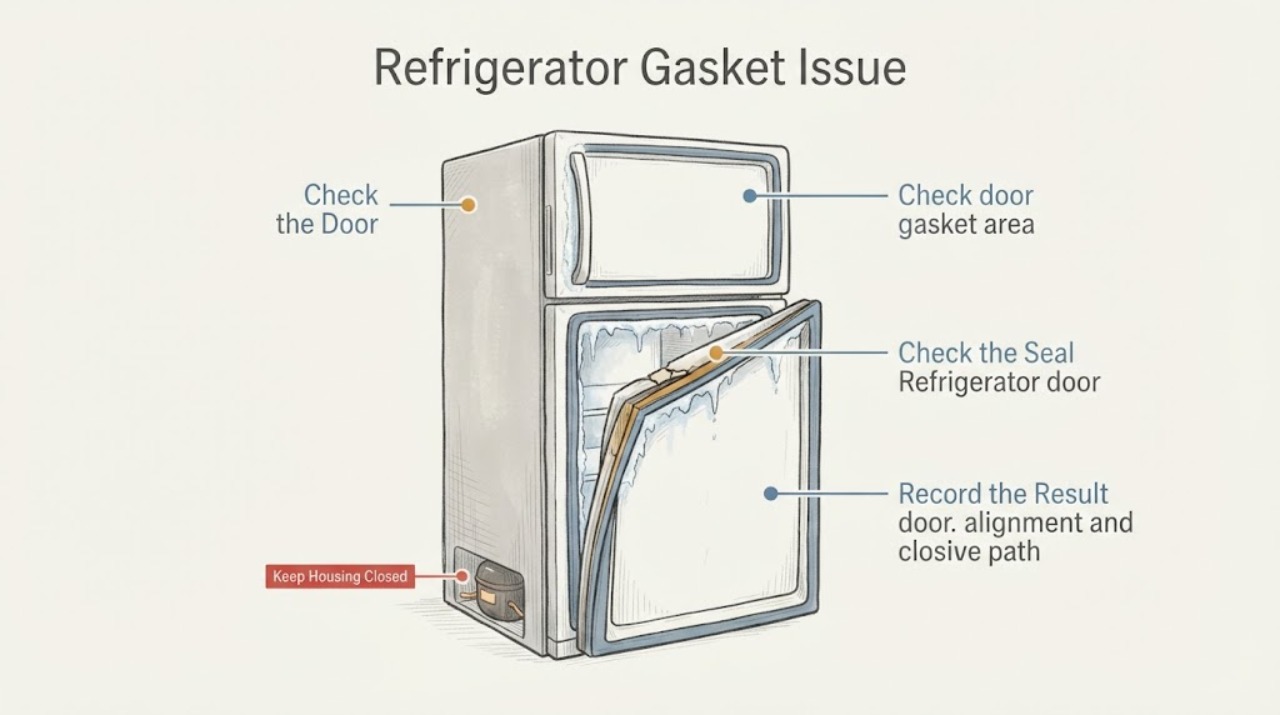
Treat a gasket issue as a symptom to verify, not as proof that the rubber seal needs replacement. Amana says poor sealing can cause frost, temperature fluctuation, and door-switch contact problems, but blocked bins, shelves, an unlevel refrigerator, incorrect door installation, dirty gasket surfaces, or a French-door hinged seal can create the same result. Clear the closure path, clean and dry the gasket with the exact Amana-safe method, and check even contact around the closed door. With no model, do not order a gasket or adjust hinges by guesswork; use the model manual or Amana service if a gap, crack, persistent frost, or temperature problem remains.
Before you begin
Safety first
- Do not order a visually similar gasket, remove the door, adjust hinges, spray cleaner on electronics, or open refrigeration components from the symptom alone. Use model instructions or qualified Amana service for persistent gaps, damage, frost, unstable temperature, or food-safety concerns.
Work through in order
Diagnostic checks
Use only checks that match the exact appliance or system and its official guide.
-
Check 1
Open and close the refrigerator doors gently while checking visible packages, tall containers, shelves, bins, crisper covers, and any shipping material for contact with the door.
Expected result: An obstruction moves out of the way and the door now closes, or the closure path was already clear.
Next step: Keep the path clear and monitor the seal. If the door still binds or will not stay closed, continue to the level/seal checks and use the model service path rather than forcing it.
Why this matters
Why: Amana identifies contents, mis-seated shelves/bins, packaging, and incorrect installation as causes of incomplete closure. A corrected closure does not prove a gasket failure.
-
Check 2
Wipe the gasket folds and contact surface with a damp cloth and mild soap, rinse with clean water, and dry fully; do not spray cleaner on controls or use harsh chemicals.
Expected result: Food or sticky residue is present and clears, or the gasket remains dirty, brittle, cracked, warped, or folded.
Next step: If the gasket remains damaged or the door still does not seal, record the model and arrange Amana service. Do not apply an unverified product or stretch the gasket.
Why this matters
Why: Amana says debris can create resistance and that worn or damaged gasket material can reduce suction. Cleaning cannot repair a crack, warp, or alignment defect.
-
Check 3
With the door closed, inspect the gasket contact around the accessible perimeter and note any continuous gap, corner lift, or section that does not sit flush against the cabinet.
Expected result: Contact is even around the door, or a section has a visible gap or the gasket does not sit flush.
Next step: Use only the matching model’s alignment instructions. If no model procedure is available or the gap persists, arrange qualified service.
Why this matters
Why: An uneven gap supports a sealing/closure problem, but the cause may be the gasket, door alignment, level, or an obstruction. It does not establish a compatible replacement part.
-
Check 4
Check that the refrigerator is level side-to-side and front-to-back using an accessible level, without removing panels or making an undocumented hinge adjustment.
Expected result: The unit is visibly out of level, the floor is uneven, or the appliance appears level.
Next step: Follow the exact owner or installation instructions for accessible leveling. If alignment still requires hinge work, use Amana service or the model procedure.
Why this matters
Why: Amana says leveling supports proper operation and door closure; level status can change how the door sits and seals. A level cabinet does not prove the gasket is sound.
-
Check 5
If frost or condensation is the symptom, note door-opening frequency, humidity, whether the door was left open, and whether refrigerator/freezer air vents are blocked.
Expected result: Frost is minor and follows humidity/openings, or frost and temperature fluctuation persist despite a clear path and even gasket contact.
Next step: Reduce avoidable humid-air entry and clear accessible vents. If frost or temperature problems persist, arrange service instead of replacing the gasket by guesswork.
Why this matters
Why: Amana lists humidity, frequent/open doors, blocked vents, and normal condensation as alternatives to a gasket cause; persistent frost with a real gap needs service evaluation.
-
Check 6
Give Amana or qualified refrigeration service the full model number, door style, closure/gap observation, gasket condition, level result, frost location, temperature change, and any recent installation or door removal history.
Expected result: The gasket is damaged, a gap remains, the door will not close, frost persists, or temperature is unstable.
Next step: Arrange Amana service. Do not order a visually similar gasket, remove the door, adjust hinges, or open refrigeration components from the symptom alone.
Why this matters
Why: The no-model task does not establish a compatible gasket, hinge, door alignment, switch, or cooling component.
Use your observations
Decision map
Find the observation that best matches what you see, then follow the next safe action.
-
PATH 01Next step
What you see
A package, shelf, bin, crisper cover, or shipping piece was blocking the door and the door now closes evenly after it is moved.
Do this next
Keep the closure path clear and monitor frost and temperature during normal use.
Why this path and its safety boundary
Why it matters: The symptom was consistent with a closure obstruction, so gasket failure was not established.
-
PATH 02Next step
What you see
The gasket is dirty or sticky but becomes clean, dry, and evenly contacting after the documented cleaning.
Do this next
Continue routine cleaning and use the model manual if the seal symptom returns.
Why this path and its safety boundary
Why it matters: Surface debris was a plausible source of resistance or poor contact; a replacement gasket has not been shown to be needed.
-
PATH 03Next step
What you see
The gasket is brittle, cracked, warped, folded, or leaves a continuous visible gap when the door is closed.
Do this next
Record the full model and arrange Amana or qualified service; do not order by appearance or force the door closed.
Why this path and its safety boundary
Why it matters: Amana identifies worn/damaged gasket material or incomplete sealing as a possible cause, but the correct part and adjustment remain model-specific.
-
PATH 04Next step
What you see
The gasket is intact and evenly contacting, but frost or temperature fluctuation continues.
Do this next
Correct accessible loading and vent conditions, then arrange service if the symptom persists.
Why this path and its safety boundary
Why it matters: Amana lists humidity, frequent door openings, blocked vents, door alignment, and other refrigerator conditions as alternatives to a gasket issue.
-
PATH 05Next step
What you see
The refrigerator is a French-door design and the vertical hinged seal stays folded outward or the doors were recently removed.
Do this next
Follow the exact owner/installation instructions for the model or arrange Amana service; do not force the seal or adjust hinges from a generic guide.
Why this path and its safety boundary
Why it matters: The hinged seal or door installation can prevent proper sealing even when the rubber gasket itself is not failed.
Helpful context
Understand the symptom
A refrigerator gasket issue is often a closure problem rather than a failed rubber part. Amana says an improper seal can lead to frost, temperature fluctuation, and incorrect door-switch contact, while blocked containers, dirty gasket folds, leveling, and door installation can produce the same symptoms. Start with the visible seal and closure path before considering parts.
Clear bins, shelves, and packaging first
Move tall containers and food packages away from the door, push shelves and bins fully into position, and check that a crisper cover or drawer is not catching the door. Amana also calls out shipping material and doors that were removed and reinstalled incorrectly. Do not force the door against an obstruction.
Clean the gasket and inspect its contact
Dirt and food particles can add resistance and prevent a clean seal. Amana’s cleaning guidance supports a damp cloth with mild soap, followed by rinsing and thorough drying; do not spray cleaner directly on electronics or use abrasive, bleach, ammonia, or petroleum-based products on the gasket. Look for brittle, cracked, warped, or folded sections, then close the door gently and inspect for an even seal.
Check level and door alignment
Amana says the refrigerator should be level from side to side and front to back before door alignment is adjusted. On French-door models, the vertical hinged seal must fold inward when the left door is open and form the seal when both doors close. Because no model is supplied, use the matching owner or installation instructions rather than a generic hinge procedure.
Separate normal humidity from a failed seal
Amana says small droplets and some frost can be normal in humid conditions, and frequent or prolonged door openings add humid air. Check whether frost is concentrated near a visible gap or follows a door that was left open. Also make sure vents are not blocked; a frost or temperature symptom alone does not prove the gasket is the cause.
Use service for damage or a persistent gap
If the gasket is cracked, brittle, warped, or cannot contact the cabinet evenly after accessible checks, record the full model and use Amana’s model-specific manual or service path. Do not select a replacement by size or appearance, remove the door, or adjust hinges without the documented model procedure.
When checks do not resolve it
Need a professional?
Arrange Amana or qualified refrigeration service when the gasket remains cracked, brittle, warped, or uneven; the door will not close; frost or temperature fluctuation persists after accessible checks; a French-door hinged seal or alignment needs adjustment; or the refrigerator cannot maintain safe food temperature. No-model symptoms do not identify a compatible gasket or hinge part.
Safety scope: Do not order a visually similar gasket, remove the door, adjust hinges, spray cleaner on electronics, or open refrigeration components from the symptom alone. Use model instructions or qualified Amana service for persistent gaps, damage, frost, unstable temperature, or food-safety concerns.
Have this ready
- Full model number, door style, gasket condition, closure/gap observation, level result, frost/condensation location, temperature change, and any installation or door-removal history.
Common questions
FAQ
Does an Amana refrigerator gasket issue always mean the gasket needs replacement?
No. Amana also lists blocked packages, shelves or bins, leveling, installation/door alignment, dirty gasket surfaces, humidity, and blocked vents as possible causes. Inspect those conditions before considering a part.
How should I clean an Amana refrigerator gasket?
Amana supports warm water and mild soap on a clean cloth, followed by rinsing and thorough drying. Avoid abrasive or harsh cleaners, bleach, ammonia, and petroleum-based products on the gasket and plastic parts.
Why is there frost if the gasket looks intact?
Amana says humidity, prolonged or frequent door openings, blocked air vents, and normal condensation can also cause moisture or frost. A gasket that looks intact does not rule out another cause.
Can I adjust an Amana refrigerator hinge without the model number?
Do not use a generic hinge procedure. Amana directs users to the Owner’s Manual or Installation Instructions for alignment, and French-door hinged seals have model/style-specific behavior. Use the matching manual or service.
Read the exact guide
Official sources
- How to Help Eliminate Condensation and FrostAmana · Opened Amana official frost guidance. Used for normal humidity, door-opening, gasket-obstruction, vent, model-control, and service boundaries; exact model controls vary.
- Doors Not Closing ProperlyAmana · Opened Amana official guidance for door closure, worn/dirty gasket, obstructions, packaging, leveling, and hinged-seal context. It is used for family-level observations only; no model-specific hinge or part claim is made.
- Doors Not Sealing - RefrigeratorAmana · Opened Amana official guidance for door sealing, installation, obstructions, gasket cleanliness, leveling, frost/temperature effects, and service. Exact model and refrigerator style remain unspecified.
- Doors Not Sealing - French Door RefrigeratorAmana · Opened Amana official French-door guidance. Used only for family-specific examples of gasket cleaning, leveling, door adjustment, and the need for model instructions; it does not establish that the task appliance is French-door.
- Cleaning the Interior of the RefrigeratorAmana · Opened Amana official cleaning guidance. Used for mild soap, damp cloth, gasket-fold cleaning, drying, and prohibited harsh products; no replacement-part claim.
- Door Hard to Open - RefrigeratorAmana · Opened Amana official guidance. Used for normal post-close pressure, gasket cleaning, optional model-independent caution, and leveling/service boundaries; no generic wax or hinge procedure is required by this article.
Community feedback
Share a repair observation
Share a plain-text repair observation. Accepted observations are published automatically; this page may take a moment to update.