
On this page
Start here
Quick answer
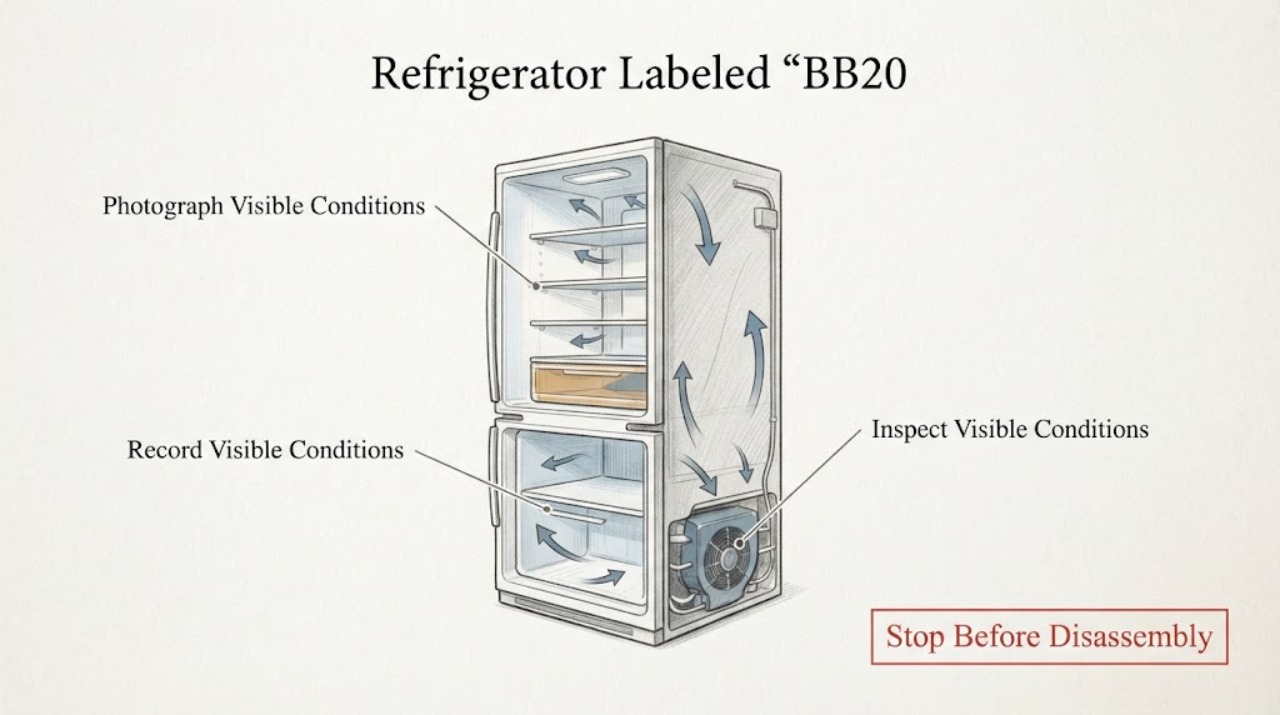
“BB20” is not enough to confirm a complete Amana model or the correct fan layout, so do not order a fan or remove a freezer panel from that label alone. First record the full model from the refrigerator's rating plate, then use an appliance thermometer to compare the freezer and fresh-food temperatures. With the refrigerator powered down and the doors open, move food away from the accessible supply and return vents, check for heavy frost or an obvious airflow obstruction, and verify that the doors seal. Amana's family guidance says blocked vents can reduce circulation and create uneven temperatures, while its general temperature guidance uses about 37°F for the refrigerator and 0°F for the freezer with 24 hours to stabilize. If the freezer is cold but the refrigerator stays warm, food is above a safe temperature, frost blocks the airflow, or no circulation returns after the external checks, keep the refrigerator closed and arrange qualified service; do not remove the evaporator cover or test the fan with live power.
Work through in order
Diagnostic checks
Use only checks that match the exact appliance or system and its official guide.
-
Check 1
With the refrigerator doors open and no panel removed, photograph or record the complete model number from the rating plate and note whether it is a top-freezer, bottom-freezer or another layout. Compare that number with the owner's manual before considering any fan or control information.
Expected result: A complete model number is available and matches Amana literature, or only the incomplete “BB20” label is available.
Next step: Use the exact model manual for any later decision. If the full number is still unresolved, keep the checks below at general Amana family level and do not buy a part or open the freezer panel.
Why this matters
Why: A complete match can scope the vent locations and service instructions; the BB20 label alone cannot establish model-specific fan wiring, parts or test values.
-
Check 2
Place an appliance thermometer in the center of the freezer and fresh-food section, away from a wall, door bin and vent. Record the temperatures and whether the freezer is cold while the refrigerator is warm, both sections are warm, or food near a vent is unusually cold.
Expected result: The freezer is near its normal range but the fresh-food section is warm, both sections are warm, or temperatures are within the model's documented range.
Next step: Keep doors closed and protect temperature-sensitive food. If a control is adjusted, change only as the exact manual permits and wait 24 hours before judging the result. Escalate warm or unsafe readings instead of testing the fan live.
Why this matters
Why: A cold freezer with a warm refrigerator is consistent with an air-distribution problem but does not prove an evaporator-fan failure; both sections warm suggests a broader cooling issue; a stable reading reduces the urgency of a fan diagnosis.
-
Check 3
With power disconnected only if it can be done safely and without moving the appliance, inspect accessible shelves, bins and vent openings in both compartments. Move packages away from the supply and return vents and look for visible frost or ice that blocks an opening; do not remove the rear freezer cover.
Expected result: Food or containers block a vent, frost visibly covers an airflow opening, or the accessible vents are clear.
Next step: Rearrange only accessible items and follow the exact model manual for any approved defrost or cleaning procedure. If frost returns, the refrigerator remains warm, or the panel would need removal, stop and arrange qualified service.
Why this matters
Why: Amana identifies blocked vents and excessive frost/uneven temperatures as airflow symptoms. A clear visible opening does not prove that a concealed fan or defrost system is working.
-
Check 4
Check the external conditions without opening the cabinet: confirm the doors close and seal, the refrigerator is level, the room is not outside the model's stated environment, and the condenser area is not visibly packed with dust or pet hair where the owner's instructions permit external cleaning.
Expected result: A door does not seal, the cabinet is unstable, the surrounding temperature is unusual, or external dust/debris is restricting airflow; or these conditions appear normal.
Next step: Correct only the safe external condition using the exact manual, then allow the refrigerator to stabilize before rechecking. Do not move wiring, remove covers or use a live meter test; persistent symptoms require service.
Why this matters
Why: Door leakage, ambient conditions, leveling and restricted condenser airflow can affect temperatures independently of the evaporator fan. Normal external conditions leave the internal cause unresolved rather than proving a fan fault.
-
Check 5
After the external checks, monitor the two compartment temperatures and food condition without forcing a fan test. Note any rising temperature, repeated frost, unusual fan noise, clicking, or compressor running continuously.
Expected result: Temperatures stabilize and airflow returns after an accessible obstruction is corrected, or the refrigerator remains warm/uneven or develops frost and unusual operation.
Next step: For persistent, unsafe or food-spoilage symptoms, keep the doors closed, discard food according to applicable food-safety guidance, and contact Amana or a qualified refrigerator technician. Do not remove the freezer panel or apply live power to the fan.
Why this matters
Why: Improvement after an external obstruction supports an airflow-path issue; persistent or worsening symptoms need model-specific diagnosis and can involve more than the evaporator fan.
Use your observations
Decision map
Find the observation that best matches what you see, then follow the next safe action.
-
PATH 01Next step
What you see
Only “BB20” is available and no complete Amana model can be read from the rating plate.
Do this next
Use only the external airflow and temperature checks in this article, obtain the full model number, and do not order a fan or open a freezer panel.
Why this path and its safety boundary
Why it matters: Model-specific fan layout, wiring, service mode and replacement fitment are unresolved.
-
PATH 02Next step
What you see
The freezer is cold but the refrigerator section is warm, and food or visible frost blocks an accessible supply or return vent.
Do this next
Move items away from the vent and follow the exact manual for any approved defrost procedure, then recheck temperatures after stabilization.
Why this path and its safety boundary
Why it matters: The pattern is consistent with restricted air circulation, but it does not prove the evaporator fan is defective.
-
PATH 03Next step
What you see
Both compartments are warm, temperatures rise above the model's safe operating range, or food is no longer safely cold.
Do this next
Keep the doors closed, protect or discard affected food as appropriate, and arrange qualified service without removing panels or testing energized components.
Why this path and its safety boundary
Why it matters: This is broader than a confirmed fan-only issue and creates a food-preservation concern.
-
PATH 04Next step
What you see
The vents are clear but frost returns, the fan remains absent, unusual noise persists, or temperatures do not recover after the external checks.
Do this next
Stop DIY diagnosis and provide the full model number, temperature readings and frost pattern to Amana or a qualified technician.
Why this path and its safety boundary
Why it matters: An internal fan, defrost, control or sealed-system issue remains possible, but the available evidence cannot identify which part is involved.
-
PATH 05Next step
What you see
The vents are clear, both sections hold the model's target temperatures, and no food-safety or unusual-operation symptom remains.
Do this next
Continue normal use under the exact model manual and monitor temperatures; request service if circulation or temperatures deteriorate.
Why this path and its safety boundary
Why it matters: The evidence does not establish that the evaporator fan has failed; some fan operation is automatic and may not be audible at every moment.
Helpful context
Understand the symptom
Verify what “BB20” identifies before choosing a repair path
The supplied title calls the refrigerator “Amana BB20,” but no complete model was confirmed and the direct Reddit lead was unavailable. Amana's support pages direct owners to use the complete model number for manuals and model-specific instructions. Treat BB20 as a label until the full rating-plate model is recorded; a family resemblance or a search result is not enough to establish a fan, thermostat, control or part fit.
Airflow symptoms can be observed without opening the freezer
Amana says most models move cold air from the freezer into the refrigerator through supply and return vents, and that blocked vents can cause warm spots, freezing near a vent, frost or uneven temperatures. Those observations can show an airflow problem without proving that the evaporator fan itself has failed. Keep food clear of accessible vents and do not remove a back panel to make the fan run for a test.
Use temperature and food safety to decide when to stop
Amana's general control guidance suggests about 37°F in the refrigerator and 0°F in the freezer, checked with an appliance thermometer and rechecked after 24 hours following a small control change. These are family-level starting points, not proof of the BB20 model's settings. If food has warmed above a safe temperature or the refrigerator remains warm, limit door opening and arrange service rather than relying on a fan sound or forcing a test.
When checks do not resolve it
Need a professional?
Keep the refrigerator closed and arrange service for rising or unsafe food temperatures, repeated frost blocking airflow, a warm fresh-food compartment with a cold freezer after vent checks, unusual electrical or burning signs, or any situation requiring freezer-panel removal or live electrical testing. Do not bypass a fan circuit, force a blade, or order a part from the incomplete BB20 label.
Common questions
FAQ
Is Amana BB20 a complete refrigerator model number?
It could not be confirmed as a complete model from the accessible official literature, and the supplied Reddit lead was not available to verify it. Read the complete model number from the refrigerator rating plate before using a model-specific manual or ordering a fan. Until then, use only the family-level external checks here.
Can a cold freezer and warm refrigerator mean the evaporator fan is bad?
It can indicate an air-distribution problem, but Amana's guidance also points to blocked vents and temperature conditions, and the symptom alone does not identify the fan, defrost system or control. Clear only accessible obstructions, measure both compartments, and obtain service if the condition persists.
Should I remove the freezer back panel to see whether the fan spins?
No. The exact BB20 model and service instructions are unresolved, and Amana's official service manual is written for qualified technicians. Use temperature, visible vent and frost observations only; arrange qualified service for any panel removal or electrical test.
Read the exact guide
Official sources
- Outside of Cabinet Feels Warm - Top Freezer RefrigeratorAmana · Top-freezer family guidance; use only for external observation and not as BB20 model confirmation.
- How to Check the Air Vents for Blockage-Ensuring Proper Air FlowAmana · Family-level guidance; it does not confirm BB20 as a complete model or identify a failed component.
- Service Manual - 16025629Amana / Maytag Services · This base manual lists other specific models and does not establish BB20 fitment; used only to avoid user-level internal/live testing.
- Tips for Properly Setting the ControlsAmana · General starting guidance only; the complete model manual controls actual settings.
Community feedback
Share a repair observation
Share a plain-text repair observation. Accepted observations are published automatically; this page may take a moment to update.