
On this page
Start here
Quick answer
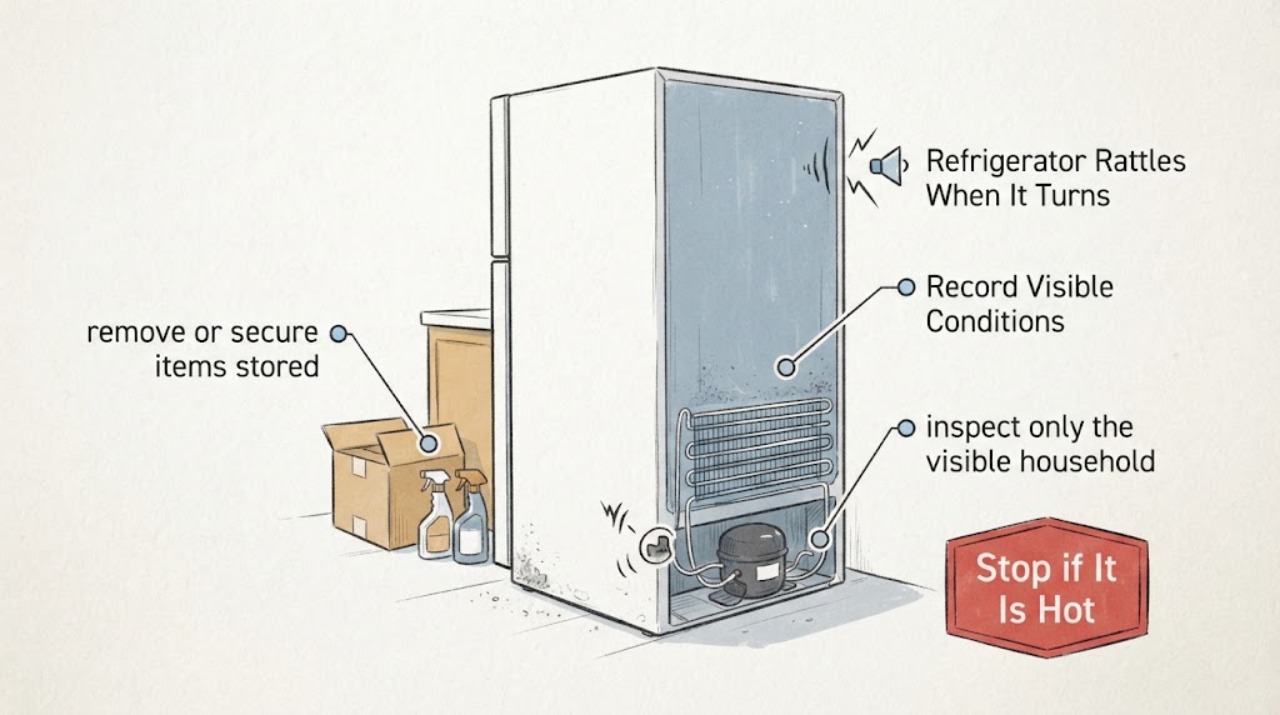
A brief rattle, click or vibration as an Amana refrigerator stops cooling can be normal: Amana says refrigerant or water flow, a compressor or control switching off, items on top, or an unlevel cabinet can create these sounds. First record whether the sound is a single short event at compressor shutoff, follows water or ice-maker activity, or continues while the refrigerator is idle. Secure items on top, check that the cabinet is stable and level, and inspect only the accessible water line for vibration or kinks. Arrange service if the sound is loud, sustained, worsening, accompanied by loss of cooling, leaks, a burning smell, repeated hard start attempts or visible damage; do not infer a failed compressor, fan or sealed-system part from sound alone.
Work through in order
Diagnostic checks
Use only checks that match the exact appliance or system and its official guide.
-
Check 1
Listen once with the refrigerator doors closed and record the timing: a single brief rattle or click exactly when cooling stops, a noise that continues while idle, or a sound linked to a door opening, water dispense or ice-maker fill. Note whether both compartments hold their normal temperatures.
Expected result: The sound is brief and synchronized with compressor shutoff while cooling remains normal, or it is sustained, getting louder, repeating rapidly or accompanied by warming.
Next step: For a brief stop event with normal temperatures, continue with the external vibration checks below and monitor it. For a sustained or worsening sound or any cooling loss, arrange service and do not guess at a compressor, fan or sealed-system part.
Why this matters
Why: Amana says a single click can occur when the compressor starts or stops and that refrigerant, water and fan/compressor operation can create normal sounds. A sustained or worsening noise with loss of cooling is outside what timing alone can explain.
-
Check 2
With the refrigerator stable and the doors closed, remove or secure items stored on top and check that the cabinet is not touching a wall, cabinet or floor trim. Use a bubble level on the cabinet and follow the exact model manual before adjusting any leveling legs.
Expected result: The sound changes when a loose item is removed or when cabinet contact is relieved, or the refrigerator remains stable with no external contact and the sound is unchanged.
Next step: Leave the unit stable with manufacturer clearances. If leveling or contact correction does not reduce a loud or worsening sound, record the result for service rather than moving the cabinet repeatedly or opening panels.
Why this matters
Why: Amana identifies items on top, an unlevel refrigerator and an uneven floor as causes of rattling or vibration. A sound that remains after external vibration is removed may come from normal fluid flow or an internal condition that needs service; it does not identify a failed part.
-
Check 3
If the sound occurs during or soon after ice-maker fill or water dispensing, inspect only the visible household water line for a kink, sharp bend or contact that could vibrate. If the ice maker is installed but the refrigerator has no water supply, confirm from the model manual how to turn the ice maker off.
Expected result: The noise follows a fill/dispense event, the line is kinked or touching the cabinet, or the noise occurs at compressor shutoff without water activity.
Next step: Correct only an obvious external kink or contact and use the exact manual for ice-maker controls. If the sound is unrelated to water activity or persists after the line is clear, continue with the cooling and service checks.
Why this matters
Why: Amana attributes rattling to water-line flow and says an ice maker without a water supply can make a valve buzz or click. A line check cannot prove a defective inlet valve or internal tubing.
-
Check 4
Check the refrigerator and freezer temperature using the appliance's normal controls and a suitable thermometer if available, and note any frost, water leak, repeated restart attempt, burning odor or unusual heat near the power cord. Do not unplug the unit repeatedly to reproduce the sound.
Expected result: Cooling is normal with no leak, odor or electrical sign, or the rattle is accompanied by warming, frost/water, repeated clicking, burning odor or visible damage.
Next step: Keep food safe and arrange qualified refrigerator service for any warning sign or cooling loss. Do not touch exposed wiring, refrigerant tubing or compressor components and do not add refrigerant.
Why this matters
Why: A normal temperature and clean external condition make a brief operating sound more likely to be benign. Warming, leaks, repeated hard-start behavior, odor or electrical damage moves the problem beyond a sound-only check.
-
Check 5
If your model permits user cleaning of an accessible condenser area, unplug the refrigerator first and follow the model manual; otherwise leave the rear or lower panels in place. After restoring the documented configuration, observe whether the sound and cooling behavior change without forcing a test cycle.
Expected result: The manual permits accessible cleaning and dust is present, or the manual does not permit that step or the area is inaccessible; the sound remains or cooling is affected afterward.
Next step: Use only the maintenance procedure for the exact model. If the noise remains, if a panel cannot be safely reinstalled, or if cooling is abnormal, stop troubleshooting and request service.
Why this matters
Why: Amana says some models may allow condenser-area cleaning to reduce noise caused by restricted airflow, but model construction and access vary. Cleaning does not establish a failed fan, compressor or sealed system.
Use your observations
Decision map
Find the observation that best matches what you see, then follow the next safe action.
-
PATH 01Next step
What you see
The rattle is a brief click or soft vibration exactly at compressor shutoff, cooling and temperatures are normal, and no leak, odor or electrical damage is present.
Do this next
Monitor the frequency and loudness, keep the refrigerator stable and clear, and use the exact model manual if the sound changes.
Why this path and its safety boundary
Why it matters: Amana documents a single click at compressor start/stop and normal refrigerant, water and cabinet sounds; the timing is consistent with normal operation but does not prove a particular source.
-
PATH 02Next step
What you see
The noise changes when an item on top, cabinet contact, an unlevel floor or an accessible water-line contact is corrected.
Do this next
Leave the appliance level and stable with the line routed as the manual specifies. Request service if the sound returns loudly or cooling changes.
Why this path and its safety boundary
Why it matters: The external condition was amplifying or transmitting the vibration, which Amana lists as a possible rattle source.
-
PATH 03Next step
What you see
The rattle continues while idle, grows louder, repeats with hard clicking, or is accompanied by warming, leaks, frost, burning odor or visible electrical damage.
Do this next
Arrange qualified Amana refrigerator service, preserve the model number and timing, and do not open the sealed system or replace a sound-selected part.
Why this path and its safety boundary
Why it matters: The symptom is no longer a brief normal-sound observation; timing alone cannot separate a fan, compressor, control, water or sealed-system problem.
-
PATH 04Next step
What you see
The sound happens during ice-maker fill or water dispensing, especially when the refrigerator is not connected to a water supply or the line/filter is restricted.
Do this next
Follow the exact model instructions for the ice maker and filter, correct only visible line restrictions, and request service if the sound persists or water leaks.
Why this path and its safety boundary
Why it matters: Amana says water valves and water-line flow can buzz, click or rattle under these conditions; this does not prove a bad valve.
Helpful context
Understand the symptom
The stop event matters more than the word rattling
A sound that lasts briefly exactly when cooling stops is different from a vibration that continues, repeats rapidly, or comes with a temperature change. Amana's normal-sounds guidance includes a single click as the compressor starts or stops, refrigerant and water movement, and normal fan/compressor adjustments. Those descriptions support observation and external checks, not a component diagnosis.
Start outside the cabinet
Amana lists items on top, cabinet leveling, the floor, water-line movement and available condenser-area maintenance as ways sound can be amplified. Secure loose objects, check stability and clearances, and inspect only the accessible line or filter/ice-maker setup that your model manual identifies. Do not remove sealed-system tubing, open the compressor compartment beyond documented user maintenance, or order a compressor or fan because the noise sounds mechanical.
When checks do not resolve it
Need a professional?
Arrange service when the rattling is loud, persistent, worsening, unrelated to normal cycling or water activity, or accompanied by warming, leaks, frost, repeated hard-start clicking, burning odor, visible electrical damage or an inaccessible internal source. Do not diagnose or replace the compressor, fan, valve or sealed-system part from sound alone.
Have this ready
- Provide the exact model number, the sound recording if safe, when it occurs relative to compressor stop, doors, water dispensing or ice-maker fill, whether cooling temperatures remain normal, and what external checks changed the sound.
Common questions
FAQ
Is a rattle when the refrigerator turns off always a compressor failure?
No. Amana lists refrigerant or water flow, items on top, an unlevel cabinet and normal compressor/control switching as possible sound sources. A single click at compressor start or stop can be normal; persistent noise with warming or other symptoms needs service.
What should I check first for an Amana refrigerator rattle?
Record the timing, remove loose objects from the top, check cabinet stability and level, and inspect only the accessible water line for vibration or kinks. Use the exact owner manual before adjusting leveling legs or cleaning any condenser area.
Why does the refrigerator click or rattle if the ice maker is not connected to water?
Amana says the water valve may buzz or click as it tries to fill an ice maker without a water supply. Follow the exact model manual to turn the ice maker off rather than inferring that the valve has failed.
Should I replace a fan or compressor because of the sound?
No. Sound timing cannot identify a particular internal part. If the sound persists after external checks or comes with temperature loss, leaks, frost, burning odor or repeated hard starts, leave internal diagnosis to qualified service.
Read the exact guide
Official sources
- Refrigerator Noise - BuzzingAmana · Amana family-level guidance for compressor/fan sound timing, unconnected ice-maker water valve noise, leveling, accessible condenser cleaning and water-line checks.
- Refrigerator Normal Sounds and NoisesAmana · Amana family-level sound interpretation, including compressor start/stop clicks, refrigerant/water flow, fans, leveling and items on top.
- Refrigerator Noise - Rattling or VibratingAmana · Amana family-level guidance for refrigerant flow, water-line flow, items on top and leveling as rattling/vibration sources.
- Refrigerator Noise - High-Pitched or PulsatingAmana · Amana family-level context for brief post-cycle sounds and the distinction between normal operating sound and a need for service.
- TROUBLESHOOTINGAmana · Opened Amana owner manual used for family-level noise descriptions, model-specific-manual caution, temperature/service boundary and electrical safety; exact model is not assigned.
Community feedback
Share a repair observation
Share a plain-text repair observation. Accepted observations are published automatically; this page may take a moment to update.