
On this page
Start here
Quick answer
Start with the filter assembly and standing water, because Ariston's dishwasher manual links accumulated odor and sediment with the need for regular high-temperature cleaning and links clogged filters with poor waste-water flow. Switch the appliance off and follow the exact manual to remove and rinse the filters with a non-metallic brush; inspect the trap and visible drain area without removing the pump protection, then refit every filter securely. Wipe the door seal and detergent-dispenser area, check that the spray arms are not carrying food residue, and run the model's recommended high-temperature maintenance programme when the manual permits it. If the smell is chemical, burning, or sewage-like, if water remains in the tub, or if there is a leak, smoke, damaged hose, or recurring odor after cleaning, stop using the dishwasher and arrange authorized service. Never use the machine without its filters or with a loose filter.
Before you begin
Safety first
- Owner checks are limited to the normal controls, cool accessible surfaces, filter and trap care described by the manual, visible seal and spray-arm inspection, and external drain observations. Pump, hose disconnection, electrical, control, heating, and internal cabinet work require authorized service.
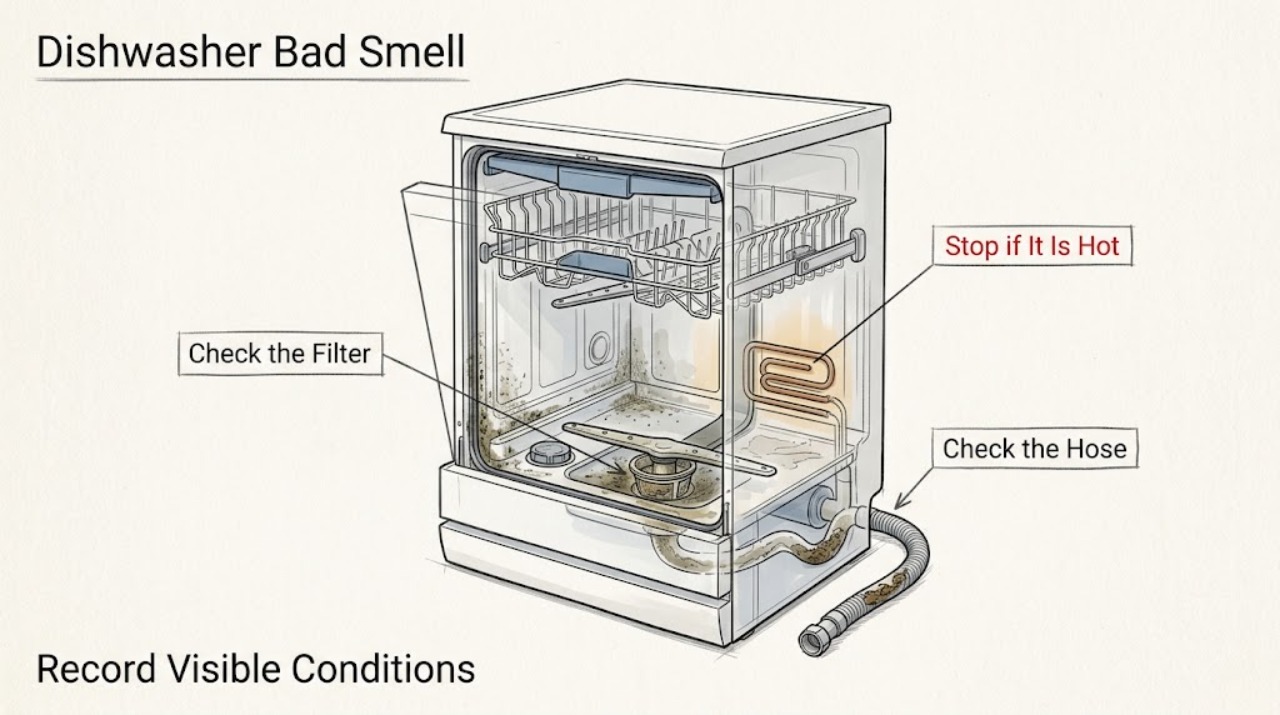
Work through in order
Diagnostic checks
Use only checks that match the exact appliance or system and its official guide.
-
Check 1
Record the exact Ariston model and identify when the smell occurs: before a cycle, while washing, immediately after opening, or after the appliance has been closed. With the dishwasher switched off and cool, check whether the tub has standing water and whether the odor is strongest at the filter, door seal, detergent dispenser, or drain area.
Expected result: The tub is empty but the filter area smells, water remains in the tub, residue is visible around the seal or dispenser, the odor occurs only during operation, or there is no visible source.
Next step: Use the matching branch below. Do not run another cycle if the smell is burning, solvent-like, or accompanied by smoke, a leak, or an electrical symptom.
Stop if: Do not touch hot water, open electrical covers, or start a cycle with a suspected electrical or chemical odor.
Why this matters
Why: A localized residue odor is more consistent with cleanable buildup; standing water shifts attention to filtration or drainage; an odor that appears only during operation may be chemical, electrical, or heat-related and should not be treated as ordinary food residue.
-
Check 2
Follow the exact Ariston manual to remove the filter assembly after switching the dishwasher off. Rinse the filters under running water with a non-metallic brush, inspect the trap for food residue or a visible foreign object, and leave the wash-cycle pump protection in place. Reassemble and lock the complete filter assembly correctly before operating the dishwasher.
Expected result: The filter is coated with food residue, the trap contains debris, a foreign object is visible, the filter is damaged or will not lock, or the filter area is clean.
Next step: Remove only loose, visible residue or objects using the manual-approved method, refit the filters securely, and continue to the drain and seal checks. If the filter is damaged, cannot lock, or the tub does not drain, stop and arrange service.
Stop if: Never operate the dishwasher without filters or with a loose filter, and never remove the pump protection or reach into an unknown obstruction.
Why this matters
Why: Residue or debris can retain odor and restrict waste-water flow. A filter that cannot be secured is an operating fault; a clean filter with persistent standing water or smell points to a downstream drain or internal contamination issue.
-
Check 3
Check the visible drain area, drain hose, and sink connection only as the exact installation instructions allow. Confirm the hose is not kinked, the sink drain path is not obviously blocked, and the tub empties after a permitted cycle. Do not disconnect a hose or dismantle a pump to investigate a smell.
Expected result: Standing water remains, the drain hose is bent, the sink connection is blocked, the filter is clogged, the drain path appears normal, or the smell returns with an empty tub.
Next step: Correct only an obvious external kink or user-accessible sink blockage permitted by the manual, then run one suitable cycle. If water remains, a connection leaks, or the odor returns, keep the appliance off and arrange authorized service.
Stop if: Do not run repeated cycles with standing water, loosen plumbing while water is connected, or operate with a leaking hose.
Why this matters
Why: Ariston's troubleshooting guidance associates failure to drain with a bent hose, blocked sink drain, or food-clogged filter. Persistent odor with an empty tub makes a retained-residue explanation less certain and can require an internal drain or service diagnosis.
-
Check 4
With the appliance off, wipe the accessible door seal and detergent-dispenser area with the method allowed by the exact manual. Inspect the spray arms for food residue blocking their holes and clean them only with the manual-approved non-metallic method; do not remove parts that the manual does not identify for owner access.
Expected result: Residue is trapped in the seal or dispenser, spray-arm holes are visibly encrusted, the door seal is damaged, or these areas are clean and intact.
Next step: Remove only visible residue with the exact manual's cleaning method, reinstall any owner-removable spray arm correctly, and continue to the maintenance-cycle check. If the seal is damaged or the smell is chemical or burning, stop using the dishwasher and call service.
Stop if: Do not use abrasive or unlisted chemicals, force a spray arm, or operate with a damaged seal or leak.
Why this matters
Why: Food trapped at the seal, dispenser, or spray arms can contribute to recurring residue and odor, while a damaged seal can allow leaks and contamination. Clean, intact surfaces shift the diagnosis toward filter, drain, detergent, water-softening, or internal service issues.
-
Check 5
After the filter is secure and the tub drains, use the exact Ariston manual's recommended high-temperature maintenance programme, including its stated detergent instruction, with no dishes. Run it only when there is no leak, burning smell, chemical odor, or electrical fault, then leave the door ajar after the cycle if the manual permits.
Expected result: The odor decreases, the odor returns after one maintenance cycle, sediment or residue remains, the cycle ends with standing water, or the appliance develops an abnormal smell while running.
Next step: Keep the door ajar between uses where the manual permits and continue the model's maintenance schedule if the smell resolves. For a recurring odor, standing water, or abnormal operating smell, stop using the dishwasher and arrange authorized service.
Stop if: Do not add unlisted chemicals, combine cleaners, or continue a cycle that produces burning, solvent, smoke, or electrical odors.
Why this matters
Why: A reduction after maintenance supports accumulated residue or moisture as the likely source. A returning odor despite clean filters, clear visible drainage, and correct maintenance suggests an unresolved internal, detergent, water-softening, or plumbing condition; an active abnormal smell is a safety stop.
Use your observations
Decision map
Find the observation that best matches what you see, then follow the next safe action.
-
PATH 01Next step
What you see
The smell is strongest at a dirty filter or trap, the tub drains normally, and the odor decreases after the filters are cleaned and correctly refitted.
Do this next
Keep the filters secured, inspect them on the manual's schedule, and use the recommended high-temperature maintenance programme when permitted. Arrange service if the odor quickly returns.
Why this path and its safety boundary
Why it matters: Accumulated food residue or sediment is more likely than an immediate internal component fault.
-
PATH 02Next step
What you see
Standing water remains after a cycle, or a bent hose, blocked sink connection, or clogged filter is visible with the smell.
Do this next
Correct only the manual-approved external restriction and run one suitable cycle. If water remains, the path leaks, or the odor persists, leave the dishwasher off and arrange service.
Why this path and its safety boundary
Why it matters: The odor may be associated with retained wash water and drain-path residue. Ariston identifies these conditions as drainage faults, but an internal pump or hose obstruction cannot be confirmed from the visible check.
-
PATH 03Next step
What you see
Residue is concentrated around the door seal, detergent dispenser, or spray arms, while the filter is clean and the tub empties.
Do this next
Clean only the accessible areas with the exact manual's method, verify the spray arms can rotate and are refitted correctly, and monitor one cycle. If the seal is damaged or the smell returns, request service.
Why this path and its safety boundary
Why it matters: Localized food or detergent residue is more likely than a blocked main drain, although a damaged seal can create a leak and needs a different response.
-
PATH 04Next step
What you see
The smell improves after the model-approved high-temperature maintenance programme but returns when the dishwasher is left closed, and there is no standing water or leak.
Do this next
Keep the door ajar between uses if allowed, maintain the filter and seal, and run the model's recommended maintenance cycle on schedule. If the odor persists despite this care, arrange service.
Why this path and its safety boundary
Why it matters: Moisture and recurring residue are more plausible than a one-time spill. Ariston recommends leaving the door ajar to avoid moisture being trapped, where the model's manual permits it.
-
PATH 05Next step
What you see
The odor is burning, solvent-like, sewage-like, or chemical; appears only while the machine runs; or is accompanied by smoke, a leak, abnormal noise, or a damaged hose or seal.
Do this next
Stop the cycle and leave the dishwasher off. Close the water tap for a leak if it is safe to do so, isolate power only through the normal safe disconnect, and arrange authorized service.
Why this path and its safety boundary
Why it matters: This is not safely explained by ordinary food residue. Continued operation could worsen electrical, water, or component damage.
Helpful context
Understand the symptom
Locate the odor before choosing a cleaner
A smell from an Ariston dishwasher can come from food residue held in the filter or trap, water that is not leaving the tub, residue around the door seal or detergent dispenser, or debris on the spray arms. A smell that appears only when the door opens is different from a burning or solvent odor while the machine runs. Open the door after the cycle and note whether the tub is empty, whether the filter area is dirty, and whether the odor is concentrated at the seal, dispenser, or drain area.
The filter and drain are the first practical checks
Ariston's manual says the filter assembly removes food residues from wash water and should be checked regularly so waste water can flow away. It also says the dishwasher must not be used without filters or with a loose filter. This makes a correctly refitted filter and an empty tub important: cleaning the visible filter is useful, but it does not prove that the internal drain pump or hose is clear.
Use the exact Ariston manual for maintenance timing
The available Ariston manual recommends a high-temperature programme at least monthly to help avoid odor and sediment, and describes regular filter and spray-arm care. Models differ in filter layout, programme names, detergent guidance, and access to the drain area. Treat the manual matching the model number as the authority; do not pour an unlisted chemical into the dishwasher or dismantle the pump protection to chase an odor.
When checks do not resolve it
Need a professional?
Arrange authorized Ariston service when the odor returns after the filter, drain, seal, spray-arm, and model-approved maintenance checks; when standing water remains; or when a filter, hose, seal, pump protection, or control cannot be safely restored. Stop immediately for burning, solvent, chemical, smoke, leak, or electrical odors. Do not operate without filters, dismantle the pump or drain assembly, use unlisted chemicals, or work on wiring.
Safety scope: Owner checks are limited to the normal controls, cool accessible surfaces, filter and trap care described by the manual, visible seal and spray-arm inspection, and external drain observations. Pump, hose disconnection, electrical, control, heating, and internal cabinet work require authorized service.
Common questions
FAQ
Why does my Ariston dishwasher smell bad after washing?
Check the filter and trap for food residue, confirm the tub drains, and inspect the door seal, detergent dispenser, and spray arms for buildup. Ariston's manual recommends regular filter care and a high-temperature maintenance programme to help avoid odor and sediment. If the smell returns after those model-approved steps, arrange service.
Can a dirty dishwasher filter cause a bad smell?
It can. The filter removes food residues from the wash water, and residue in the filter or trap can retain odor while a clogged filter can interfere with waste-water flow. Clean it with the exact manual's method, refit it securely, and never run the Ariston dishwasher without its filters.
How often should I run a cleaning cycle in an Ariston dishwasher?
The opened Ariston manual recommends running a high-temperature programme at least once a month to help avoid odor and sediment. Use the programme and detergent instruction in the manual for your exact model, and do not run a maintenance cycle if there is a leak, standing water, or abnormal chemical or burning smell.
Should I leave my Ariston dishwasher door open to prevent smells?
Ariston's care guidance for the opened manual recommends keeping the door ajar between uses to avoid moisture being trapped. Follow the manual for your exact model and leave it ajar only when safe; this does not replace filter, seal, spray-arm, and drainage care.
What if the smell from my Ariston dishwasher is burning or chemical?
Stop the cycle and leave the dishwasher off. Do not add cleaner or run another test. If there is smoke, a leak, damaged wiring, or a repeated abnormal odor, isolate power only through the normal safe disconnect if accessible and arrange authorized service.
Read the exact guide
Official sources
- Tough On Grease, Gentle on EnergyAriston · Official Ariston product-information page describing selected dishwasher features; Active Oxygen availability is model and market dependent.
- User ManualAriston · Official Ariston dishwasher owner's manual for a specific model family; exact programmes, access, and cleaning instructions vary by model.
Community feedback
Share a repair observation
Share a plain-text repair observation. Accepted observations are published automatically; this page may take a moment to update.