
On this page
Start here
Quick answer
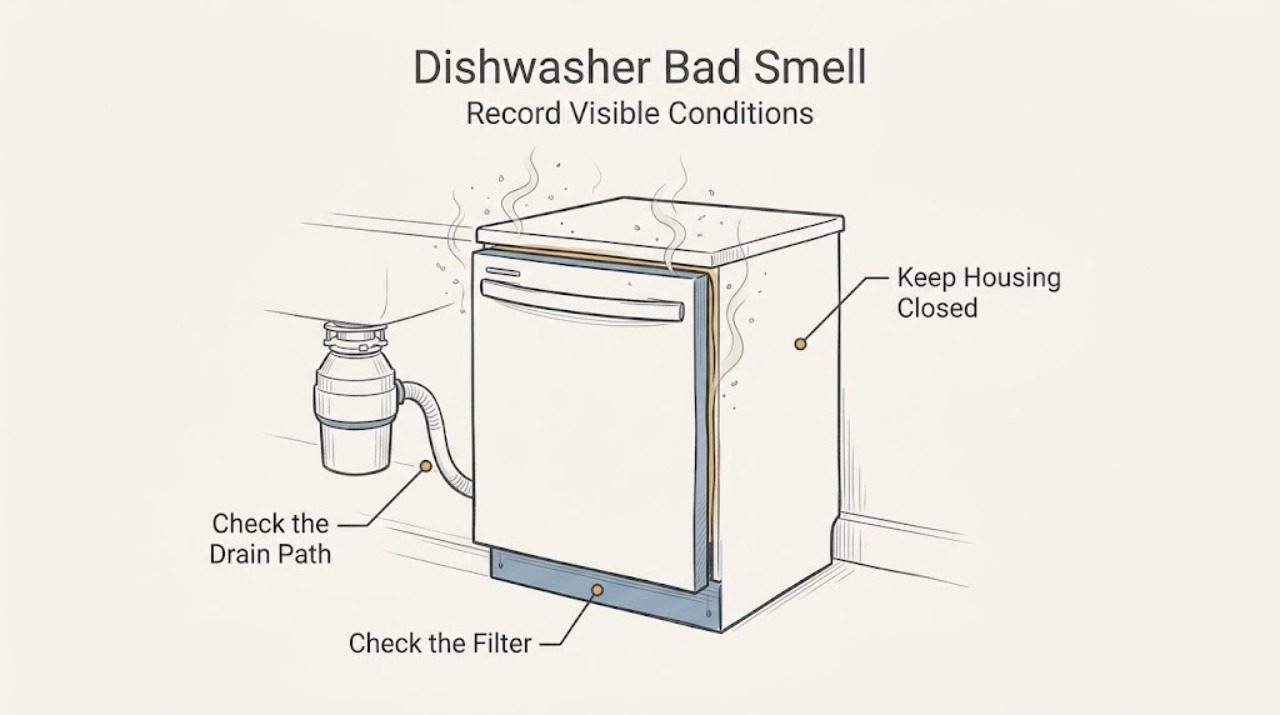
Start by separating a food or stagnant-water odor from a chemical, plastic, or burning smell. Asko's US Dishwasher Cleaning Guide specifically directs owners to clean the interior and filters for an odor inside the unit, and it permits an empty Normal Wash cleaning cycle with a dishwasher-safe container holding 2 cups of vinegar or citric acid crystals. It also directs owners to wipe the door edge and rubber seal, keep controls clean with a damp cloth, and never use antifreeze, drain opener, CLR, or other chemical cleaners. Turn the dishwasher off before cleaning, remove dishes, clean only the filter and interior areas covered by the exact use-and-care guide, and dry or drain the unit normally. If the smell is chemical, electrical, smoky, or accompanied by melted material, abnormal heat, a continuously running drain pump, repeated faults, or standing water that remains after the model-approved checks, turn power and water off when safe and arrange qualified service.
Work through in order
Diagnostic checks
Use only checks that match the exact appliance or system and its official guide.
-
Check 1
Turn the dishwasher off, note the odor before cleaning, and record whether it smells stale or like food, detergent or cleaner, plastic, smoke, or electricity; also note whether it appears after a cycle, while draining, or with the controls off.
Expected result: The odor is limited to the tub, strongest at the door edge or seal, follows a cleaning-product or detergent change, is accompanied by standing water, or is sharp, smoky, chemical, or electrical.
Next step: For a hazard odor, keep the dishwasher off and arrange service. For a food-like or stale odor without a hazard, remove the dishes and continue with the filter and interior checks in the exact use-and-care guide.
Why this matters
Why: A tub or door-area odor can be consistent with residue, filters, seal buildup, or retained water. A chemical, smoky, electrical, or worsening odor is not a normal cleaning problem, and standing water can preserve odor or indicate a drain issue.
-
Check 2
Remove all dishes and inspect the cool, idle interior for food debris, grease, residue, pooled water above the filters, or a foreign item; do not reach into a running machine or a hot wash area.
Expected result: Food or grease is visible, water sits above the filters, a foreign item is present, or the interior looks clean and dry.
Next step: Remove only loose, visible debris. Do not probe the sump, spray arm, heater, or pump; clean the filters and interior using the model-approved method before considering another cycle.
Why this matters
Why: Asko's guide links an odor inside the unit with cleaning the interior and filters, and separately lists water above the filters as an interior-and-filter cleaning issue. A clean, dry tub makes an accessible residue source less likely.
-
Check 3
Clean the filter assembly using the Asko guide for the exact model: remove the lower rack, remove the filter basket and fine-filter components as directed, wash them with soap and water, and reinstall every part securely.
Expected result: The filters contain food or buildup, a filter is damaged or will not seat, water was above the filters, or the filters are clean and correctly installed.
Next step: Use only the exact manual's filter procedure and do not run the dishwasher with a missing or unsecured filter. Arrange service for a damaged filter, inaccessible debris, persistent standing water, or an odor that remains after cleaning.
Why this matters
Why: Asko specifically recommends cleaning the interior and filters for an odor inside the unit. Debris or a filter that is not correctly reinstalled can leave residue in the wash and drain path; a clean, secure filter shifts attention to the interior, drain, or a hidden fault.
-
Check 4
Run the documented empty interior-cleaning cycle only after the filters are secure and no chemical or electrical hazard is present: place a dishwasher-safe container with 2 cups of vinegar on the bottom rack or use citric acid crystals in the soap compartment, then select Normal Wash as the guide directs.
Expected result: The odor is reduced after the cycle, residue or odor remains, the dishwasher fails to drain, or the smell becomes chemical, smoky, or electrical during the cycle.
Next step: If the odor improves, wipe and dry accessible areas and follow the model's normal maintenance schedule. If it remains, the unit will not drain, or a hazard appears, stop the dishwasher, turn power and water off when safe, and arrange service.
Why this matters
Why: Asko's US cleaning guide uses this vinegar or citric-acid bath to remove soap and rinse-aid residue from the interior. A failed drain or worsening hazard odor is not evidence for adding more cleaner or repeating the cycle.
-
Check 5
Wipe the cool door edge and rubber seal with a damp cloth, and clean the control panel only with a damp cloth; if the dishwasher is connected to a food-waste disposer, clean that disposer according to its own manufacturer instructions.
Expected result: Residue is present on the seal or door edge, the odor is strongest at the door or connected disposer, the controls are greasy, or all accessible surfaces are clean.
Next step: Remove only accessible residue and dry the surfaces. Do not spray cleaner directly on the door or controls, flood the seal, or dismantle a disposer connection; request service if the odor persists or comes from beneath the door or cabinet.
Why this matters
Why: Asko identifies the door edge, rubber seal, controls, and connected disposer as separate maintenance areas. Odor at those boundaries can persist even when the tub and filters are clean.
-
Check 6
Check the drain outcome after one completed, model-approved cleaning cycle without repeatedly forcing a drain or opening the pump area.
Expected result: The tub is empty, water remains above the filters, the drain pump runs continuously, the drain line is visibly obstructed, or an error or unusual noise appears.
Next step: If water remains, the pump runs continuously, or an error or abnormal noise occurs, turn power and water off when safe and arrange qualified service. Do not remove the pump cover, probe wiring, or pour drain chemicals into the machine.
Why this matters
Why: Asko's guide pairs odor or water above the filters with cleaning the interior and filters, but lists a continuously running drain pump as a condition requiring power and water to be turned off and service. A hidden drain or pump problem cannot be diagnosed from odor alone.
-
Check 7
Recheck the empty, dry dishwasher after the safe cleaning steps and prepare a service handoff if the odor returns; record the model number, detergent and rinse-aid products, filter condition, water level, cycle used, and any unusual sound or fault.
Expected result: The odor is gone, returns only after dishes sit, returns immediately when heating or draining starts, or remains with a clean and dry interior.
Next step: Resume normal use only when the odor has cleared and the dishwasher operates normally. For a recurring or unexplained odor, keep it out of service and contact qualified Asko service with the recorded evidence.
Why this matters
Why: A resolved residue odor supports an interior or filter source. A recurring odor tied to heating, draining, or an empty clean tub points toward a hidden pump, heater, wiring, insulation, seal, or ventilation issue that requires model-specific diagnosis.
Use your observations
Decision map
Find the observation that best matches what you see, then follow the next safe action.
-
PATH 01Next step
What you see
Do this next
Clean the filters and interior using the exact Asko guide. Use the documented vinegar or citric-acid Normal Wash cleaning cycle once, with no other cleaner mixed in, and reassess after the unit drains.
-
PATH 02Next step
What you see
Do this next
Clean and reinstall the filters as directed and check only the visible drain condition allowed by the manual. Stop for service if water remains, the drain pump runs continuously, or the drain path is inaccessible.
-
PATH 03Next step
What you see
Do this next
Wipe the door edge, seal, and controls as the guide directs, and follow the disposer manufacturer's cleaning instructions if applicable. Do not spray cleaner directly on the door or disassemble the connection.
-
PATH 04Next step
What you see
Do this next
Stop the cycle, keep people away from the appliance, turn power and water off only when safe, ventilate without entering smoke, and arrange qualified service. Do not run another cleaning cycle or add chemicals.
-
PATH 05Next step
What you see
Do this next
Keep the dishwasher out of service and arrange qualified Asko appliance service with the exact model, cycle timing, and cleaning results. Do not open panels or order a pump, heater, seal, or control from the smell alone.
Helpful context
Understand the symptom
The odor pattern tells you where to start
A stale or food-like smell inside the tub often stays with residue, filters, the door edge, or water that is not leaving. An odor that appears after a filter, detergent, or cleaning-product change needs a different check. A sharp chemical, burnt-plastic, or electrical smell is a stop condition, not a reason to run another cleaning cycle. Record whether the dishwasher is empty or loaded, whether water is above the filters, and whether the smell is strongest at the door seal, drain area, controls, or underneath the unit.
Clean filters and the interior using Asko's documented method
Asko's US cleaning guide says to clean the dishwasher interior and filters for an odor inside the unit. For the interior, it describes removing the dishes, placing a dishwasher-safe container with 2 cups of vinegar on the bottom rack or using citric acid crystals in the soap compartment, and running a Normal Wash cycle. It separately describes removing the lower rack and filter components, washing them with soap and water, and reinstalling them. Use the exact model guide if your filter or detergent compartment differs.
Do not mask an odor with unsafe chemicals
The Asko guide expressly says never to use antifreeze, drain opener, CLR, or other chemical cleaners in the dishwasher. Do not mix vinegar, citric acid, bleach, detergent, or commercial cleaners in one cycle. For the door edge and rubber seal, wipe with a damp cloth; if a household cleaner is necessary, spray it onto the cloth rather than directly on the door. Keep cleaner away from controls and openings.
Persistent odors need a service boundary
If a clean interior and filters do not change the odor, or if the unit has standing water, a drain pump that runs continuously, smoke, melted material, abnormal heat, or an electrical smell, stop using it. Asko's guide routes a continuously running drain pump to turning power and water off and contacting customer care. A technician can inspect hidden drain, pump, heater, wiring, insulation, or leak sources without turning a symptom into an unsupported part diagnosis.
Safety boundary
Stop conditions
- Smoke, sparks, burnt-plastic or electrical odor, visible melting, or abnormal heat
- A drain pump runs continuously, water remains above the filters, or the unit cannot complete a safe drain
- A fault, leak, or unusual noise appears during or after the cleaning cycle
- The odor returns with an empty, clean dishwasher or cannot be localized to an accessible surface
- The next step would require opening a pump, electrical compartment, heater area, or hidden plumbing
When checks do not resolve it
Need a professional?
Stop and arrange qualified service for a chemical, smoky, burnt-plastic, or electrical odor, visible melting, abnormal heat, a continuously running drain pump, standing water that remains after the exact manual's external filter checks, repeated faults, unusual noise, or an odor that returns after the documented cleaning. Turn power and water off when safe before service access.
Common questions
FAQ
Why does my Asko dishwasher smell bad inside?
Asko's US cleaning guide directs owners to clean the interior and filters for an odor inside the unit. Check for food residue and water above the filters, then clean and reinstall the filters and use the documented vinegar or citric-acid Normal Wash cleaning method once. Stop for service for chemical, smoky, electrical, or recurring odors.
How do I clean the filters in an Asko dishwasher to remove odor?
With the dishwasher off and empty, follow the exact model guide to remove the lower rack and filter components. Wash the filter parts with soap and water, remove accessible buildup, and reinstall every component securely. Do not run the unit with a missing or loose filter.
Can I use vinegar to remove an odor from my Asko dishwasher?
Asko's US cleaning guide describes placing a dishwasher-safe container with 2 cups of vinegar on the bottom rack and running a Normal Wash cycle, or using citric acid crystals in the soap compartment. Do not mix either with bleach, detergent, or another cleaner, and never use drain opener, CLR, or antifreeze.
What if my Asko dishwasher still smells after cleaning the filters?
Wipe the interior, door edge, and rubber seal as directed, check for water above the filters, and consider a connected food-waste disposer if applicable. If the empty dishwasher still smells or the odor returns when heating or draining, keep it out of service and arrange qualified Asko appliance service.
Is a chemical or burning smell from an Asko dishwasher safe?
No. Stop the cycle for a chemical, smoky, burnt-plastic, or electrical odor, visible melting, abnormal heat, or smoke. Turn power and water off only when safe and arrange qualified service; do not add cleaner or run another cycle to mask the smell.
Why does my Asko dishwasher smell and leave water above the filters?
Asko's guide lists cleaning the interior and filters for both an odor inside the unit and water above the filters. Clean and reinstall the filters using the exact model procedure. If water remains, the pump runs continuously, or the drain path is not safely accessible, turn power and water off and request service.
Read the exact guide
Official sources
- ASKO Dishwasher Cleaning GuideASKO · Official US Asko cleaning and troubleshooting guide; filter access, cycle names, and controls can vary by exact model, so the model use-and-care guide takes precedence.
Community feedback
Share a repair observation
Share a plain-text repair observation. Accepted observations are published automatically; this page may take a moment to update.