
On this page
Start here
Quick answer
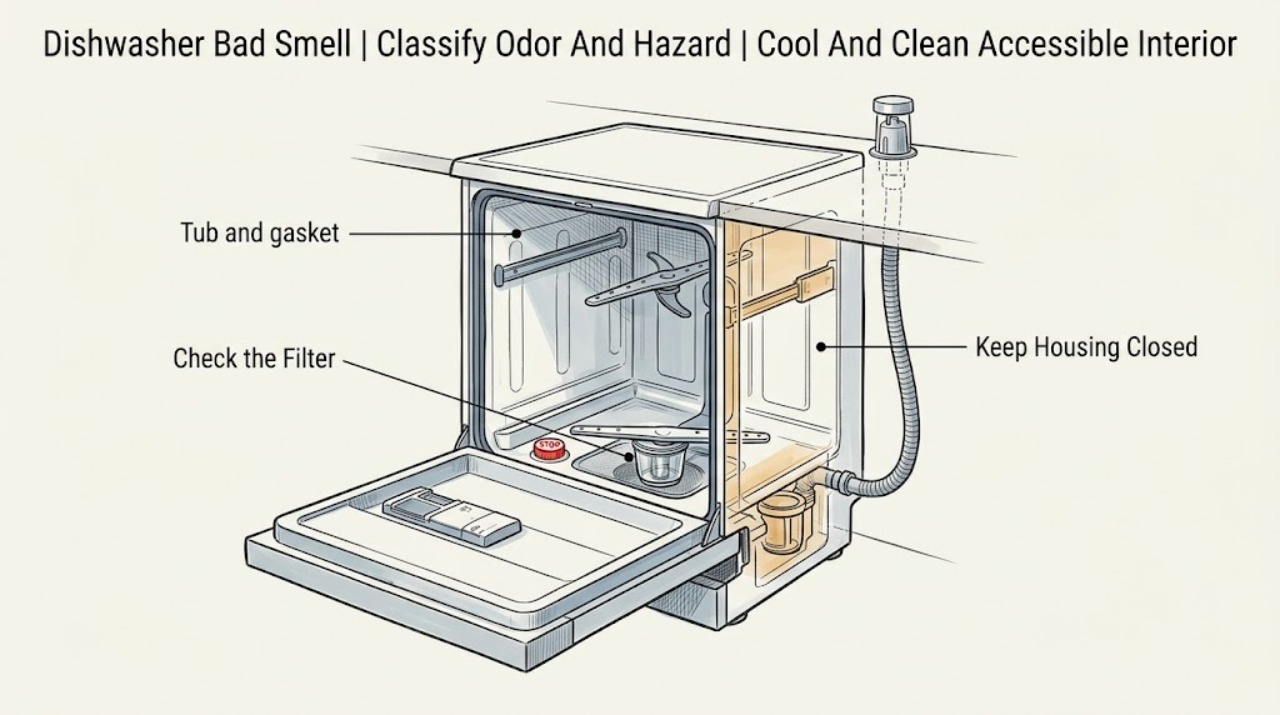
First identify the odor: stale food or sewage-like odor after dishes sat, a damp smell with standing water, a chemical or detergent smell, or a burning/electrical odor. For a normal food or damp odor, remove dishes and visible debris, check that the dishwasher finishes its cycle and drains, and run Rinse Only if your model provides it. With electrical power off and the heating element cool, wipe the door gasket and accessible tub area, clean the exact model's filter or glass trap, and check only visible drain routing for a kink. If the dishwasher drains to a disposer, the disposer inlet must be open and the disposer clear; an installed air gap must also be clean. Use only dishwasher detergent and rinse aid, and follow the exact manual for any approved cleaner or descaling cycle. Crosley's CDBEH960 guide identifies food left too long, poor draining, and a normal new-installation smell as odor causes, while its care section gives a glass-trap and air-gap check. A recurring burning/plastic/electrical smell, smoke, sparks, a hot control or cord, water in the base, or a leak near wiring is not a cleaning problem: stop the dishwasher, isolate power and water only when safe, and arrange qualified service. Do not remove panels, reach near a live heating element, probe the pump, or mix bleach, vinegar, or other cleaners.
Before you begin
Safety first
- The user may remove dishes, wait for cooling, wipe accessible gasket/tub residue, clean and reinstall the exact model's filter or glass trap, inspect a visible drain hose/air gap/disposer path, and use only documented dishwasher-cleaner procedures with power disconnected as required. Panel removal, live electrical work, pump/heater/motor/control diagnosis, hidden plumbing disconnection, leak repair, and work near a wet base are for qualified service personnel.
Work through in order
Diagnostic checks
Use only checks that match the exact appliance or system and its official guide.
-
Check 1
Do not start another cycle while investigating. Describe the smell as stale food/damp, sewage-like after draining, detergent or chemical, hot plastic, burning electrical, or smoke-like. Note whether it appears only after dishes sit, after draining/drying, at the first installation, or during operation, and look only for visible standing water, scorching, melted plastic, smoke, sparks, or a hot cord/control area.
Expected result: The odor is food/damp with no hazard, it returns with standing water or poor drain-out, it is a first-installation smell, or it is burning/electrical with heat, smoke, sparks, or visible damage.
Next step: For a hazard odor, stop use and isolate power and water only from a safe, dry position before arranging service. For a non-hazard odor, continue with the cooled interior, filter, and drain checks.
Stop if: Do not run a heated cycle to test a burning smell, touch hot components, or open panels when smoke, sparks, liquid near electrics, or damaged wiring is present.
Why this matters
Why: Food residue, retained water, drain-back, or a new-appliance smell supports user-level cleaning and drainage checks. A burning or electrical pattern is a safety event and can involve wiring, controls, a pump, or heating components that cannot be identified safely from the smell alone.
-
Check 2
After the cycle is over, turn the dishwasher off, disconnect electrical power according to the installation, and allow the heating element and tub to cool. Remove dishes and wipe food residue from the door gasket, lower-door edge, and accessible tub surfaces with a damp cloth; do not remove enclosure panels or pour cleaner into the base.
Expected result: Food soil or residue is present around the gasket/tub, the interior is clean but the odor remains, or the interior contains water, a melted item, or a scorched area.
Next step: Clean only ordinary residue and continue to the model-specific filter and drain checks. For standing water, melted plastic, scorching, smoke residue, or damage, keep the dishwasher out of service and arrange qualified inspection.
Stop if: Do not touch the heating element until cool, use bleach/oven cleaner or abrasive pads without exact manual approval, or wipe into exposed electrical areas.
Why this matters
Why: Residue at the gasket or lower door can produce a local stale odor even when the wash area looks clean. Standing water points toward drainage, while a melted item or scorch mark can explain a burnt odor and needs more than cleaning.
-
Check 3
Use the exact model manual to identify the filter or glass-trap assembly. On the CDBEH960 guide, inspect the central glass trap and confirm the spray-arm/glass-trap assembly is fully snapped back into place. On XD Series models, remove and rinse the Ultra-Fine and Fine filters with warm soapy water as directed, without scouring or damaging the mesh; reinstall and lock every retaining post.
Expected result: The trap/filter contains food, glass, bones, pits, grease, or hard-water soil; the filter was loose or missing; or the correct filter is clean and locked but odor/standing water remains.
Next step: Empty and rinse the model-specific assembly, reinstall it exactly, and continue to the drain-path check. If a filter, trap, retaining post, or spray arm is damaged or will not lock, do not run the dishwasher and arrange service.
Stop if: Do not reach through sharp glass or debris with bare hands, use a scouring pad on filter mesh, force a filter, or run without the required filter/trap assembly.
Why this matters
Why: Food trapped in the collection area can feed a recurring stale odor and restrict drainage or wash performance. A loose or incorrectly installed filter can let debris circulate. Persistent odor with a clean, correctly installed filter makes drain routing, door-seal residue, detergent, or a hidden service fault more likely.
-
Check 4
With power off, inspect only the visible drain path under the sink and behind accessible cabinetry. Look for a kinked hose, a clogged countertop air gap if fitted, a disposer that is not clear, or a drain connection that allows water to return. If the dishwasher drains into a disposer, confirm its inlet has been opened as required by the installation; do not disconnect plumbing or pull out the dishwasher as a first-line odor check.
Expected result: Water remains in the tub, the hose is kinked, the air gap or disposer is blocked, the sink also drains poorly, or the visible drain path is clear but odor and retained water persist.
Next step: Clean an accessible air gap as its own instructions direct and clear the disposer/sink only if safe; correct a visible kink without stressing fittings. If standing water remains or plumbing must be disconnected, stop and arrange a plumber or qualified appliance technician.
Stop if: Do not dismantle the pump, disconnect pressurized or hard-to-reach lines, reach into standing water with power connected, or restart after a leak into the base.
Why this matters
Why: Crosley's guidance links odor and poor drainage to the drain hose, glass trap, disposer connection, and air gap. A sink or disposer blockage can be upstream of the dishwasher. A clear visible path with continued standing water may involve the pump, internal hose, check valve, high loop, or installation and cannot be confirmed by an odor alone.
-
Check 5
Use only detergent and rinse aid labeled for automatic dishwashers and the amount specified by the exact manual. Wipe any spilled rinse aid, avoid oversudsing, and if the model provides Rinse Only use it for dishes that will sit. For persistent food or mineral odor after filter/drain cleaning, run only an approved dishwasher-cleaner or citric-acid procedure from the exact manual; never mix cleaning chemicals.
Expected result: The odor follows an old load or rinse-aid/detergent spill, excessive suds are present, the odor improves after a permitted rinse/cleaner cycle, or it remains despite correct detergent and cleaning.
Next step: Use the correct product and dosage and allow the approved cycle to finish. If odor returns immediately, the tub does not drain, or detergent/cleaner has entered an unintended area, stop use and arrange service.
Stop if: Do not mix bleach, vinegar, citric acid, detergent, or commercial cleaners, use hand-dish soap, or pour chemicals into a standing-water or electrical fault.
Why this matters
Why: Food left in the tub, spilled rinse aid, excess suds, and mineral film can create or retain odors. Improvement after an approved cycle supports a residue or mineral cause; a persistent odor despite correct chemistry and drainage needs a broader inspection.
-
Check 6
If the smell is burning plastic/electrical, or if smoke, sparks, a hot control/cord, repeated breaker trips, a melted item, a leak toward the base, or a persistent water-level problem appears, stop the dishwasher. From a safe dry position, switch off electrical power and the water supply if accessible; otherwise keep clear and have a qualified person isolate them.
Expected result: The odor is electrical or smoky, the appliance or wiring is damaged, water is in the base or near wiring, or the odor persists after safe food/filter/drain cleaning with no obvious residue source.
Next step: Keep the dishwasher out of service and arrange Crosley/authorized or qualified appliance service. Provide the exact model, odor timing, standing-water result, filter/drain findings, and any breaker, leak, smoke, or damage history.
Stop if: Do not reset and rerun repeatedly, remove panels, test live voltage, touch the heating element, bypass a leak sensor, or repair wiring yourself.
Why this matters
Why: These signs can indicate a heating element, pump, motor, control, wiring, insulation, leak, or installation fault. Crosley's safety guidance requires electrical disconnection before servicing and says repairs should be done by a qualified technician; the smell alone cannot select a replacement part.
Use your observations
Decision map
Find the observation that best matches what you see, then follow the next safe action.
-
PATH 01Next step
What you see
The smell is mild/stale, follows dishes left inside, or occurs only during first installation, with no standing water, scorch, smoke, or electrical sign.
Do this next
Remove the load, wipe accessible residue after cooling, and use Rinse Only for dishes that will sit if the model provides it. If the new smell persists beyond initial use or becomes burnt/electrical, stop and arrange service.
Why this path and its safety boundary
Why it matters: Crosley's CDBEH960 guide identifies soiled dishes left too long and a normal new-installation smell as ordinary odor causes.
-
PATH 02Next step
What you see
The odor is food-like or damp, food/grease is found at the gasket, glass trap, or model-specific filter, and the tub otherwise drains.
Do this next
Power off, cool, clean the model-specific filter/trap and gasket, reinstall the assembly, and run an approved rinse/cleaner cycle if the manual permits. If the smell remains, check drainage next.
Why this path and its safety boundary
Why it matters: Residue in an accessible collection area or seal is more likely than an electrical fault, but the filter must be reinstalled correctly so debris does not recirculate.
-
PATH 03Next step
What you see
A sour or sewage-like smell returns with water left in the tub, slow drain-out, a blocked air gap/disposer, a kinked hose, or an improperly routed visible drain line.
Do this next
Clean the accessible filter/trap and air gap, clear the disposer/sink if safe, and correct only a visible hose kink. Persistent standing water or inaccessible plumbing/pump work needs a plumber or qualified appliance technician.
Why this path and its safety boundary
Why it matters: Poor drainage or drain-back is more likely than a simple interior odor. Crosley calls out the filter/glass trap, drain hose, disposer connection, air gap, and high-loop arrangement in its guidance.
-
PATH 04Next step
What you see
The odor follows a detergent/rinse-aid spill, excess suds, hand soap, or an unapproved cleaning product, without smoke or electrical heat.
Do this next
Stop adding chemicals, wipe accessible spills after power-off/cooling, use only the exact manual's automatic-dishwasher products and approved cycle, and arrange service if foam, overflow, or odor persists.
Why this path and its safety boundary
Why it matters: Incorrect chemistry can leave odor, foam, or residue and can cause overflow. It should not be “neutralized” by mixing another cleaner.
-
PATH 05Safety boundary
What you see
The odor is sharp, burnt, smoky, or electrical, or it coincides with sparks, a hot control/cord, breaker trips, melted plastic, a leak near the base, or visible scorch marks.
Do this next
Stop the dishwasher, isolate electrical power and water only if safe, keep it out of service, and arrange qualified repair. Use local emergency procedures for active smoke or fire.
Why this path and its safety boundary
Why it matters: This is a safety fault, not a filter or deodorizing branch. Heating, motor, control, wiring, insulation, or leak-related damage may be involved.
Safety stop: Do not run another cycle, reset the breaker repeatedly, remove panels, reach near the heater, or use water on an energized appliance fire.
Helpful context
Understand the symptom
A dishwasher odor is not automatically a filter problem
Stale food left in the tub, a small amount of retained water, or a dirty filter can create a damp or sour smell. Poor drainage can make the same odor return after each cycle. A sharp burnt-plastic or electrical smell is a different category: it may indicate overheating, wiring, a control, or a component near the heating system, so the machine should not be run to “flush” it away.
Crosley dishwasher layouts vary by model
The CDBEH960 guide describes a glass trap and a self-cleaning filter arrangement, while the Crosley-hosted XD Series manual describes removable Ultra-Fine and Fine filters and an optional drain air gap. That difference matters. Find the exact model number inside the door or on the tub label and use its manual for filter removal, cycle names, cleaner choice, and drain-line layout rather than forcing a part that looks similar.
Clean only after power is off and hot parts have cooled
Crosley's guides warn that the heating element and recent cycle contents can be hot. Turn the dishwasher off, disconnect electrical power as the installation permits, and wait for the element and interior to cool before wiping the gasket or handling filters. Keep water and cleaning solution away from the control panel, wiring, and base; never remove an enclosure panel as part of odor cleaning.
Drainage determines whether cleaning will last
A clean filter will not solve an odor that is being reintroduced by standing water or drain-back. Crosley's troubleshooting guidance calls out the glass trap, drain hose, disposer connection, air gap, and high-loop arrangement. These checks can explain a food or sewage-like odor, but a hidden blockage, failed pump, leak, or installation defect belongs with a qualified technician.
Safety boundary
Stop conditions
- Stop using the dishwasher for burning/electrical odor, smoke, sparks, dangerous heat, a hot or damaged cord/control, melted plastic, repeated breaker trips, or water near wiring or the base; isolate electrical power and water only from a safe dry position.
- Do not remove enclosure panels, test live voltage, tamper with controls, bypass a leak/overflow sensor, or repair wiring, pump, heater, motor, or control components yourself.
- Do not reach into a hot tub or touch the heating element until it has cooled; disconnect power before handling filters, the glass trap, or any interior cleaning.
- Do not use knives or bare hands around broken glass, force a filter or spray arm, disconnect hidden plumbing, or pull out the built-in dishwasher as an odor check.
- Do not mix bleach, vinegar, citric acid, detergent, rinse aid, or other cleaners; do not use hand-dish soap or pour chemicals into standing water.
When checks do not resolve it
Need a professional?
Arrange qualified Crosley/authorized appliance service or plumbing help when odor returns with standing water after the accessible filter, glass-trap, air-gap, disposer, and visible drain-hose checks; when the drain pump, internal hose, check valve, leak sensor, or installation routing may be involved; or whenever odor is burning/electrical, the dishwasher leaks toward the base, a control/cord is hot or damaged, smoke/sparks occur, or a breaker trips. Do not keep running the appliance to diagnose a hazardous odor.
Safety scope: The user may remove dishes, wait for cooling, wipe accessible gasket/tub residue, clean and reinstall the exact model's filter or glass trap, inspect a visible drain hose/air gap/disposer path, and use only documented dishwasher-cleaner procedures with power disconnected as required. Panel removal, live electrical work, pump/heater/motor/control diagnosis, hidden plumbing disconnection, leak repair, and work near a wet base are for qualified service personnel.
Common questions
FAQ
Why does my Crosley dishwasher smell bad after dishes sit?
Crosley identifies soiled dishes left in the dishwasher too long as an odor cause. Remove the load, wipe accessible residue after the tub cools, and use Rinse Only if your model provides it. If the smell returns with standing water, check the model-specific filter/glass trap and drain path.
Can a clogged dishwasher filter cause a bad smell?
Yes, food and grease retained in a filter or glass trap can feed a stale odor and affect drainage. Disconnect power, let the heating element cool, then clean the exact model's filter or glass trap and reinstall it fully. Do not force the assembly or reach through broken glass.
Why does my Crosley dishwasher smell like sewage or stay wet?
A recurring odor with standing water points toward poor drainage or drain-back. Check the accessible filter/trap, air gap if fitted, disposer connection, sink drainage, and visible drain hose for a kink, following the exact installation. Persistent standing water or hidden pump/plumbing work needs qualified service.
What dishwasher cleaner can I use to remove a Crosley odor?
Use only a cleaner or citric-acid procedure named or permitted by the exact Crosley manual. Use automatic-dishwasher detergent and rinse aid only, and never mix bleach, vinegar, citric acid, detergent, or other products. Do not pour chemicals into standing water or an electrical fault.
Is a burning smell from a Crosley dishwasher safe to ignore?
No. Stop the dishwasher for a burning or electrical odor, smoke, sparks, a hot control/cord, melted plastic, repeated breaker trips, or water near wiring. Isolate power and water only if safe, do not restart it, and arrange qualified appliance service.
Can I remove the dishwasher panel to find the source of the smell?
No. Crosley's guidance requires electrical disconnection before servicing and says repairs should be done by a qualified technician. Keep panels, wiring, pump, heater, controls, and the base closed; user cleaning is limited to cooled, accessible areas and the exact model's documented filter/drain steps.
Read the exact guide
Official sources
- CDBEH960TS/D - CROSLEY HOME PRODUCTSCrosley Home Products · Confirms the product family and lists its removable filter trap, stainless steel food disposer, controls, cycles, and links to model documentation; does not replace the exact user guide.
- A05752401A.inddCrosley · Model-family guidance for ordinary odor causes, Rinse Only, drainage checks, gasket/tub cleaning, glass trap, disposer inlet, drain hose, air gap, heating-element cooling, electrical disconnection, and qualified repair; other models may differ.
- Dishwashers Owner’s ManualCrosley · Model-family guidance for filter cleaning, dishwasher interior deodorizing, air-gap and drain-back checks, detergent/cleaner boundaries, electrical safety, and troubleshooting; exact Crosley models may use another filter or drain arrangement.
Community feedback
Share a repair observation
Share a plain-text repair observation. Accepted observations are published automatically; this page may take a moment to update.