
On this page
Start here
Quick answer
Treat a visibly cracked, loose, detached, or leaking ASKO dishwasher detergent dispenser as a model-specific service issue rather than choosing a universal replacement part. First stop the cycle, remove the dishes, and check whether a pan handle or utensil is blocking the dispenser door. ASKO's opened US cleaning guide also says to add detergent immediately before a wash program and not to add it for Rinse and Hold. If the door is visibly damaged, will not latch, is forced open, or still fails after the accessible loading and cycle checks, stop using the dispenser and use the exact model manual or qualified ASKO service. The task has no model number, so no dispenser assembly or compatibility claim is made.
Before you begin
Safety first
- Limit owner checks to stopping the cycle, unloading, visual inspection, correcting an accessible rack or utensil obstruction, selecting the correct program, and recording the exact model. Do not force the dispenser door, bypass its latch, glue or bend damaged plastic, open the inner door or electrical cover, perform live tests, or choose a replacement part without model confirmation.
Work through in order
Diagnostic checks
Use only checks that match the exact appliance or system and its official guide.
-
Check 1
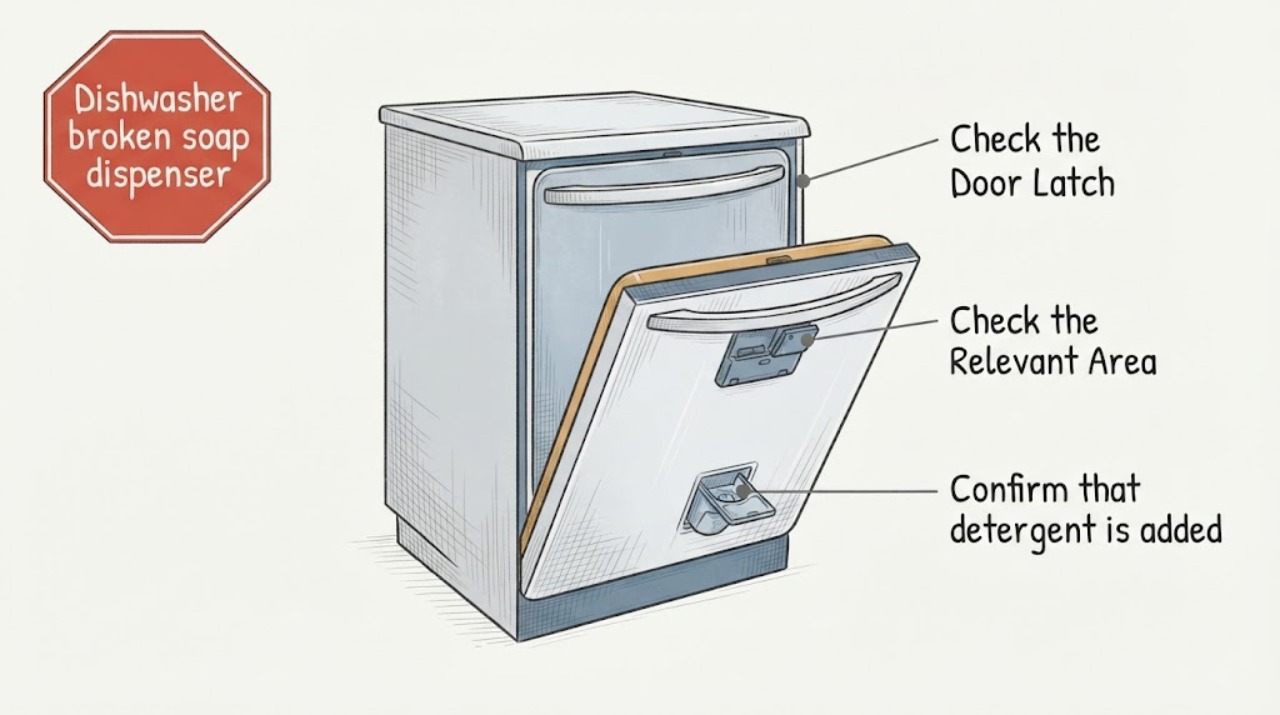
Stop the dishwasher, let the door and dispenser cool and dry, remove the dishes, and inspect the dispenser from the inside of the open door without forcing its door, latch, or cover.
Expected result: The dispenser is visibly intact but closed or obstructed, or it is cracked, loose, detached, leaking, or unable to latch.
Next step: For an intact dispenser, continue with the cycle and loading checks; for visible damage or leakage, stop using the dishwasher and request model-specific service.
Stop if: Do not pry or run a cycle to test a loose part. Photograph the condition and provide the model number to ASKO service.
Why this matters
Why: A visible physical defect is different from ASKO's documented user-level causes for detergent not dispensing. The opened guide does not identify a universal replacement or permit a bypass for a damaged dispenser.
-
Check 2
Check whether a pot handle, pan edge, utensil, or unusually placed rack item can contact the dispenser door when the dishwasher closes; correct only the accessible loading obstruction.
Expected result: An item blocks the dispenser door, or the dispenser path is clear when the racks are positioned normally.
Next step: Reposition the item, close the door normally, and use one suitable wash cycle while observing the dispenser without opening the machine during operation.
Stop if: Leave the loading arrangement unchanged and continue with the detergent and program check; do not bend the dispenser or rack to create clearance.
Why this matters
Why: ASKO specifically lists a pot or pan handle or utensil blocking the dispenser door as a check when detergent is not dispensed. A clear path does not prove the latch, actuator, or control has failed.
-
Check 3
Confirm that detergent is added immediately before a wash program and that the selected program is not Rinse and Hold; follow the exact model guide for any different dispenser type or auto-dose feature.
Expected result: Detergent was added too early, the program is Rinse and Hold, or the timing and program are correct.
Next step: Correct the timing or select the intended wash program and observe one cycle; do not add extra detergent to compensate.
Stop if: If the correct program and timing still leave the dispenser closed or damaged, stop at the external checks and request service.
Why this matters
Why: ASKO says detergent should be added just before starting a wash program and should not be used for Rinse and Hold. These conditions can explain an apparently unused dispenser without proving it is broken.
-
Check 4
Record the complete ASKO model or product code before looking for a manual, service path, or replacement dispenser; do not rely on the word “ASKO” or a similar-looking dishwasher photo.
Expected result: The full model/product code is available, or only a partial label is available.
Next step: Use the matching manual to determine whether the dispenser is user-removable and contact ASKO service if the manual does not cover the damage.
Stop if: Do not order a generic dispenser or use another ASKO model's latch instructions; obtain the model from the appliance label or service support.
Why this matters
Why: ASKO's official manuals portal is model/product-code based, and dispenser construction can vary by dishwasher family and market. A partial identity cannot establish compatible parts or access instructions.
-
Check 5
Escalate when the dispenser remains damaged or fails after the obstruction and program checks, or when water, detergent, electrical, or drain symptoms accompany it.
Expected result: The dispenser still will not latch/open, detergent leaks, the dishwasher will not close, the drain pump runs continuously, or there is smoke, burning smell, or water near electrical parts.
Next step: Stop using the dishwasher; turn off power and water for a leak or continuous pump as safely accessible, and arrange qualified ASKO service.
Stop if: If the dispenser operates normally after the documented checks, monitor one wash cycle and retain the model-specific manual for future use.
Why this matters
Why: The accessible ASKO guide does not identify an internal dispenser component or authorize a bypass. Its safety guidance sends continuous drain-pump conditions to power/water isolation and Customer Care.
Use your observations
Decision map
Find the observation that best matches what you see, then follow the next safe action.
-
PATH 01Next step
What you see
The dispenser is intact and a pot handle, pan edge, utensil, or rack item is blocking its door.
Do this next
Correct the loading obstruction without forcing the dispenser, then run one suitable wash cycle.
Why this path and its safety boundary
Why it matters: This matches ASKO's documented user-level explanation for detergent not being dispensed.
-
PATH 02Next step
What you see
Detergent was added before the wash program or the selected program is Rinse and Hold.
Do this next
Add detergent immediately before the intended wash program and observe one cycle; do not add extra detergent to Rinse and Hold.
Why this path and its safety boundary
Why it matters: ASKO identifies detergent timing and the Rinse and Hold program as reasons the dispenser may appear not to work.
-
PATH 03Next step
What you see
The dispenser is cracked, loose, detached, leaking, or will not latch after the accessible obstruction and program checks.
Do this next
Stop using the dispenser and arrange ASKO service with the complete model/product code; do not glue, bend, bypass, or replace it by guesswork.
Why this path and its safety boundary
Why it matters: The symptom is outside the opened guide's user-level checks, and no model-specific evidence supports a universal dispenser repair or part fit.
-
PATH 04Next step
What you see
The dishwasher leaks, cannot close, has water near electrical parts, or the drain pump runs continuously.
Do this next
Stop the appliance, isolate power and water safely, and contact qualified ASKO service.
Why this path and its safety boundary
Why it matters: The situation has a water or electrical safety boundary beyond a dispenser check; ASKO specifically directs power and water shutoff plus customer care for a continuously running drain pump.
-
PATH 05Next step
What you see
The model number is missing or the matching manual does not show the same dispenser design.
Do this next
Use the appliance label and ASKO's product-code manual route or request service; do not transfer another model's instructions.
Why this path and its safety boundary
Why it matters: The available evidence cannot establish dispenser construction, latch access, or compatible replacement parts for this dishwasher.
Helpful context
Understand the symptom
“Broken soap dispenser” can mean a blocked door, detergent left in the cup, a dispenser that does not open, or physical damage to the latch or housing. The opened ASKO dishwasher guide supports only the first user checks: detergent timing, the selected program, and an obstruction from a pot handle or utensil. It does not establish a universal ASKO dispenser assembly or a safe repair sequence for an unidentified model.
This task has no model number. Keep the checks external and unloaded. Do not force the dispenser door, pry the inner door, bypass a latch, apply adhesive to a damaged part, or run a cycle with a loose piece that could enter the pump or spray path. Record the exact model and use its manual before ordering or replacing anything.
If detergent or water is leaking through the inner door, the dispenser is detached, the door cannot close, or the dishwasher has smoke, burning smell, electrical damage, or a continuous drain pump, stop using it and arrange qualified ASKO service.
When checks do not resolve it
Need a professional?
Use the exact ASKO manual or qualified ASKO service for a visibly damaged dispenser, leakage, latch failure, uncertain model, or any internal electrical, door, water, or drain work.
Safety scope: Limit owner checks to stopping the cycle, unloading, visual inspection, correcting an accessible rack or utensil obstruction, selecting the correct program, and recording the exact model. Do not force the dispenser door, bypass its latch, glue or bend damaged plastic, open the inner door or electrical cover, perform live tests, or choose a replacement part without model confirmation.
Common questions
FAQ
Why is my ASKO dishwasher soap dispenser not opening?
First check whether a pot handle, pan edge, utensil, or rack item blocks the dispenser door, and confirm detergent was added immediately before a wash program rather than Rinse and Hold. If the door is visibly damaged or still fails with a clear loading path, use the exact model manual or ASKO service instead of forcing it.
Can I glue or bend a broken ASKO detergent dispenser?
Do not glue, bend, bypass, or force an unidentified dispenser. The opened ASKO guide gives obstruction and program checks but no universal repair or part-fit instruction. A cracked, loose, leaking, or non-latching dispenser should be handled through the exact model manual or qualified service.
Does ASKO use the same soap dispenser on every dishwasher?
The available official evidence does not establish that. ASKO's manuals portal is product-code based, and the task has no model number. Confirm the exact dishwasher identity before selecting a dispenser or using an access procedure.
What should I do if the broken dispenser is leaking?
Stop the dishwasher and do not run another cycle with water or detergent leaking through the door. If water is near electrical parts, isolate power and water safely and arrange qualified ASKO service; do not open the inner door or bypass the dispenser or door latch.
Read the exact guide
Official sources
- ASKO Dishwasher CleaningASKO Distribution North America / ASKO · Opened the ASKO-hosted US PDF directly. The dishwasher section supports detergent timing, Rinse and Hold, and obstruction checks. It does not give a universal broken-dispenser repair, latch bypass, or replacement-part procedure.
- ASKO User manualsASKO · Opened the official ASKO manuals portal directly. Its page requires JavaScript in this environment, but the opened official route establishes that manual lookup is model/product-code based; it is used for scope and not for unseen dispenser instructions.
Community feedback
Share a repair observation
Share a plain-text repair observation. Accepted observations are published automatically; this page may take a moment to update.