
On this page
Start here
Quick answer
A strange sound from an ASKO dishwasher should first be classified by when it occurs and whether dishes, racks, spray arms, or filter debris can explain it. Turn the dishwasher off before handling anything, secure the load so items cannot touch each other or the spray system, and clean the filters using the ASKO cleaning instructions. ASKO documents different spray pressures and lower-noise modes across its dishwasher range, so a sound that follows a wash or drying phase is not by itself proof of a failed pump. Stop using the dishwasher and arrange service for a harsh or persistent noise, a continuous drain-pump sound, a leak, burning smell, or electrical symptom.
Before you begin
Safety first
- Do not reach into a moving dishwasher, remove cabinet panels, test live electrical parts, dismantle a pump or fan, or keep running the appliance when there is a leak, burning smell, smoke, electrical symptom, or continuous drain-pump operation.
Work through in order
Diagnostic checks
Use only checks that match the exact appliance or system and its official guide.
-
Check 1
Stop the cycle, wait for moving water and racks to settle, and turn the dishwasher off before opening it or handling dishes, spray arms, filters, or debris.
Expected result: The sound stops safely, or the machine continues making a harsh sound, leaking, smelling burned, smoking, or running its drain pump continuously.
Next step: For the hazardous result, turn power and water off when safe to do so and arrange qualified service; do not open panels or repeat the cycle to reproduce the sound.
Why this matters
Why: Handling is appropriate only after the machine is stopped. Persistent pump operation or a leak/electrical symptom is outside a casual noise check.
-
Check 2
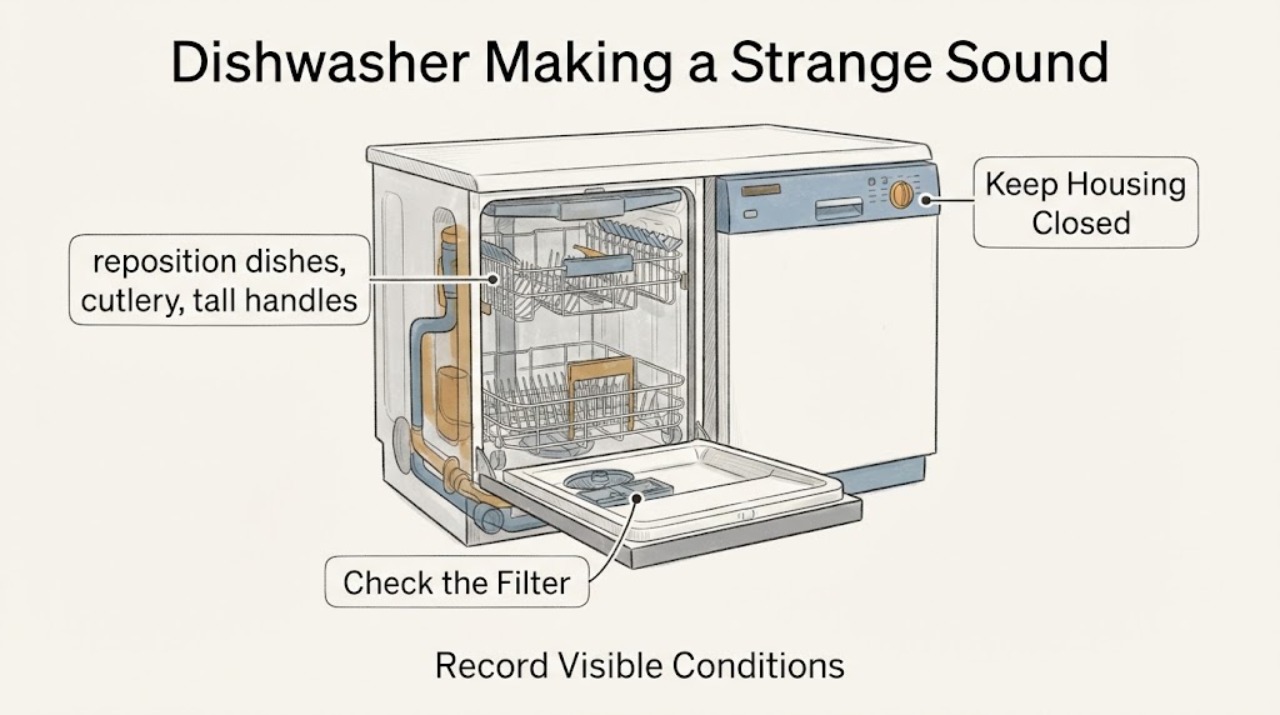
Record when the sound occurs: filling, spraying, draining, drying, or throughout the cycle, and whether it is a brief click, a rattle, a buzz, a grind, or a continuous tone.
Expected result: The sound follows one phase or changes with the load, or it remains the same and harsh even when the dishwasher is empty.
Next step: Use the timing to guide the rack/spray/filter checks below and save the full model and a short recording for service if the sound persists.
Why this matters
Why: Phase- or load-dependent timing narrows the external checks, but sound alone does not prove a failed pump, motor, valve, or fan.
-
Check 3
With power off, reposition dishes, cutlery, tall handles, and lightweight items so they are stable and cannot touch one another or obstruct the spray system; check only the rack adjustments described for the model.
Expected result: A dish or rack part was touching another item or could block a spray arm, or the load is already clear and secure.
Next step: Run one normal model-approved cycle only if there is no leak, burning smell, electrical symptom, or continuous pump sound; otherwise leave the appliance off and call service.
Why this matters
Why: A contact-related rattle can be corrected externally. If the sound is unchanged with a clear load, do not infer a specific internal part from the noise.
-
Check 4
With the dishwasher off, clean the filters using ASKO's documented sequence: remove the lower rack, remove the filter basket and fine filter and cover, wash them with soap and water, and reinstall them correctly.
Expected result: Food, glass, or other debris is present, the filter is incorrectly seated, or the filter area is clean and correctly reinstalled.
Next step: If the sound remains after the filter is correctly reinstalled, stop troubleshooting at the user level and provide the phase, sound description, model, and any water symptom to service.
Why this matters
Why: Debris or a mis-seated filter can affect the wash and drain path, but cleaning does not establish that an internal pump or motor is defective.
-
Check 5
Prepare a service handoff with the exact model, cycle phase, load condition, filter result, whether the sound is repeatable when empty, and any leak, odor, code, or electrical symptom.
Expected result: The machine remains noisy after the external checks, the noise is severe or continuous, or the model-specific manual is needed to interpret the sound.
Next step: Keep the dishwasher off for persistent or hazardous noise and contact ASKO or a qualified appliance technician; do not order a pump, motor, fan, or valve from the sound description alone.
Why this matters
Why: The remaining cause is not safely identifiable from a generic ASKO family page and may require model-specific service inspection.
Use your observations
Decision map
Find the observation that best matches what you see, then follow the next safe action.
-
PATH 01Next step
What you see
The sound is a rattle or intermittent clatter that changes with a particular load and a dish, utensil, rack or spray path can be seen touching or obstructing another item.
Do this next
Stop the machine, correct the model-approved rack/load arrangement, and monitor one normal cycle only if no safety symptom is present. Escalate if the noise returns with a clear load.
Why this path and its safety boundary
Why it matters: The observed pattern supports an external loading or spray-clearance issue more than a confirmed internal failure.
-
PATH 02Next step
What you see
The sound is strongest while draining, the filter area contains debris, or the filter was not seated correctly; the machine otherwise has no leak or electrical warning.
Do this next
Turn the unit off, clean and reinstall the filters as documented, then use service if the sound persists or the drain pump runs continuously.
Why this path and its safety boundary
Why it matters: The filter and drain path deserve a user-level cleaning check, but the result does not identify a drain-pump or impeller defect.
-
PATH 03Next step
What you see
The sound appears only during spraying or drying, changes with the selected program, and is not harsh, worsening, or accompanied by damage.
Do this next
Compare the sound with the exact model's use guide and record the phase. If it is new, worsening, or remains abnormal on an empty machine, arrange service rather than assuming it is normal.
Why this path and its safety boundary
Why it matters: ASKO documents multiple spray pressures, a lower-noise Night mode and Turbo Drying airflow, so phase-related sound can reflect normal operating behavior for a particular model.
-
PATH 04Next step
What you see
The noise is severe or continuous, persists after the load and filter checks, or occurs with a leak, burning/electrical smell, smoke, tripped protection, or a continuously running drain pump.
Do this next
Turn power and water off when safe, keep the dishwasher out of service, and obtain qualified ASKO service. Do not run repeated tests or open the cabinet.
Why this path and its safety boundary
Why it matters: The condition exceeds safe external troubleshooting and may cause damage or injury; the generic family evidence cannot identify the failed component.
Helpful context
Understand the symptom
The useful clue is the sound's timing, not a guessed part name. A clatter that changes with a load can come from dishware or a rack position; a sound that follows spray pressure or drying may be tied to the current phase. ASKO's range includes multiple spray zones, wash-pressure modes, Turbo Drying and low-noise settings, while the exact acoustics and service procedure depend on the model.
Classify the sound before touching the machine
Note whether the sound starts during filling, spraying, draining, or drying; whether it is a brief click or a continuous harsh noise; and whether it changes when the dishwasher is empty. Do not use a sound description alone to identify a pump, inlet valve, fan or motor. Keep the full model and the cycle phase for a service request.
Check the load and spray clearance with power off
After the cycle has stopped, remove or reposition items that touch one another, protrude through a rack, or could obstruct a spray arm. ASKO documents several rack designs, removable or adjustable tray sections, spray arms and holders for securing lightweight items. Use the exact model instructions for any rack adjustment; do not force a spray arm or reach into a moving machine.
Clean the filters and visible wash area
With the dishwasher off and cool enough to handle, follow ASKO's filter sequence: remove the lower rack, remove the filter basket and fine filter, lift the filter cover, wash the components with soap and water, and reinstall them correctly. Remove only loose debris that is visible and reachable without dismantling the pump or wash system. A filter that is clean and correctly seated helps separate a simple debris or drainage issue from a sound that needs service.
Use the cycle phase as a decision clue
If the sound occurs only during a particular phase, record that phase rather than repeatedly restarting the machine. ASKO describes wash modes that change spray pressure and a Night mode intended to reduce noise, and it documents drying airflow as part of Turbo Drying. A sound that remains harsh, grows louder, or continues with an empty machine is not safely identified by changing modes; stop and provide the recording and timing to service.
Escalate continuous or hazardous symptoms
Keep the dishwasher out of service for a continuous drain-pump sound, water leak, burning or electrical smell, tripped protection, smoke, or a noise accompanied by visible damage. ASKO's cleaning guide specifically directs the user to turn power and water off and contact Customer Care when the drain pump runs continuously. Internal pump, motor, valve and fan diagnosis should be left to model-qualified service.
When checks do not resolve it
Need a professional?
Call ASKO or qualified appliance service if the sound remains after the load and filter checks, is harsh or continuous, cannot be safely classified by cycle phase, or is accompanied by a leak, burning/electrical smell, smoke, tripped protection, visible damage, or a continuously running drain pump.
Safety scope: Do not reach into a moving dishwasher, remove cabinet panels, test live electrical parts, dismantle a pump or fan, or keep running the appliance when there is a leak, burning smell, smoke, electrical symptom, or continuous drain-pump operation.
Have this ready
- Exact ASKO model, sound recording, cycle phase, load condition, filter-cleaning result, whether the sound repeats when empty, and any leak, odor, error or electrical symptom.
Common questions
FAQ
Does a strange sound prove that the ASKO dishwasher pump is bad?
No. A sound description does not identify a pump, motor, valve or fan. First note the cycle phase, secure the load, check spray clearance, and clean the filters with the dishwasher off. Persistent or severe noise needs model-specific service.
What should I check first when an ASKO dishwasher rattles?
Stop the machine, then check whether dishes, cutlery, rack parts or tall items touch each other or obstruct the spray system. If the load is clear, clean and correctly reinstall the filters using the ASKO guide and record when the sound occurs.
Is some ASKO dishwasher noise normal?
ASKO documents different spray pressures, a Night mode that reduces noise, and Turbo Drying airflow across its range. That does not make a new harsh or worsening sound normal; compare the timing with the exact model guide and call service when the sound persists or is accompanied by a hazard.
Read the exact guide
Official sources
- Dishwasher CleaningASKO · ASKO USA dishwasher cleaning guide; used for filter removal/cleaning, visible debris checks, continuous drain-pump stop guidance and the model-manual limitation.
- A new generation of dishwashersASKO Appliances AB · ASKO dishwasher family brochure; used only for documented rack/spray-system features, spray-pressure modes, Night mode noise reduction and Turbo Drying, not for a model-specific failure diagnosis.
Community feedback
Share a repair observation
Share a plain-text repair observation. Accepted observations are published automatically; this page may take a moment to update.