
On this page
Start here
Quick answer
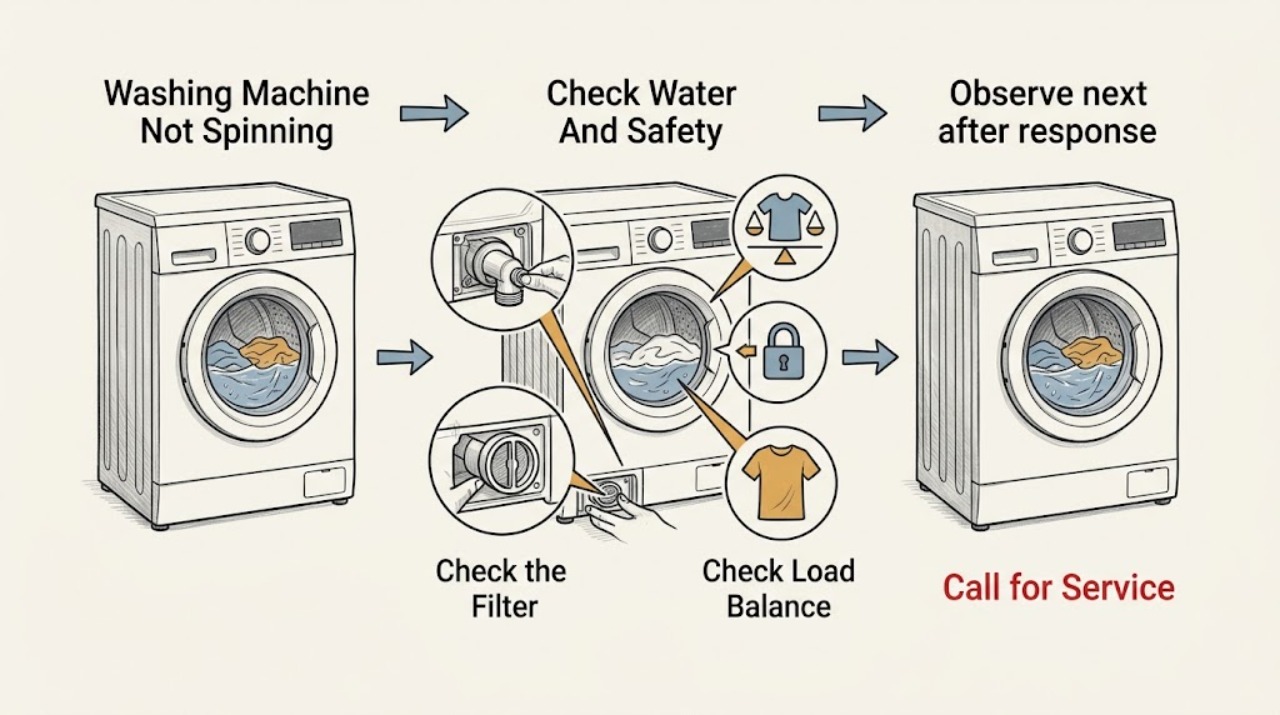
If an Asko washing machine is not spinning, first check whether water remains in the drum. A blocked pump filter or drain path can prevent proper draining and therefore prevent or weaken spin. If the drum is empty, redistribute an overloaded or uneven load and verify that the selected program permits spin and has not been set to no spin or a low speed. Confirm the door is closed and the machine has power, then perform only the model-approved pump-filter check with power disconnected and residual water cooled. If the machine still will not spin, shows an error, leaves water in the drum, leaks, makes a mechanical noise, or repeatedly stops, stop using it and arrange an ASKO technician or qualified appliance service.
Work through in order
Diagnostic checks
Use only checks that match the exact appliance or system and its official guide.
-
Check 1
Stop the program and observe the water level, floor, cord, outlet, smell, and display before touching the laundry or opening a filter cover.
Expected result: Water remains in the drum, water is on the floor, a leak or burning smell is present, an error is displayed, or the machine is dry and safe to inspect.
Next step: If there is a leak, wet electrical area, smoke, or burning smell, stop using the washer and call qualified service. Otherwise keep the machine off and continue with the drainage check if water remains.
Why this matters
Why: Standing water makes drainage the first path; water near electricity or a burning smell is a safety stop. A dry machine with no warning can continue to the load and control checks.
-
Check 2
If water remains, disconnect power, place towels and a shallow container at the user-accessible pump-filter area, and clean the pump filter only using the exact Asko model manual; let residual water cool before draining it.
Expected result: The filter contains lint or objects, the filter housing or visible drain path is blocked, or the filter is clear and water still will not drain.
Next step: Refit the filter and its seal securely and run only the model-approved drain or spin test. If water remains, the filter leaks, or the pump is noisy, stop and call service; do not open the pump or internal hoses.
Why this matters
Why: ASKO states that a clogged filter can stop proper drainage, leaving laundry too wet to spin. A clear filter with retained water points toward a hose, pump, or internal drainage fault.
-
Check 3
With the drum stopped, loosen and redistribute the laundry; remove obvious excess weight and avoid testing with one heavy item alone.
Expected result: The load was tightly packed, bunched to one side, or unusually small, or it was already loose and evenly distributed.
Next step: Run a suitable spin or rinse-and-spin program with a balanced load. If the unbalance returns with ordinary loads, stop repeated attempts and arrange service for suspension, sensing, or drive diagnosis.
Why this matters
Why: ASKO identifies an overloaded or poorly distributed load as a cause of an unbalance condition that can cause spin to be skipped. A balanced load with the same symptom makes drainage, settings, or a technical fault more likely.
-
Check 4
Review the selected program and visible spin control for no-spin, reduced-speed, delicate, hand-wash, or other settings that intentionally limit extraction.
Expected result: The program or option prevents or reduces spin, or a normal spin-capable setting is selected.
Next step: Select a spin-capable setting allowed for the fabric and run it once with a balanced load. If the controls will not select spin or the drum still does not turn, note the display and call service.
Why this matters
Why: ASKO notes that some programs use a lower spin speed, so laundry can feel wetter even when the washer is operating normally. A normal spin setting with no drum movement requires another path.
-
Check 5
Confirm that the door is fully closed with no garment caught in the seal, the selected program has been started, and the control panel shows no child lock, delay, pause, or fault state that your model manual identifies.
Expected result: The door was not latched or a visible control state prevented the cycle, or the door latches and the washer still will not spin.
Next step: Remove only an obvious obstruction and use the exact model's documented start or unlock control. Do not bypass the interlock; call service if the door lock, control, or cycle state remains abnormal.
Why this matters
Why: A washer cannot safely enter a high-speed spin unless the door and control state are accepted. If the door latches and the program runs but the drum remains still, the issue is less likely to be a simple user setting.
-
Check 6
During one safe, correctly loaded test, observe whether the drum turns slowly, attempts to accelerate, hums without movement, stops with an error, or produces scraping or knocking; do not put hands into the drum or remove panels.
Expected result: The drum turns after drainage and balancing, attempts but cannot accelerate, remains still, or makes an abnormal noise.
Next step: Stop testing for persistent no-spin, noise, repeated errors, or a stalled motor sound. Arrange an Asko technician or qualified appliance service and report the exact behavior.
Why this matters
Why: A restored spin supports a drain, balance, or setting cause. Repeated failure to accelerate or abnormal noise can involve the drive, motor, suspension, control, or a trapped object and cannot be confirmed safely from outside.
-
Check 7
Record whether the no-spin problem began after moving, installation, a power interruption, a recent filter clean, or a single unusual load, and check from outside that the washer is stable without trying to reposition a full machine.
Expected result: The issue is a one-time load event, follows a recent installation or move, or recurs with normal loads and settings.
Next step: Use the exact manual for model-specific installation checks. If the failure recurs or the machine is unstable, stop using it and arrange qualified service rather than adjusting internal feet, suspension, or wiring while loaded.
Why this matters
Why: A one-time unbalance or blocked filter may be resolved by the documented checks. Recurrence with normal loads and drainage suggests an installation, sensing, suspension, drive, or control fault.
Use your observations
Decision map
Find the observation that best matches what you see, then follow the next safe action.
-
PATH 01Next step
What you see
Water remains in the drum after the wash or rinse.
Do this next
Disconnect power and perform only the model-approved pump-filter check with cooled water contained. If water remains, call service.
Why this path and its safety boundary
Why it matters: A blocked pump filter, drain path, hose, or pump fault can prevent the washer from reaching a proper spin.
-
PATH 02Next step
What you see
The washer shows an unbalance indication or refuses to accelerate with a bunched load.
Do this next
Redistribute the load and use a suitable spin-capable program once. Recurring unbalance with ordinary loads needs service.
Why this path and its safety boundary
Why it matters: Load distribution or excess weight may be preventing a safe spin.
-
PATH 03Next step
What you see
The washer completes but clothes are wetter than expected and the program uses low or no spin.
Do this next
Choose a spin setting allowed by the fabric and model manual. If the control cannot select it or the drum never turns, call service.
Why this path and its safety boundary
Why it matters: The selected program or option may be operating as designed.
-
PATH 04Next step
What you see
The door does not latch, the program is paused or locked, or the control panel will not start spin.
Do this next
Clear only a visible obstruction and follow the exact manual's control procedure. Never bypass the door lock; request service for a persistent latch or control fault.
Why this path and its safety boundary
Why it matters: The safety interlock or control state is preventing the spin command.
-
PATH 05Next step
What you see
The drum remains still, hums without turning, scrapes, knocks, or stops with a recurring fault after drainage and balance are normal.
Do this next
Stop using the washer and arrange qualified appliance service. Do not remove panels or test live components.
Why this path and its safety boundary
Why it matters: A motor, drive, suspension, sensing, trapped-object, or control problem is more likely than a simple load issue.
-
PATH 06Next step
What you see
Water is leaking onto electrical parts, the cord or outlet is damaged or wet, or there is smoke or a burning smell.
Do this next
Stop the cycle and isolate power only if safe without touching wet electrical equipment. Keep the washer unused until qualified service has assessed it.
Why this path and its safety boundary
Why it matters: This is an immediate water, fire, or electrical safety boundary.
Helpful context
Understand the symptom
Wet clothes and a stopped drum are connected clues
A washer may refuse to spin because it cannot drain, because the load cannot be balanced, because the program limits spin, or because the door, motor, or control system has a fault. Start with what you can observe without opening the cabinet: water level, error message, load distribution, door status, and whether the drum attempts to turn.
Make the machine safe before checking the filter
If water is leaking onto the floor, the cord or outlet is wet or damaged, or the machine smells hot or burnt, stop the cycle and isolate power only if safe. Do not reach into a moving drum, remove electrical panels, bypass the door lock, or work on the motor, wiring, pump, or drive system. Residual water may be hot; allow it to cool before any model-approved filter check.
Use the failure pattern to choose the path
Water left in the drum points first to drainage. An empty drum with a single heavy item or an unbalance message points to load distribution. A normal-looking load with a low or disabled spin setting points to the program. A locked door, repeated error, humming without drum movement, scraping, or a machine that stops at the same point needs professional diagnosis after the safe checks.
Only after diagnosis
Potential parts
- pump filter or drain pump
Consider only after service confirms a drain fault remains after the accessible filter and visible path are clear.
Filter and pump design are model-specific; internal pump work requires qualified service. - door interlock
Consider only when the door closes but the washer cannot safely start or enter spin and a technician confirms the interlock fault.
Door-lock parts vary by model and must not be bypassed or replaced as an unassisted repair. - drive belt or motor component
Consider only after qualified diagnosis of a drum that remains still or cannot accelerate with normal drainage and balance.
Drive parts differ by platform and access involves electrical and mechanical hazards; confirm the exact model. - suspension or balance sensor
Consider only when recurring unbalance occurs with ordinary balanced loads and service confirms a sensing or suspension fault.
Sensor and suspension parts are model-specific and require professional installation and calibration.
When checks do not resolve it
Need a professional?
Call an Asko technician or qualified appliance service when the drum will not spin after the filter, balanced-load, program, and door checks, when water remains in the drum, or when the problem recurs with normal loads., Stop using the washer for smoke, burning smell, abnormal heat, damaged or wet electrical parts, a significant leak, scraping or knocking, or repeated fault indications., Do not bypass the door lock or open the cabinet to test the motor, pump, belt, wiring, suspension, or control board; those require qualified diagnosis.
Common questions
FAQ
Why does my Asko washer leave clothes wet without spinning?
Check for water remaining in the drum first, then inspect the pump filter according to the exact manual. If the drum is empty, redistribute the load and verify that the program allows spin rather than using a low or no-spin option.
Can an unbalanced load stop an Asko washing machine from spinning?
Yes. ASKO explains that an overloaded or unevenly distributed load can trigger an unbalance condition and cause spin to be skipped. Redistribute the laundry and call service if the problem recurs with ordinary loads.
Should I clean the Asko pump filter if the washer will not spin?
If water remains in the drum, a model-approved pump-filter check is a reasonable first step. Disconnect power, contain and cool residual water, and refit the filter seal securely; persistent retained water or a noisy pump needs service.
When is a no-spin problem an electrical or mechanical repair?
Stop and arrange service when the door will not latch, a normal balanced load and clear drain still will not spin, the drum hums without turning, abnormal noise occurs, an error repeats, or the washer has smoke, burning smell, or a significant leak.
Read the exact guide
Official sources
- Hoe maak ik het filter van de wasmachine schoon?ASKO Service · Official ASKO service article for safely accessing and cleaning a model's pump filter; article is in Dutch and translated for this English article
- ASKO Cleaning GuideASKO · Official ASKO cleaning guide with a washer section covering drain-filter maintenance; exact model manual controls
- Waarom is mijn was nog nat aan het einde van het programma?ASKO Service · Official ASKO service article for laundry remaining wet after a program or an unbalance indication; article is in Dutch and translated for this English article
Community feedback
Share a repair observation
Share a plain-text repair observation. Accepted observations are published automatically; this page may take a moment to update.