
On this page
Start here
Quick answer
A Beko washing machine may skip or stop spinning because the door is not recognized as closed, the load is unbalanced, the drum still contains water, excess foam is being managed, or a drive component has failed. Do not start by replacing a belt or forcing the cycle. Check the door and visible obstruction, redistribute the load, and note whether water remains. If the drum is full of water, inspect the drain hose and pump filter using the model manual and prepare for water release. Beko also documents a one-minute power reset for some technical faults, but if the machine still will not spin, the belt appears broken, the filter and hose are clear, or a code returns, stop using it and arrange authorized service.
Before you begin
Safety first
- Never reach into a moving Beko drum or bypass its door lock. Isolate power before checking a drain hose or user-accessible pump filter, contain unexpected water, and follow the model manual. Do not remove the cabinet or attempt live diagnosis of the belt, motor, pump, interlock, wiring, or control board as an ordinary-user step.
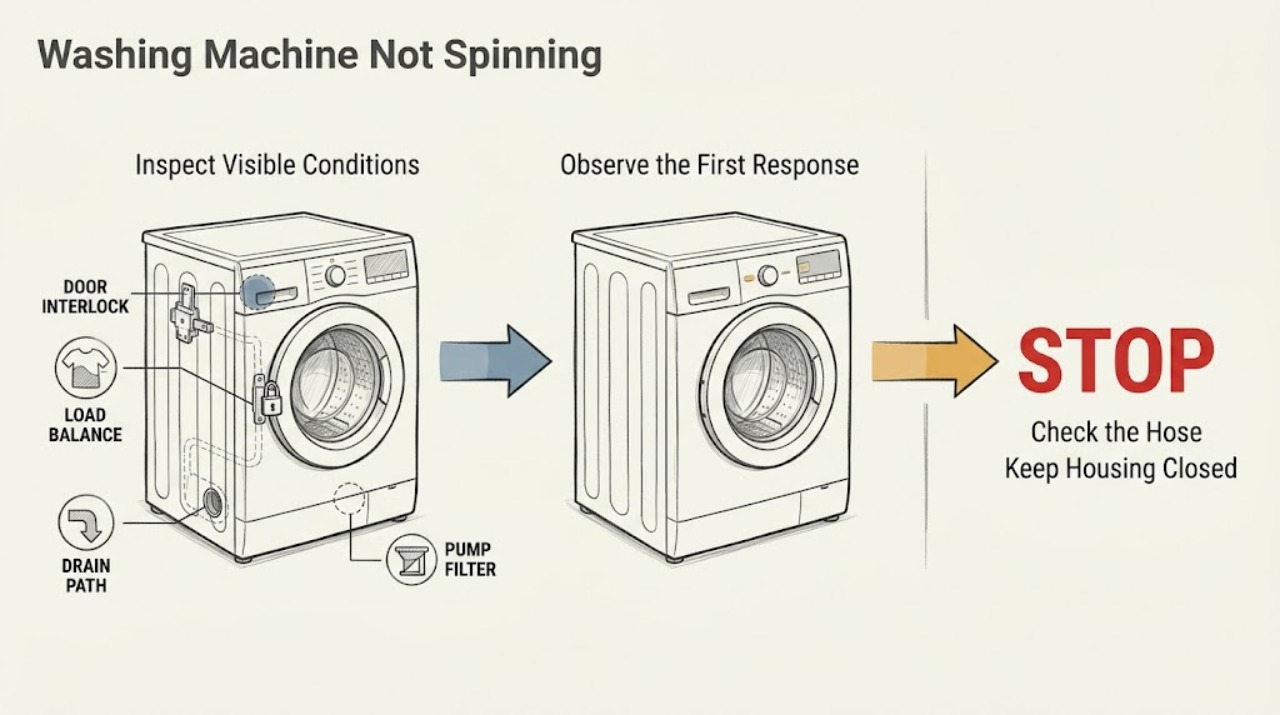
Work through in order
Diagnostic checks
Use only checks that match the exact appliance or system and its official guide.
-
Check 1
Look at the display and observe whether the door is firmly closed, whether an item is caught between the door and rubber seal, whether the drum is moving at all, and whether any warning or error message is shown.
Expected result: The door does not close or lock, laundry is trapped at the seal, the drum never starts, or the machine shows a code; alternatively the door locks and the programme tumbles normally.
Next step: Remove only a loose visible obstruction, close the door gently until the normal locking sound, and try the programme once. If the door will not lock, the latch is damaged, or the code returns, stop and arrange service.
Why this matters
Why: Beko says a machine that detects an open door will not start functioning or spin. A door that locks and a drum that tumbles shifts attention toward load balance, drainage, foam, or drive conditions rather than the door itself.
-
Check 2
Stop the programme safely and assess the load: look for one bulky or highly absorbent item, a mixture of heavy and light pieces, an overloaded drum, or only one or two items. Redistribute the load without forcing the drum.
Expected result: The load is visibly bunched, overloaded, or too small to balance; or the load is reasonably even but spinning still does not begin.
Next step: Spread the items evenly and use a suitable load; for a bulky item, combine it only as the manual permits with similar large items. If the balanced load still fails to spin, check for water and foam before suspecting a drive fault.
Why this matters
Why: Beko says its unbalanced-load detection can stop the spin process to protect the machine, and that heavy items such as towels, rugs, or blankets can prevent full speed. A balanced load that still will not spin points to another branch.
-
Check 3
Check whether water remains in the drum after the machine stops. If water is present, switch off and unplug the appliance before inspecting the visible drain hose for a crush, kink, twist, or blockage, following the model manual for access.
Expected result: Water remains and the hose is kinked or blocked, or the hose looks clear but water still does not drain; alternatively the drum is empty.
Next step: Correct only an obvious external hose restriction without disconnecting a pressurized connection, then use the model's normal drain or spin programme once. If water remains or the hose is clear, proceed to the pump-filter check or service branch.
Why this matters
Why: Beko states that the spin cycle will not start if water has not drained completely and identifies a bent or clogged drain hose as a cause of interrupted spinning. An empty drum makes drainage less likely as the immediate cause.
-
Check 4
If the model provides a user-accessible pump filter, place a shallow container and towels below it, use the model's drain tube if fitted, and open the filter housing slowly only after power is isolated. Check the filter and its housing for lint, hair, coins, or other small objects, then refit it correctly.
Expected result: Water or debris comes out and the filter is blocked, or little debris is found but the machine still will not drain or spin.
Next step: Remove only loose debris described by the manual, refit the filter securely, and run one normal drain or spin test. If drainage remains poor, water leaks, or the filter cannot be safely accessed, stop and request service.
Why this matters
Why: Beko's support instructions warn that substantial water may be behind the filter and say a blocked pump filter can stop the appliance from spinning. A clear filter does not rule out a pump, hose, wiring, or control problem.
-
Check 5
If there is no standing water, check whether the machine is repeatedly pausing while suds are visible or whether too much or unsuitable detergent was used. Do not add more detergent or run repeated high-speed tests.
Expected result: Excessive foam is visible or the detergent dose was above the package or model guidance; alternatively there is no unusual foam.
Next step: Allow the programme to complete its foam-management sequence, then use the recommended detergent type and dose on a later load. If the machine still will not spin with normal detergent use, continue to the technical-fault branch.
Why this matters
Why: Beko explains that excess foam can activate an automatic foam-absorption system and stop the spinning stage temporarily. If foam is not present, this explanation becomes less likely and the remaining checks matter more.
-
Check 6
With the door closed, drum empty or safely unloaded, and no water or hazard present, perform at most one model-appropriate power reset: unplug the appliance, wait about one minute, and reconnect it only if the model instructions permit that step.
Expected result: The machine resumes a normal programme, or the drum still will not spin, the door remains locked, an error returns, or the machine makes abnormal noise.
Next step: If the reset works, monitor one supervised cycle and stop if the symptom returns. If it fails, do not open the cabinet or test the belt, motor, or wiring as a live repair; arrange an authorized diagnosis.
Why this matters
Why: Beko describes a one-minute unplug/reconnect attempt for some technical faults, but a reset cannot repair a blocked drain, broken belt, failed motor, interlock, or recurring control problem. Abnormal noise or free-spinning with no resistance can point toward a drive issue.
Use your observations
Decision map
Find the observation that best matches what you see, then follow the next safe action.
-
PATH 01Next step
What you see
The door will not close or lock, laundry is caught in the seal, or the door-lock indication never appears.
Do this next
Remove only a loose visible obstruction and close the door gently once. If it still will not lock or the latch is damaged, stop using the machine and request service.
-
PATH 02Next step
What you see
The load is bunched, overloaded, very small, or dominated by one absorbent bulky item.
Do this next
Redistribute or resize the load according to the manual and try one appropriate cycle. If a balanced load still fails, check drainage.
-
PATH 03Next step
What you see
Water remains in the drum or the drain hose/pump filter is kinked, blocked, or leaking.
Do this next
Isolate power, follow the manual's safe hose or pump-filter procedure, contain water, and test the normal drain or spin function once. Escalate if water remains or the blockage is not user-accessible.
-
PATH 04Next step
What you see
Excess foam is present, or the load, door, and drain path are normal but the machine still will not spin.
Do this next
Use the recommended detergent dose and allow the foam sequence to finish; otherwise perform only one permitted reset. If spinning does not return, arrange authorized service for the drive, motor, interlock, pump, or control system.
-
PATH 05Next step
What you see
There is a burning smell, smoke, sparking, electrical damage, uncontrolled water near electrical parts, repeated trips, or a need to open the cabinet.
Do this next
Stop immediately, leave the appliance off, isolate power or water only if safe, and seek qualified professional help. Do not run another cycle or bypass the door interlock.
Helpful context
Understand the symptom
Why the Beko machine may not spin
“Not spinning” can mean different things: the drum never starts, the machine tumbles but refuses the high-speed stage, or it stops with wet laundry and water still inside. Beko uses safety and control checks before high-speed spinning, so the first useful split is door state, load balance, and water level. A clear external check does not prove a motor, belt, control, or interlock fault.
Keep the checks safe
Do not reach into a moving drum. If water is visible, stop the programme and keep towels and a shallow container ready before opening any user-accessible drain filter, because Beko warns that a large amount of water may be released. Do not remove the cabinet, test live wiring, or defeat the door lock.
Read what the machine is telling you
A single heavy item, a very small load, a locked door, standing water, or excessive suds points to a different next step. If the same symptom remains after the visible checks, record the exact display, cycle stage, and model information instead of repeatedly restarting the appliance.
Only after diagnosis
Potential parts
- drain pump filter or drain hose
Consider this category only if the model-specific check confirms a damaged hose or a filter that cannot be restored to a clear, secure condition.
Confirm the full Beko model and manufacturer's fit information before ordering; do not infer compatibility from a no-spin symptom. - door interlock or latch assembly
Consider this category only if the door cannot latch or the control does not recognize a correctly closed door after visible obstructions are ruled out and a technician confirms the fault.
Match the exact model and revision using Beko information; a similar-looking latch is not proof of fit. - drive belt or motor component
Consider this category only after a technician confirms a drive fault, such as a drum that turns without normal resistance or a motor symptom, with the drain and load branches ruled out.
Use model-specific diagnosis and fit information before ordering; do not open the cabinet or replace a drive part as a trial.
When checks do not resolve it
Need a professional?
Contact Beko or an authorized appliance technician when the door will not lock, the machine remains unable to spin after the balanced-load and drain checks, the pump filter or hose is clear but water remains, the belt appears broken, abnormal noise occurs, an error returns, or any diagnosis would require opening the cabinet or testing the motor, wiring, pump, or control system.
Common questions
FAQ
Why is my Beko washing machine not spinning but still washing?
Check the load balance and whether water has drained. Beko may stop the high-speed stage for an uneven load, and it will not spin if water remains. Excess foam, a door-recognition issue, or a technical fault can also interrupt spinning.
Can an unbalanced load stop a Beko washing machine from spinning?
Yes. Beko says its unbalanced-load detection can stop the spin process, especially with heavy or absorbent items mixed unevenly. Redistribute the load according to the manual and try one suitable cycle; if a balanced load still fails, check drainage.
Why does water left in the Beko drum matter?
Beko states that the spin stage will not start if water has not drained completely. Check the accessible drain hose for a kink or blockage and, if your model permits it, inspect the pump filter with power isolated and a container ready for water.
Should I replace the Beko washing machine belt if it will not spin?
Not based on the symptom alone. First rule out the door, load, foam, and drain conditions. If the drum turns with no normal resistance or the problem persists, have an authorized technician confirm a belt, motor, or control fault before ordering a model-specific part.
Read the exact guide
Official sources
- How to fix a washing machine that won’t spin?Beko · Beko washing machines that will not spin, including door, load balance, foam, drain, belt, and technical-fault guidance
- Why is my washing machine not spinning properly?Beko UK · Beko washing machines that do not spin, including door, load, drain hose, and pump-filter checks
Community feedback
Share a repair observation
Share a plain-text repair observation. Accepted observations are published automatically; this page may take a moment to update.