
On this page
Start here
Quick answer
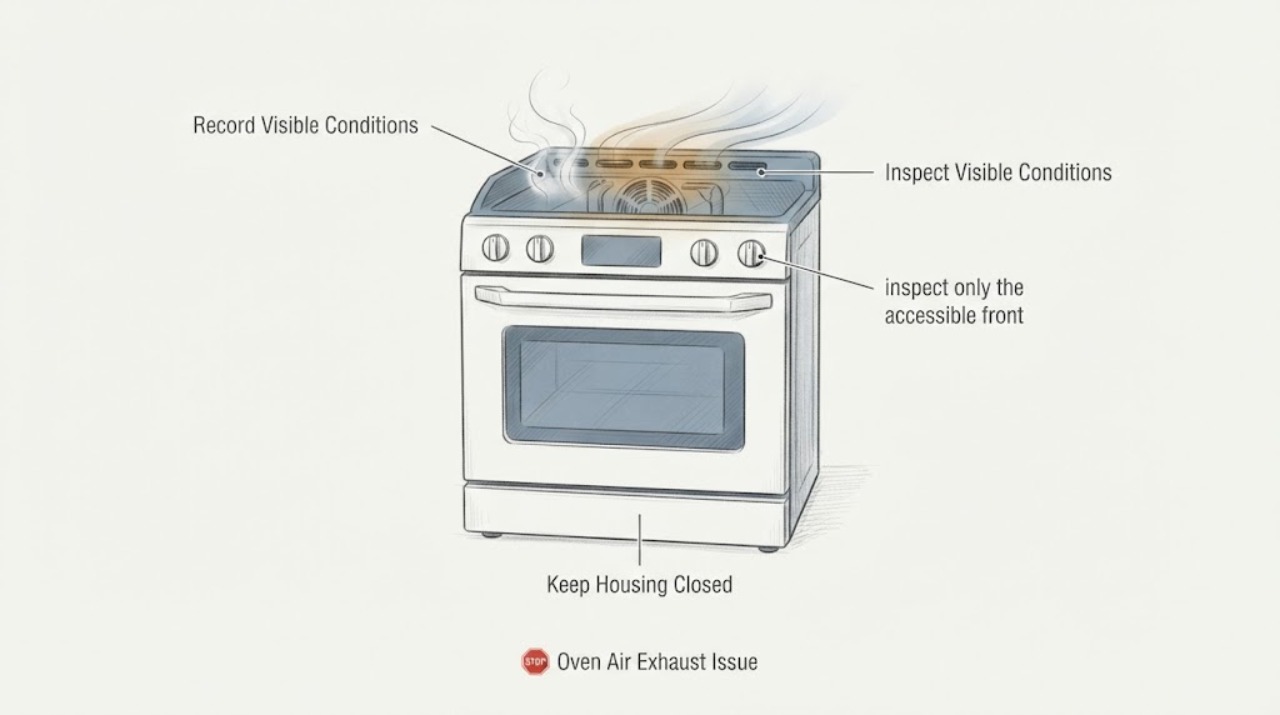
First identify whether the concern is steam or hot air during cooking, a cooling fan that continues after shutdown, weak or blocked airflow, or a fan that never runs. Beko says steam and condensation can be normal, and its model-dependent cooling fan may continue after cooking until the oven cools; the ventilation openings must remain uncovered. Check only the exact model’s manual, the accessible front/installation clearance and the selected function, without removing panels or testing a fan electrically. Stop using the oven and arrange service for smoke, burning odor, overheating, damaged ventilation, a fan that fails to operate after the documented checks, or any gas-appliance ventilation concern.
Work through in order
Diagnostic checks
Use only checks that match the exact appliance or system and its official guide.
-
Check 1
Record the complete Beko model number, country/region, oven type (built-in, freestanding cooker or other), selected cooking function and the exact symptom. Note whether the air/steam comes from the intended front outlet, the door area, a cabinet gap or an unexpected location.
Expected result: The symptom is normal-looking steam/hot air, post-cycle fan operation, weak/blocked airflow, no fan, or smoke/odor/overheating; the model and installation type are confirmed or unknown.
Next step: Use the exact Beko manual for the confirmed model. If identity or outlet location is unclear, stop changing the installation and provide the model and photos to Beko service.
Why this matters
Why: Beko states that cooling-fan availability and behavior vary by model, and its ventilation guidance is installation-specific. An unknown model cannot establish where the designed exhaust path or fan controls are.
-
Check 2
With the oven operating only as intended and without touching hot surfaces, observe whether steam appears only during cooking and whether the cooling fan runs during or after a cycle, then stops as the oven cools. Stay away from the door when opening it because hot steam may emerge.
Expected result: Steam/condensation follows cooking, or the fan runs after shutdown and later stops; alternatively the fan persists indefinitely, makes an abnormal noise or does not run when the exact manual says it should.
Next step: For the documented normal pattern, keep openings clear and monitor. For a mismatch, stop using the oven if it overheats or produces a hazard sign and arrange model-specific service rather than repeating tests.
Why this matters
Why: Beko describes vapor and post-cycle cooling-fan operation as normal in the applicable guidance. Persistent, absent or abnormal fan behavior falls outside that normal pattern but still does not identify a motor or control part.
-
Check 3
After the oven is cool and off, inspect only the accessible front ventilation openings, surrounding cabinet clearance and visible grille for a cloth, foil, grease buildup or furniture obstruction. Do not remove the oven from its housing, open panels or insert tools into a vent.
Expected result: An accessible opening is covered/obstructed or the visible clearance matches the model installation guidance.
Next step: Remove only a loose external obstruction without dismantling the appliance and restore the clearance specified by the exact manual. If the obstruction is built into the installation or airflow remains abnormal, stop and arrange qualified service.
Why this matters
Why: Beko says covering ventilation openings can cause overheating and that built-in ovens require adequate clearance for airflow. A clear visible opening does not rule out a hidden fan or duct fault.
-
Check 4
If the cooling/ventilation fan does not start, check the selected cooking function and temperature, confirm the appliance has power, and for a model with a mechanical timer confirm the timer is in the manual position, using only accessible controls and the household fuse box if safe. Do not infer a fan fault by opening the control panel.
Expected result: The oven has no power, the selected function/timer does not call for the fan, or the oven has the documented settings and power but the fan still does not operate.
Next step: Correct only an obvious setting or safe power issue. If the fan remains absent, leave the oven unused and arrange Beko technical assistance; do not replace a fan blade, thermostat or control yourself.
Why this matters
Why: Beko lists power, function/temperature and mechanical-timer settings among external checks for a non-working oven fan, but an unresolved result may require technical assessment.
-
Check 5
Stop using the oven immediately for smoke, burning odor, visible melted material, unusual heat in the cabinet, sparking, a damaged vent, or suspected gas-appliance ventilation failure. Do not keep cooking to compare fan settings or attempt to improve airflow with a temporary duct or cover change.
Expected result: A hazard sign is present, or the symptom is only normal steam/fan behavior without smoke, odor, overheating or visible damage.
Next step: Switch the oven off and isolate power only if safe and accessible; for gas concerns follow local emergency/gas-safety procedures and use a qualified gas professional. Arrange Beko or authorized service before reuse.
Why this matters
Why: A hazard sign changes the decision from ventilation observation to safe shutdown and professional assessment; normal steam or post-cycle cooling alone is not evidence of a fault.
Use your observations
Decision map
Find the observation that best matches what you see, then follow the next safe action.
-
PATH 01Next step
What you see
Steam or droplets appear during cooking, or the model-supported cooling fan runs during/after cooking and stops as the oven cools.
Do this next
Keep the designed openings clear, stay away from hot steam when opening the door and monitor. Arrange service if the pattern changes or a hazard sign appears.
Why this path and its safety boundary
Why it matters: Beko describes vapor, condensation and model-dependent post-cycle cooling as normal behavior in the applicable guidance.
-
PATH 02Next step
What you see
An accessible front opening or required cabinet clearance is blocked, or the built-in oven is installed in a tight space that does not match its manual.
Do this next
Remove only a loose external obstruction and restore the exact manual’s clearance. Use a qualified installer or service professional if the housing or ventilation route must be changed.
Why this path and its safety boundary
Why it matters: The designed airflow may be restricted and the oven may overheat; this is an installation/clearance issue rather than proof of a failed fan.
-
PATH 03Next step
What you see
The fan never runs when the model-supported function calls for it, persists far beyond the documented cooling behavior, or makes abnormal noise after safe setting/power checks.
Do this next
Leave the oven off and contact Beko or qualified service. Do not open the control panel or perform energized fan tests.
Why this path and its safety boundary
Why it matters: The symptom is outside the documented normal fan pattern, but it does not identify the motor, blade, thermostat or control as the cause.
-
PATH 04Next step
What you see
Smoke, burning odor, overheating, visible damage, sparking or suspected gas/combustion ventilation danger is present.
Do this next
Stop the oven, isolate power only if safe, leave any gas concern to local emergency/gas-safety procedures and arrange qualified service before reuse.
Why this path and its safety boundary
Why it matters: Continued operation can create fire, electric or combustion risk and should not be used as a diagnostic test.
Helpful context
Understand the symptom
“Air exhaust issue” can describe several different symptoms
Record whether you see steam or droplets while cooking, feel hot air at the designed outlet, hear a fan after switching off, have weak airflow, or have no fan at all. Beko says the cooling fan varies by model and may not be fitted on every oven, so the exact model and installation type matter. Do not use a microwave or cooker-hood explanation for a built-in oven.
Steam and a cooling fan may be normal
Beko’s official troubleshooting says vapor during operation is not an error, and its baking warnings say hot steam can emerge when the door is opened. Beko also explains that the cooling fan behind the control panel can continue for a while after shutdown and stops automatically once the oven has cooled. These observations do not prove a blocked duct or failed fan.
Keep the designed airflow path clear
Beko says built-in ovens are designed with ventilation and that its built-in ovens vent through the lower front, while the exact clearance must come from the installation manual. Do not cover the openings, push a built-in oven farther into a tight cabinet, or modify the ducting based on a generic diagram. Keep checks to visible clearance and accessible grilles.
A fan or exhaust fault is not an invitation to open the oven
If airflow remains abnormal after the model-matched external checks, Beko directs owners to technical assistance and does not recommend self-repair. Do not remove the control panel, reach into the fan, make an energized test, bypass a thermal or door safety device, or continue cooking with smoke, burning odor or overheating.
When checks do not resolve it
Need a professional?
Arrange Beko or qualified service when the fan does not operate after model-matched external checks, persists abnormally or makes a harsh/unusual noise., Use a qualified installer when built-in cabinet clearance or the ventilation route does not match the exact installation manual., Stop immediately for smoke, burning odor, sparking, overheating, visible damage or suspected gas-appliance ventilation danger; do not continue cooking to test it.
Have this ready
- complete Beko model and serial number
- country/region and oven type
- selected function/temperature and whether a timer was used
- when the fan/steam/airflow symptom starts and stops
- photos of accessible openings, cabinet clearance and any visible damage or residue
Common questions
FAQ
Is hot air coming from a Beko oven vent normal?
It can be. Beko describes model-dependent cooling-fan operation and designed ventilation, including hot air over the oven door in applicable models. Keep openings clear and use the exact manual; smoke, burning odor or overheating is not a normal-operation check.
Why does my Beko oven fan keep running after I turn it off?
Beko says the cooling fan behind the control panel can continue for a while after shutdown and stops automatically as the oven cools. The exact behavior varies by model, so a fan that never stops or becomes abnormal needs service.
Can I cover or redirect the Beko oven exhaust?
No. Beko says not to cover ventilation openings and advises following the installation manual’s clearance requirements. Do not add a temporary cover, block the front vent or modify the route without qualified installation guidance.
What should I check if the Beko oven fan is not working?
Use only accessible checks: confirm power, the selected function/temperature and, where fitted, the mechanical timer’s manual position. If the fan still does not operate, stop using the oven and arrange technical assistance rather than opening the appliance.
Read the exact guide
Official sources
- General Warnings About Baking in the OvenBeko · Opened the official Beko documents page. It warns that hot steam may emerge when opening the door and that condensation can be normal; it supports the safety boundary, not a model-specific fan diagnosis.
- Why is my Oven Fan Not Working?Beko UK · Opened Beko UK official support FAQ. It lists accessible power, cooking-function/temperature and mechanical-timer checks and says to contact technical assistance if the issue persists; it does not authorize internal fan or thermostat repair.
- Why does the fan on my oven keep running after I have turned it off?Beko UK · Opened Beko UK official support FAQ. It identifies the sound as a cooling fan behind the control panel that runs while cooling and stops automatically; region/model differences still require the exact manual.
- TroubleshootingBeko · Opened the official Beko troubleshooting page. It says vapor during operation and condensation droplets can be normal, and directs unresolved issues to authorized service; no model-specific internal repair is generalized.
- General Information on Using the OvenBeko · Opened the official Beko documents site. The page states that cooling-fan availability varies by model, the fan may run during/after operation, hot air exits over the door and ventilation openings must not be covered; exact model instructions remain controlling.
- Built-In Oven and Grill Ventilation: Requirements & Best PracticesBeko UK · Opened Beko UK official guidance. It says built-in ovens require adequate ventilation and clearance from the installation manual, and that Beko built-in ovens vent through the lower front; exact model installation instructions remain controlling.
Community feedback
Share a repair observation
Share a plain-text repair observation. Accepted observations are published automatically; this page may take a moment to update.