
Beko appliance guidance
Beko Oven Repair Guides
Troubleshooting and repair guidance for published Beko Oven problems, symptoms, and maintenance questions.
Published Beko Oven guides
Choose the guide whose symptom or condition most closely matches what you are seeing.
-
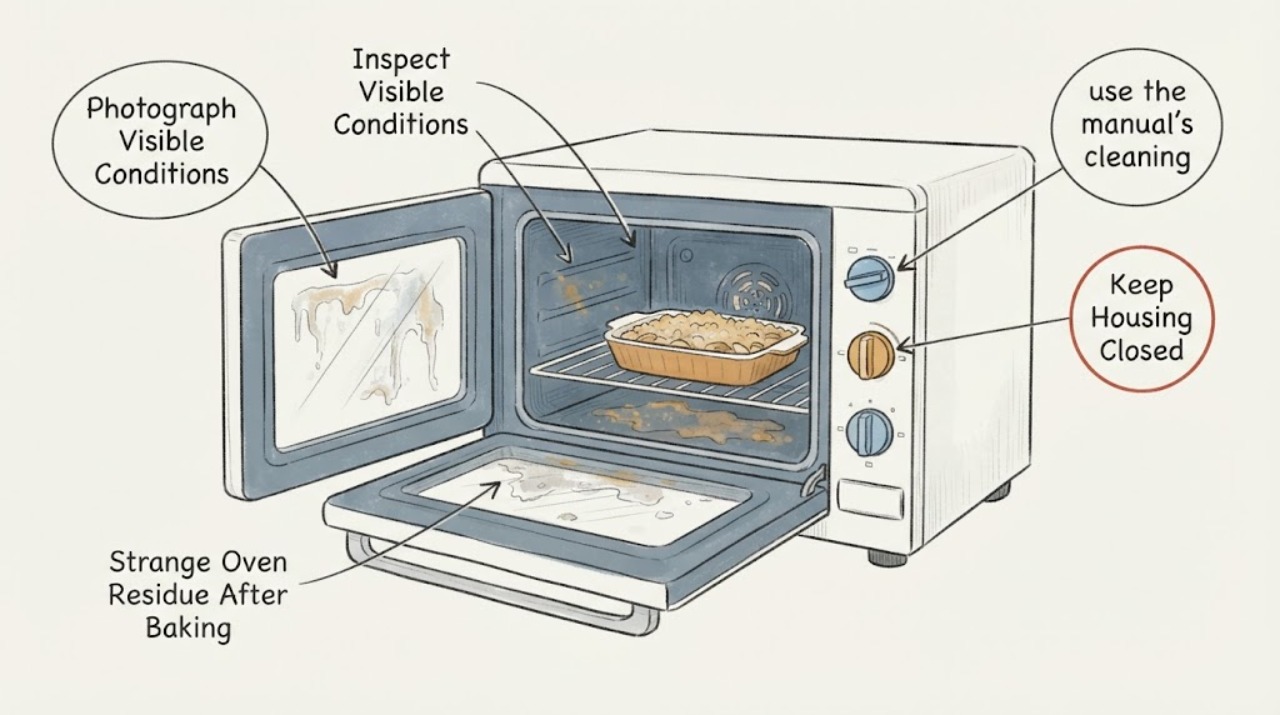
Beko BSC630 Strange Oven Residue After Baking Apple Crumble
Do not assume an unexplained residue in the Beko BSC630 oven is a self-cleaning ash or a failed heater. This model is listed by Beko as an electric single-cavity cooker with an enamelled oven, steam-cleaning capability, and no catalytic or pyrolytic self-cleaning system.
-
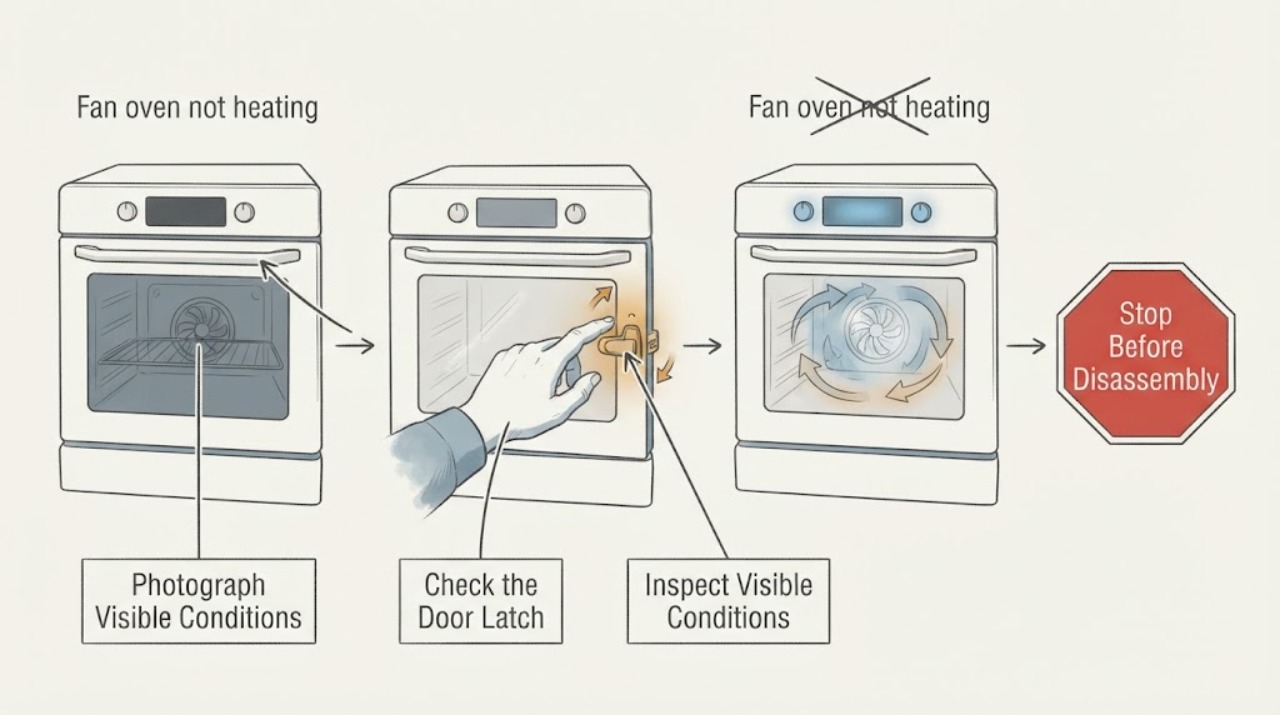
Beko OIF22100X fan oven not heating: verify the element before replacing it
The opened Beko UK product page identifies OIF22100X as a discontinued 66 L built-in electric fan oven and lists its fan-oven element as 1.8 kW and its grill as 2.2 kW. That 1.8 kW figure is a product specification, not a universal replacement-part instruction: do not fit a lower or higher-wattage element by appearance, voltage, or a marketplace listing.
-
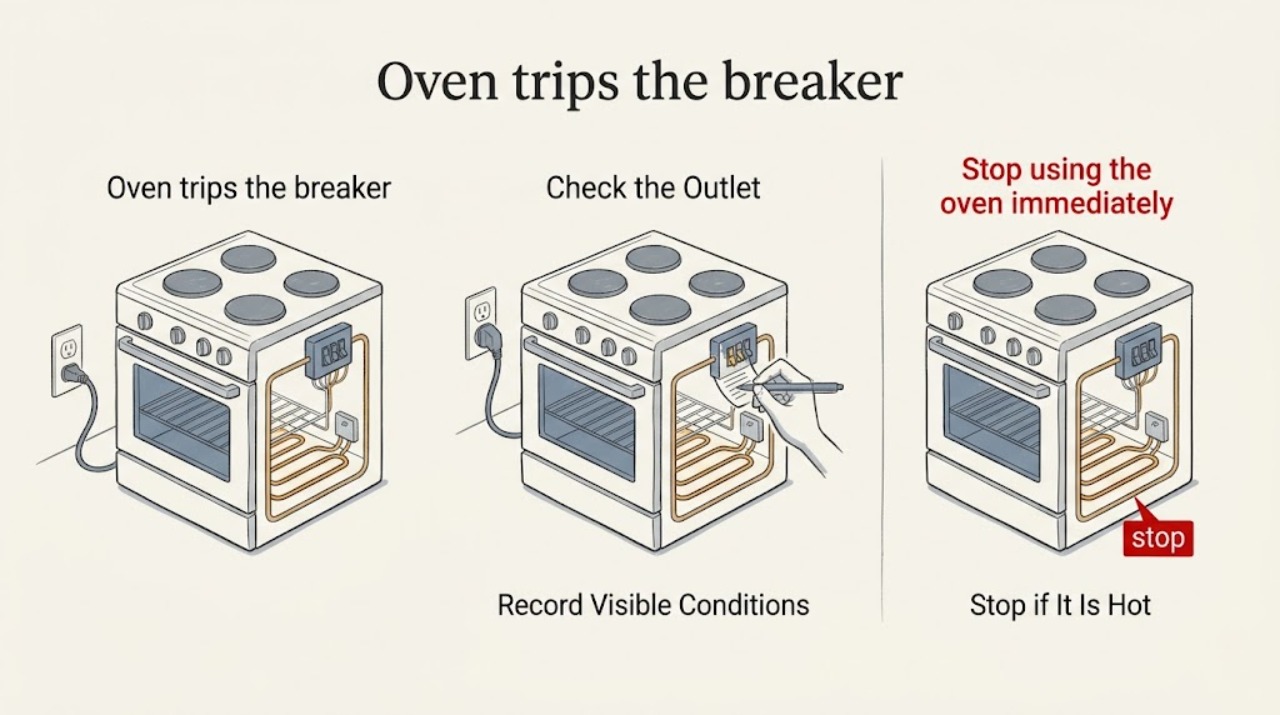
Beko OIF22301XR oven trips the breaker and will not heat
If a second-hand Beko OIF22301XR trips the breaker or fuse when the oven is selected, treat “it is not the heating element” as unconfirmed. Stop using the oven and do not keep resetting the protection to repeat the fault.
-
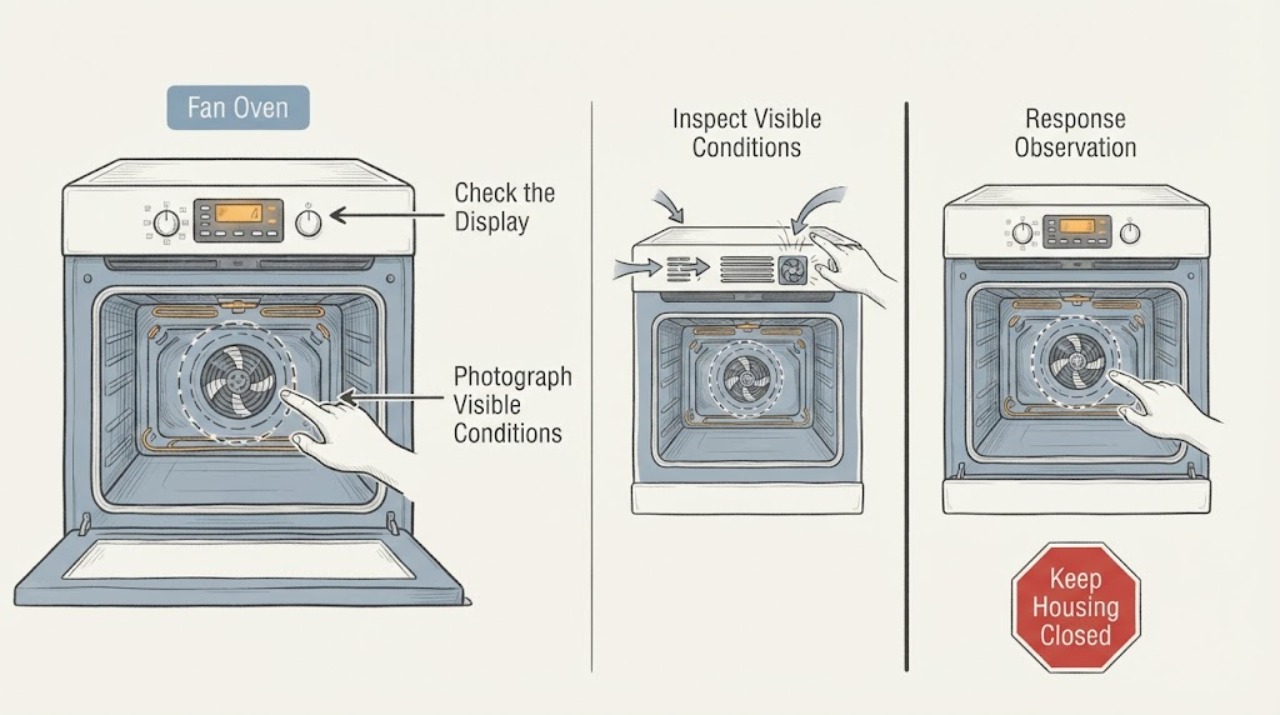
Beko OSF21121X Fan Oven: Fan Not Turning During Cooking
For the Beko OSF21121X, first identify which fan is meant and which function is selected. Beko's product page identifies this model as a 60 cm electric fan oven with Fan Defrost, Fan Grilling, Fan Heating, and a separate cooling fan.
-
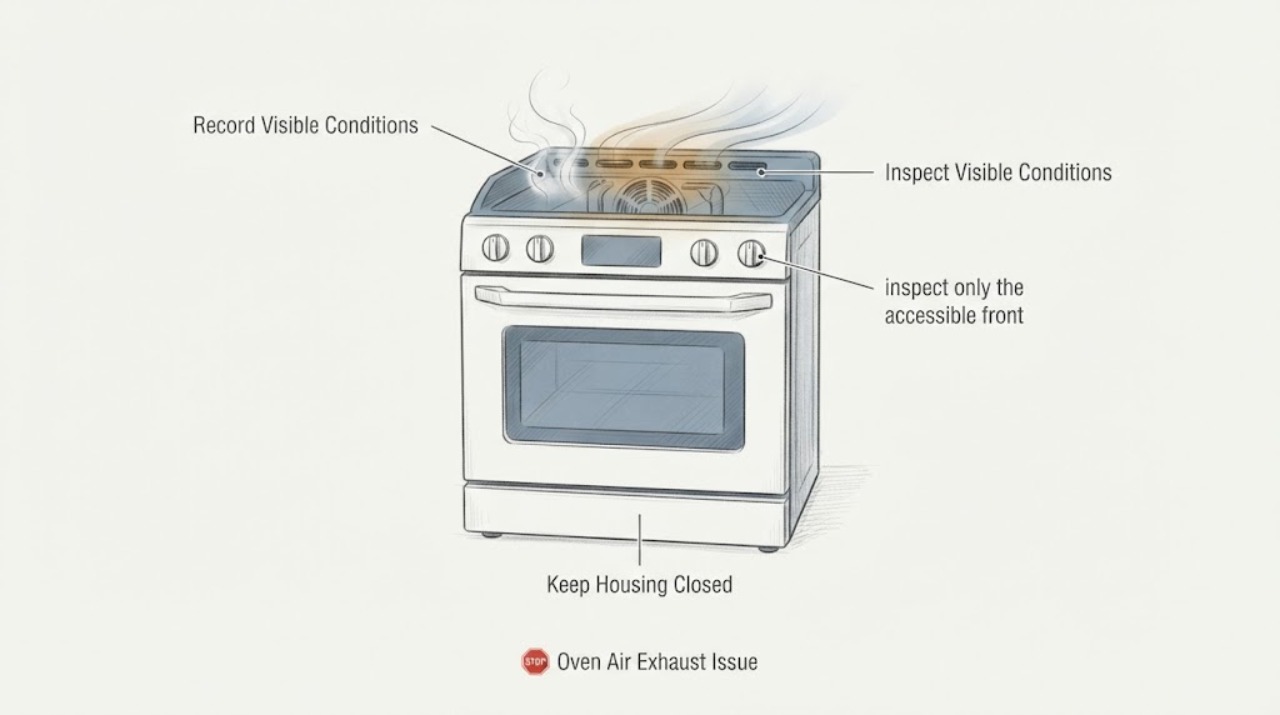
Beko Oven Air Exhaust Issue: Separate Normal Steam and Cooling From Blocked or Failed Ventilation
First identify whether the concern is steam or hot air during cooking, a cooling fan that continues after shutdown, weak or blocked airflow, or a fan that never runs. Beko says steam and condensation can be normal, and its model-dependent cooling fan may continue after cooking until the oven cools; the ventilation openings must remain uncovered.
-
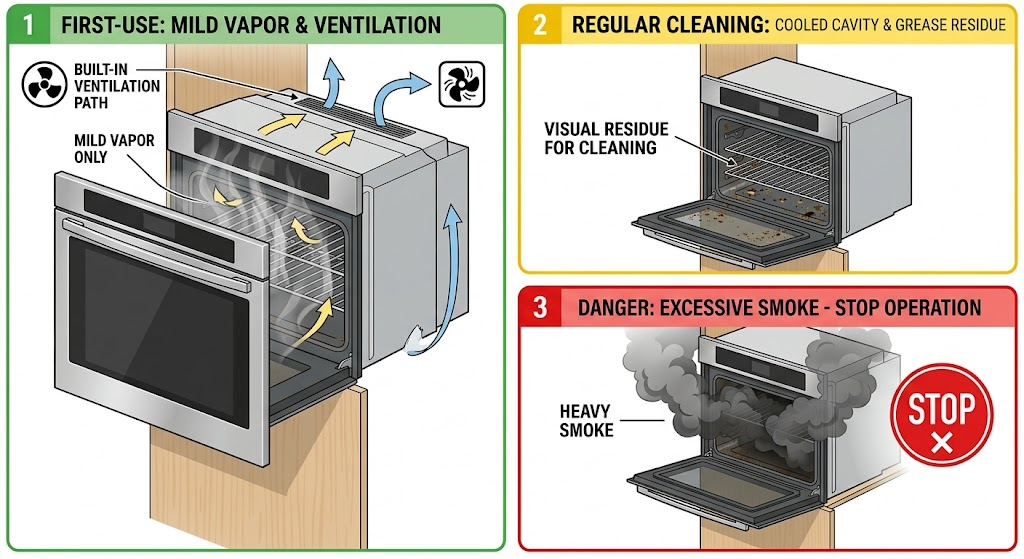
Beko Oven Bad Smell: Separate First-Use Odor from a Safety Fault
First determine whether this is the mild oily odor of a new oven or a new smell from food, grease, cleaner residue, or an electrical or gas fault. Beko says smoke and smell during initial heating can come from production residues, while grease or cleaning-agent residue can smoke when heated.
-
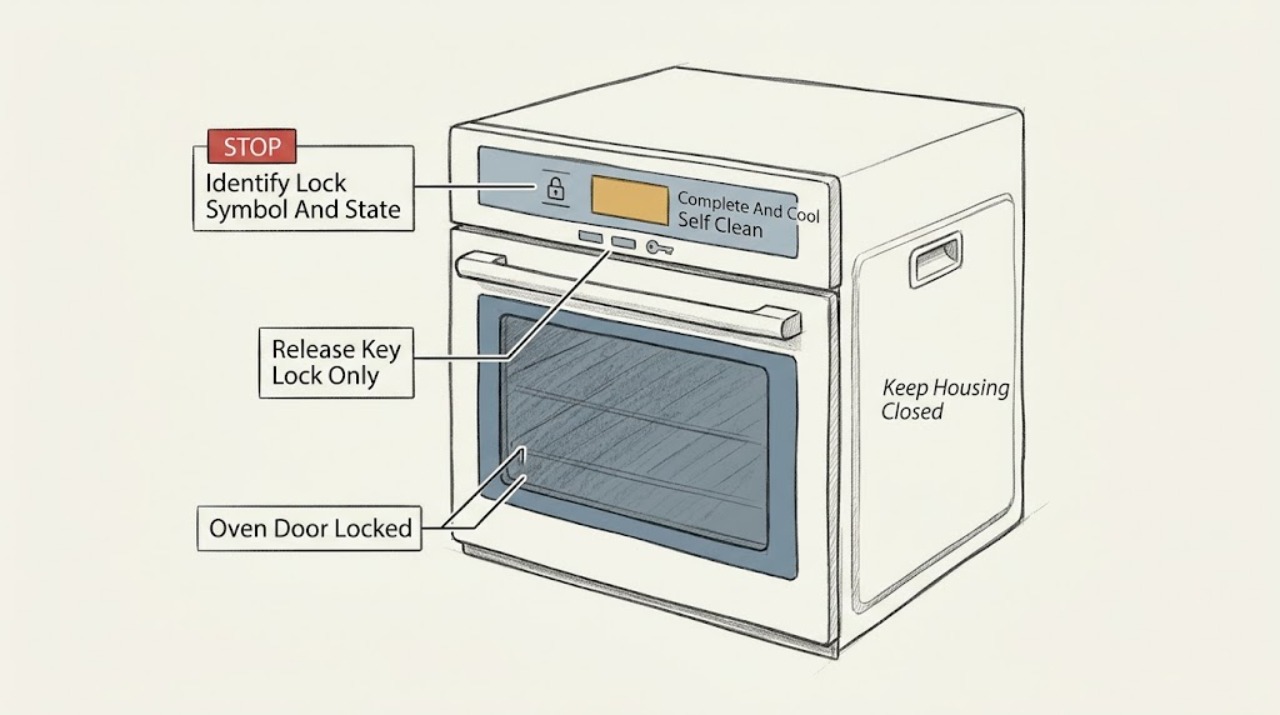
Beko Oven Door Locked: Check self-clean cooling, key lock, and the safe stop point
Do not force a Beko oven door that shows a door-lock symbol or will not open. First identify whether the lock is expected: Beko's high-temperature self-cleaning instructions keep the door locked while the oven is hot and until the lock symbol disappears after the cleaning process; the exact model's manual controls the timing.
-
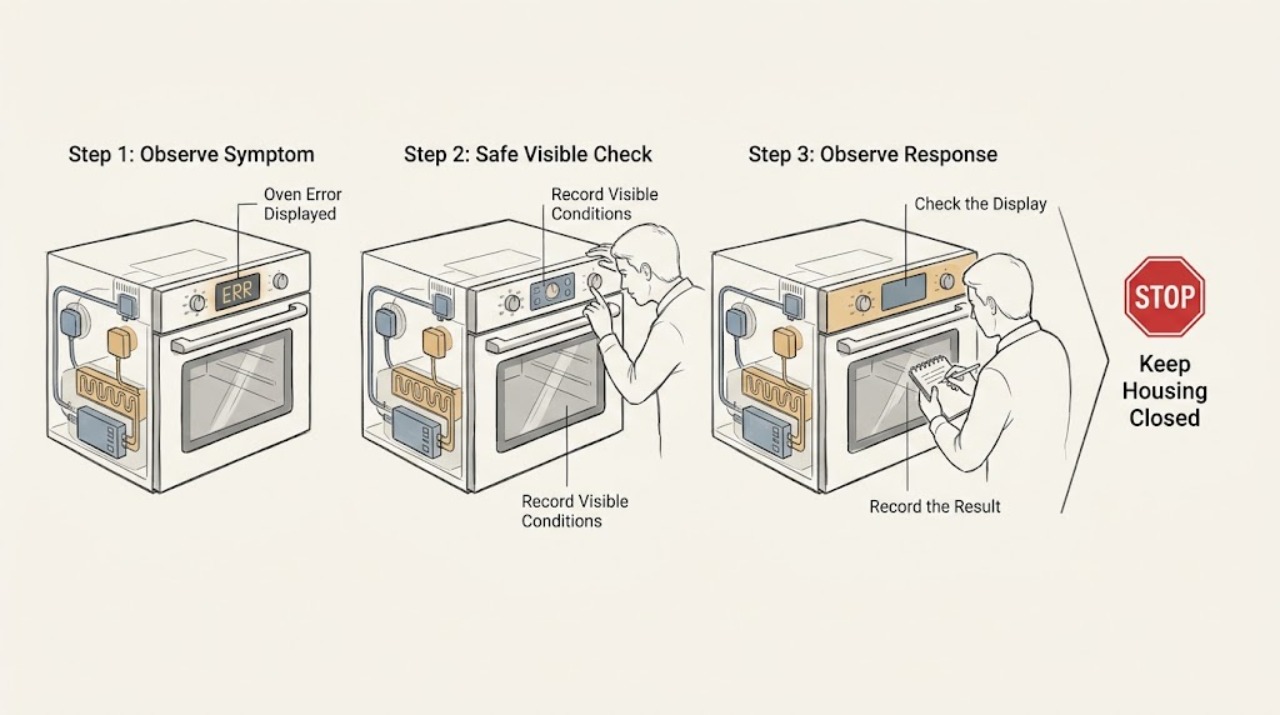
Beko Oven Error Displayed: Identify the Code Safely
When a Beko oven displays an error, write down the exact code or message and the model before switching anything off. Beko manuals use different code ranges for communication, sensor, heating, component, safety, and timer faults, so a generic code list cannot safely identify a part.
-
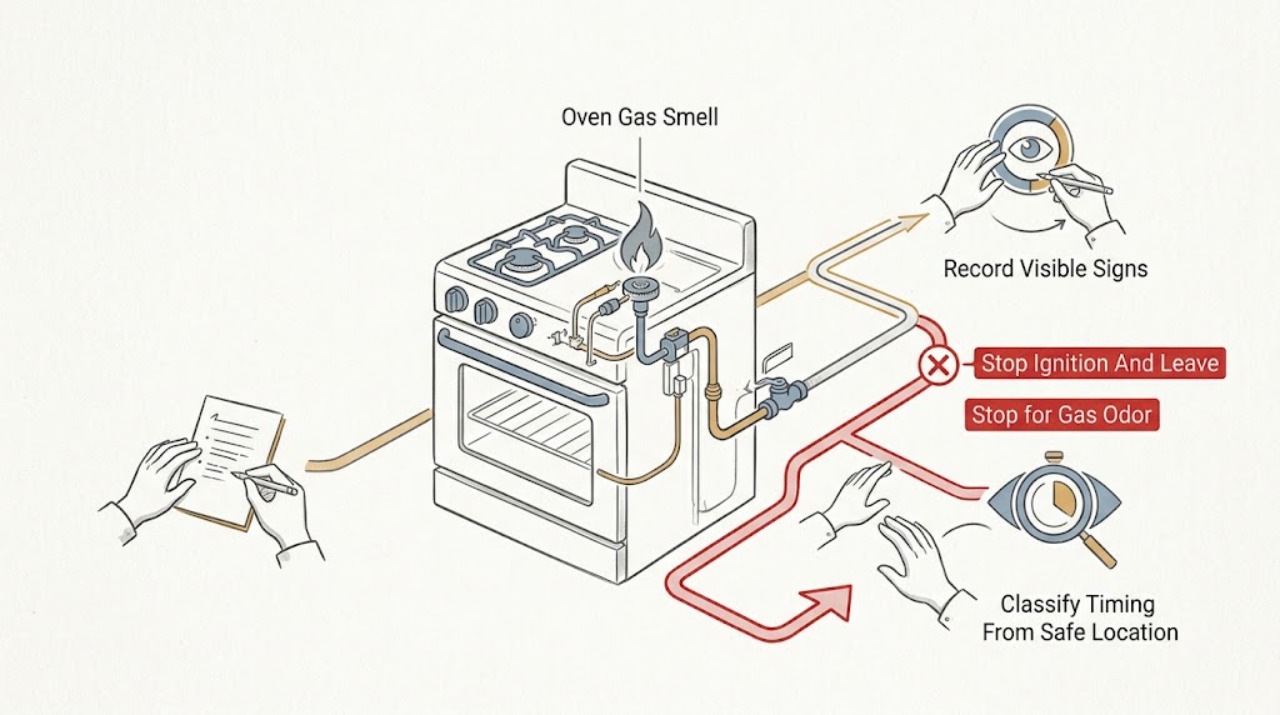
Beko Oven Gas Smell: Stop Safely and Arrange the Right Help
Treat a gas smell from a Beko gas oven as a safety event, not as a cleaning or ignition problem. Stop trying to light the oven, turn all controls off if you can do so without remaining in danger, extinguish open flames, and leave the area.
-
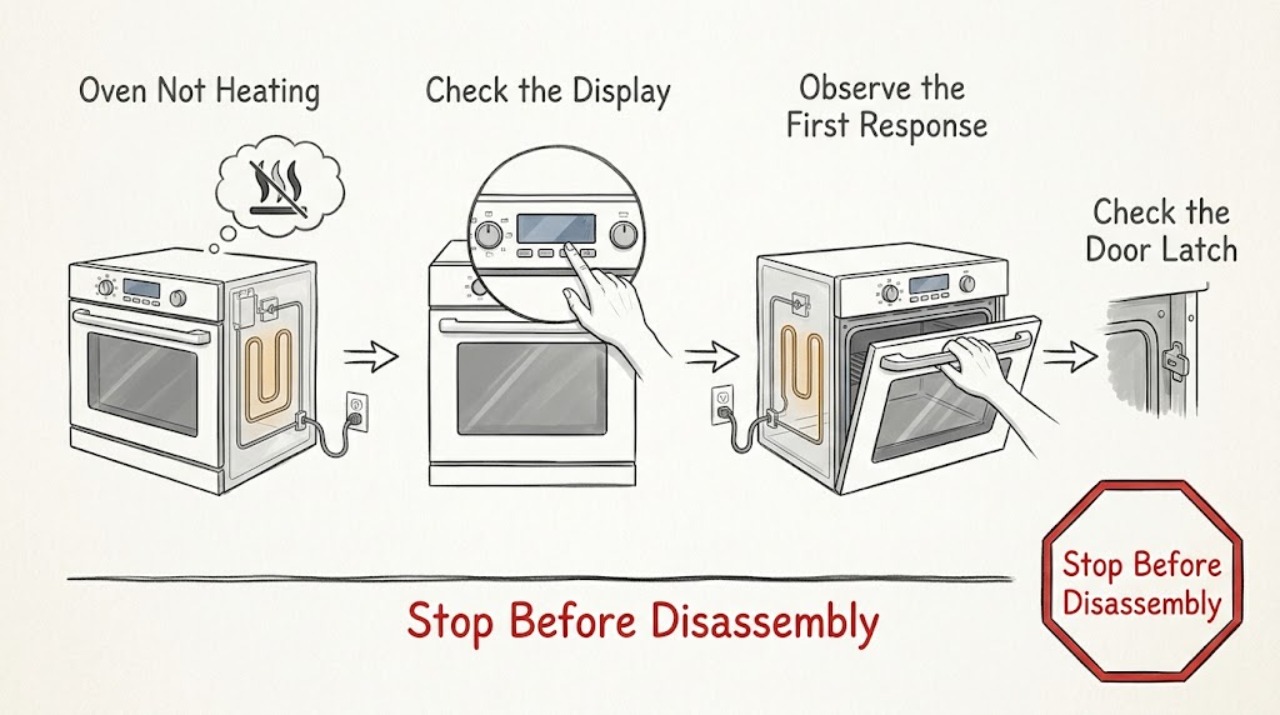
Beko Oven Not Heating: Safe Settings and Power Checks
If a Beko oven is not heating, first stop cooking and let it cool if it has been running. Confirm that a cooking function and temperature are selected, the clock or timer is set as required by the model, the door is fully closed, and the appliance has power at its normal grounded outlet.
-
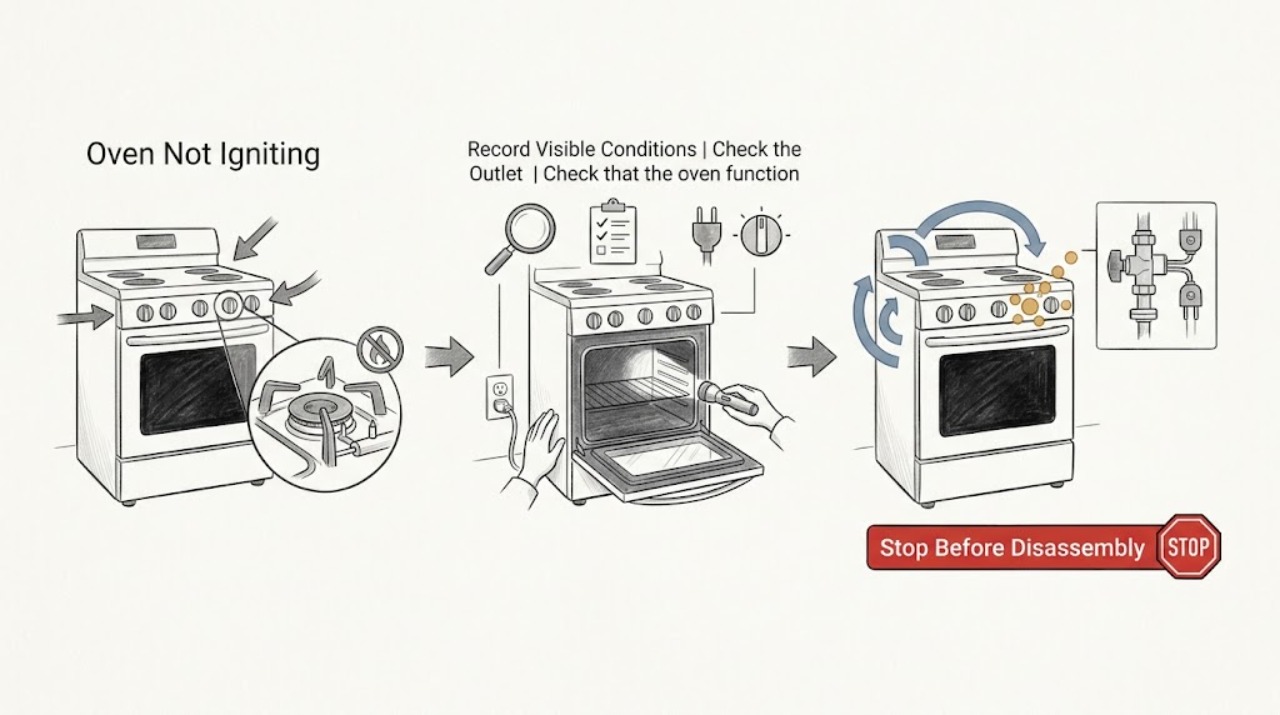
Beko Oven Not Igniting: Separate Gas Ignition, Power, and Control Faults
First identify whether the Beko oven is gas or electric and whether there is no display, no ignition click, clicking without a flame, or a flame that will not remain lit. For a gas model, no click points toward electrical ignition power, while clicking without ignition can indicate a gas-supply or burner-area problem; stop using it if gas is suspected.
-
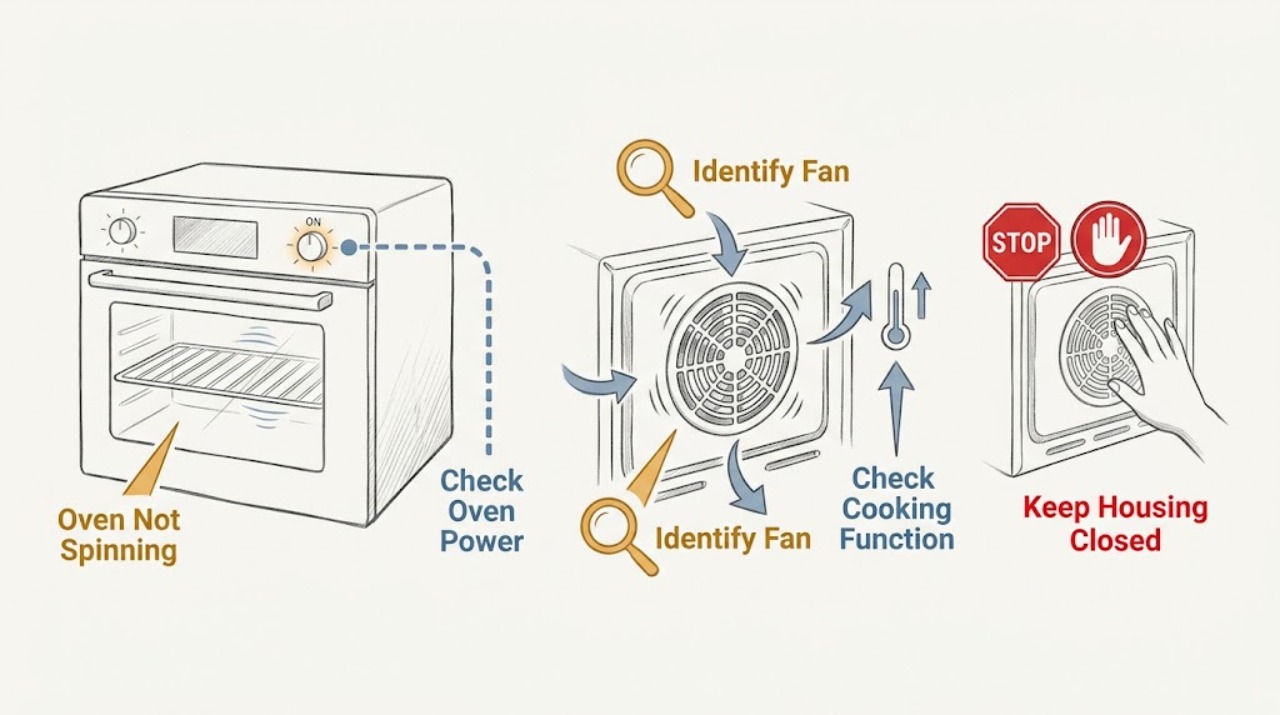
Beko Oven Not Spinning: Identify the Fan Before Servicing
For a Beko oven, “not spinning” is meaningful only if it refers to a fan. First distinguish the cooking fan inside the cavity from the cooling fan behind the control panel.
-
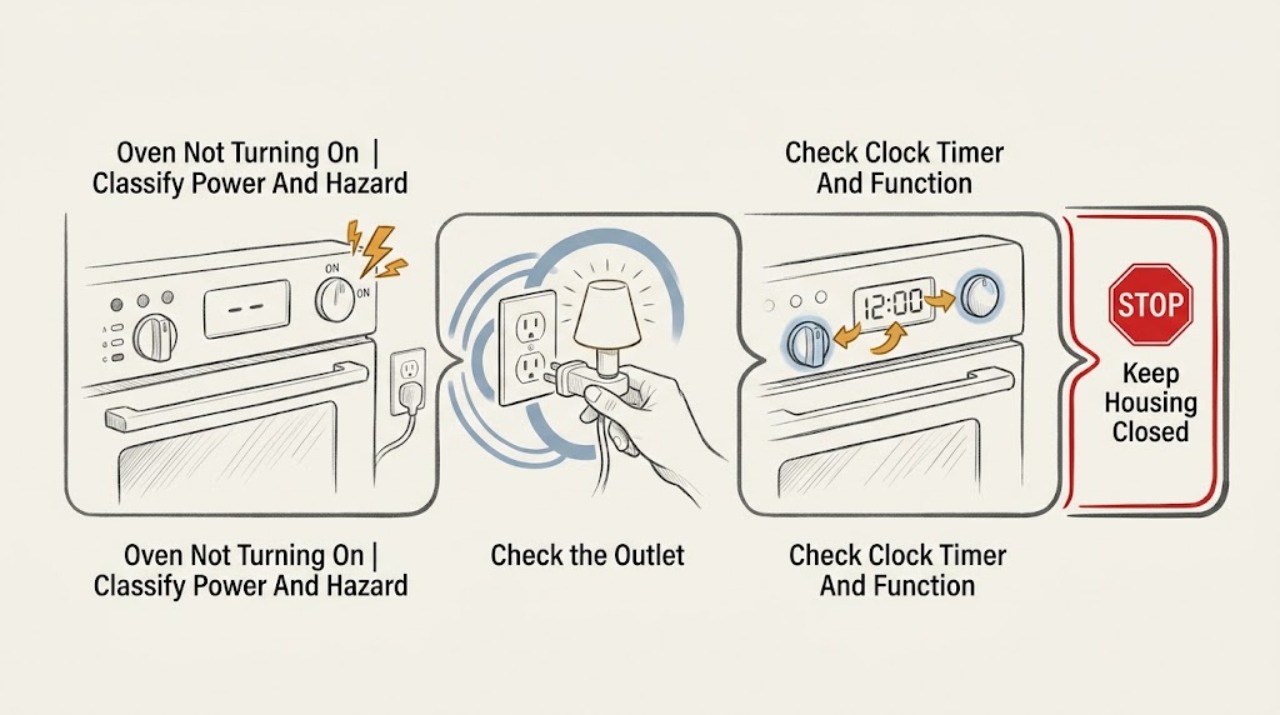
Beko Oven Not Turning On: Safe Checks and Next Steps
First decide whether the Beko oven has no power at all or has power but will not start. From a dry, safe position, check whether the display or interior light responds, confirm the plug and grounded outlet are intact, and check the household fuse box or breaker without opening the appliance.
-
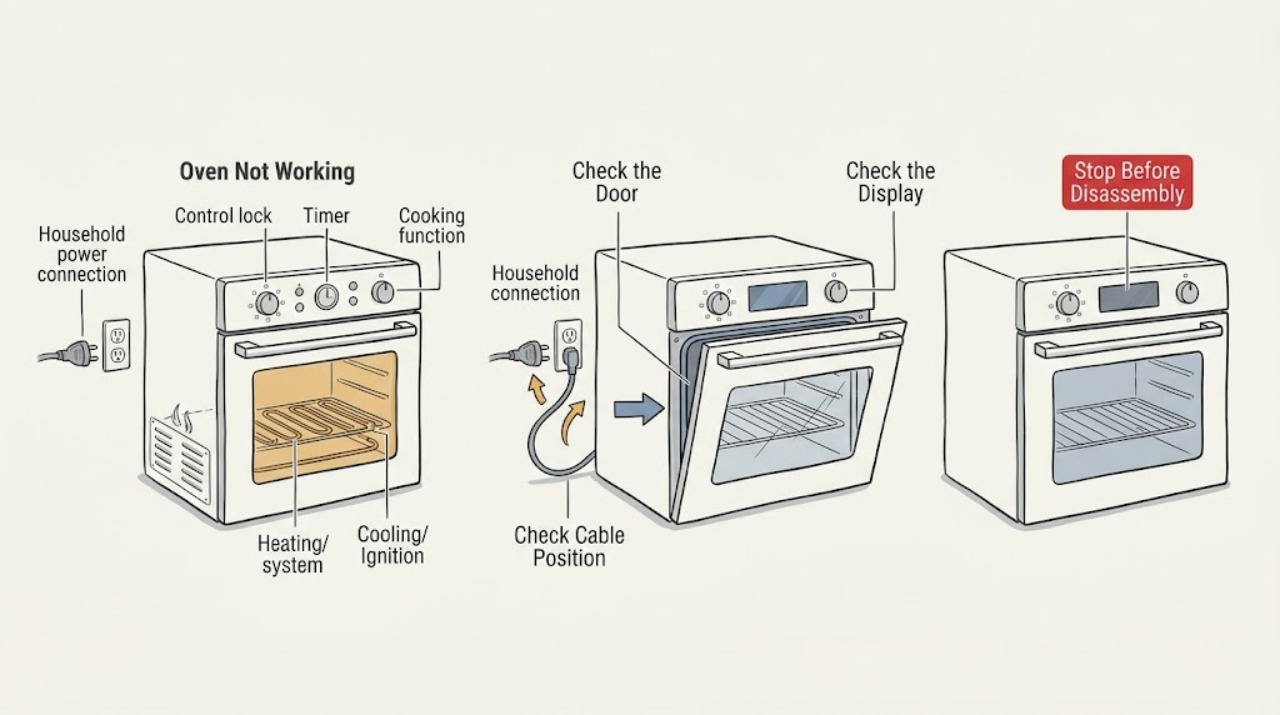
Beko Oven Not Working: Check Power, Controls, Timer, and Heating Mode
Start by separating a completely dead Beko oven from an oven that powers on but will not start or heat. Check the normal user-accessible power source, then confirm that a cooking function, temperature, and—when the model requires it—a cooking time are set.
-
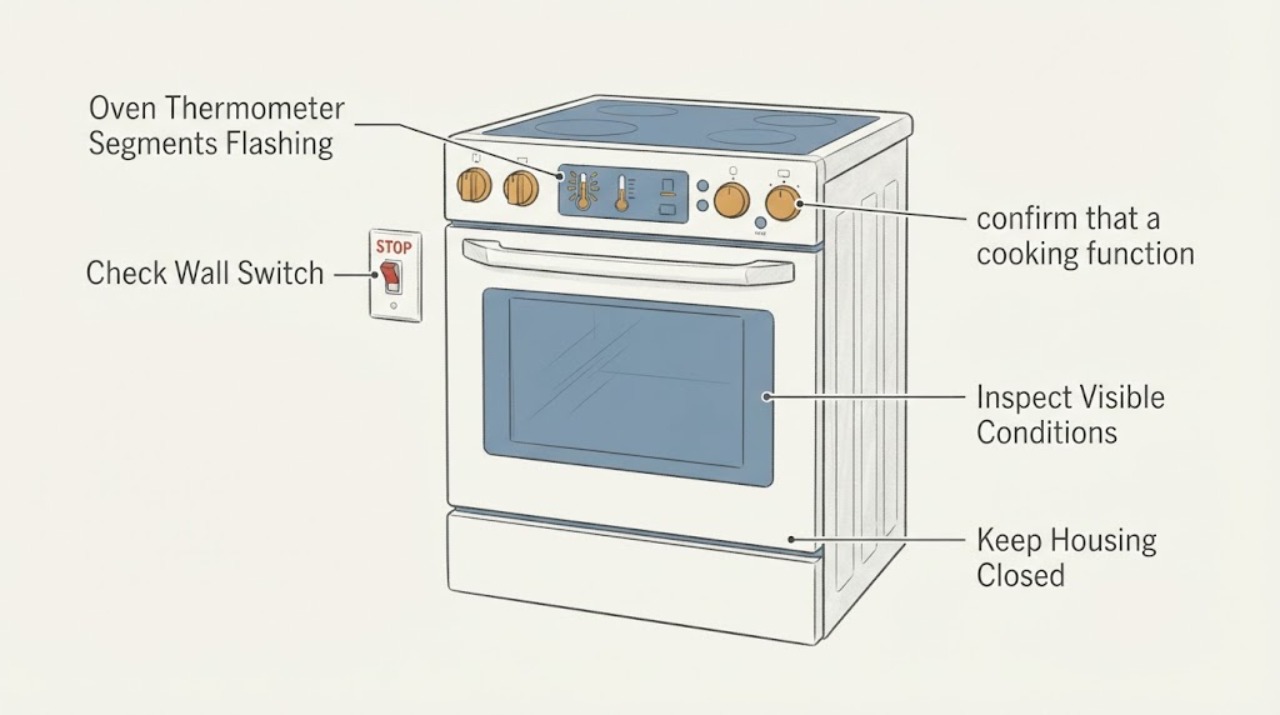
Beko Oven Thermometer Segments Flashing: Normal Preheat or a Fault?
A flashing thermometer or temperature animation can be normal while a Beko oven is heating. Beko's official control-panel documentation says the three-line heating animation flashes while the oven rises to the set temperature and stops when the set temperature is reached, with a constant “C” symbol on that documented display.
-
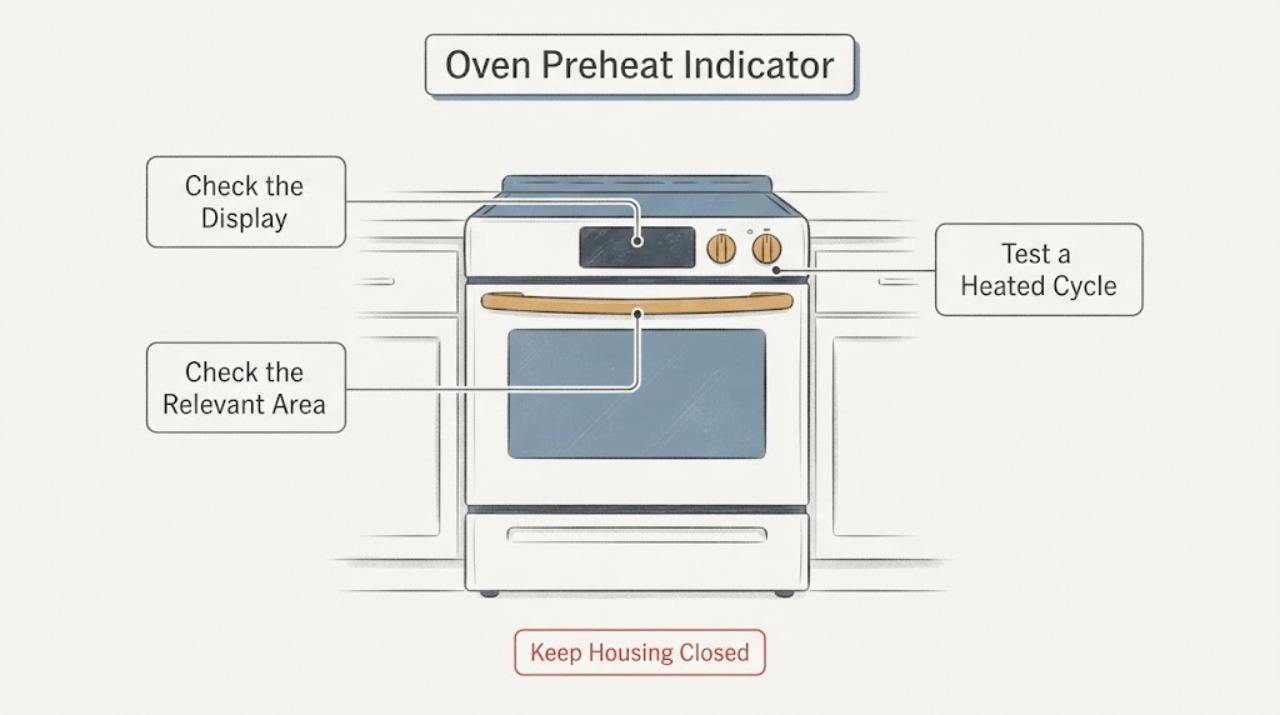
Beko PRIR34450SS Oven Preheat Indicator: What the Manual Actually Says
For the Beko PRIR34450SS, do not assume that every oven-style beep or a separate ready light is present. The exact Beko manual describes selecting a cooking function and temperature, then says the oven heats to and maintains the set temperature while the temperature lamp stays on during heating; it does not promise a distinct preheat-complete chime in that operating section.
-
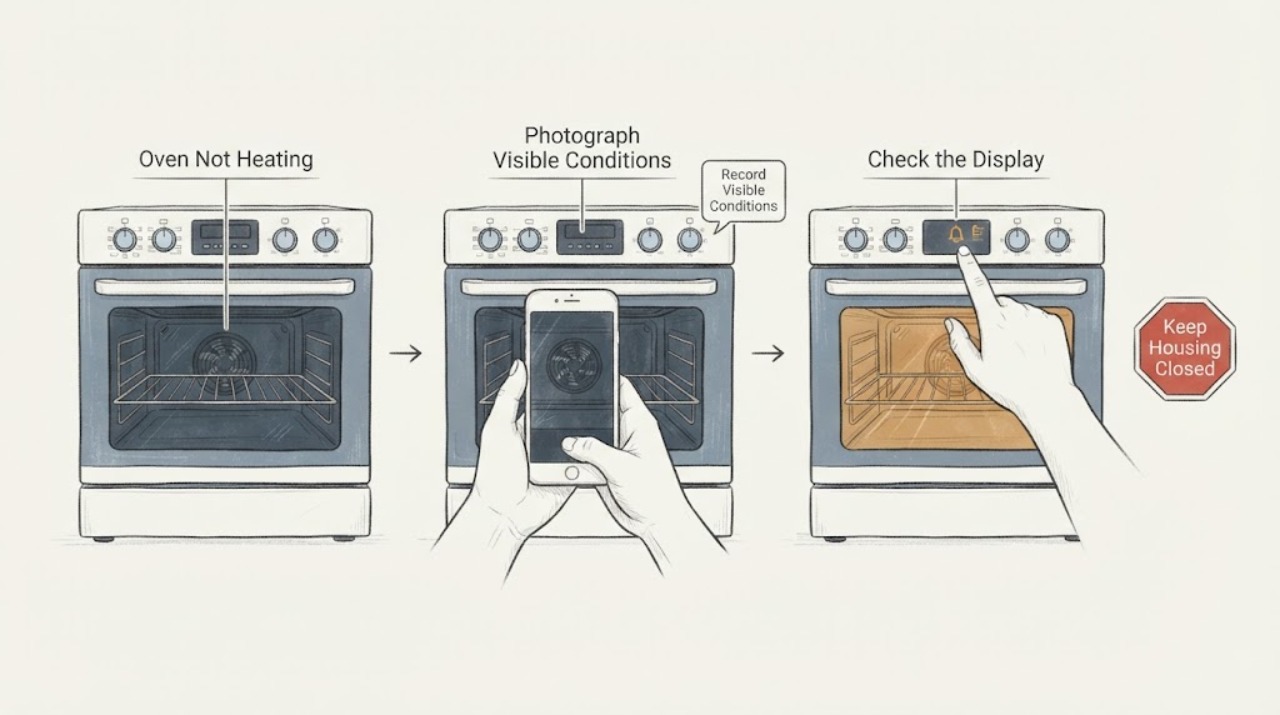
Beko QDM246B Oven Not Heating: Bent Element and Program Differences
Beko identifies the QDM246B as a discontinued 90 cm built-in multifunctional double oven with fan, static, grill, fan-grill, bottom-heat, pizza, and other cooking programs. Its product page lists separate top and bottom elements for the main cavity and a grill element, so a program that does not visibly energize one element is not by itself proof that the element is faulty: different programs use different heater combinations, and some elements may cycle.