
On this page
Start here
Quick answer
First decide whether the Beko oven has no power at all or has power but will not start. From a dry, safe position, check whether the display or interior light responds, confirm the plug and grounded outlet are intact, and check the household fuse box or breaker without opening the appliance. If the display works, verify the clock or timer, cooking function, temperature, and any keylock or control-lock setting using the exact model manual; some Beko ovens will not operate until the clock is set. If it is a gas model and you smell gas, stop immediately, do not ignite or operate electrical controls, leave the area, and contact the local emergency gas service from a safe location. If the outlet and settings are normal but the oven remains dead, does not heat, trips power, has a damaged cord, or needs panel access, stop and arrange qualified Beko service. Do not replace internal fuses, bypass a lock, or test live wiring yourself.
Before you begin
Safety first
- This article covers safe visual checks, ordinary control settings, one normal start attempt, and household protection observation only. Gas-line or pressure work, live electrical testing, cabinet removal, door-interlock bypass, internal component replacement, and combustion diagnosis require qualified service or emergency responders.
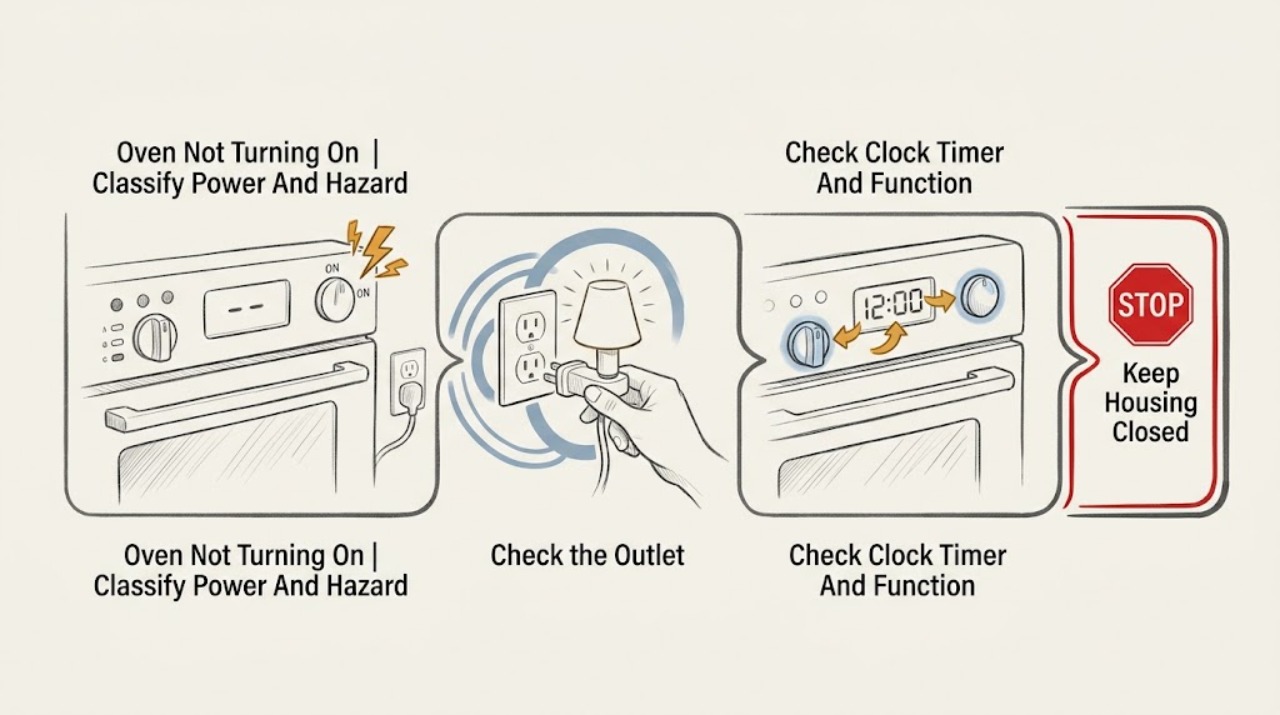
Work through in order
Diagnostic checks
Use only checks that match the exact appliance or system and its official guide.
-
Check 1
From a dry, stable position, note whether the display, clock, indicator lights, or interior light respond, and whether the oven is electric or gas; do not open the door or operate controls if there is gas odor, smoke, flame, or heat damage.
Expected result: The oven is completely blank, some indicators respond, the display is on but no cooking begins, or a gas odor or visible combustion symptom is present.
Next step: If there is no gas odor or active hazard, continue to the plug, outlet, fuse, and breaker check. If a gas or fire symptom is present, leave and contact emergency support from a safe location.
Stop if: Stop for gas odor, smoke, flame outside the burner, burning odor, sparks, water near electrics, or a hot or damaged cord.
Why this matters
Why: A blank unit focuses the next check on the electrical supply. A powered but inactive oven shifts attention to timer, function, lock, door, or a control fault. Gas odor or combustion symptoms override ordinary troubleshooting and require the safety branch.
-
Check 2
With the oven controls OFF and no active hazard, check that the plug is seated in the grounded outlet, inspect the visible cord, and look at the household fuse box or breaker for a tripped device; do not open the outlet, increase fuse capacity, or remove the oven from built-in cabinetry.
Expected result: The outlet or fuse device is dead or tripped, the cord or plug is visibly damaged, the outlet works but the oven remains blank, or power appears normal.
Next step: If safe, restore a household breaker or fuse device only according to its normal operation and test the oven once. If it trips again, the cord is damaged, or the oven stays blank, leave it isolated and arrange a qualified electrician or appliance technician.
Stop if: Do not bypass protection, repeatedly reset a tripped device, handle exposed conductors, use a damaged cord, or make live electrical measurements.
Why this matters
Why: A dead outlet or tripped fuse device points toward the household supply or an overload, but a repeat trip may also be caused by the appliance. A working outlet with a blank oven makes the appliance supply or internal electronics possible; the visible check cannot identify the failed part.
-
Check 3
If the display is powered, consult the exact Beko manual and verify the clock or timer, cooking function, temperature, and any manual-mode or Minute Minder setting; do not guess at a control sequence or start a gas burner to test the setting.
Expected result: The clock is unset, a timer or automatic mode is active, the function or temperature is not selected, the controls are locked, or the documented settings appear correct.
Next step: Correct only the documented setting, then make one normal start attempt. If the display remains unresponsive, the setting cannot be changed, or the oven still does not start, arrange service.
Stop if: Do not bypass a keylock, bridge a control, remove knobs or panels, or continue using a gas oven when odor or an abnormal flame is present.
Why this matters
Why: Beko says some ovens will not operate until the clock is set and that timer, function, temperature, or keylock states can prevent heating or operation. Correct settings can remove an operating condition but do not prove the control hardware is healthy.
-
Check 4
Close the oven door normally, check for an obvious obstruction at the seal or latch, and make one start attempt using the model-directed controls while observing only from outside; do not force the door, defeat a safety interlock, or reach into a hot cavity.
Expected result: The door closes and latches normally, an obstruction prevents closure, the display responds but the oven remains inactive, or a code, unusual noise, smoke, or odor appears.
Next step: Remove only an obvious loose obstruction and retry once if the oven is safe and cool. If the latch, controls, or no-start condition persists, record the code and arrange qualified service.
Stop if: Do not force the door, operate with a damaged seal or latch, open a hot cavity, or continue after smoke, gas odor, burning odor, sparks, or a repeated trip.
Why this matters
Why: A door or latch condition can prevent an oven from starting, while a powered oven that remains inactive after correct settings may have a control, interlock, fan, heating, or ignition fault. A code or abnormal symptom needs model-specific interpretation rather than repeated starts.
-
Check 5
Record the model, display and indicator behavior, power and fuse result, clock or timer state, function and temperature, door behavior, full error code, and when the failure began; do not remove the rear cover or replace an internal component.
Expected result: The oven starts after a documented setting or supply correction, remains dead on a working supply, repeatedly trips, fails after a gas ignition attempt, or produces soot, smoke, or an abnormal flame.
Next step: Use the oven only when it operates normally and safely after the documented correction. Otherwise leave it unused and provide the record to a qualified Beko service professional; use emergency gas support for a current gas odor.
Stop if: Stop all user troubleshooting for a repeat trip, damaged cord, gas odor, smoke, soot, abnormal flame, burning odor, or any need for internal access.
Why this matters
Why: A one-time setting or supply correction may explain the symptom. Persistent no power or abnormal combustion indicates an unresolved electrical, control, ignition, gas, or heating fault and cannot be safely narrowed by more user tests.
Use your observations
Decision map
Find the observation that best matches what you see, then follow the next safe action.
-
PATH 01Safety boundary
What you see
Gas odor, hissing, smoke, flame outside the burner, or other active combustion hazard is present.
Do this next
Leave the area, avoid flames and unnecessary electrical operation, and contact the local emergency gas or fire service from a safe location. Do not re-enter or use the oven until cleared.
Why this path and its safety boundary
Why it matters: This is an emergency or gas-safety condition, not a normal start or timer problem.
Safety stop: Do not ignite the oven, operate switches, search for the leak, or test another burner while the hazard is present.
-
PATH 02Safety boundary
What you see
The outlet is dead or a household fuse or breaker has tripped.
Do this next
Restore protection only once if safe and normal, then test the oven once. If it trips again or the outlet is damaged, use qualified electrical service and leave the oven disconnected.
Why this path and its safety boundary
Why it matters: The supply or an overload is a plausible cause, but a repeat trip can indicate an appliance fault.
Safety stop: Do not bypass protection, increase fuse capacity, open the outlet, or keep reconnecting the oven.
-
PATH 03Safety boundary
What you see
The display works but the clock, timer, function, temperature, manual mode, or keylock prevents a start.
Do this next
Use the exact model manual to correct the setting and make one normal start attempt; arrange service if the setting will not change or the oven remains inactive.
Why this path and its safety boundary
Why it matters: The oven has power and is being held by an operating setting rather than proven to have a dead supply.
Safety stop: Do not bypass a lock, force controls, or remove the panel.
-
PATH 04Safety boundary
What you see
The door does not close or latch normally, or an obstruction is caught at the seal.
Do this next
Remove only a loose visible obstruction while cool and retry once. Stop and arrange service for a damaged, loose, misaligned, or stuck latch or seal.
Why this path and its safety boundary
Why it matters: The oven may prevent operation for safety, but a damaged latch or seal needs model-specific service rather than force.
Safety stop: Do not force the door, defeat an interlock, or operate with a damaged seal.
-
PATH 05Safety boundary
What you see
Power and documented settings are normal, but the oven remains blank, will not start, trips again, or produces soot, smoke, odor, or an abnormal flame.
Do this next
Leave the oven unused and arrange qualified Beko appliance service; use emergency gas support for a current gas odor or fire symptom.
Why this path and its safety boundary
Why it matters: An internal electrical, control, heating, fan, ignition, gas, or combustion fault remains possible and cannot be confirmed through repeated user operation.
Safety stop: Do not open the cabinet, replace internal parts, adjust gas, or keep testing cycles.
Helpful context
Understand the symptom
Start by separating no power from no start
A blank display and no light response make the outlet, plug, fuse, breaker, or appliance supply the first distinction. A lit display with no heat or no cycle can instead involve the clock, timer, function selection, lock, door condition, or a component fault. Do not assume a dark oven light proves that the whole oven is dead; record every indicator before changing settings.
Beko timers and locks are model-dependent
Beko notes that some ovens will not work until the clock is set, and models may use a keylock or mechanical timer. Use the exact manual for the control sequence and do not guess at a reset combination. If a powered oven still refuses to start after the documented setting check, the control or interlock needs qualified diagnosis.
Gas odor is an emergency branch
A gas oven that will not light must not be tested repeatedly when gas odor is present. Leave the area, avoid flames and unnecessary electrical operation, and contact local gas emergency support from a safe location. An oven with soot, smoke, or an abnormal flame also stays out of use until an authorized or qualified professional checks it.
Safety boundary
Stop conditions
- For gas odor, hissing, smoke, or flame outside the burner, leave immediately, avoid flames and unnecessary electrical operation, and contact the appropriate emergency service from a safe location.
- Do not use the oven with soot, smoke, an abnormal flame, burning odor, sparks, a damaged cord, water near electrical parts, or a repeated power trip.
- Do not bypass a fuse, breaker, keylock, door interlock, or safety control, and do not increase fuse capacity.
- Do not open the oven cabinet, test live wiring, adjust gas pressure, change fuel parts, or replace internal components yourself.
- Do not force the door or use the appliance again until a persistent no-start or combustion problem has been assessed by qualified service.
When checks do not resolve it
Need a professional?
Use emergency gas or fire support immediately for a current gas odor, hissing, smoke, flame outside the burner, or suspected fire. Arrange qualified Beko appliance service when the outlet and documented settings are normal but the oven remains blank or will not start, a fuse or breaker trips again, the door or lock is damaged, an error returns, or the oven has soot, smoke, abnormal flame, burning odor, or any internal fault symptom. Use a qualified electrician for a damaged outlet or household supply.
Safety scope: This article covers safe visual checks, ordinary control settings, one normal start attempt, and household protection observation only. Gas-line or pressure work, live electrical testing, cabinet removal, door-interlock bypass, internal component replacement, and combustion diagnosis require qualified service or emergency responders.
Common questions
FAQ
What should I check first if my Beko oven will not turn on?
Check whether the display or indicators respond, then inspect the plug, grounded outlet, and household fuse or breaker from a safe position. If the display works, check the clock, timer, function, temperature, and keylock in the exact model manual.
Can an unset clock stop a Beko oven from starting?
Yes. Beko says some ovens will not work until the clock is set. Use the exact manual to set the clock or return a timer to the required operating mode, then make one normal start attempt.
What if my Beko oven has power but does not heat?
Check the documented cooking function, temperature, timer or manual mode, and keylock. If settings are correct and the oven still does not begin heating, arrange qualified service rather than opening the cabinet or replacing an internal part.
What should I do if I smell gas from a Beko gas oven?
Do not try to ignite it or operate electrical controls. Leave the area and contact the local Emergency Gas Service from a safe location. Do not re-enter or use the oven until the responsible professional says it is safe.
When should I call for Beko oven service?
Call when a working supply and documented settings do not restore operation, a fuse or breaker trips again, the door or lock is damaged, or the oven produces soot, smoke, abnormal flames, burning odor, sparks, or a gas smell. Do not attempt internal electrical or gas repair.
Read the exact guide
Official sources
- My oven’s not working, what do I do?Beko UK · Official Beko oven support page used for no-start checks; it is framed around electric ovens, so gas-specific behavior remains subject to the exact manual and gas-safety branch.
- Why is my oven smokingBeko UK · Official Beko oven support page used for the combustion-symptom stop boundary.
- I can smell gas but none of the control knobs are turned on.Beko UK · Official Beko gas-appliance safety FAQ used for a gas oven safety branch; local emergency gas guidance controls the response.
- The hobs work fine but the main oven is not heating up?Beko UK · Official Beko oven support page applicable to powered ovens that do not begin heating; model-specific controls and timers remain governed by the owner manual.
Community feedback
Share a repair observation
Share a plain-text repair observation. Accepted observations are published automatically; this page may take a moment to update.