
On this page
Start here
Quick answer
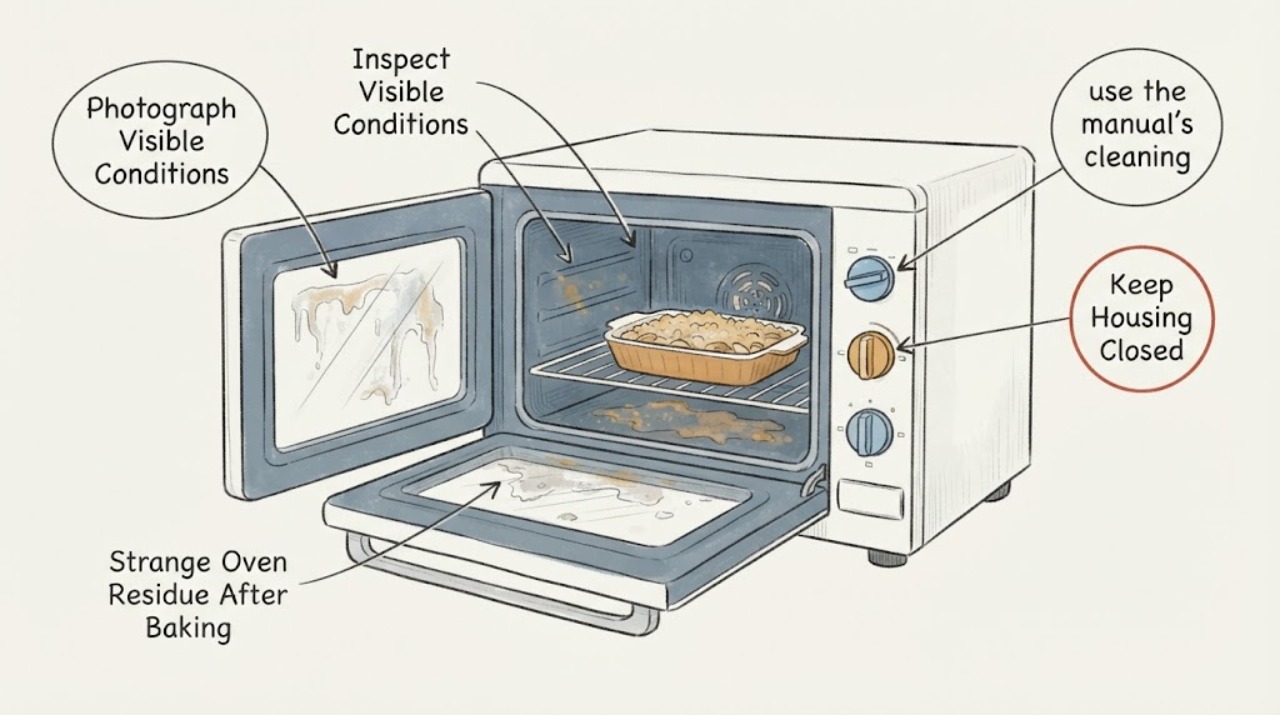
Do not assume an unexplained residue in the Beko BSC630 oven is a self-cleaning ash or a failed heater. This model is listed by Beko as an electric single-cavity cooker with an enamelled oven, steam-cleaning capability, and no catalytic or pyrolytic self-cleaning system. First let the oven cool, isolate mains power before cleaning, and photograph the residue and rating plate. Decide whether it is a soft food, apple, sugar, or grease spill; a smooth cleaner or mineral film; or loose, blistered, flaking, glass-like, or metal material. For an intact enamel surface with ordinary food residue, use only the matching Beko manual and the gentle warm-water/soft-cloth method. Do not scrape, use abrasive chemicals, heat the residue to burn it off, or continue using the oven if the enamel is lifting, metal or wiring is exposed, residue is near a heating element or vent, or there was smoke, sparking, burning odor, or a hot or damaged connection.
Before you begin
Safety first
- User checks are limited to cooling, safe mains isolation, rating-plate identification, visual residue classification, and gentle cleaning of clearly removable food on an intact accessible enamel surface. Do not remove the control or rear panel, heater, fan cover, door hardware, or wiring; do not perform live tests or high-heat burn-off tests.
Work through in order
Diagnostic checks
Use only checks that match the exact appliance or system and its official guide.
-
Check 1
Stop cooking and allow the oven, tray, and residue to cool completely. From a dry, safe position isolate the cooker from the mains before touching the interior. Record the full rating-plate model, including whether it is BSC630K, BSC630S, or BSC630W, and photograph the residue in place. Do not restart the oven to see whether the material burns away.
Expected result: There is heavy or worsening smoke, sparking, a burning or electrical odor, a hot or damaged connection, a cracked surface, or only a cool unexplained deposit with no immediate hazard.
Next step: For a non-hazardous deposit, keep power isolated and continue with visual classification. For smoke, sparking, burning odor, damaged wiring, or a hot connection, leave the cooker off and arrange qualified Beko appliance or electrical service.
Stop if: Do not touch a hot residue, reach behind the cooker, open the control or rear panel, or perform a live electrical test.
Why this matters
Why: Smoke, electrical symptoms, or visible damage make this a safety event rather than a cleaning question. A cool deposit without those signs can be examined from the normal user position, but its material and location still need to be distinguished.
-
Check 2
Without scraping or prying, inspect the patch from the normal user position and note its location, colour, texture, and whether the underlying enamel looks continuous. Look for a sticky or translucent food-like spill on the oven floor or tray, a smooth white or hazy film, a hard brittle flake, blistering, peeling, exposed metal, glass fragments, or material close to a heater, fan opening, or door seal.
Expected result: The material is soft or smeared and follows the food-spill area; it is a smooth film on intact enamel; it is a brittle or lifting surface layer; or its composition or location is uncertain.
Next step: Photograph the uncertain or damaged area and keep the oven unused until Beko or a qualified technician confirms the material. Only an intact surface with clearly removable food residue should proceed to the gentle cleaning step.
Stop if: Do not use a knife, wire wool, abrasive pad, paint, foil, adhesive, or an unapproved chemical to identify or remove the material.
Why this matters
Why: A soft deposit in the spill zone is more consistent with food, fruit, butter, or sugar than with a component failure. A smooth film can be leftover cleaner or mineral contamination. A lifting, blistered, sharp, glass-like, or exposed area is a possible surface or safety defect and should not be treated as ordinary dirt.
-
Check 3
If the residue is clearly ordinary food on an intact enamel surface and is away from electrical openings, use the BSC630 manual's cleaning instructions. With power still isolated and the oven cool, wipe with warm water and a soft cloth or sponge; use an oven cleaner only if the exact manual confirms it is suitable for this interior. Wipe away all cleaner residue and dry the cavity before reconnecting anything.
Expected result: The deposit softens and wipes away; a film remains after rinsing; the surface stains but remains smooth and intact; or the deposit does not move without force.
Next step: Rinse and dry thoroughly after an approved cleaning product, then reassess only from the outside. If the material remains, the enamel changes, or the deposit returns without a new spill, stop and request model-specific service.
Stop if: Do not apply cleaner to a hot surface, mix products, use steam equipment unless the BSC630 instructions authorize that function, or leave liquid near controls, wiring, or openings.
Why this matters
Why: A removable food deposit supports a spill or cooking-residue explanation. A remaining film may be cleaning product or mineral residue and needs the exact manual's treatment. A deposit that will not move without force, or a surface that is damaged underneath, is not a safe DIY cleaning result.
-
Check 4
After the cavity is clean, dry, and visually intact, check the tray, rack, door seal, and the area above and below the food dish for a source of overflow or residue transfer. Note whether the material appeared only after this apple-crumble bake or is present after an empty cool oven. Do not remove the door, heating element, fan cover, or rear panel to investigate.
Expected result: The residue tracks back to a spill on the tray or dish; it is confined to one accessible food-contact area; it reappears with no new spill; or it is near a heater, vent, door seal, or inaccessible surface.
Next step: Clean the accessible spill source and use the oven only when the cavity is dry and intact. If the residue recurs, spreads, affects the seal, or is near a heated or inaccessible component, keep the oven off and arrange qualified service with the photographs.
Stop if: Do not run an empty high-heat burn-off cycle, remove fixed panels, or continue cooking over loose flakes, exposed metal, or a damaged seal.
Why this matters
Why: A repeatable spill pattern supports a cooking or cookware overflow explanation. Recurrence without a new spill, or material near a heater, vent, seal, or inaccessible surface, raises the possibility of a surface, installation, or internal fault that cannot be certified by wiping.
Use your observations
Decision map
Find the observation that best matches what you see, then follow the next safe action.
-
PATH 01Next step
What you see
The residue is soft, sticky, or browned in the same area where apple juice, butter, sugar, or food could have overflowed, and the enamel underneath is smooth and unbroken.
Do this next
With the BSC630 cool and disconnected, remove it using warm water and a soft cloth or sponge, rinse away any cleaner, and dry fully before normal use. Do not scrape or burn it off.
Why this path and its safety boundary
Why it matters: An ordinary food spill is more likely than a failed heating or control component.
-
PATH 02Next step
What you see
The deposit is a smooth white or hazy film on intact enamel, especially after an earlier cleaning, and there is no smoke, burning odor, heat damage, or exposed surface.
Do this next
Stop adding products, use only the exact BSC630 manual's approved cleaning method, and rinse and dry thoroughly. If the film persists, ask Beko or a qualified service provider to identify it rather than trying stronger chemicals.
Why this path and its safety boundary
Why it matters: Leftover cleaning product or a surface film is possible, but its chemistry and safe removal are not established from the photograph or symptom alone.
-
PATH 03Next step
What you see
The material is brittle, blistered, flaking, sharp, glass-like, or metallic; the enamel is lifting or exposes a different substrate; or the residue lies beside a heater, fan opening, door seal, or wiring route.
Do this next
Keep the oven disconnected and arrange qualified Beko appliance service. Provide the complete model suffix and photographs; do not patch, paint, scrape, or run a confirmation bake.
Why this path and its safety boundary
Why it matters: This may be surface damage, a loose foreign material, or a safety-relevant location rather than removable food. Beko's general cleaning guidance does not certify continued heating over a damaged or unidentified surface.
-
PATH 04Next step
What you see
The oven produced heavy smoke, sparking, an electrical or burning odor, abnormal heat, a hot or damaged connection, repeated breaker trips, or a gas odor from another appliance or installation nearby.
Do this next
Stop using the cooker. Isolate power only from a dry, safe position and obtain qualified appliance or electrical help; for an active gas odor, leave the area and contact the gas supplier or emergency service from outside.
Why this path and its safety boundary
Why it matters: The residue question is subordinate to an electrical, fire, or gas safety event; cleaning cannot prove that the cooker is safe.
-
PATH 05Next step
What you see
The rating plate does not match BSC630, the colour suffix or market differs from the manual, or the residue cannot be classified without dismantling the oven.
Do this next
Retrieve the manual for the complete model number through Beko's official manual search or arrange service. Until then, limit work to cool, external observation and no-product cleaning of clearly removable food on an intact surface.
Why this path and its safety boundary
Why it matters: The available BSC630 evidence cannot establish the correct cavity finish, cleaning function, or safe component boundary for another model or configuration.
Helpful context
Understand the symptom
Apple crumble can leave a genuine food spill when fruit juice, butter, or sugar bubbles over, but an unfamiliar patch should be classified before it is cleaned or reheated. A residue that wipes away from intact enamel is a different decision from a hard flake that lifts the surface, a piece of glass or metal, or material beside a heater or vent. The recipe and timing are clues, not proof that the oven itself is at fault.
Beko lists the BSC630 as an electric cooker with a fan oven and grill, and the official page says its cavity has steam-cleaning capability but no catalytic or pyrolytic self-cleaning system. That means a dark or pale deposit should not automatically be treated as self-cleaning ash or as a normal catalytic-liner appearance. Confirm the full colour suffix and use the matching BSC630 manual before applying any model-specific cleaning step.
When checks do not resolve it
Need a professional?
Request Beko or qualified oven service for unidentified or recurring residue, lifting or blistered enamel, exposed metal, material beside a heater or vent, a damaged seal, persistent smoke or odor, or any symptom that requires dismantling.
Safety scope: User checks are limited to cooling, safe mains isolation, rating-plate identification, visual residue classification, and gentle cleaning of clearly removable food on an intact accessible enamel surface. Do not remove the control or rear panel, heater, fan cover, door hardware, or wiring; do not perform live tests or high-heat burn-off tests.
Have this ready
- Provide the complete BSC630 colour suffix, rating-plate and serial information, market, photographs of the residue before and after cooling, its location and texture, what was baked, any cleaning product used, whether the cavity surface is damaged, and any smoke, odor, heat, breaker, or electrical symptoms.
Common questions
FAQ
Is the residue normal ash from a self-cleaning Beko BSC630 oven?
Do not assume that. Beko's BSC630 product page lists steam cleaning but no catalytic or pyrolytic self-cleaning system. Classify the material and follow the exact manual instead of heating it to burn away.
Can I scrape the strange residue off with a knife or scourer?
No. Beko advises a soft cloth or sponge and warns that unsuitable or abrasive cleaning materials can damage oven surfaces. If the material will not wipe away gently, keep the oven off and ask for model-specific advice.
Could apple crumble itself have caused the residue?
A food, fruit, butter, or sugar spill is plausible when the material is soft or browned and follows the dish's spill area, but a photo or timing cannot prove it. Check whether the enamel is intact and whether the residue returns without a new spill.
Can I use the Beko steam-cleaning function to remove it?
Only if the exact BSC630 manual describes that function and the material is clearly ordinary food on an intact surface. Do not use steam or heat on loose, flaking, unidentified, or electrically adjacent material.
Read the exact guide
Official sources
- How do I clean the inside of my Beko oven?Beko UK · Beko's official cleaning FAQ supports a gentle method for enamelled interiors and says catalytic liners should not be cleaned; the exact BSC630 manual controls if the configuration differs.
- Appliance ManualsBeko UK · Official Beko manual search page used to confirm that manuals are retrieved by the appliance model number and contain safety, installation, maintenance, and troubleshooting information.
- How To Clean an OvenBeko UK · Official Beko cleaning guide used for mains isolation, cooling, soft-cloth cleaning, suitable-product caution, and no-abrasive user boundary; model-specific instructions take priority.
- BSC630 User ManualBeko · Exact BSC630 manual linked from the Beko product page; use it to confirm the model-specific cleaning and operation instructions, not a different Beko oven's procedure.
- 60cm Single cavity electric cooker BSC630Beko UK · Exact Beko UK product page for BSC630; used for appliance identity, electric single-cavity configuration, enamel cavity, steam-cleaning availability, and absence of catalytic or pyrolytic self-cleaning. Confirm the full suffix before applying instructions.
Community feedback
Share a repair observation
Share a plain-text repair observation. Accepted observations are published automatically; this page may take a moment to update.