
On this page
Start here
Quick answer
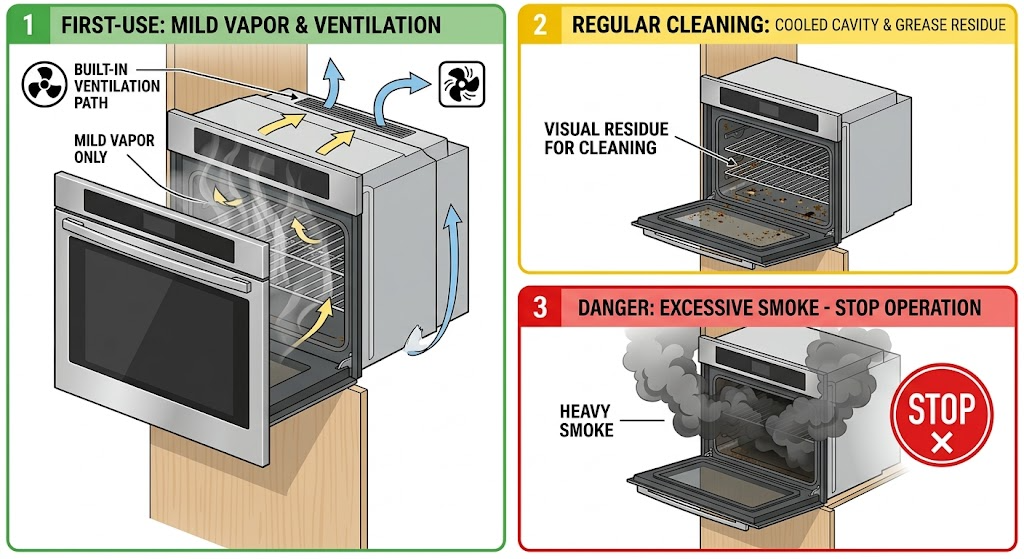
First determine whether this is the mild oily odor of a new oven or a new smell from food, grease, cleaner residue, or an electrical or gas fault. Beko says smoke and smell during initial heating can come from production residues, while grease or cleaning-agent residue can smoke when heated. With the oven cool and isolated, remove visible food or residue and follow the exact model's cleaning and initial-heating instructions; ventilate the room and do not inhale smoke. Do not start a pyrolytic or other self-cleaning cycle unless the model manual explicitly supports it and its preparation steps are followed. Turn the oven off immediately for heavy smoke, flames, a burning electrical or plastic odor, gas smell, sparking, damaged wiring, or an odor that persists after a clean cavity and proper first-use procedure, then seek qualified service.
Before you begin
Safety first
- Do not inhale oven smoke, put water on an electrical or grease fire, open the cabinet, bypass safety controls, or clean a hot cavity. Keep children away from hot surfaces. Isolate power only from a dry, accessible control and only when doing so is safe; suspected gas or active fire requires leaving the area and contacting the appropriate emergency service.
Work through in order
Diagnostic checks
Use only checks that match the exact appliance or system and its official guide.
-
Check 1
Turn the oven off and note when the odor appears: only during the first use, after a spill or greasy meal, after cleaning, during a self-cleaning programme, or whenever a heating function runs. Observe whether there is visible smoke, flame, or abnormal heating.
Expected result: The odor is mild and limited to initial heating with normal operation, or it is acrid, persistent, visibly smoky, or accompanied by flame, sparking, abnormal heat, or an electrical or gas smell.
Next step: For a mild first-use odor, ventilate and follow the model's initial-heating instructions after the oven cools. For acrid, persistent, or hazardous symptoms, stop using the oven and follow the professional-help branch immediately.
Why this matters
Why: Beko says initial production residues can create smoke and smell, while grease and cleaning-agent residue can smoke when reheated. Heavy smoke or abnormal operation is a safety branch, not a routine cleaning issue.
-
Check 2
If the smell is from a new oven and there is no hazard, remove packaging, trays, and racks only as the model instructions direct, wipe accessible surfaces with a damp cloth, and ensure the room is well ventilated before any documented initial-heating cycle.
Expected result: Packaging or manufacturing residue is present, the cavity is clean and the odor fades after the documented procedure, or the odor and smoke remain strong.
Next step: If the odor fades and the oven heats normally, use it according to the manual. If it remains strong or operation is abnormal, turn the appliance off and arrange authorized service rather than repeating high-heat cycles.
Why this matters
Why: Beko's preparation guidance attributes initial smoke and smell to production residues and instructs ventilation and avoidance of direct inhalation. A strong odor that remains after the procedure is not established as normal by the first-use explanation.
-
Check 3
With the oven cool and power isolated where the installation permits, inspect the cavity ceiling, floor, side walls, racks, and the visible area around the heating element for food splatter or grease; also look for cleaner residue left after a recent cleaning.
Expected result: Grease, burnt food, or cleaner residue is visible, or the cavity looks clean but the smell returns whenever heat is applied.
Next step: Let everything cool, then clean only with the model-approved method and a soft damp cloth or suitable non-abrasive material. Do not pour liquid on an element or control. If the smell returns after the residue is removed, stop using the oven and request service.
Why this matters
Why: Beko states that grease can reach a heating element or adhere to cavity surfaces and later burn, and that cleaning-agent residue can also cause smoke. A clean cavity with recurring odor points beyond a visible residue.
-
Check 4
Check whether a pyrolytic, catalytic, steam-clean, or other special cleaning mode is selected or available on this exact model; consult the model manual before starting or repeating any such mode.
Expected result: A documented self-cleaning mode is active, no special mode is active, or the feature and preparation requirements are unclear.
Next step: If the mode is documented, follow every loading, ventilation, and cool-down instruction exactly and stop if smoke becomes heavy. If the feature is unclear, do not start it; use the model manual or professional service.
Why this matters
Why: Beko explains that some ovens have pyrolytic self-cleaning and that catalytic panels handle grease differently, but features and preparation are model-dependent. An unfamiliar mode can itself produce heat or odor and is not a substitute for diagnosis.
-
Check 5
After cleaning and cooling, check the external door seal and visible cavity surfaces for damage, trapped material, or a spill that could contact a hot element; do not remove the door, element, or panels.
Expected result: The door seal or cavity is damaged, material is trapped near a heater, or no visible damage remains but odor returns as soon as heating begins.
Next step: Remove only loose material that is safely reachable after cooling. Do not operate with damaged glass, seal, element, or wiring. Arrange qualified service for any damage or recurring odor.
Why this matters
Why: A damaged seal or material near heat can create a recurring odor and may allow heat or residue to reach places the user cannot safely clean. Persistent odor during heating needs an internal inspection by a technician.
-
Check 6
If the smell is electrical, plastic-like, or gas-like, or smoke is heavy, switch the oven off immediately; if safe, isolate its power at the accessible control and leave the area rather than opening the appliance or searching for the source.
Expected result: The smell stops without further operation and no hazard remains, or smoke, flame, gas odor, sparking, overheating, or a repeated protective-device trip continues or returns.
Next step: Keep the oven out of use. For suspected gas, leave without operating switches and contact the local gas emergency service from outside. For smoke, flame, sparking, or repeated electrical trips, leave the area and contact emergency or qualified service responders as appropriate.
Why this matters
Why: Beko directs immediate shutdown and authorized service when cleaning does not resolve very heavy smoke. Electrical, gas, and fire symptoms exceed visible residue troubleshooting and can expose the user to shock, fire, or combustion hazards.
Use your observations
Decision map
Find the observation that best matches what you see, then follow the next safe action.
-
PATH 01Next step
What you see
The oven is new or newly installed, the odor is mild, and there is no abnormal operation or heavy smoke.
Do this next
Ventilate, avoid inhaling the smoke, remove packaging and accessories as directed, and follow the exact model's initial-heating instructions. Stop if the odor becomes heavy or persists outside that context.
-
PATH 02Next step
What you see
The smell follows a spill, greasy cooking, or recent cleaning and visible residue may be present.
Do this next
Cool and isolate the oven, remove residue with the model-approved non-abrasive method, and retry only after the cavity is clean and dry. Persistent odor requires service.
-
PATH 03Next step
What you see
A pyrolytic, catalytic, steam-clean, or other special cleaning function is involved.
Do this next
Use it only if the exact manual documents the feature and preparation. Stop for heavy smoke or unexpected odor and seek service.
-
PATH 04Next step
What you see
The cavity is clean and dry but the odor returns whenever heating starts, or the oven heats abnormally.
Do this next
Stop using the oven and arrange qualified diagnosis of the element, wiring, controls, seal, or other internal source. Do not remove panels.
-
PATH 05Next step
What you see
There is heavy smoke, flame, sparking, a burning electrical or plastic smell, suspected gas, overheating, or a repeated protective-device trip.
Do this next
Turn the appliance off if safe, leave the area for gas or fire symptoms, and contact emergency or qualified service responders. Do not continue testing or cleaning.
Helpful context
Understand the symptom
Do not treat every new-oven smell as the same
A new oven can release a temporary oily or protective manufacturing residue during initial heating. A previously used oven may instead be burning grease, food splatter, or cleaner left on an inner surface. The smell's timing, visible smoke, and whether the oven heats normally are more useful than the word bad by itself.
Prepare safely
Turn the oven off and let hot surfaces cool before cleaning or inspecting the cavity. Ventilate without standing over the smoke. Keep children away from the hot door and elements. Do not spray liquid into controls, scrape glass with a sharp tool, remove panels, or touch wiring.
Use the exact model manual for special modes
Beko offers ovens with different cavity treatments and self-cleaning features. A pyrolytic or steam-clean programme is not a universal cure for an odor and can create more heat or smoke if used with the wrong model, racks, or residue. Use only the documented procedure for the exact appliance.
Only after diagnosis
Potential parts
- heating element or thermal component
Consider this category only when a clean cavity still produces an odor or smoke from the heating area and a qualified technician confirms an element or thermal fault.
Confirm the complete Beko model and manufacturer fit information before ordering; do not identify an element from smell alone. - door seal or insulation component
Consider this category only when the seal or insulation is visibly damaged or a technician confirms heat or residue is escaping from that area.
Match the exact model and documented fit information; do not remove the door or insulation as a first troubleshooting step. - wiring, control, or gas safety component
Consider this category only for a recurring electrical or gas-related odor after visible residue is ruled out and qualified testing identifies the specific internal fault.
Internal electrical and gas components require model-specific diagnosis and qualified installation; never order or replace them from an odor description alone.
When checks do not resolve it
Need a professional?
Arrange qualified Beko service when the odor persists after the documented first-use procedure and a cool-cavity clean, smoke is very heavy, the oven heats abnormally, an element, seal, glass, wiring, or control is damaged, or the source cannot be identified without opening the appliance. For suspected gas or active fire, use the appropriate local emergency or utility response before ordinary appliance service.
Common questions
FAQ
Is a smell from a new Beko oven normal?
A mild smell and some smoke during initial heating can come from manufacturing residues. Ventilate and follow the exact model's preparation instructions. Heavy smoke, abnormal operation, or an odor that persists needs the oven switched off and serviced.
Why does my Beko oven smell acrid when I cook?
Beko lists grease or fat on cavity surfaces or a heating element and cleaning-agent residue as possible causes. Let the oven cool, clean it with the model-approved method, and stop if the odor returns or smoke is heavy.
Should I run the Beko oven's self-cleaning programme for a bad smell?
Only if the exact model manual documents that feature and its preparation steps. Beko notes that self-cleaning technologies vary; an unfamiliar or incorrectly prepared mode can create more heat and smoke.
When should I stop using a Beko oven because of smell or smoke?
Stop for heavy smoke, flames, sparking, a burning electrical or plastic odor, suspected gas, overheating, or repeated electrical trips. Isolate power only if safe, leave for gas or fire symptoms, and seek appropriate professional help.
Read the exact guide
Official sources
- My range or oven produces smoke when working. Should I be worried?Beko · Beko ranges and wall ovens producing smoke or an acrid smell
- TroubleshootingBeko · Beko oven troubleshooting and service boundary guidance
- First cleaning of the applianceBeko · Beko SLER24410SS range/oven first cleaning and initial heating guidance
- PREPARE FOR USEBeko · Beko WOS30200SS built-in wall oven preparation and initial heating guidance
Community feedback
Share a repair observation
Share a plain-text repair observation. Accepted observations are published automatically; this page may take a moment to update.