
On this page
Start here
Quick answer
A slight odor during the first few uses of a new GE oven, or a brief combustion odor when a gas oven first starts, can be normal. A persistent burning, melting-plastic, chemical, electrical, or rotten-egg odor is not a normal reason to keep cooking. Turn the oven off, keep the door closed if smoke is present, and let it cool only when there is no gas-leak or fire emergency. If you smell unburned gas, hear hissing, see smoke or fire, smell melting insulation, or the odor returns from a clean oven, leave the area and arrange professional help; do not move the range or inspect gas connections yourself.
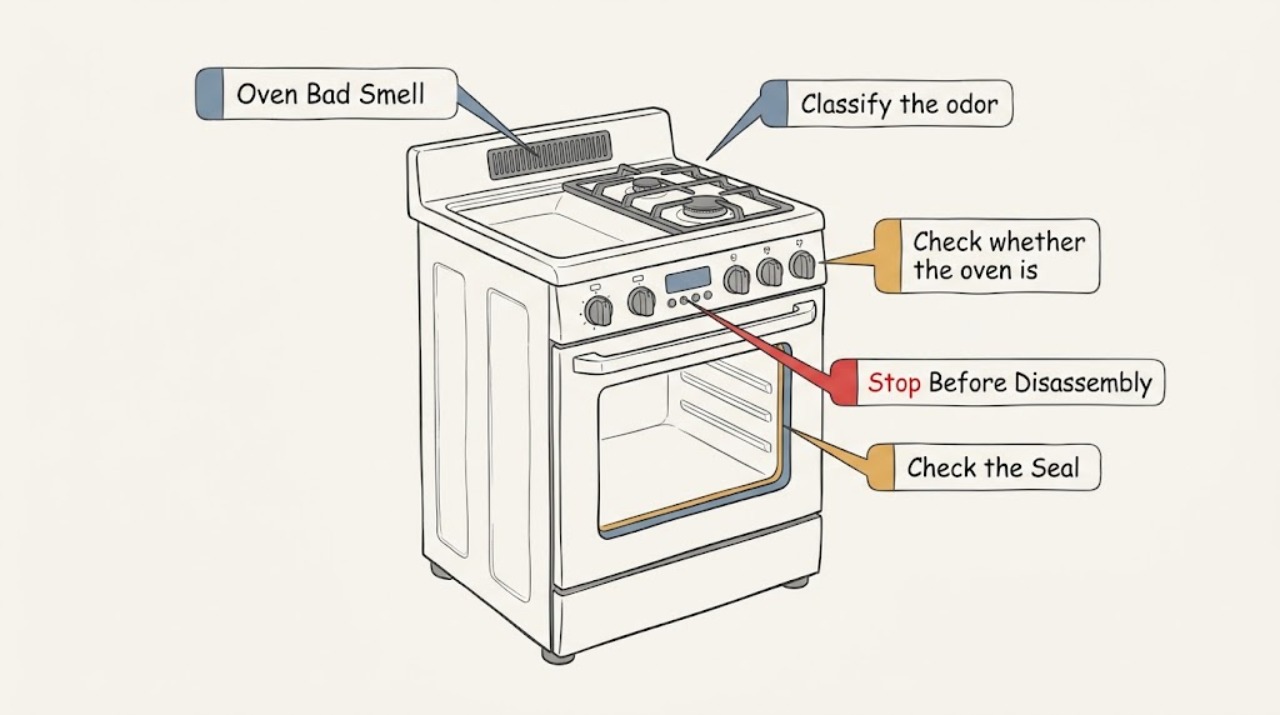
Work through in order
Diagnostic checks
Use only checks that match the exact appliance or system and its official guide.
-
Check 1
Classify the odor from a safe position before restarting or opening the oven.
Expected result: Note whether it resembles rotten eggs or unburned gas, burning food or grease, new insulation, melting plastic, hot wiring, or a chemical cleaner. Record whether there is smoke, a visible flame outside the burner area, hissing, or a boom.
Next step: If gas is suspected, leave immediately and contact the gas supplier or emergency services from outside. If there is smoke or fire, leave and use emergency help. For a non-emergency odor, turn the oven off and let it cool before inspecting anything accessible.
Stop if: Do not light a match, operate switches, use a phone inside, restart the appliance, or move the range when a gas leak is possible.
Why this matters
Why: A brief new-oven odor or short combustion odor at startup can be normal, but gas, electrical, melting, or escalating smoke odors can indicate a fuel, ignition, wiring, or overheating fault.
-
Check 2
Check whether the oven is new or whether the odor began after a spill, cleaning cycle, installation change, or repair.
Expected result: A slight odor limited to the first few uses of a new oven that fades is different from a smell that persists, returns after the oven is established, or follows a recent service or fuel change. Note the cooking mode and whether the odor starts immediately or only after heating.
Next step: For a genuinely new oven with only a mild fading odor and no smoke or gas symptoms, follow the exact model's first-use and ventilation directions. For any persistent, worsening, or unexplained odor, keep the oven out of service and arrange qualified appliance service.
Stop if: Do not run a self-clean or high-heat cycle to test an odor that is strong, persistent, electrical, fuel-like, or accompanied by smoke.
Why this matters
Why: GE attributes some early odor to new parts, insulation, or shipping tape, while a persistent or newly appearing odor needs inspection rather than repeated burn-in cycles. A post-installation gas or combustion change also needs professional review.
-
Check 3
After the oven is fully cool and the area is safe, inspect only the visible cavity, racks, cookware, door seal, and removable bottom area for residue or a foreign item.
Expected result: Look for a fresh spill, grease on the cavity surface, food touching a hot area, packaging left from installation, melted plastic, damaged insulation visible without disassembly, or heavy soil near the burner or vent path. Do not reach through a burner opening or remove covers.
Next step: Clean only cool, accessible surfaces according to the exact owner's manual and remove only items that are clearly removable. If the odor remains after a safe cleanup, or if material has melted or charred, stop use and request service.
Stop if: Stop cleaning or inspecting if the oven is warm, smoke returns, a gas odor appears, insulation is exposed, or a panel or gas component would need to be removed.
Why this matters
Why: Food residue or a new-oven shipping material can explain a temporary odor, but melted material, damaged insulation, recurring smoke, or an odor with no visible source points to a repair condition.
-
Check 4
Observe the gas oven's normal ignition and flame behavior only from the normal viewing position during a safe, ordinary start; do not open panels or move the range.
Expected result: A short startup combustion odor can fade as the oven heats, but a rotten-egg smell, delayed ignition, a boom, a door pushed open, persistent yellow or orange flame, or an odor that remains after startup is abnormal. Melting control knobs are also an escalation sign.
Next step: Turn the oven off in the normal way if there is no gas emergency, keep it out of service, and arrange a qualified gas-appliance inspection. If gas is smelled, leave first and call from outside; do not move the appliance to inspect its connector.
Stop if: Stop immediately for gas odor, hissing, delayed ignition, flame outside the burner area, smoke, or any need to move the range or adjust the gas supply.
Why this matters
Why: These signs can involve unburned gas, combustion, airflow, fuel conversion, or control faults. They cannot be separated safely by adjusting a burner or connector at home.
-
Check 5
Document the pattern and hand off persistent or hazardous odors with the exact model and recent history.
Expected result: Record the model number, fuel type, mode, temperature setting, when the smell starts, whether it fades, where it is strongest, any smoke or flame behavior, and whether the oven was recently installed, converted, cleaned, or repaired.
Next step: Give the record and photos, if safe, to qualified appliance service. Do not perform live electrical tests, remove the back panel, disconnect a gas line, or replace a control based only on the smell.
Stop if: Keep the oven out of service until a professional clears any recurring odor, smoke, abnormal ignition, melting material, or odor with no safe visible cause.
Why this matters
Why: This information helps distinguish a first-use odor, food residue, gas combustion issue, delayed ignition, vent or insulation problem, and an electrical or control fault without requiring unsafe tests.
Use your observations
Decision map
Find the observation that best matches what you see, then follow the next safe action.
-
PATH 01Next step
What you see
The smell is rotten-egg or unburned gas, or there is hissing or delayed ignition.
Do this next
Leave the building immediately. Do not use lights, switches, matches, or a phone inside; contact the gas supplier or emergency services from a safe location and wait for professional clearance.
-
PATH 02Next step
What you see
The odor is mild, occurs only during the first few uses of a new oven, fades, and has no smoke or fuel symptom.
Do this next
Follow the exact model's first-use and ventilation instructions. If it does not fade or becomes stronger, stop using the oven and arrange service.
-
PATH 03Next step
What you see
The smell follows a food spill or visible residue and the oven is cool with no gas or electrical hazard.
Do this next
Clean only accessible cool surfaces according to the owner's manual. If smoke or odor returns after the residue is removed, stop and request service.
-
PATH 04Next step
What you see
There is smoke, a melting knob or plastic item, a boom, a flame problem, or a smell that persists without a visible residue source.
Do this next
Turn the appliance off if safe, keep it out of service, and arrange qualified appliance or gas-professional inspection. Do not use self-clean, move the range, or open panels to investigate.
Helpful context
Understand the symptom
The smell's timing matters
A new oven can release a temporary odor as factory materials warm, and a gas oven can produce a short combustion odor when its burner first starts. Those patterns should fade rather than intensify. A smell that appears after the oven has been in service, continues through multiple cycles, follows a spill, or resembles gas, melting plastic, or electrical insulation deserves a different response.
Smoke, fumes, and gas are not the same symptom
Food residue or grease can smoke when heated, while steam near the vent can be normal. Neither should be used to explain away a sharp electrical odor, visible smoke from the control area, a melting knob, a boom or delayed ignition, or a rotten-egg smell. If the source is uncertain, stop using the oven and treat the uncertainty as a service boundary.
Safe cooling and cleanup boundaries
Only after the oven is off, the area is free of gas odor and active smoke, and the appliance is cool should you inspect the cavity and removable cookware for a spill or residue. Do not spray cleaner into a hot oven, open panels, remove a gas connector, or run self-clean to hide an unexplained smell. Use the exact owner's manual for any cleaning cycle and keep birds and other sensitive occupants away from cleaning fumes.
Only after diagnosis
Potential parts
- oven door gasket or insulation component
Consider this category only after a qualified inspection confirms heat escaping through a damaged gasket or a damaged insulation component and rules out residue and normal venting.
Confirm the exact GE model and the manufacturer's fit information before ordering; do not remove insulation from a hot or gas appliance. - gas oven igniter, burner, or safety valve
Consider this category only when a qualified gas-appliance professional confirms delayed ignition, abnormal flame, or a failed combustion-control component.
Gas components require exact model matching and professional installation; odor alone does not identify a replacement part. - temperature sensor or control component
Consider this category only after service confirms that the odor is associated with a control or temperature fault rather than food residue, gas combustion, or damaged wiring.
Confirm the exact model and diagnosis before ordering and do not perform live electrical testing yourself.
When checks do not resolve it
Need a professional?
Stop and seek qualified appliance or gas service for rotten-egg or unburned-gas odor, hissing, smoke or fire, melting plastic or knobs, delayed ignition or a boom, persistent odor after safe cleanup, exposed insulation, an unexplained electrical smell, or any diagnosis requiring a panel, gas connector, burner adjustment, or live electrical test.
Common questions
FAQ
Is a smell from a brand-new GE oven normal?
A slight odor or small amount of smoke during the first few uses can be normal as new parts, insulation, or shipping materials heat. It should fade. A strong, persistent, fuel-like, electrical, or worsening odor needs service.
Why does a gas oven smell when it starts?
GE says a brief combustion odor at startup can occur and should go away within a few minutes. Unburned gas has a different odor, often compared with rotten eggs, and is not normal in the home.
Can I run the self-clean cycle to remove a bad smell?
Do not use self-clean as a diagnostic for a strong, persistent, fuel-like, electrical, or unexplained odor. First identify and safely remove any accessible residue according to the model manual; persistent symptoms need service.
What should I do if I smell gas near the oven?
Leave immediately. Do not use a phone, light, switch, match, or other electrical equipment inside; call the gas supplier or emergency services from outside or from a neighbor's location.
Read the exact guide
Official sources
- Gas Range - Gas OdorsGE Appliances · GE gas range distinction between normal startup combustion odor and suspected unburned gas
- Certain Older Gas Connectors May Be DangerousU.S. Consumer Product Safety Commission · Gas-appliance connector movement warning and emergency response to suspected gas leaks
- Range & Wall Oven - Smoke and Odor from a New OvenGE Appliances · GE range and wall oven first-use smoke and odor guidance for gas and electric ovens
- Gas Range - What is Normal Operation vs What Requires ServiceGE Appliances · GE gas range normal startup odors, abnormal ignition, flame symptoms, smoke, and service boundaries
Community feedback
Share a repair observation
Share a plain-text repair observation. Accepted observations are published automatically; this page may take a moment to update.