
GE appliance guidance
GE Oven Repair Guides
Troubleshooting and repair guidance for published GE Oven problems, symptoms, and maintenance questions.
Published GE Oven guides
Choose the guide whose symptom or condition most closely matches what you are seeing.
-
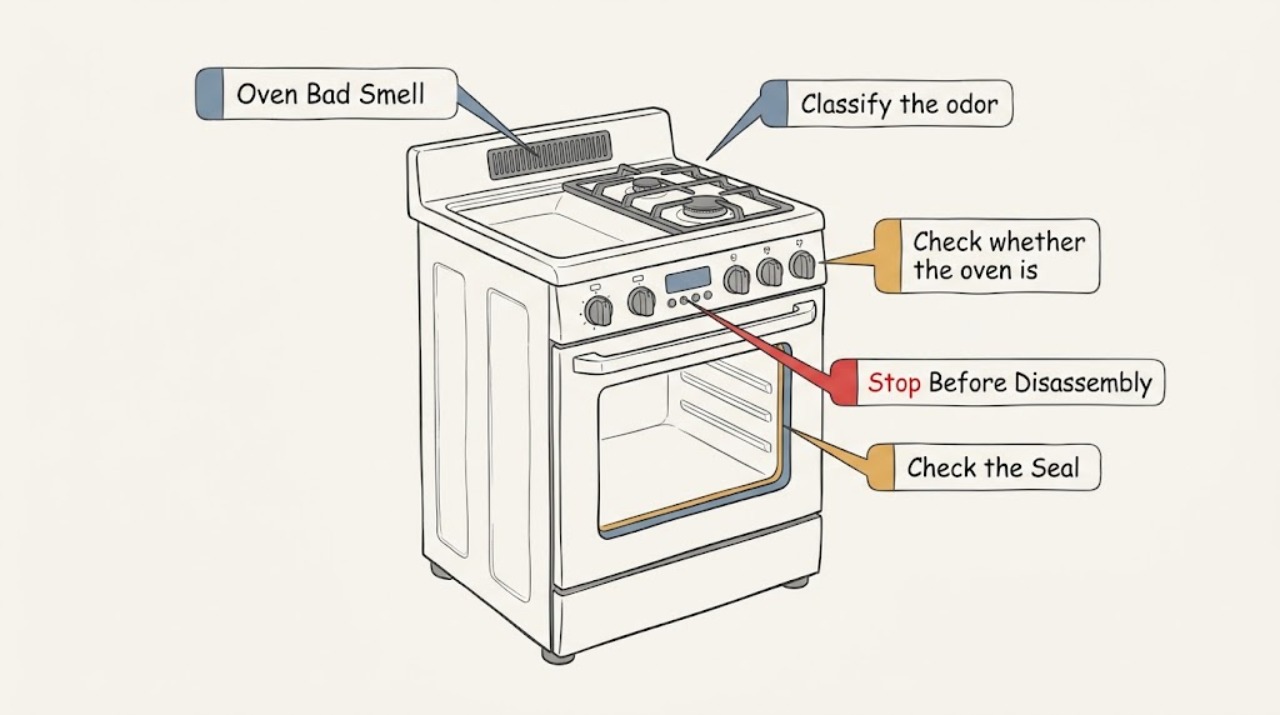
GE Oven Bad Smell: Identify the Odor and Know When to Stop
A slight odor during the first few uses of a new GE oven, or a brief combustion odor when a gas oven first starts, can be normal. A persistent burning, melting-plastic, chemical, electrical, or rotten-egg odor is not a normal reason to keep cooking.
-
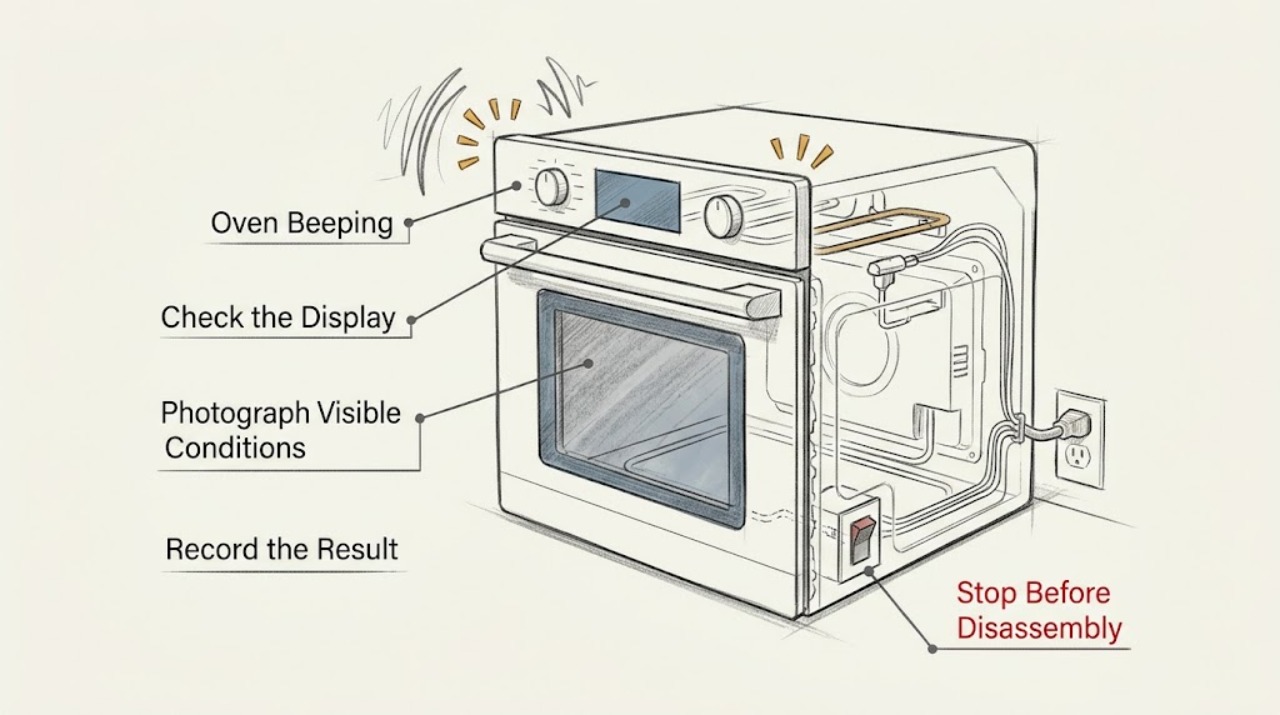
GE Oven Beeping: Identify the Tone, Check the Display, and Stop Safely
A GE oven may beep normally when a timer ends, preheat reaches its signal point, or a programmed function needs attention, but a rapid or repeating tone with an error display can indicate a fault. Note the exact display, tone pattern, cycle, temperature, and whether the oven is heating or the fan is running.
-
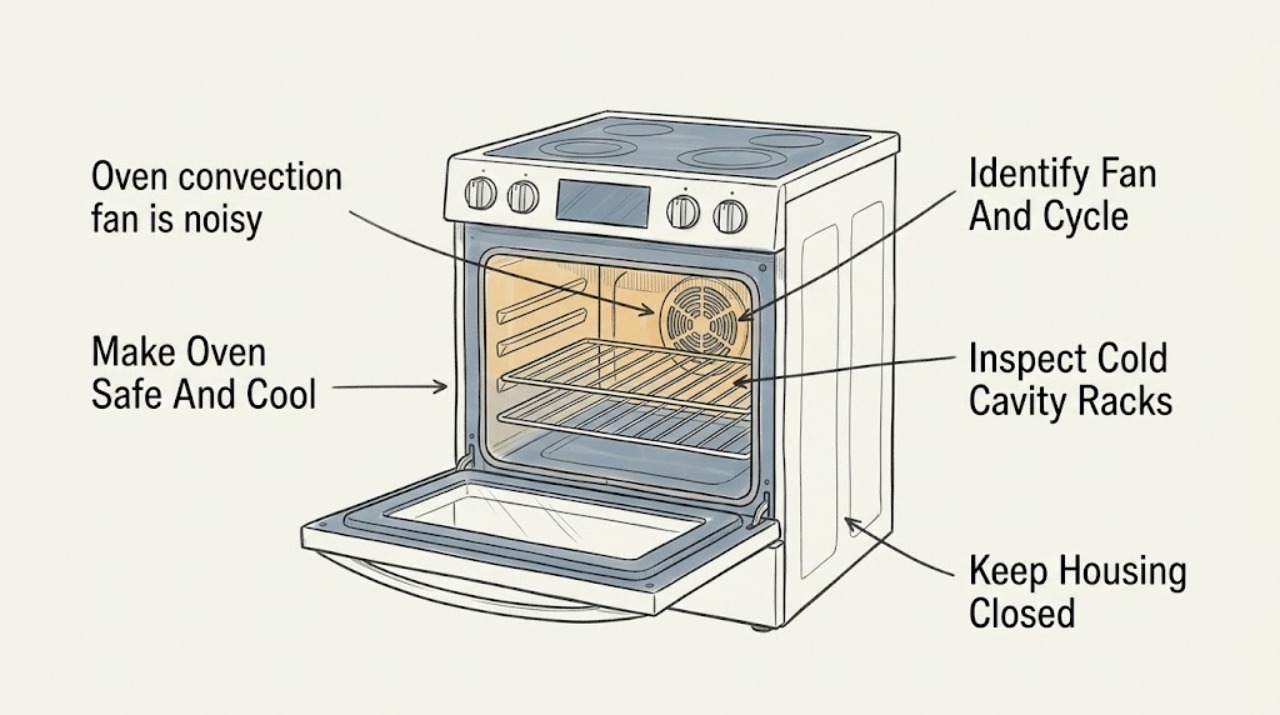
GE oven convection fan is noisy: What to Check and What to Do Next
Some GE ovens make a normal fan sound: the convection fan may start at a model-specific point, cycle during convection cooking, change direction or speed on some designs, and stop when the door opens; a separate cooling fan may continue after cooking until the controls cool. A new harsh rattle, scrape, grind, squeal, wobble, or electrical sound is different.
-
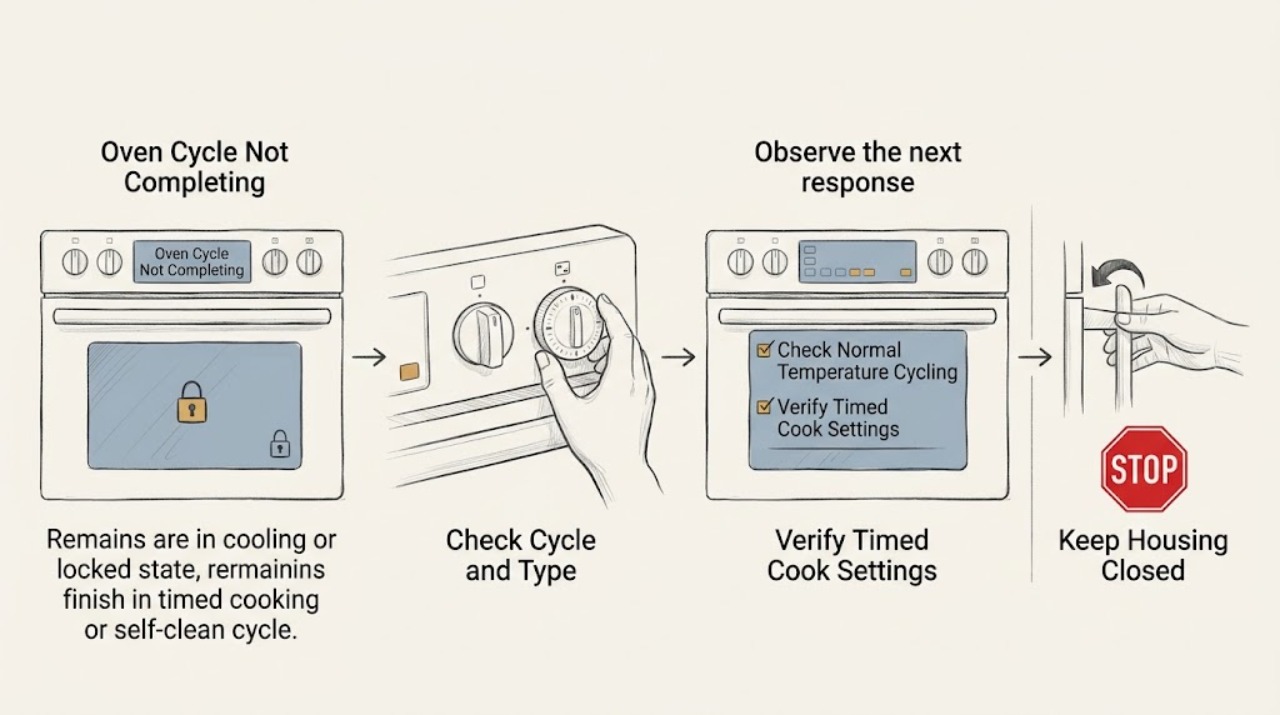
GE Oven Cycle Not Completing
First identify which cycle is affected and record the display, remaining time, door-lock state, and whether the oven is still heating. A normal bake can cycle the elements on and off; a delay-start program may turn the oven on but not turn it off unless Cook Time or Time Bake is set.
-
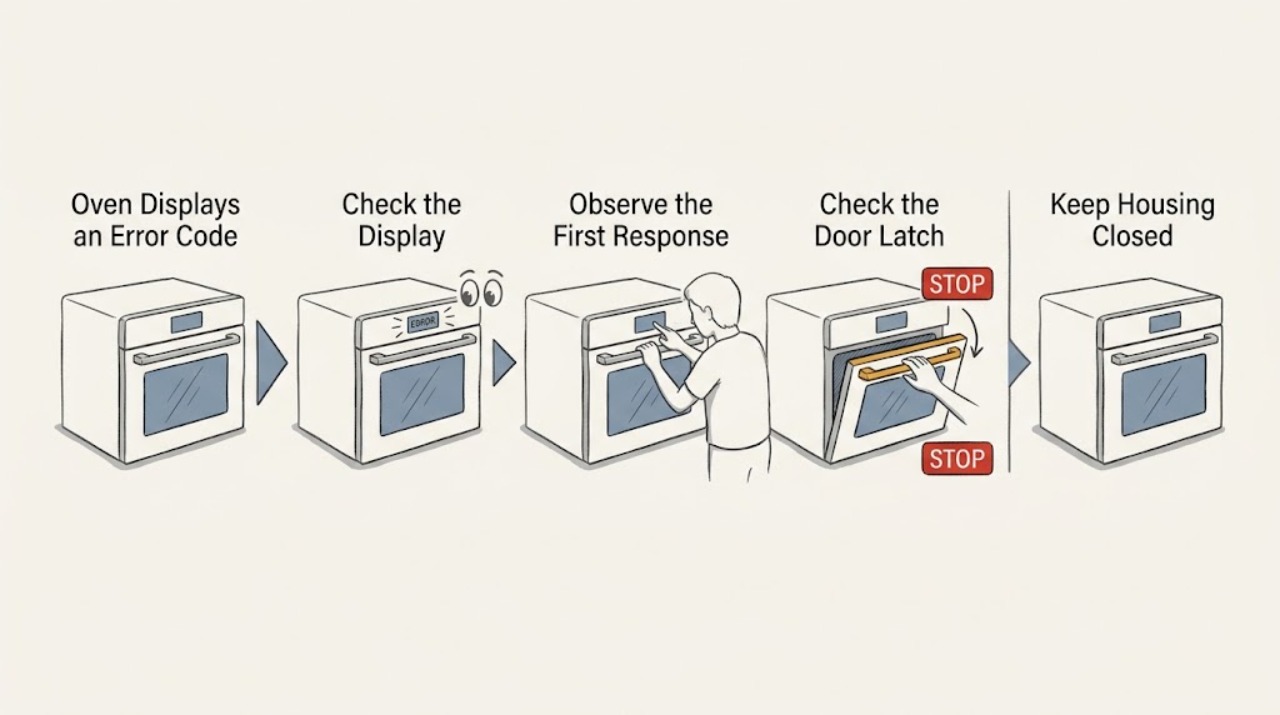
GE Oven Displays an Error Code: What to Check and What to Do Next
Write down the GE oven's complete display exactly as shown, including letters, numbers, dashes, or a door/lock message, and note what the oven was doing when it appeared. GE says its published fault-code list is only a summary, so the exact model manual controls the interpretation.
-
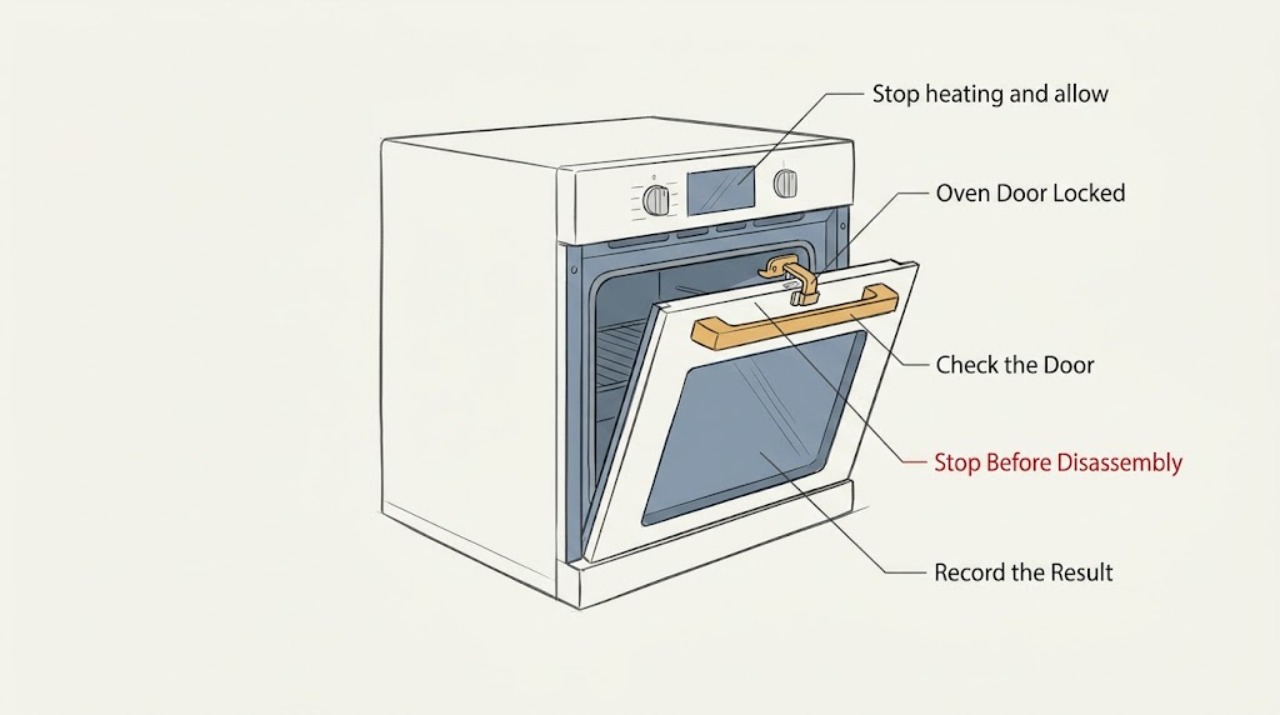
Ge Oven Door Locked
A GE oven door should normally lock only during self-cleaning. Stop the heat, keep the door closed, and let the oven cool completely until the lock indicator goes out. Do not force the handle. If the door was locked during baking, or remains locked after the safe cool-down and a model-appropriate power reset, stop troubleshooting and arrange appliance service.
-
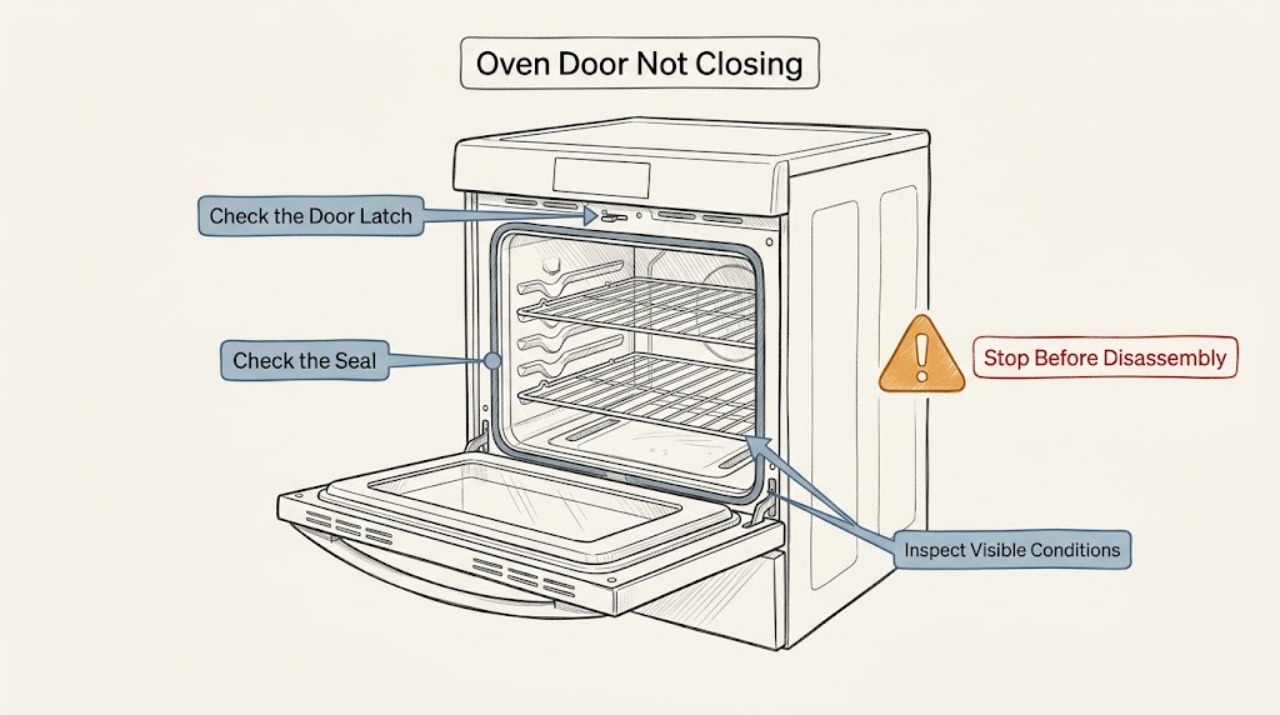
GE Oven Door Not Closing: Check Racks, Gasket, and Hinges Safely
Let a hot GE oven cool before inspecting the door, then remove any pan, rack, foil, or debris that could obstruct the opening. Check that racks are oriented correctly and that a movable oven floor has not shifted forward on models with a hidden bake element.
-
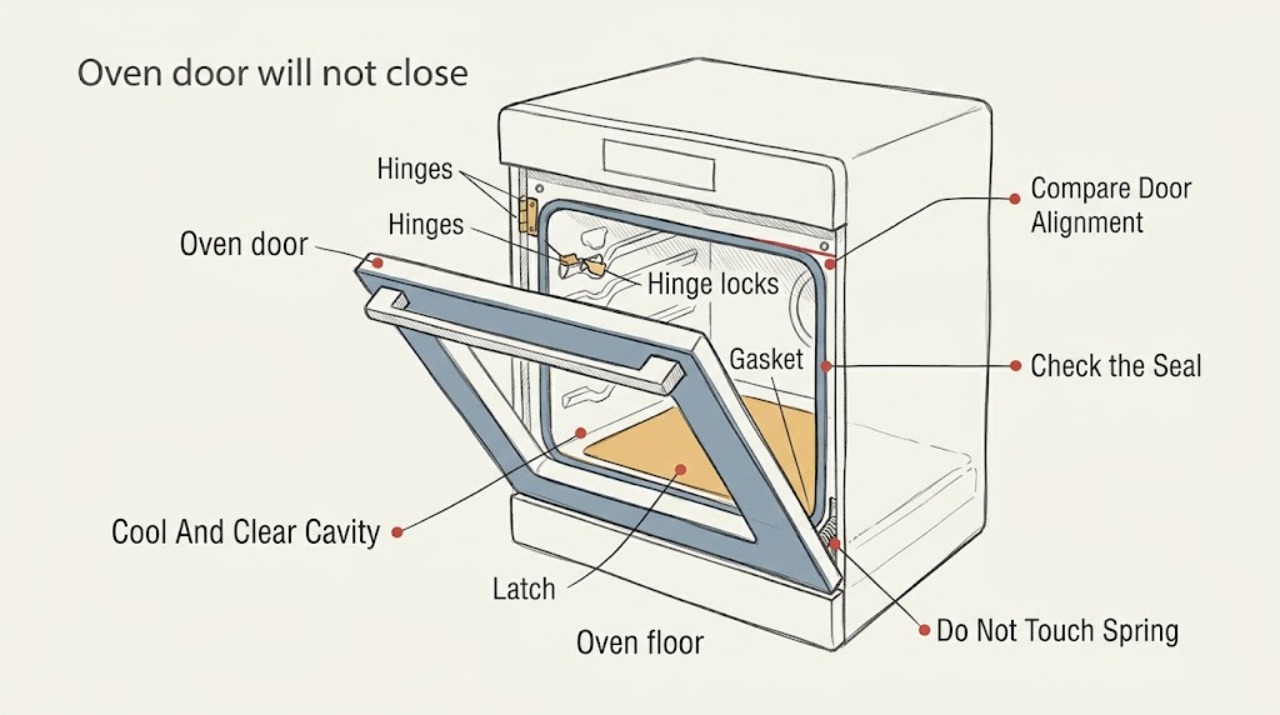
GE oven door will not close: What to Check and What to Do Next
Start with the oven cold and the cavity empty. Check for a rack, pan, foil edge, divider, or shifted oven floor blocking the door, then look for a door that was removed and not fully reseated, a hinge that is out of position, a damaged gasket, or a latch left in a self-clean position.
-
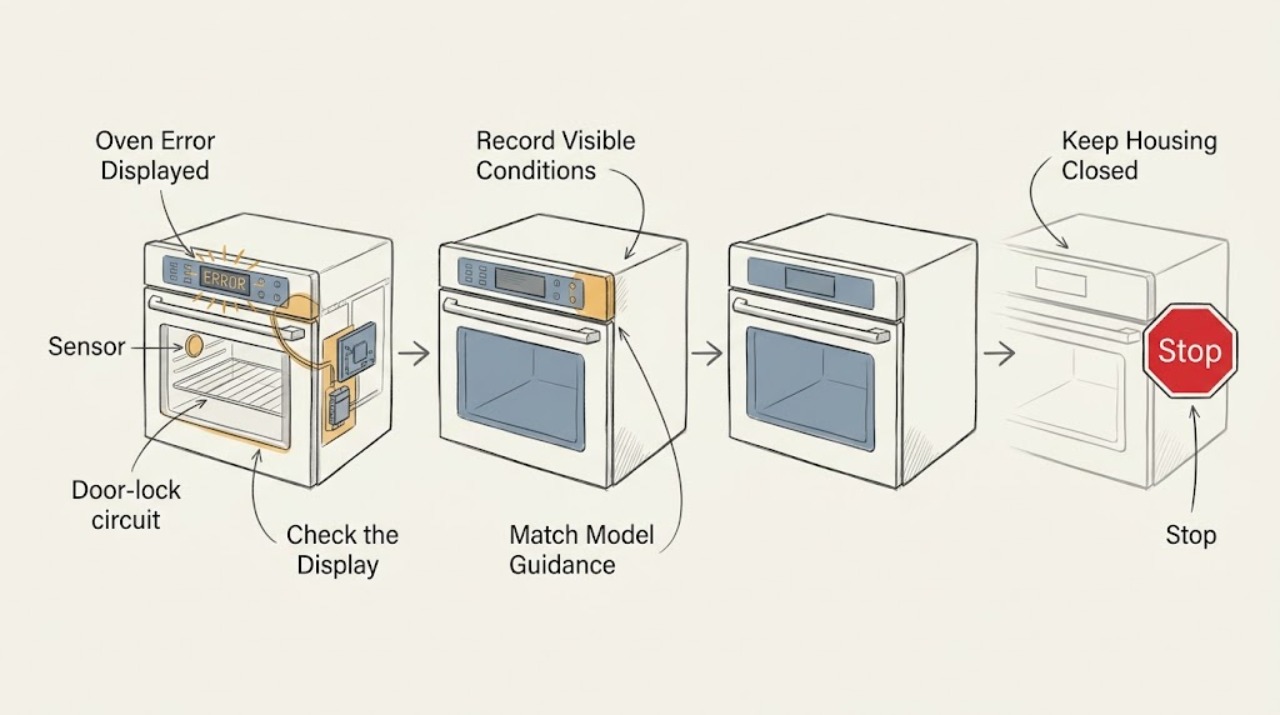
GE Oven Error Displayed: Identify the Code and Decide When to Stop
A GE oven error display is a diagnostic message, not a universal diagnosis. Photograph the exact letters, numbers, punctuation, and the operating mode, then use the owner manual or GE's model-specific error-code guidance.
-
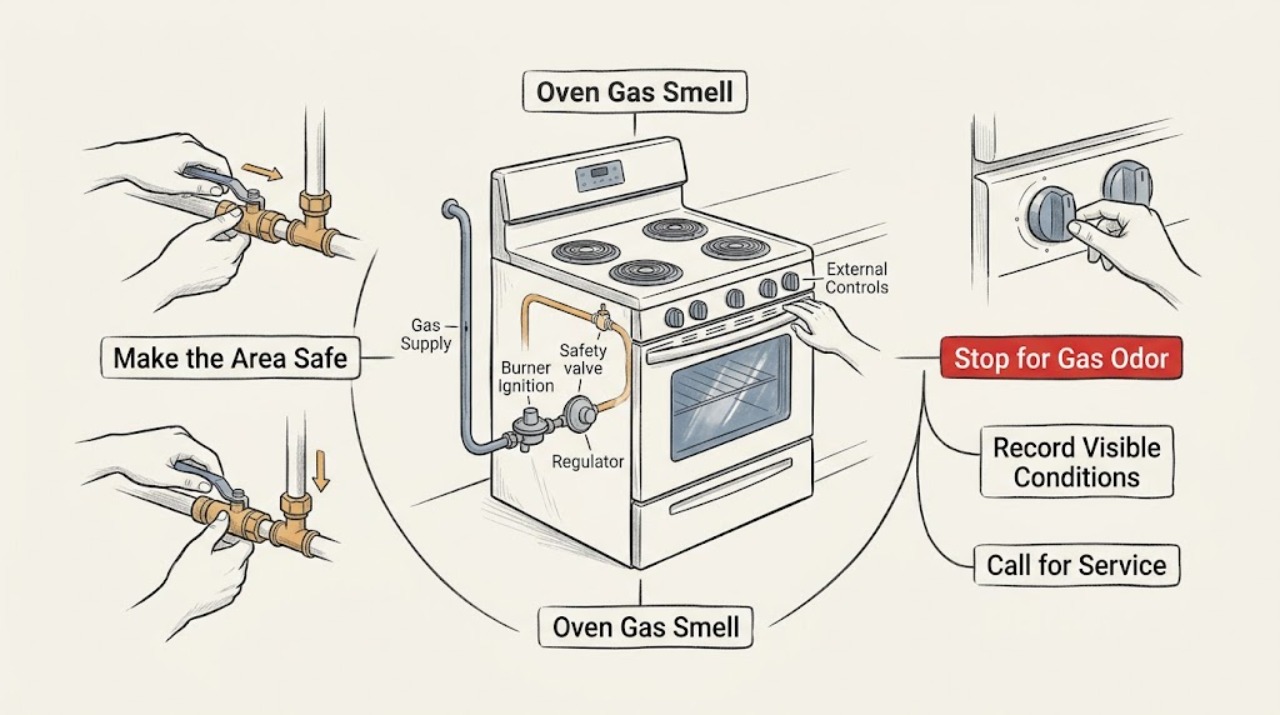
GE Oven Gas Smell: Know When It Is Normal and When to Leave
Treat an unexplained or rotten-egg gas odor as an emergency, not a troubleshooting opportunity. Do not light the oven, operate switches or appliances, use a phone inside, or search for the leak with a flame.
-
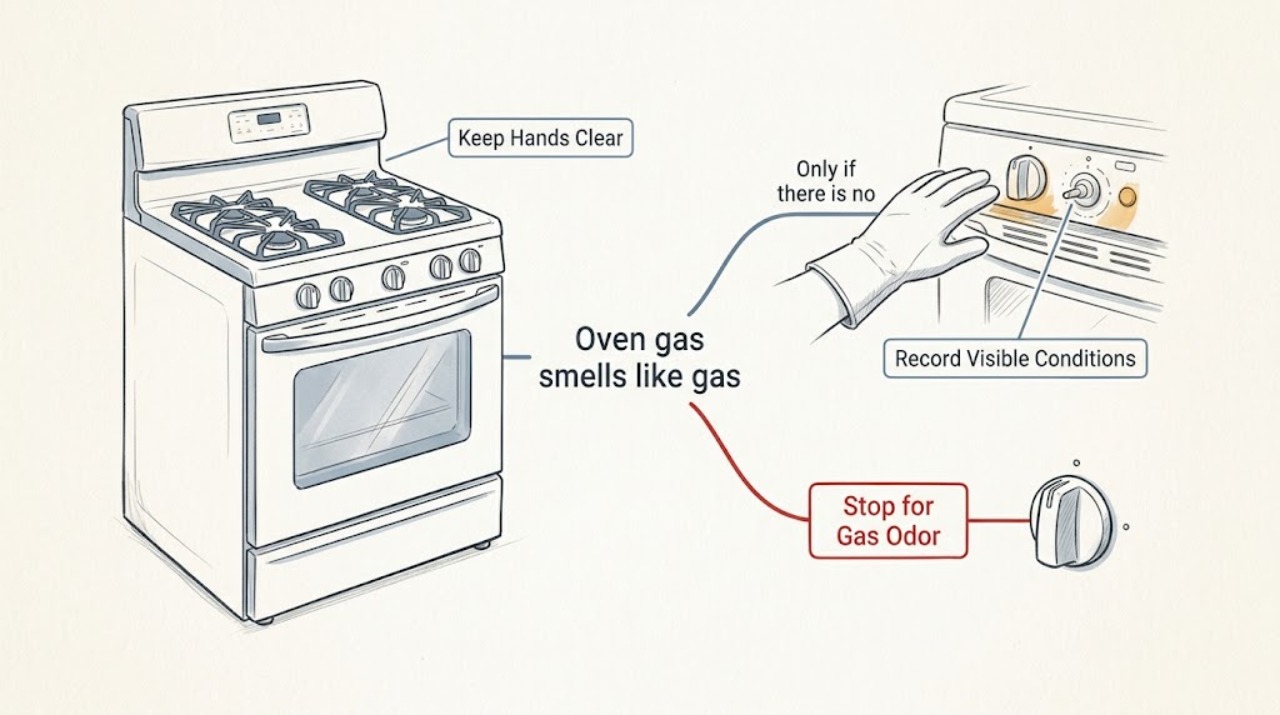
GE oven gas smells like gas: What to Check and What to Do Next
Treat a strong, spreading, persistent, or rotten-egg-like gas smell as a gas-safety event, not an oven adjustment. If the odor is present with the controls off, you hear hissing, a flame has gone out, or anyone feels unwell, do not try to light the oven or operate electrical switches: leave the area, and contact the gas supplier or fire department from outside.
-
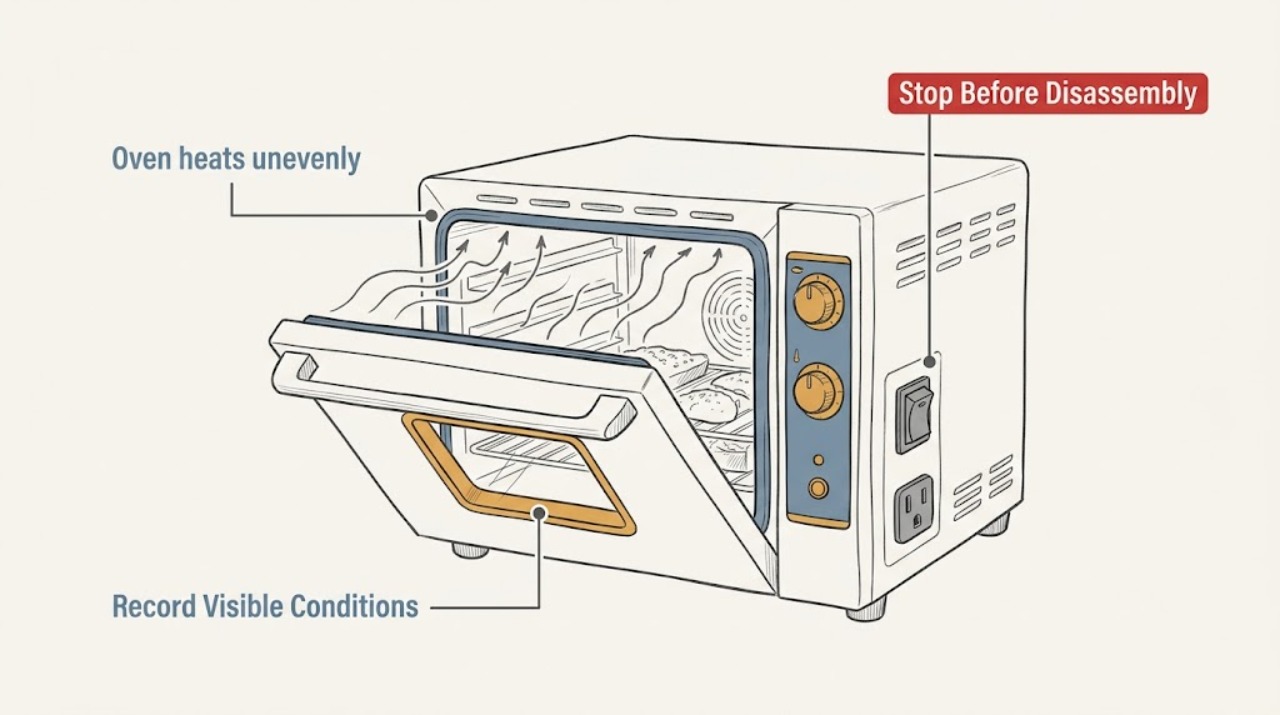
GE oven heats unevenly: What to Check and What to Do Next
First separate uneven cooking caused by the recipe setup from a true GE oven fault. Fully preheat, use the rack position and pan type in the model's cooking guide, leave room for heat to circulate, and avoid repeatedly opening the door.
-
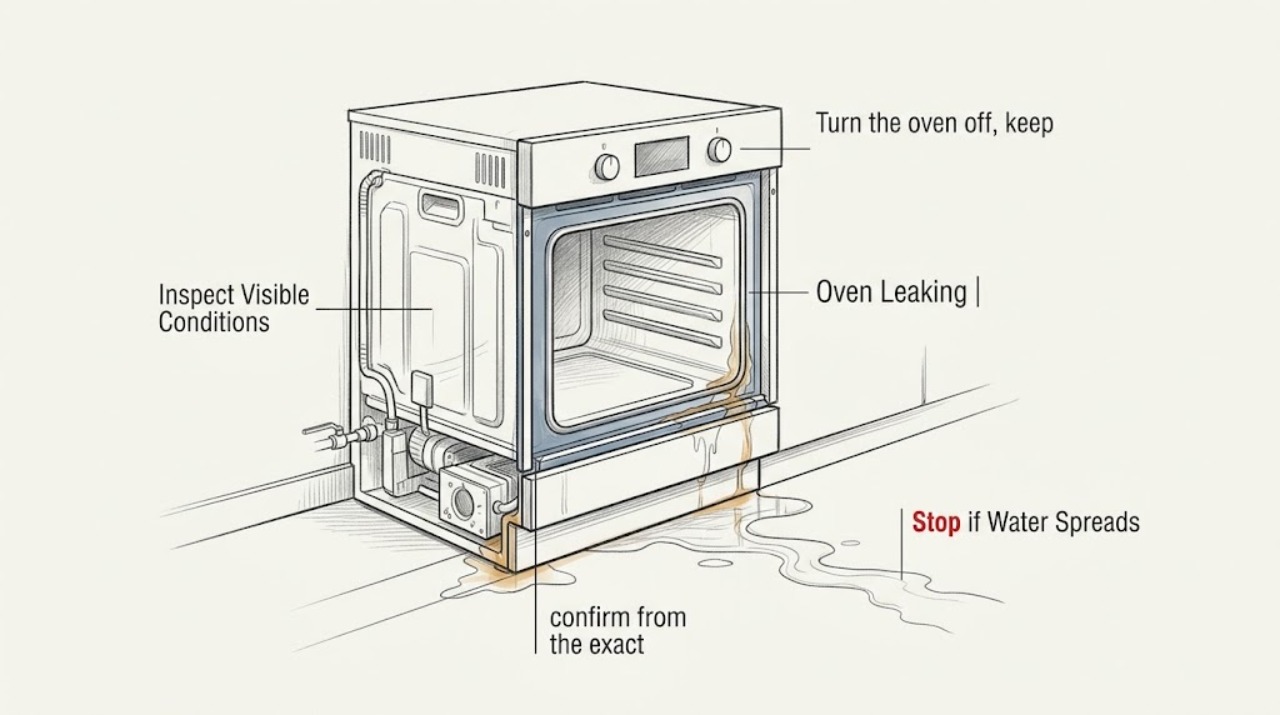
GE Oven Leaking: Tell Water, Steam, and Gas Problems Apart Safely
First identify what is leaking and where it appears. Water in or below the oven after a GE Steam Clean cycle can be expected because the cycle uses water and may leave moisture behind; wipe it up only when the oven is cool.
-
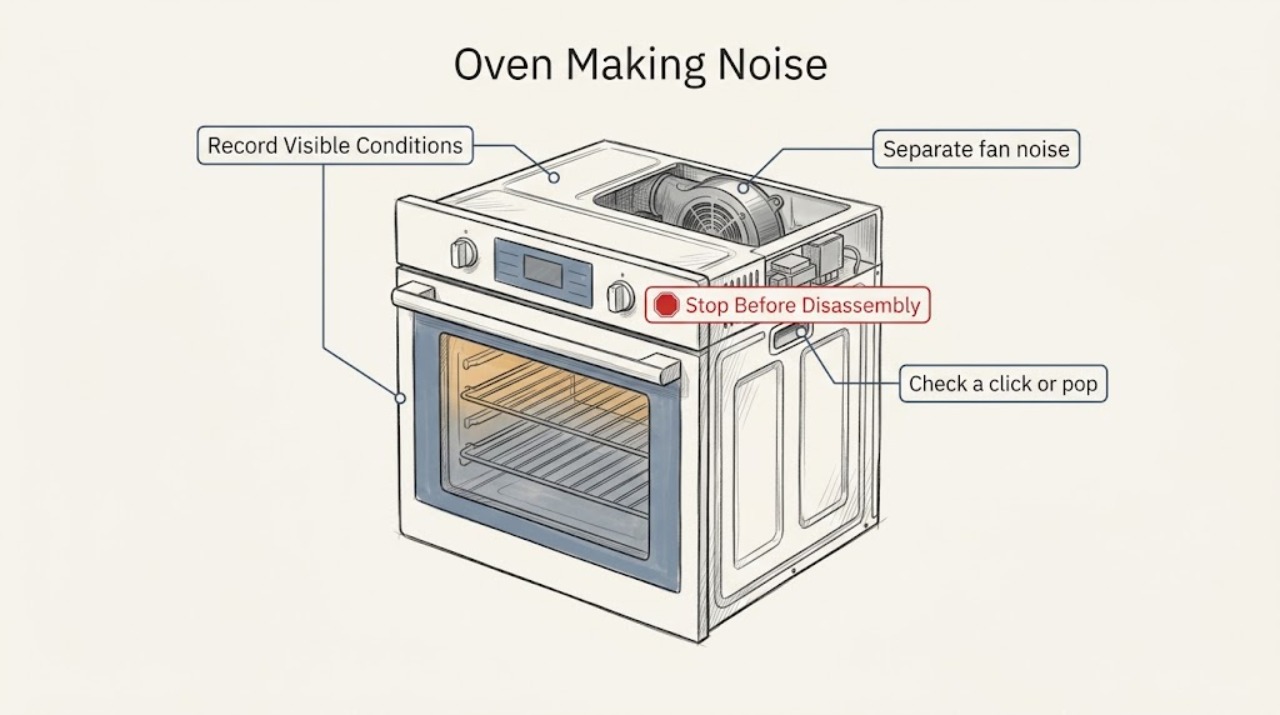
Ge Oven Making Noise
Many GE oven noises are normal: a cooling or convection fan, temperature-control clicks, and occasional popping or crackling as metal heats and cools. First identify whether the sound is tied to preheat, a heating cycle, convection, self-clean, or the fan running after cooking.
-
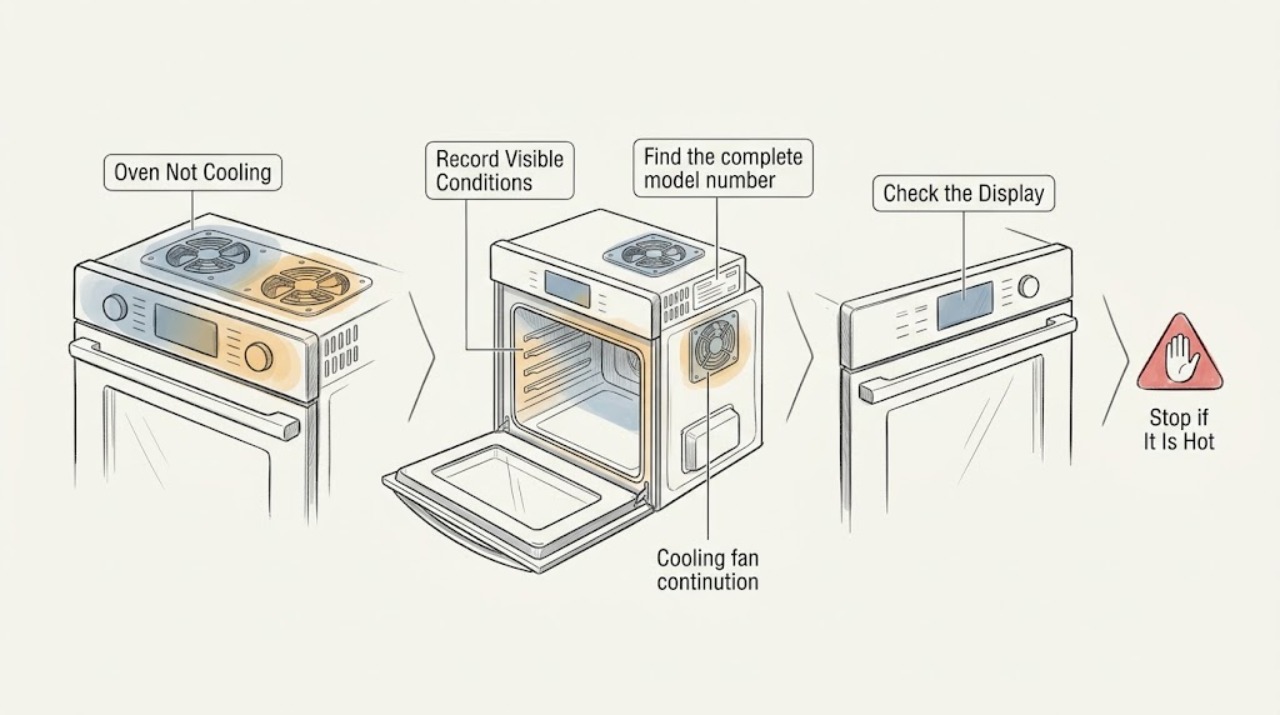
GE Oven Not Cooling: Fan Behavior and Safe Checks
A GE oven that still feels warm after cooking is not necessarily failing: on many GE ranges and wall ovens, a thermostat-controlled cooling fan may run during baking and continue after the oven is turned off while internal controls cool. Gas and dual-fuel freestanding ranges may not have a cooling fan, so the exact model and appliance type matter.
-
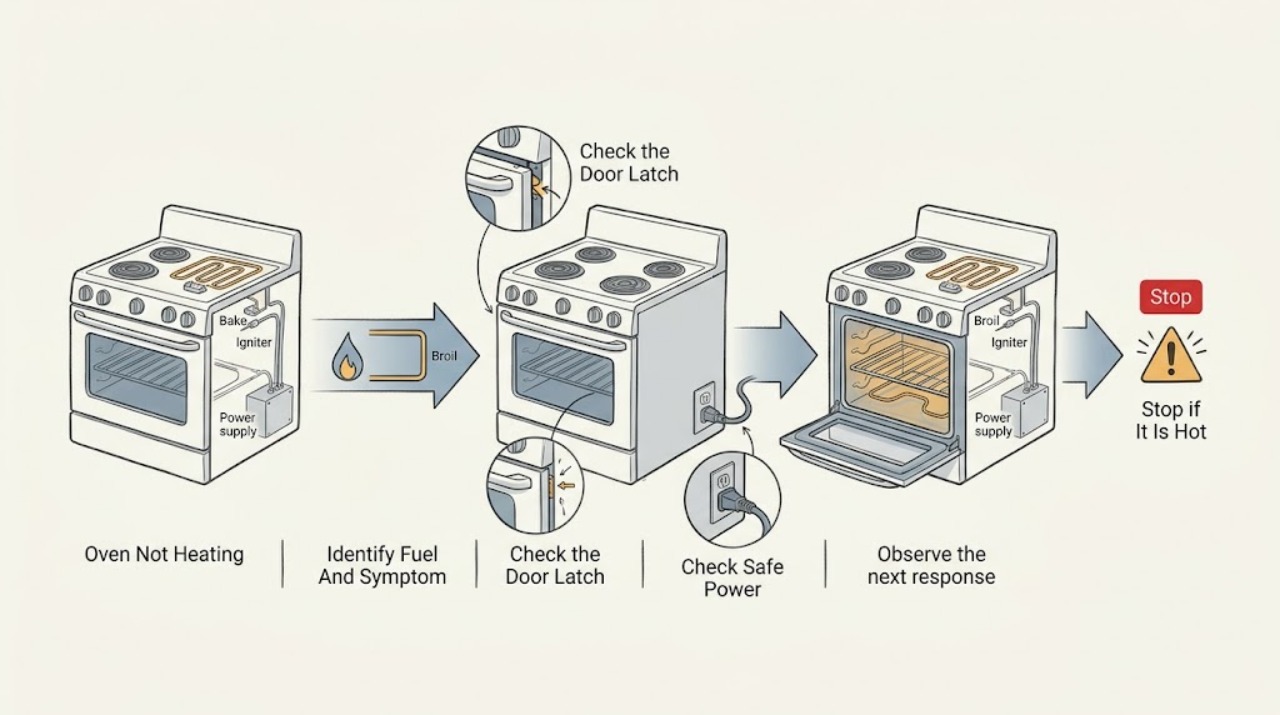
Ge Oven Not Heating
First identify whether this is a GE electric oven or a gas oven, then confirm the selected Bake or Broil function, temperature, Start command, self-clean latch, and any model-specific Sabbath mode. If the display is dead, a breaker is tripped, the power cord is loose, or the breaker trips again, stop and arrange qualified appliance service rather than repeatedly resetting it.
-
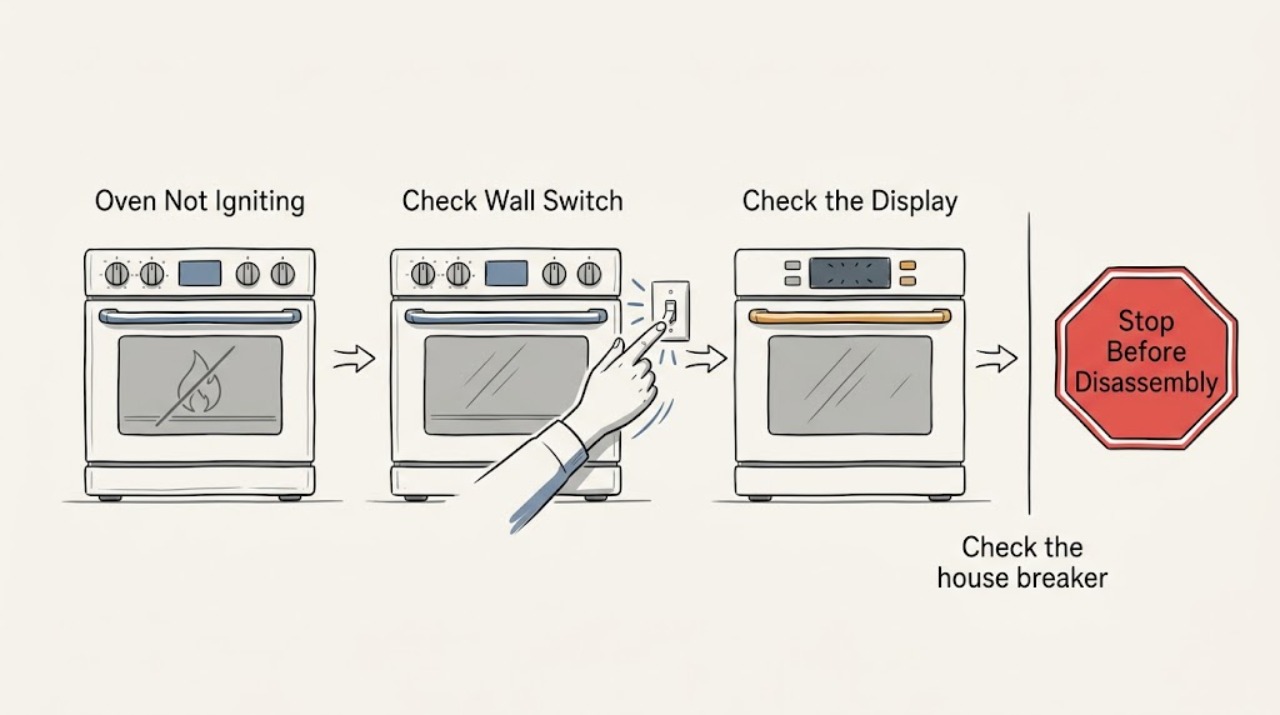
GE Oven Not Igniting: Safe Gas and Ignition Checks
If a GE gas oven does not ignite, stop trying immediately if you smell unburned gas, hear a boom, see the door move, or notice a delayed ignition. Do not operate electrical switches or use a flame; leave the area and contact the gas supplier or emergency services from outside.
-
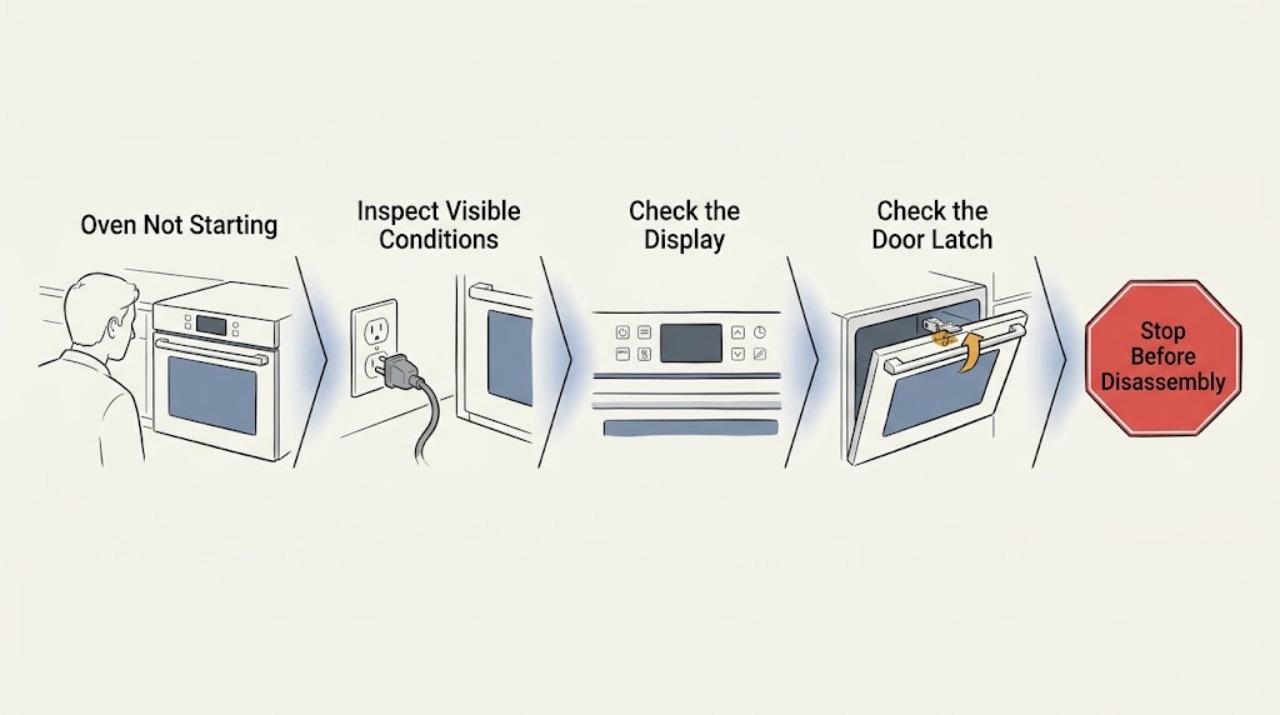
GE Oven Not Starting: Check Power, Controls, and Ignition Safely
When a GE oven will not start, first decide whether the panel is completely dead or has power but will not begin a cycle. If the display is on, check the selected Bake or Broil function, required Start press, Control Lock, Delay Start, Sabbath mode, and a self-clean door latch according to the model manual.
-
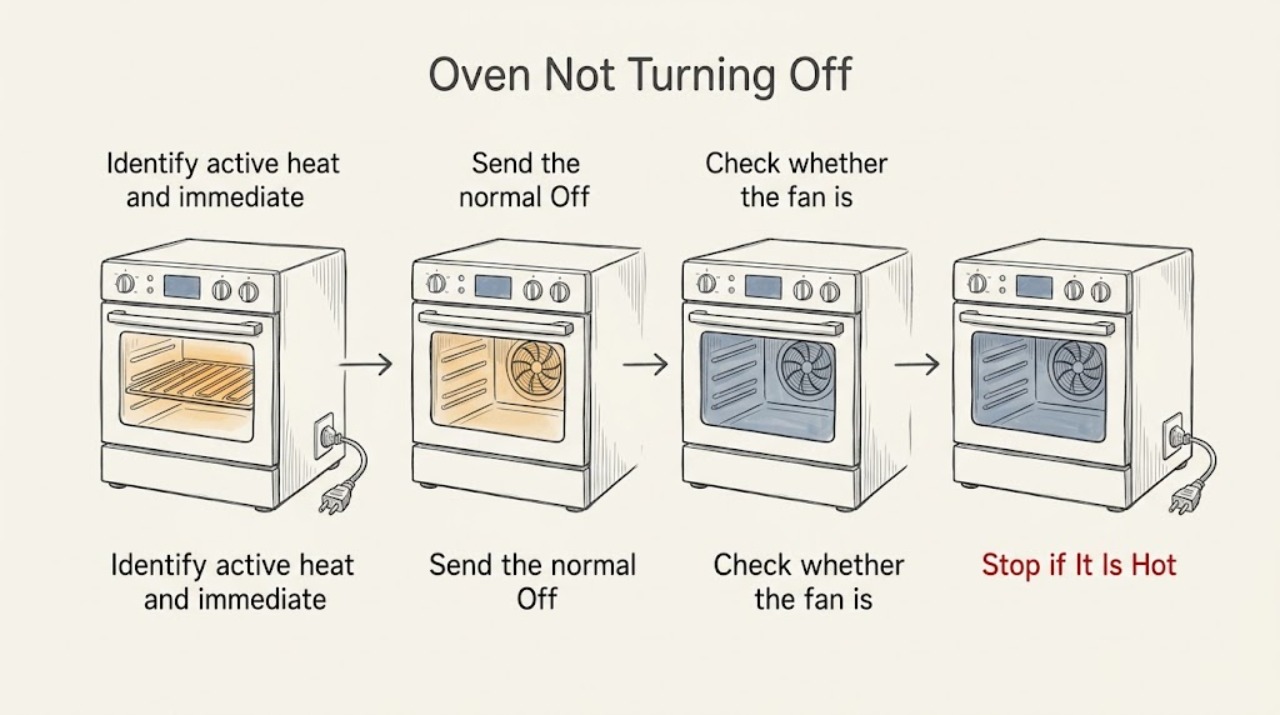
GE Oven Not Turning Off: Separate a Cooling Fan From Active Heat
If a GE oven seems not to turn off, first determine whether only the cooling fan is running or whether the oven is still producing heat. A thermostat-controlled cooling fan may continue after the oven is off while the heating elements are off; that is normal.
-
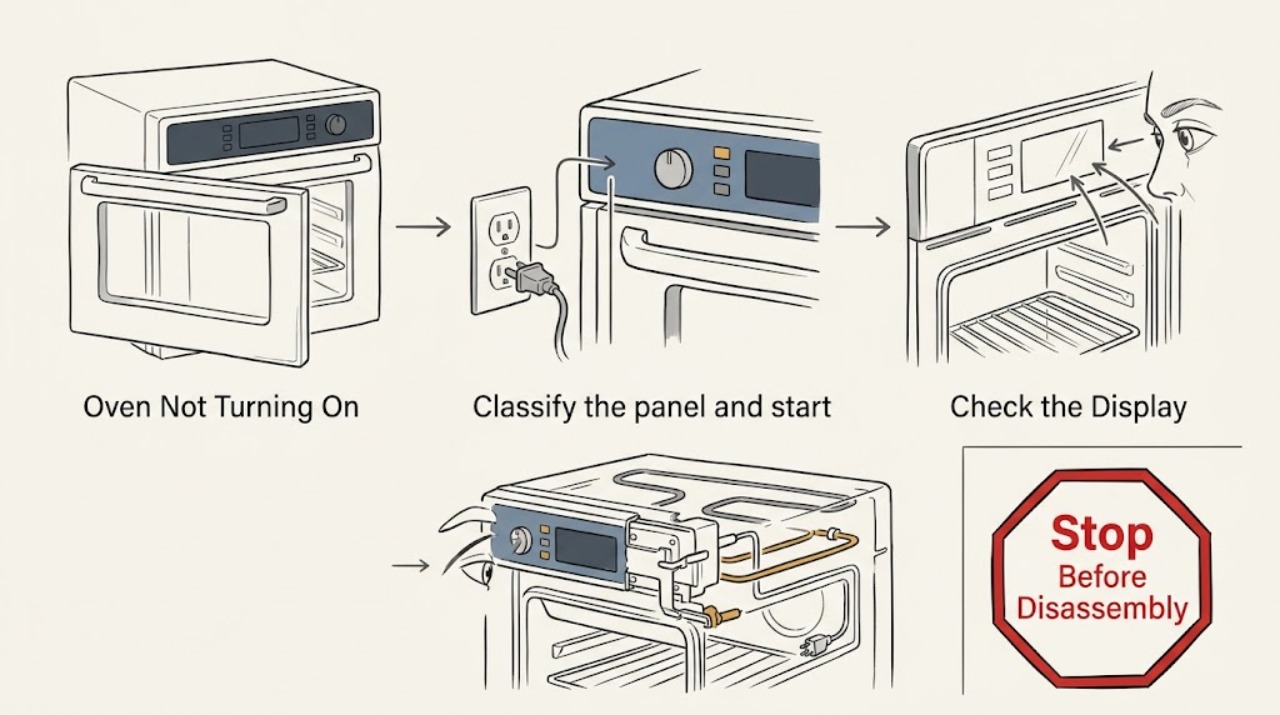
Ge Oven Not Turning On
First separate a GE oven with a blank control panel from one that has power but will not start a cooking cycle. For a blank panel, check the plug and all relevant breakers or fuses from a dry, safe position.
-
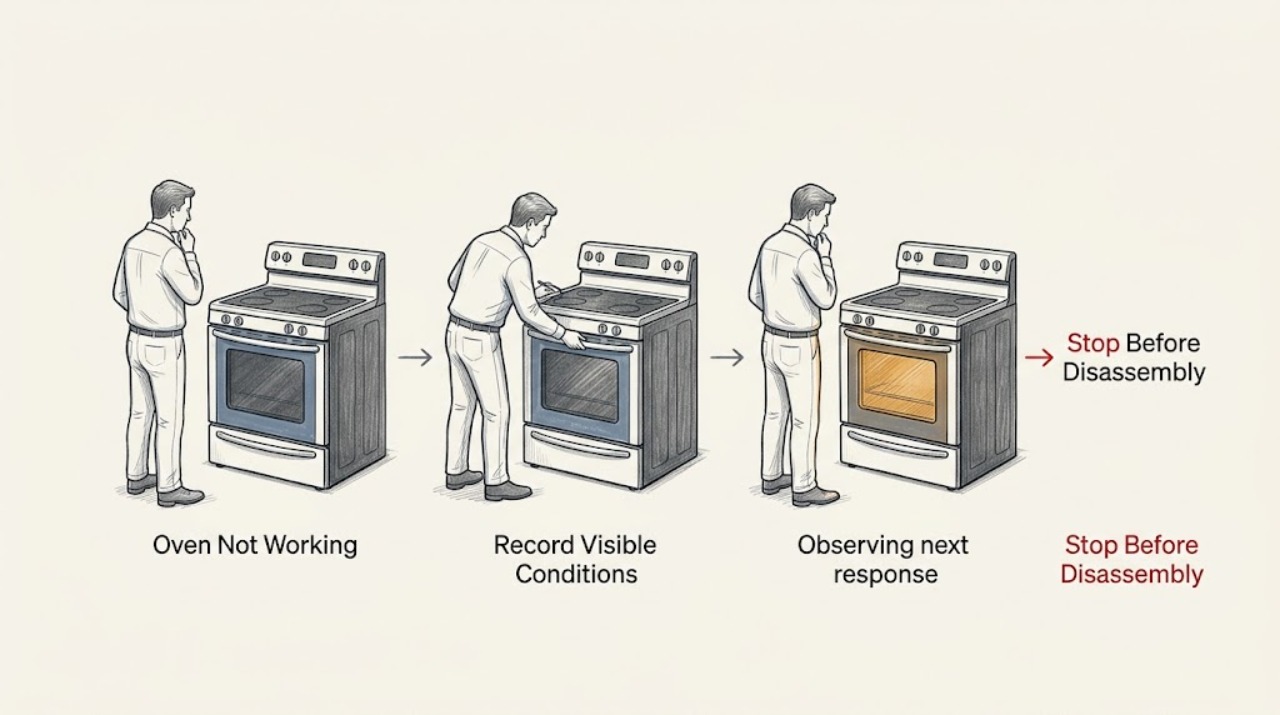
GE Oven Not Working: Separate Power, Heat, Ignition, and Control Faults
First identify what the GE oven actually does: a blank display, a powered display that will not start, an oven that starts but does not heat, a gas oven that does not ignite, or controls that behave incorrectly. With the oven cool and the area free of gas or burning odor, verify the selected Bake/Broil function and temperature, press Start when required, check the accessible house breaker or fuse, and use the exact model manual for Sabbath Mode or latch behavior.
-
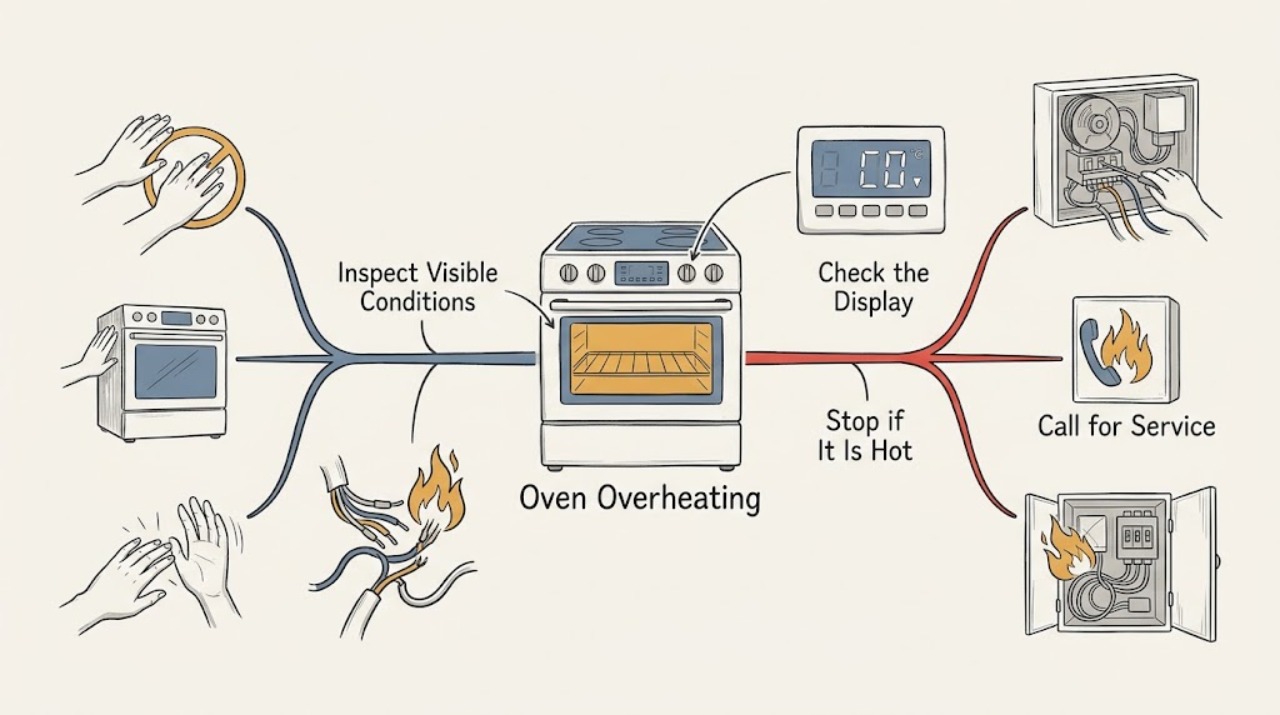
GE Oven Overheating: Separate Normal Cycling from a Dangerous Fault
If a GE oven is actually continuing to heat, shut it off and stop using it. If it ignores Cancel or Off, disconnect power only when this can be done safely; for a gas model, turn the oven control off and do not touch electrical switches if you smell gas.
-
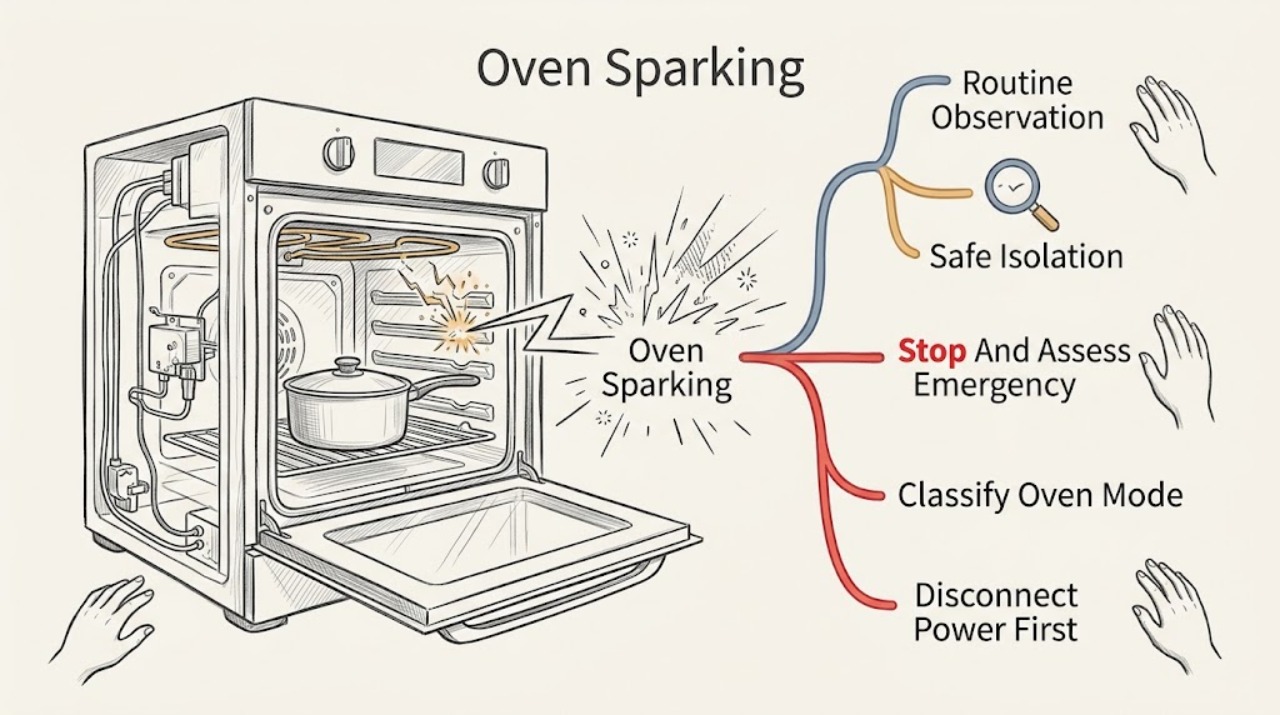
GE Oven Sparking: Stop Safely and Separate Food Arcing from an Appliance Fault
If a GE oven sparks, stop the cooking cycle immediately and keep clear of the hot cavity. For an electric or gas oven, turn the oven control off; if the area is dry and the disconnect can be reached without touching a hot, wet, damaged, or arcing appliance, isolate power safely.