
On this page
Start here
Quick answer
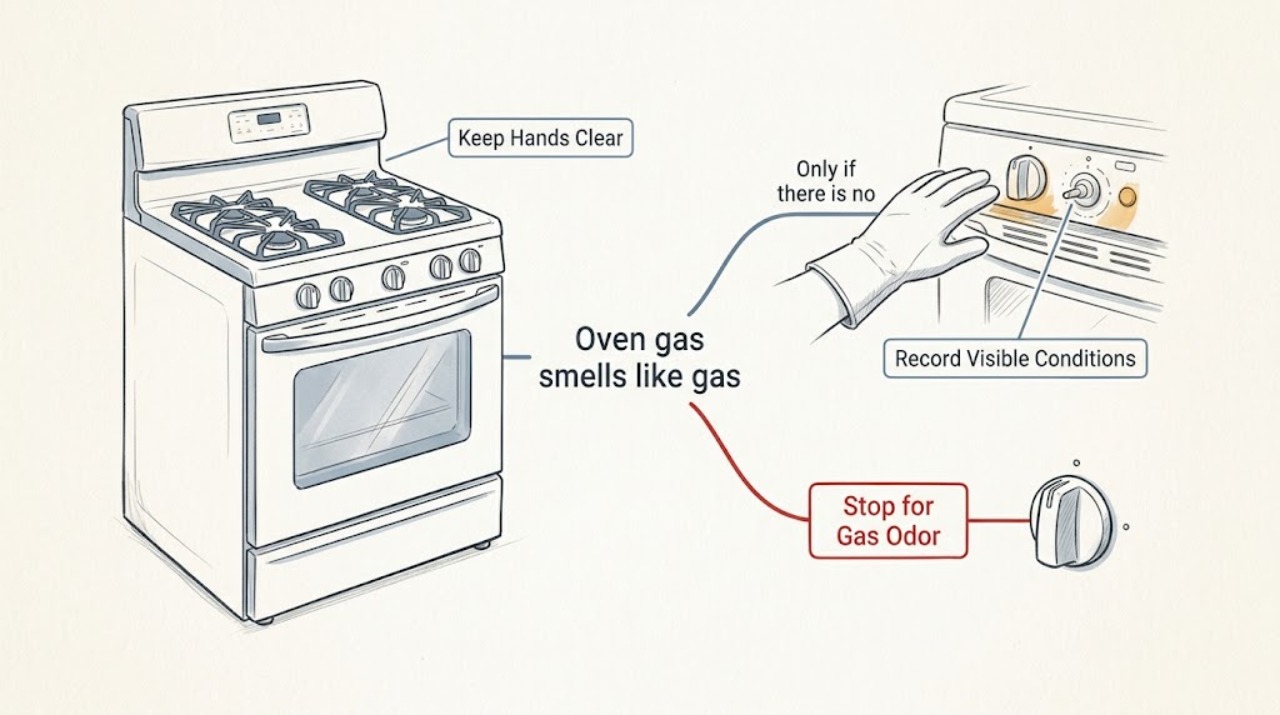
Treat a strong, spreading, persistent, or rotten-egg-like gas smell as a gas-safety event, not an oven adjustment. If the odor is present with the controls off, you hear hissing, a flame has gone out, or anyone feels unwell, do not try to light the oven or operate electrical switches: leave the area, and contact the gas supplier or fire department from outside. GE says a different, unusual odor can be normal only when a gas oven first starts and should fade within a few minutes as the oven heats; a recurring odor, delayed ignition, a boom, or any odor that remains after the controls are off requires the oven to stay unused until a qualified gas appliance professional checks it.
Before you begin
Safety first
- Gas-supply concerns belong with the gas supplier; oven ignition, burner, airflow, and safety-control diagnosis belongs with a qualified gas appliance professional. Do not assume a replacement part is correct without model-specific confirmation.
Work through in order
Diagnostic checks
Use only checks that match the exact appliance or system and its official guide.
-
Check 1
From a safe position, decide whether the odor is strong, spreading, persistent, rotten-egg-like, present while every oven and cooktop control is off, or accompanied by hissing, an extinguished flame, smoke, or illness.
Expected result: Any of those conditions is present, or you cannot safely decide that the odor has cleared.
Next step: Do not ignite anything, touch electrical switches, use communications equipment in the area, or operate the appliance. Leave the room or building and contact the gas supplier or fire department from outside; follow their instructions.
Why this matters
Why: This pattern is more consistent with unburned gas or another immediate gas-safety hazard than with the brief startup odor GE describes.
-
Check 2
Only if there is no active odor or other emergency sign, note when the smell occurs: immediately at Bake or Broil startup, after a flame goes out, after a recent cleaning or spill, during cycling, or while the oven is completely off.
Expected result: The odor is limited to initial startup and fades within a few minutes as the oven heats, with no odor between uses.
Next step: Compare the behavior with the exact GE owner's manual for the model. If the odor lasts longer, becomes stronger, returns on later starts, or changes to an unburned-gas smell, stop using the oven and use the professional-service branch.
Why this matters
Why: That timing matches GE's description of a temporary combustion odor during initial gas-oven startup, but it does not justify repeated ignition tests.
-
Check 3
Without removing parts or trying to relight anything, record whether the oven ignites promptly, whether there is a boom or door movement, and whether the odor appears before a stable flame or after the oven cycles.
Expected result: Ignition is delayed, there is a boom or door movement, the flame does not establish, or odor returns during cycling.
Next step: Turn the appliance off if it is safe to do so without delaying evacuation, do not restart it, and arrange qualified gas-appliance service. Use the gas-emergency branch immediately if the odor is present or strong.
Why this matters
Why: GE identifies a boom or door blowing open as delayed ignition and directs those conditions to repair service; recurring unburned-gas odor should not be treated as normal cycling.
-
Check 4
After the oven and nearby surfaces are cool and only when no odor is present, make a visual note of an obvious spill or displaced burner component that the model manual says the user may clean or reseat; do not probe ports, open the gas path, or remove covers.
Expected result: The manual-supported visible cleanup is completed and the odor does not return, or the odor returns despite no visible residue.
Next step: If the smell returns, keep the oven out of service and call a qualified gas appliance professional. Do not order a replacement component until the model and diagnosis are confirmed.
Why this matters
Why: A residue-related odor may have been temporary, while a returning odor is not explained safely by appearance alone and may involve ignition, burner, airflow, or gas-supply service work.
-
Check 5
Gather the GE model and serial information, fuel type if known, the cooking mode, the exact timing and duration of each odor, whether the controls were off, and any recent installation, outage, cleaning, or service history.
Expected result: The same odor pattern can be described without turning the oven back on.
Next step: Give the information to the gas supplier or qualified appliance service professional and follow their direction on whether the appliance may be used again.
Why this matters
Why: These details help a gas supplier or qualified technician separate a supply-side concern from an oven ignition or combustion concern without a user performing hazardous tests.
Use your observations
Decision map
Find the observation that best matches what you see, then follow the next safe action.
-
PATH 01Next step
What you see
The odor is active, strong, persistent, rotten-egg-like, present with all controls off, or accompanied by hissing or illness.
Do this next
Evacuate without operating electrical switches or ignition sources, then contact the gas supplier or fire department from outside. Do not return or use the oven until they say it is safe.
-
PATH 02Next step
What you see
The odor occurs only at initial startup and fades within a few minutes, with no abnormal ignition and no odor between uses.
Do this next
Do not deliberately reproduce it. If the timing changes, the odor persists, or ignition becomes delayed, stop using the oven and arrange service.
-
PATH 03Next step
What you see
The odor is tied to delayed ignition, a boom, a flame that fails to establish, or repeated return during cycling.
Do this next
Keep the oven off and have a qualified gas appliance professional inspect it. Escalate to the gas-emergency branch if gas odor is present while the appliance is off or is spreading.
-
PATH 04Next step
What you see
A visible, manual-approved spill issue is removed while the appliance is cool, but the odor returns or cannot be tied to that residue.
Do this next
Stop use and arrange qualified service rather than disassembling the oven or buying a part based on the symptom.
Helpful context
Understand the symptom
Why the timing matters
A GE gas oven can produce a brief unusual odor when it first starts because gas is burning at the oven burner. That odor should go away as the oven heats. The smell of unburned gas is different and is not a normal operating odor. The useful distinction is not simply whether the oven smells: note whether the odor is brief and limited to startup, or whether it remains, returns, occurs with the controls off, or comes with a hissing sound or abnormal ignition.
Do not turn an odor complaint into an ignition test
Never keep restarting the oven to reproduce a gas smell. Once a safety branch is reached, leave the appliance unused and give the observations to the gas supplier or qualified service professional. Do not remove panels, adjust gas controls, search for a leak with a flame, or replace a gas component based only on the odor.
Only after diagnosis
Potential parts
- oven igniter or ignition assembly
Consider this category only if a qualified diagnosis finds delayed or failed oven ignition and confirms the exact model's ignition design.
Confirm the complete GE model number and official fit information before ordering; the odor alone does not identify this part. - oven safety gas valve
Consider this category only if qualified service identifies a valve or gas-control fault after ruling out a supply-side leak and other ignition causes.
Gas controls require model-specific confirmation and professional installation; do not infer fit from the brand or symptom.
When checks do not resolve it
Need a professional?
Call the gas supplier or emergency services from outside for any active, strong, spreading, persistent, or rotten-egg-like gas odor, an odor with all controls off, hissing, smoke, an extinguished flame, or illness. For a recurring startup odor, delayed ignition, a boom, failure to establish a flame, abnormal cycling, or an odor that does not fade as GE describes, stop using the oven and contact a qualified gas appliance professional. Do not attempt to locate a leak with a flame, adjust gas pressure, bypass a safety control, or open the gas path.
Safety scope: Gas-supply concerns belong with the gas supplier; oven ignition, burner, airflow, and safety-control diagnosis belongs with a qualified gas appliance professional. Do not assume a replacement part is correct without model-specific confirmation.
Common questions
FAQ
Is a smell when a GE gas oven first starts always a leak?
No. GE says an unusual combustion odor can occur when the oven first starts and should fade within a few minutes as the oven heats. A rotten-egg-like, persistent, spreading, or controls-off odor is different: treat it as a gas-safety event and leave the area for outside help.
What should I do if the GE oven smells like gas while it is off?
Do not turn on lights or other electrical switches, use communications equipment in the area, light anything, or restart the oven. Clear the area and contact the gas supplier or fire department from outside, following their instructions.
Does a boom or delayed ignition matter if the oven eventually lights?
Yes. GE identifies a boom or door movement as delayed ignition and directs that condition to repair service. Do not keep restarting the oven to see whether it happens again; leave it unused until qualified service evaluates it.
Can I replace the igniter or gas valve because I smell gas?
Not from the odor alone. An igniter or gas valve is only a conditional part category after a qualified diagnosis confirms the failure and the exact GE model. A gas-supply concern must be separated from an oven fault first.
Read the exact guide
Official sources
- Contact Your Local Gas Company If You Smell GasGE Appliances · Escalation when gas odor may involve the appliance or gas supply
- If You Smell Gas in Your HomeGE Appliances · Immediate response when gas is smelled in or around the home
- Gas Range - Gas OdorsGE Appliances · GE guidance on temporary startup combustion odor versus unburned-gas odor
- Gas Range - What is Normal Operation vs What Requires ServiceGE Appliances · GE normal-versus-service guidance for gas oven odor, ignition, flame, and cycling symptoms
Community feedback
Share a repair observation
Share a plain-text repair observation. Accepted observations are published automatically; this page may take a moment to update.