
On this page
Start here
Quick answer
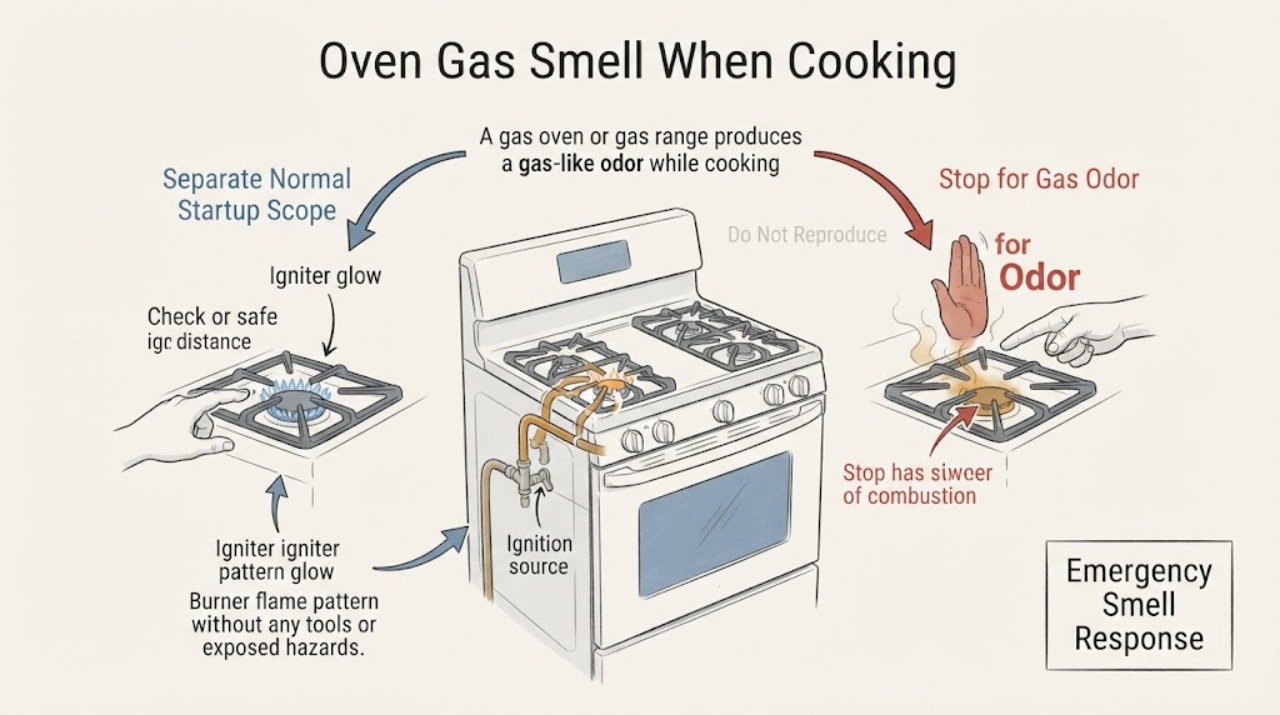
Do not keep running the oven to identify the smell. GE says a short unusual odor when a gas oven first starts can come from burner combustion and should go away within minutes, but an unburned-gas or rotten-egg smell is not normal. If the smell is strong, persists, occurs when the oven is off, or is accompanied by a boom, delayed ignition, flame problem or symptoms, leave immediately, avoid switches, flames and phones inside, and call the gas supplier or emergency services from outside. Do not relight, test, move the range, open panels or repair gas parts yourself. A qualified gas or appliance professional must determine whether the appliance is safe.
Before you begin
Safety first
- No relighting, repeat cooking test, connector movement, gas fitting work, burner adjustment, panel opening or live electrical work is included.
Work through in order
Diagnostic checks
Use only checks that match the exact appliance or system and its official guide.
-
Check 1
If the smell resembles rotten eggs or unburned gas, or if you cannot confidently distinguish it from a short startup odor, stop cooking and leave the building immediately. Do not touch switches, thermostats, plugs, flames or the oven controls on the way out.
Expected result: People and pets are outside, or anyone remains inside near the suspected gas source.
Next step: From outside, call the gas supplier or emergency services. Do not use a phone or electrical equipment inside and do not re-enter until cleared.
Why this matters
Why: An unburned-gas leak can create fire or explosion risk; it is not an appliance troubleshooting opportunity.
-
Check 2
Do not turn the oven back on, relight a burner, cycle Bake or Broil, or wait for another ignition to compare smells. Do not attempt a reset or open a control, burner or gas connection.
Expected result: The odor disappears after leaving, or it remains/returns outside or after the appliance is off.
Next step: Keep the appliance unused and arrange a gas or appliance professional after the gas supplier/emergency service has made the area safe.
Why this matters
Why: Disappearance does not prove the appliance is safe; recurrence or persistence requires professional assessment, and deliberate ignition can add an ignition source.
-
Check 3
Only after a qualified professional or gas supplier has confirmed the area is safe, document whether the reported odor was a brief unusual smell only at the first start of a known GE gas oven, or an unburned/rotten-egg smell, persistent smell or smell while off. Do not create a new test to obtain this observation.
Expected result: A reliable prior observation says the odor occurred briefly at startup and disappeared within minutes, or the odor was persistent, unburned-gas-like or present while off.
Next step: Use the documented history for the service handoff. A startup timing note does not authorize continued use if the smell returns or its character is uncertain.
Why this matters
Why: GE describes a brief startup combustion odor as potentially normal, while unburned gas or persistent odor is abnormal and needs professional attention.
-
Check 4
Tell the gas supplier or service professional about any boom, delayed ignition, door movement, popping, difficult controls, flame color change or odor that continues after cooking. Do not inspect the burner or igniter yourself.
Expected result: One or more abnormal ignition, flame, control or odor signs were reported, or none was observed.
Next step: Keep the oven out of use and provide the exact model, fuel type, installation history and symptom timeline to the professional.
Why this matters
Why: GE identifies boom/door blow-open as delayed ignition and sends abnormal flame, control and persistent gas-odor conditions to service or a gas professional; absence of a sign does not clear the appliance.
-
Check 5
Do not pull the range out to inspect or replace its gas connector, and do not loosen, tighten or replace a gas fitting. Leave connector inspection and any appliance movement to a qualified professional.
Expected result: The appliance has not been moved, or someone has already moved it to inspect behind it.
Next step: If it was moved or a connector was disturbed, stop using the appliance and tell the gas supplier/professional exactly what happened. Do not attempt a leak test yourself.
Why this matters
Why: CPSC warns that moving an appliance can damage an older connector and says qualified professionals should check or replace connectors.
-
Check 6
After the immediate gas-safety response, schedule qualified GE appliance or gas-professional service for any persistent, recurrent, uncertain or abnormal odor, and give the complete model and fuel type.
Expected result: The odor is unresolved, returns, occurs when the oven is off, or is accompanied by ignition/flame/control symptoms.
Next step: Keep the appliance off until the professional verifies it. Do not resume cooking because the smell temporarily faded.
Why this matters
Why: The general symptom cannot identify an igniter, burner, safety valve, connector, regulator or adjustment, and gas work is outside safe user maintenance.
Use your observations
Decision map
Find the observation that best matches what you see, then follow the next safe action.
-
PATH 01Next step
What you see
The smell is rotten-egg-like, strong, persistent, present while the oven is off or cannot be confidently identified.
Do this next
Leave immediately, avoid switches/flames/phones inside and call the gas supplier or 911 from outside or a neighbor's location.
Why this path and its safety boundary
Why it matters: Treat it as suspected unburned gas, not as normal oven startup odor.
-
PATH 02Next step
What you see
A prior safe observation documented only a brief unusual odor at the first start that went away within minutes, with no unburned-gas smell or abnormal ignition sign.
Do this next
Record the exact model and ask the owner's manual or GE service to confirm the appliance-specific expectation; do not deliberately reproduce the odor if uncertain.
Why this path and its safety boundary
Why it matters: GE describes this limited startup combustion odor as potentially normal, but it is not a universal clearance for every GE model or installation.
-
PATH 03Next step
What you see
The oven made a boom, the door moved, ignition was delayed, controls are difficult to turn, or flames are completely yellow/orange after LP conversion.
Do this next
Keep the oven off and give the symptom history to qualified service; do not adjust gas pressure, burner air flow or ignition parts.
Why this path and its safety boundary
Why it matters: GE identifies these as conditions for qualified service or a gas professional, including possible delayed ignition or airflow/gas-pressure issues.
-
PATH 04Next step
What you see
Someone moved the range or disturbed the connector while looking for the smell.
Do this next
Do not use the appliance or touch the connector; contact the gas supplier or a qualified professional and disclose the movement.
Why this path and its safety boundary
Why it matters: CPSC warns movement can cause an older connector to fail, so the connector cannot be safely self-inspected.
-
PATH 05Next step
What you see
The immediate gas emergency has been cleared, but the odor recurs or its source remains unknown.
Do this next
Keep the appliance out of use and arrange exact-model gas/appliance service; do not run another bake or broil cycle to test it.
Why this path and its safety boundary
Why it matters: A temporary disappearance does not establish a safe appliance or installation.
Helpful context
Understand the symptom
Gas odor while cooking has two very different safety paths. GE describes a brief odor at first ignition as possible combustion odor, but unburned gas has a different rotten-egg-like smell and is not normal in a home. Because the task has no model or verified odor description, this guide treats uncertainty conservatively and does not recommend another cooking cycle as a test.
If you suspect unburned gas now, leave the building immediately. Do not turn lights or switches on or off, use a phone inside, create a flame or operate the oven. From outside or a neighbor's location, call the gas supplier or emergency services and do not re-enter until authorities or the gas professional says it is safe.
The model number is missing, so no igniter, burner, conversion, adjustment or diagnostic instruction can be assigned. Once the area is safe, a qualified gas or appliance professional can inspect the exact GE model and installation; the reader should not move the range or open the gas system.
When checks do not resolve it
Need a professional?
For a suspected unburned-gas odor, leave immediately and call the gas supplier or emergency services from outside; do not troubleshoot first., After the area is cleared, use qualified GE appliance or gas-professional service for persistent, recurrent or uncertain odor, delayed ignition, boom, door movement, abnormal flame or difficult controls., Do not move the range, inspect or replace a gas connector, adjust burner air flow or gas pressure, open panels, relight the oven or perform a leak test yourself.
Safety scope: No relighting, repeat cooking test, connector movement, gas fitting work, burner adjustment, panel opening or live electrical work is included.
Have this ready
- complete GE model number and fuel type
- whether the odor was brief at first ignition, persistent, rotten-egg-like or present while off
- any boom, delayed ignition, door movement, flame or control symptom
- whether the range was moved or its connector disturbed
- gas supplier/emergency response already taken
Common questions
FAQ
Is a gas smell when a GE oven starts normal?
GE says a brief unusual odor at first startup can come from burner combustion and should go away within minutes. A rotten-egg/unburned-gas smell, persistent odor, odor while the oven is off or any uncertainty must be treated as unsafe: leave, call from outside and do not run another test.
What should I do if my GE oven smells like rotten eggs?
Leave the building immediately. Do not touch switches, use a phone inside, light a flame or operate the oven. From outside or a neighbor's location, call the gas supplier or 911 and do not re-enter until cleared.
Can I pull my GE gas range out to check the connector?
No. CPSC warns that moving a gas appliance can cause an older connector to fail and says a qualified professional should check it. Do not move the range or loosen the connector yourself.
Does a GE oven boom or delayed ignition need service?
Yes. GE identifies a boom or door blow-open as delayed ignition and directs that condition to qualified service. Keep the oven off and do not repeat ignition to confirm it.
Read the exact guide
Official sources
- Gas Range - Gas OdorsGE Appliances · Opened official GE Appliances support article. It supports the limited startup-odor distinction and the emergency response for suspected unburned gas; exact model and installation remain controlling.
- Gas Range - What is Normal Operation vs What Requires ServiceGE Appliances · Opened official GE Appliances support article. It supports the stated service signs and does not authorize user adjustment or repair of gas components.
- Certain Older Gas Connectors May Be DangerousU.S. Consumer Product Safety Commission · Opened official CPSC safety PDF. It supports leaving immediately, avoiding phones/electrical ignition sources and using a qualified professional for connector inspection; it is general gas-safety guidance, not a GE model manual.
Community feedback
Share a repair observation
Share a plain-text repair observation. Accepted observations are published automatically; this page may take a moment to update.