
On this page
Start here
Quick answer
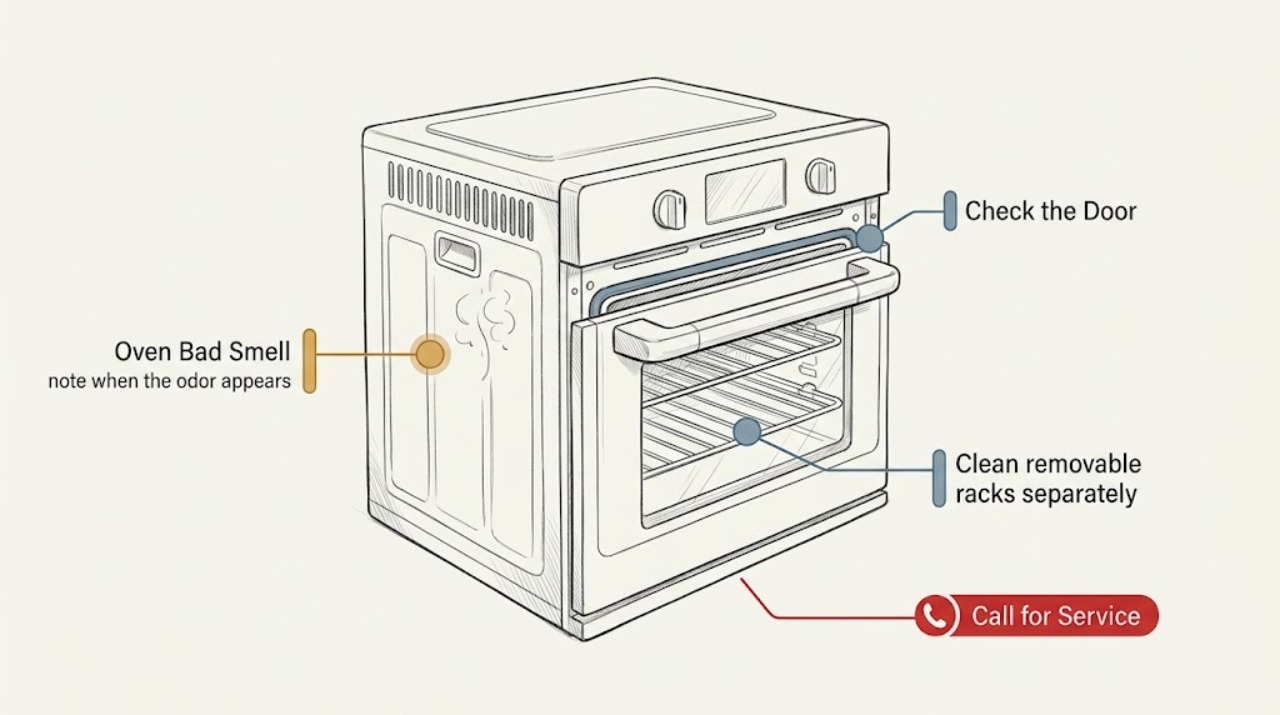
A Bosch oven bad smell usually comes from first-use insulation or manufacturing residue, food or grease left in the cavity, or a dirty rack. Let the oven cool, remove racks and accessories, and inspect for spills, charred food, or leftover packaging before cleaning according to the owner's manual. A rotten-egg or gas-like odor, an electrical or charred smell, visible smoke that does not match a small food spill, or an odor that remains after safe cleaning is a stop condition: do not keep using the oven or remove panels; arrange qualified service or gas support from outside the area.
Work through in order
Diagnostic checks
Use only checks that match the exact appliance or system and its official guide.
-
Check 1
With the oven switched off, note when the odor appears, whether the oven is new, and whether it smells chemical, like food or grease, like rotten eggs or gas, or like charred plastic or electricity.
Expected result: A faint chemical odor limited to the first few uses is different from a recurring smell, a gas-like odor, or a sharp electrical or charred smell.
Next step: For gas-like, electrical, or persistent charred odor, stop using the oven and follow the service boundary below. Otherwise continue with a cool inspection.
Why this matters
Why: First-use odor can be normal; food or grease odor points toward residue; gas-like, electrical, or persistent charred odor needs a safety stop.
-
Check 2
After the cavity is fully cool, remove all pans, food, racks, and loose accessories. Use a light to inspect the oven floor, corners, door area, and rack surfaces for spilled grease, charred food, or leftover packing material.
Expected result: Visible food, grease, or packaging is present, or the cavity and racks are visibly clean.
Next step: If residue or packaging is found, remove it only after the oven is cool and clean the affected area using the model's manual. If nothing is found, continue to the rack and vent check rather than repeatedly heating the oven.
Why this matters
Why: A deposit can heat and produce the odor; packaging can create a plastic or burnt smell in a new oven. A clean cavity makes a hidden mechanical or electrical source more likely if the odor returns.
-
Check 3
Clean removable racks separately with warm soapy water, rinse and dry them, then inspect the oven vent openings and surrounding area for a cloth, foil, spill, or other obstruction. Do not put racks back into a self-clean cycle.
Expected result: The rack has baked-on food or the vent area is obstructed, or both are clean and open.
Next step: Clean and dry the rack, clear only accessible loose material without removing panels, and keep the vent unblocked. If the odor persists after this check, stop escalating the diagnosis to a professional.
Why this matters
Why: Old food on a rack can smoke when reheated, while a blocked vent can interfere with normal hot-air release. A clean rack and clear vent do not explain a continuing gas-like, electrical, or charred odor.
-
Check 4
Once visible residue has been removed, use the owner's manual to choose the correct first-use, spot-clean, or self-clean procedure for the exact Bosch model. Keep the kitchen ventilated, remove racks and accessories before self-clean, and supervise the next normal heating test.
Expected result: The odor fades and does not return, or it returns from a clean oven, is accompanied by abnormal smoke, a flame, an error code, or a sharp electrical or charred smell.
Next step: If it fades, resume normal use while following the manual. If it returns or is accompanied by a safety symptom, switch the oven off, stop using it, and arrange qualified service.
Why this matters
Why: A fading first-use or residue odor supports a normal burn-off or cleaning explanation. A returning odor from a clean cavity, especially with smoke, a fault code, or a sharp non-food smell, is not a reason to keep testing.
Use your observations
Decision map
Find the observation that best matches what you see, then follow the next safe action.
-
PATH 01Safety boundary
What you see
The oven is new and the odor is faintly chemical, with no gas-like smell, abnormal smoke, or electrical symptom.
Do this next
Follow the Bosch first-use instructions for the exact model, keep the room ventilated, and confirm that all packaging has been removed. The odor should diminish after the initial uses.
Why this path and its safety boundary
Safety stop: Classify the smell again and inspect the cool cavity, racks, and accessible vent area for residue.
-
PATH 02Safety boundary
What you see
The smell is burnt food or grease and visible residue is found.
Do this next
Clean the cool cavity and racks using the model's care instructions. If self-clean is available, remove racks and accessories and wipe away excessive grease before starting it.
Why this path and its safety boundary
Safety stop: Do not keep heating an apparently clean oven to chase the smell; continue to the professional stop condition.
-
PATH 03Safety boundary
What you see
The smell resembles rotten eggs or unburned gas, or it is sharp electrical, charred, or persistent after cleaning.
Do this next
Turn the oven off, avoid flames and further testing, leave the area if needed, and contact the gas supplier or a qualified appliance professional from outside the affected area. Do not remove panels or attempt a burner or wiring repair.
Why this path and its safety boundary
Safety stop: If the smell has disappeared after safe cleaning and the oven operates normally, use it according to the owner's manual and monitor for recurrence.
Helpful context
Understand the symptom
The timing and character of the smell are more useful than the word bad. A faint chemical odor during the first few uses can be normal as the new oven's insulation and manufacturing residue heat for the first time. A burnt-food smell that starts after a spill points to residue in the cavity or on a rack. A rotten-egg or gas-like odor, a persistent charred or electrical smell, or smoke from a location other than a food spill should be treated as a safety issue rather than a cleaning problem.
Work only when the oven is off and cool enough to touch. Do not remove covers, test wiring, adjust a burner, or try to repair a gas or electrical fault yourself. If an error code appears with the odor, record the code and use Bosch support or a qualified appliance technician.
Self-clean is model-dependent. If your Bosch oven has it, follow that model's manual, remove every rack and accessory first, wipe away excessive grease or loose food, and provide good ventilation. For a non-self-cleaning oven, use the cleaning method specified for the model; Bosch's spot-cleaning guidance says to use its oven cleaner at room temperature and keep it away from door seals, coated or painted surfaces, the exterior, and internal outlets.
When checks do not resolve it
Need a professional?
Stop using the oven for a gas-like, electrical, persistent charred, or smoke-related odor, and seek professional help from outside the affected area when gas may be involved.
Have this ready
- Provide the oven model number, the odor description, when it starts, whether the oven is new, any visible smoke or flame, and any displayed error code.
Common questions
FAQ
Why does my new Bosch oven smell when it heats?
A faint chemical odor during the first few uses can be normal as insulation and manufacturing residue heat for the first time. Remove all packaging, wipe the cool cavity, ventilate the room, and follow the exact model's first-use instructions. A plastic smell that continues after packaging is removed, or any electrical or charred smell, is a stop condition.
Can grease or old food make a Bosch oven smell bad?
Yes. Food and grease on the oven floor or racks can heat, smoke, and create a burnt odor. Let the oven cool, remove the racks and accessories, clean the residue using the model's care instructions, and wipe away excessive grease before using a self-clean cycle.
When is a Bosch oven smell unsafe?
Treat a rotten-egg or gas-like smell, a persistent charred or electrical smell, abnormal smoke or flame, or an odor that returns from a clean oven as unsafe to keep testing. Turn the oven off, avoid further use, and arrange qualified help; do not remove panels or attempt gas or wiring repairs.
Read the exact guide
Official sources
- How to clean the oven racksBosch Home Appliances · Bosch rack cleaning and self-clean compatibility guidance.
- Oven Has Chemical Smell When Using It For The First TimeBosch Home Appliances · Guidance for a new Bosch oven with an odor during its first uses.
- How to clean your oven – Oven Cleaning TipsBosch Home Appliances · General Bosch oven cleaning and self-clean preparation guidance; the owner's manual controls model-specific steps.
- Causes of Oven Smells and How to Get Rid of ThemBosch Home Appliances · Guidance for food, grease, packaging, first-use, and gas-like oven odors.
- Use and Care ManualBosch Home Appliances · Official Bosch use-and-care manual for covered wall-oven models; exact controls and features vary by model.
Community feedback
Share a repair observation
Share a plain-text repair observation. Accepted observations are published automatically; this page may take a moment to update.