
Bosch appliance guidance
Bosch Oven Repair Guides
Troubleshooting and repair guidance for published Bosch Oven problems, symptoms, and maintenance questions.
Published Bosch Oven guides
Choose the guide whose symptom or condition most closely matches what you are seeing.
-
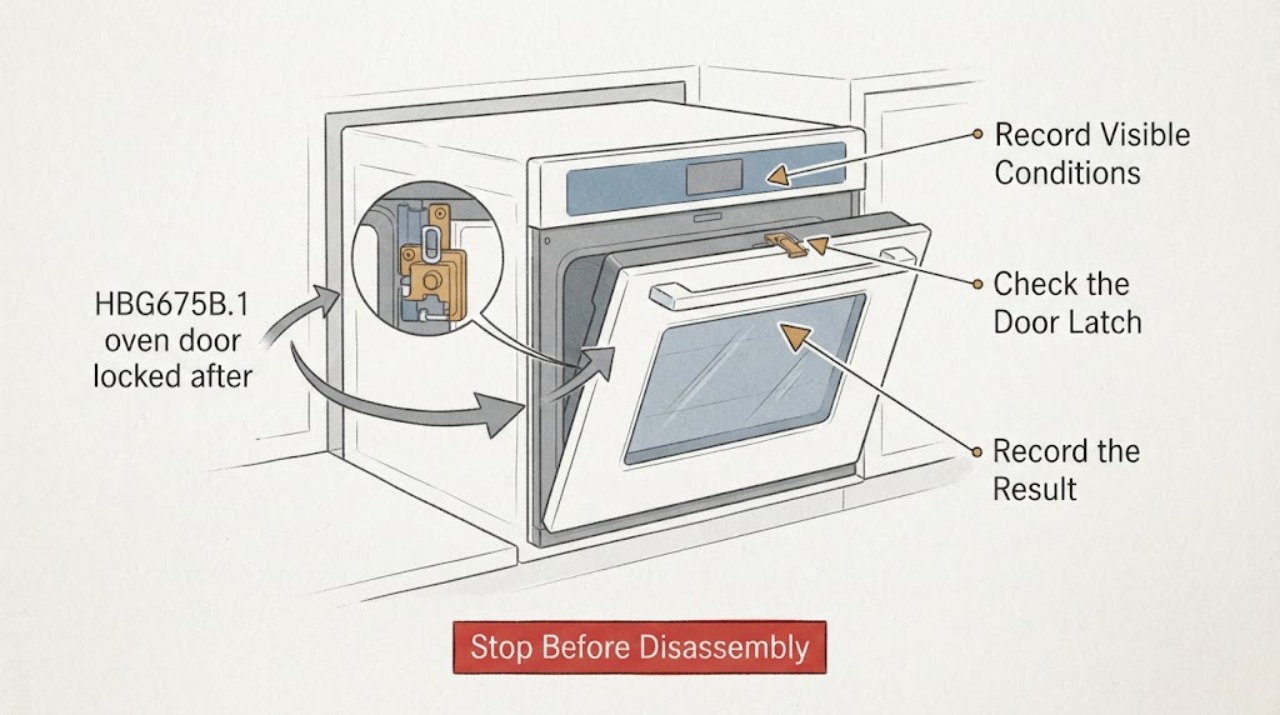
Bosch HBG675B.1 oven door locked after self-cleaning: cool-down and lock checks
Do not pull on the door after a Bosch HBG675B.1 pyrolytic cleaning cycle. First confirm the complete E-Nr.
-
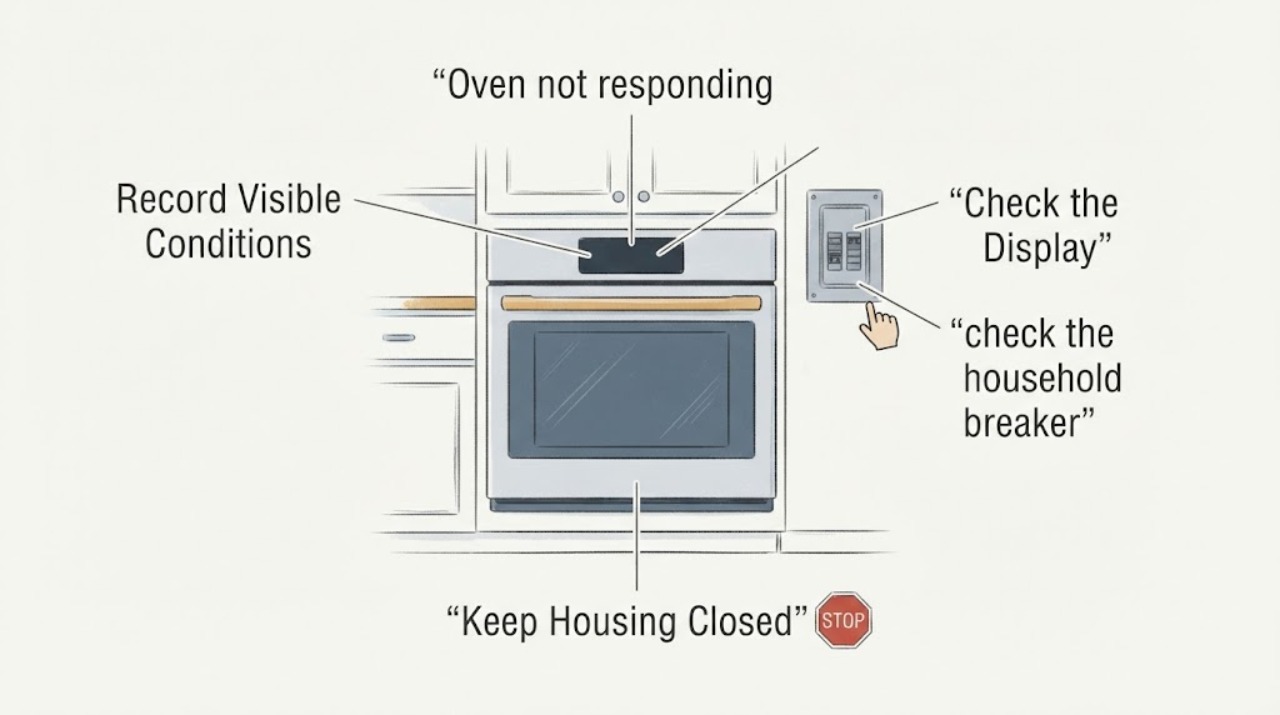
Bosch HBL5420UC oven not responding: check the full E-Nr, display and safe power path
For a Bosch HBL5420UC that does not respond, first record whether the display and clock are dark, whether the display is lit but touch keys do nothing, or whether the oven is hot or in Self-Clean. Bosch lists several HBL5420UC E-Nr suffixes, so confirm the complete rating-plate model before using any model-specific lock, reset, or clock instruction.
-
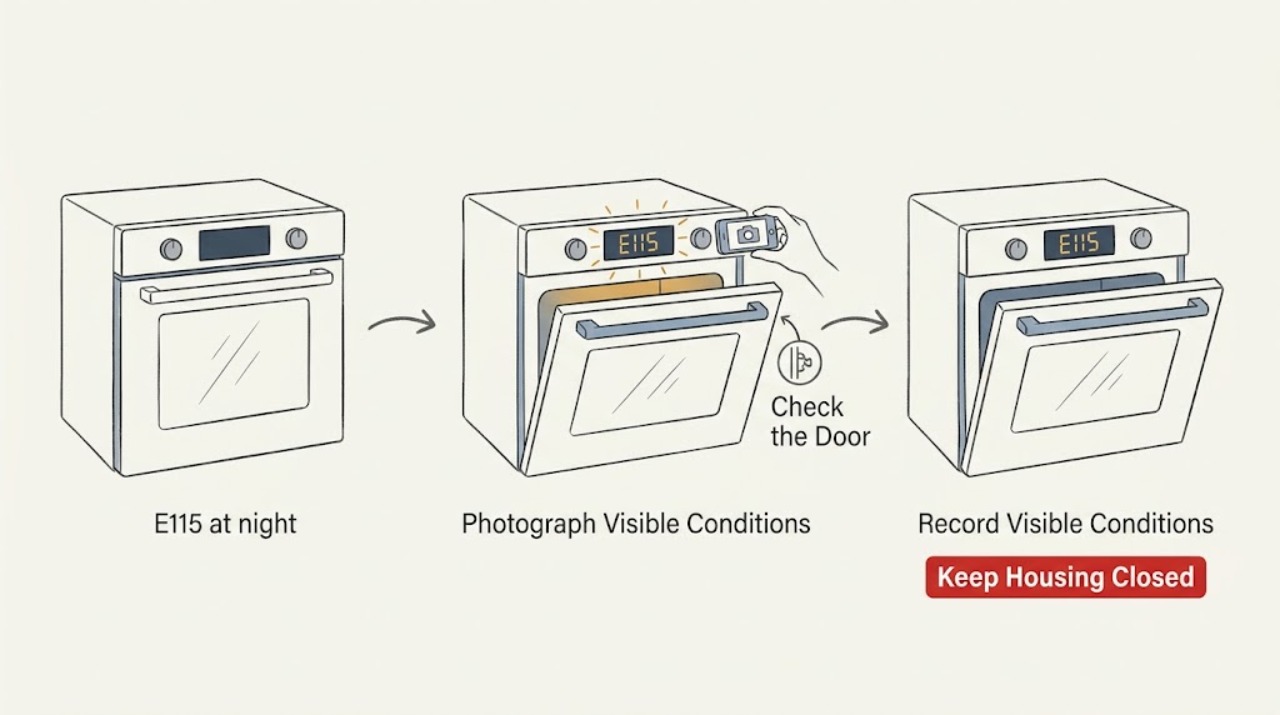
Bosch HEI8054C E115 at night with the oven door locked
On a Bosch HEI8054C, E115 with a locked door after the oven was supposedly idle and cold should not be treated as proof that the oven is actually overheated. The exact Bosch use-and-care manual covers the HEI8054C family but does not provide an E115-specific owner diagnosis; it says that a continuously flashing and beeping error requires disconnecting power and calling a qualified technician.
-
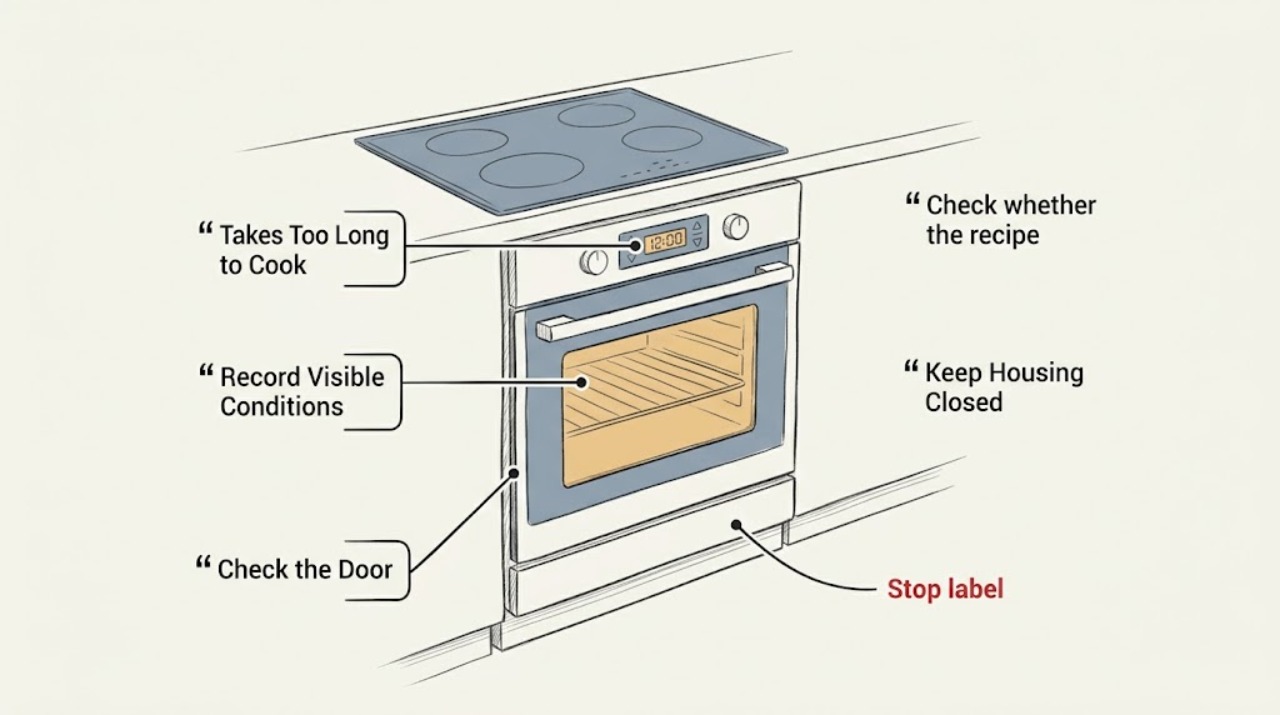
Bosch HII8057C Takes Too Long to Cook: Preheat, Convection, and Rack Checks
For a Bosch HII8057C, a longer-than-expected cook time should first be separated into preheat time, oven-mode conversion, cookware and rack placement, and a possible temperature or heating problem. Confirm the complete suffix and market because Bosch publishes HII8057C/05, /06, and /07 service pages and the shared manual says not all features are available on every covered model.
-
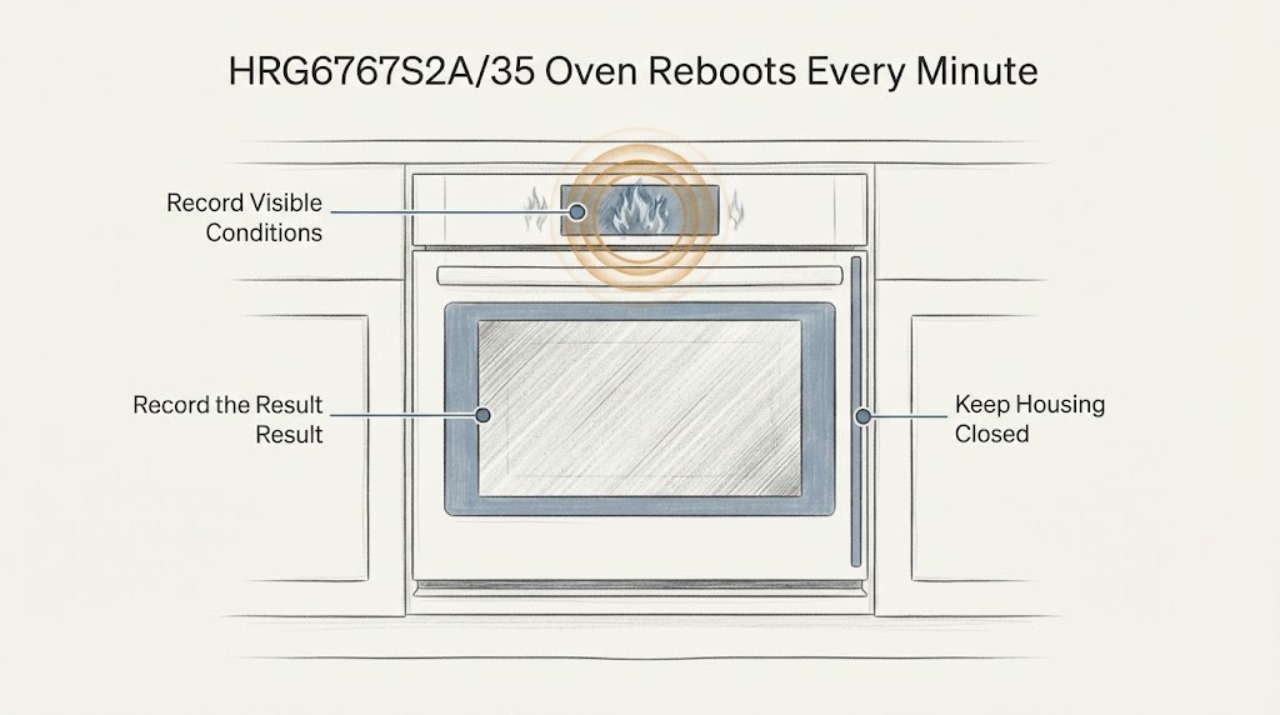
Bosch HRG6767S2A/35 Oven Reboots Every Minute: C1210 Is Not a Safe DIY Diagnosis
Keep the Bosch HRG6767S2A/35 oven switched off at its labeled circuit protection if it restarts about every minute. The exact Bosch owner manual does not list C1210; it says that a recurring display error should be reported to after-sales service with the exact message.
-
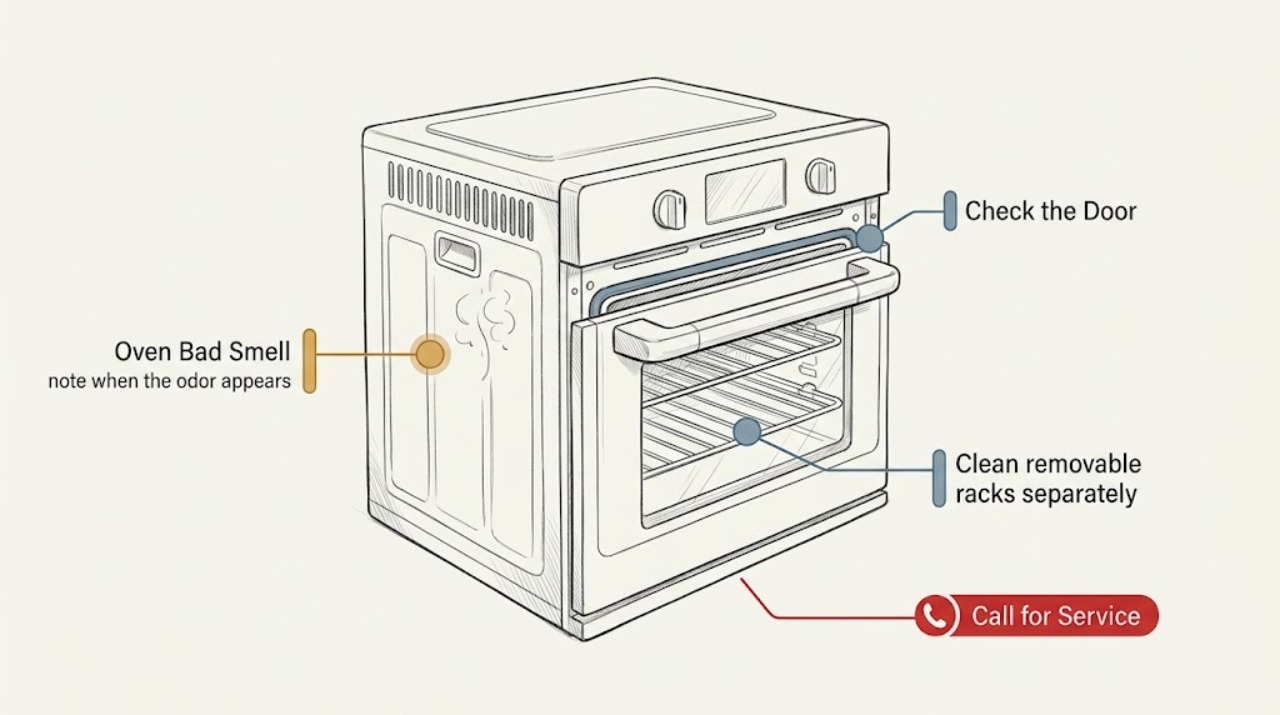
Bosch Oven Bad Smell: Safe Checks and What the Odor Means
A Bosch oven bad smell usually comes from first-use insulation or manufacturing residue, food or grease left in the cavity, or a dirty rack. Let the oven cool, remove racks and accessories, and inspect for spills, charred food, or leftover packaging before cleaning according to the owner's manual.
-
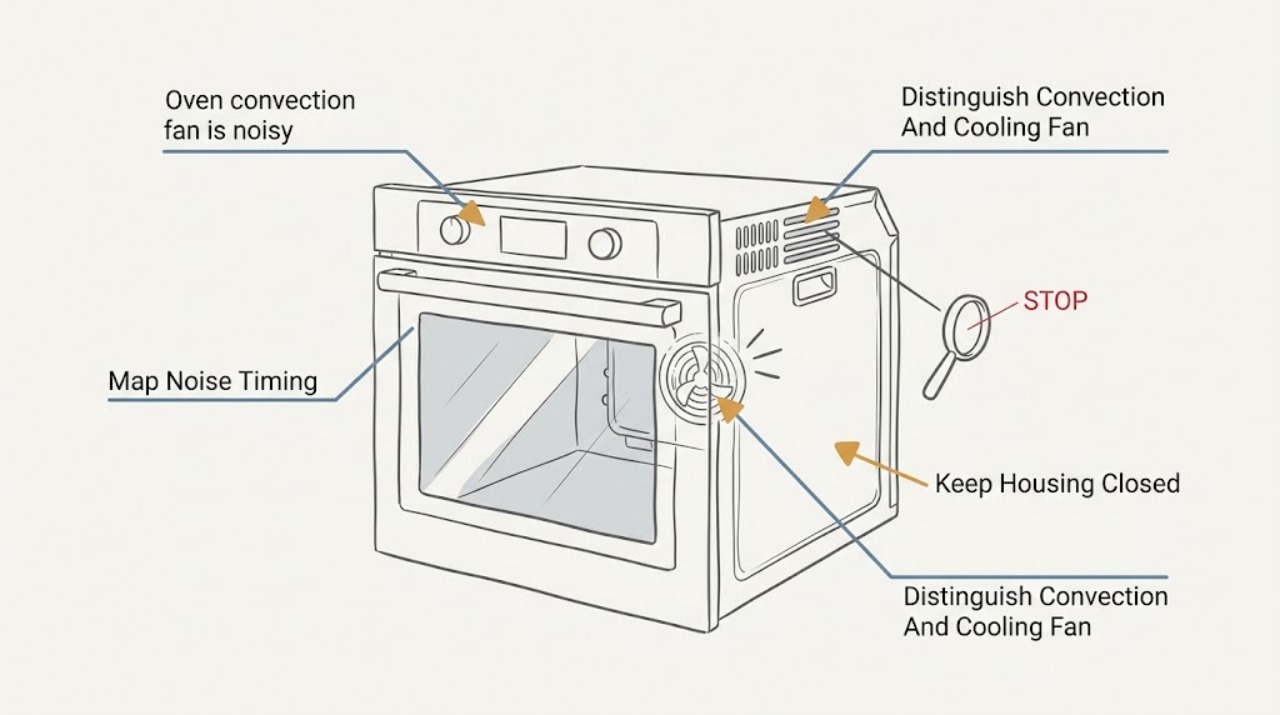
Bosch oven convection fan is noisy: What to Check and What to Do Next
First determine whether the sound is the Bosch convection fan or the separate cooling fan. A fan sound during convection, a fan that stops when the door is opened on applicable models, warm air from the vent, or fan operation after cooking can be normal model behavior.
-
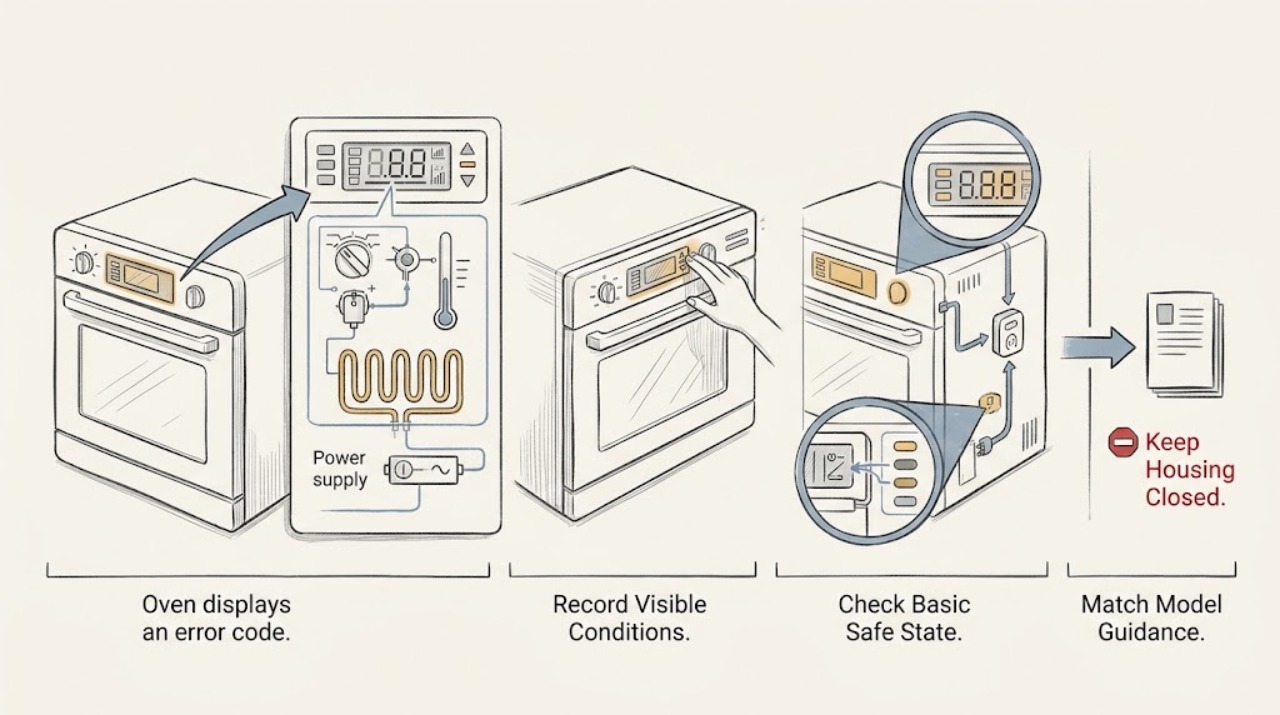
Bosch oven displays an error code: What to Check and What to Do Next
Write down the complete Bosch oven message before clearing it. An E followed by a number is a fault or malfunction message, but the meaning and reset sequence depend on the model and code.
-
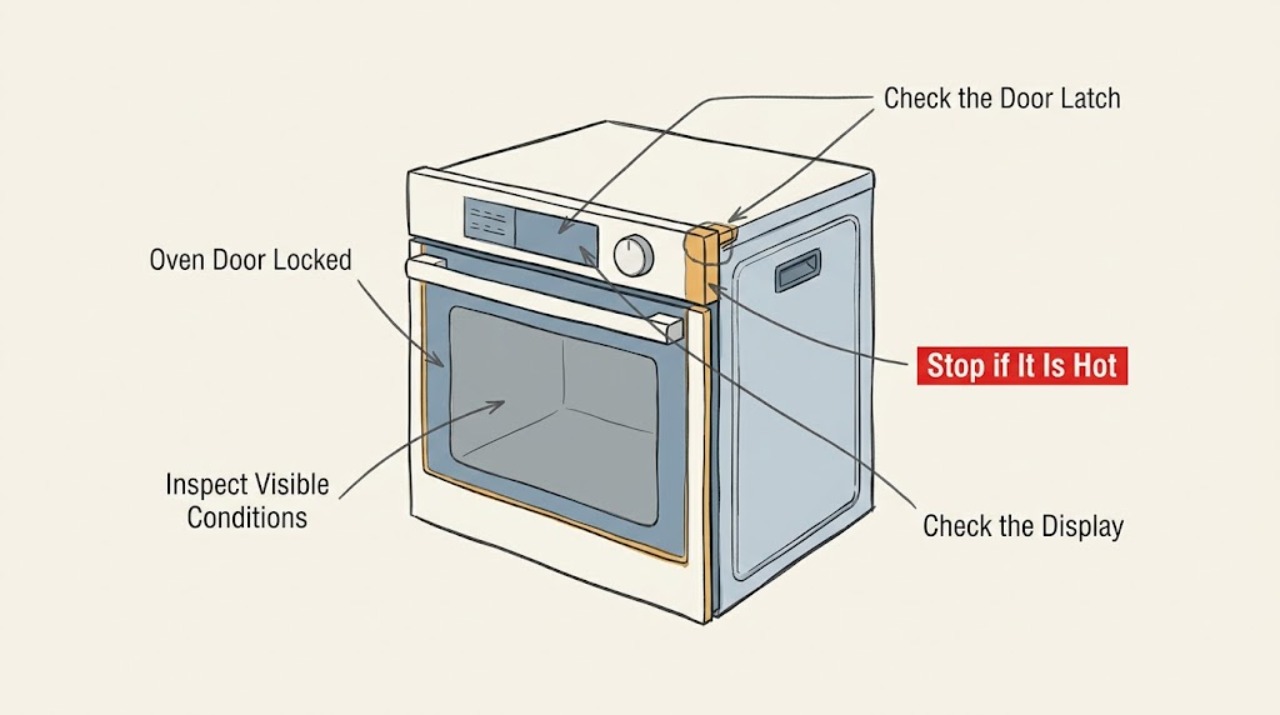
Bosch Oven Door Locked: Safe Checks Before Service
Do not pull or pry a locked Bosch oven door. First check whether the oven is still hot, whether Self Clean is active, and whether a door-lock code is displayed.
-
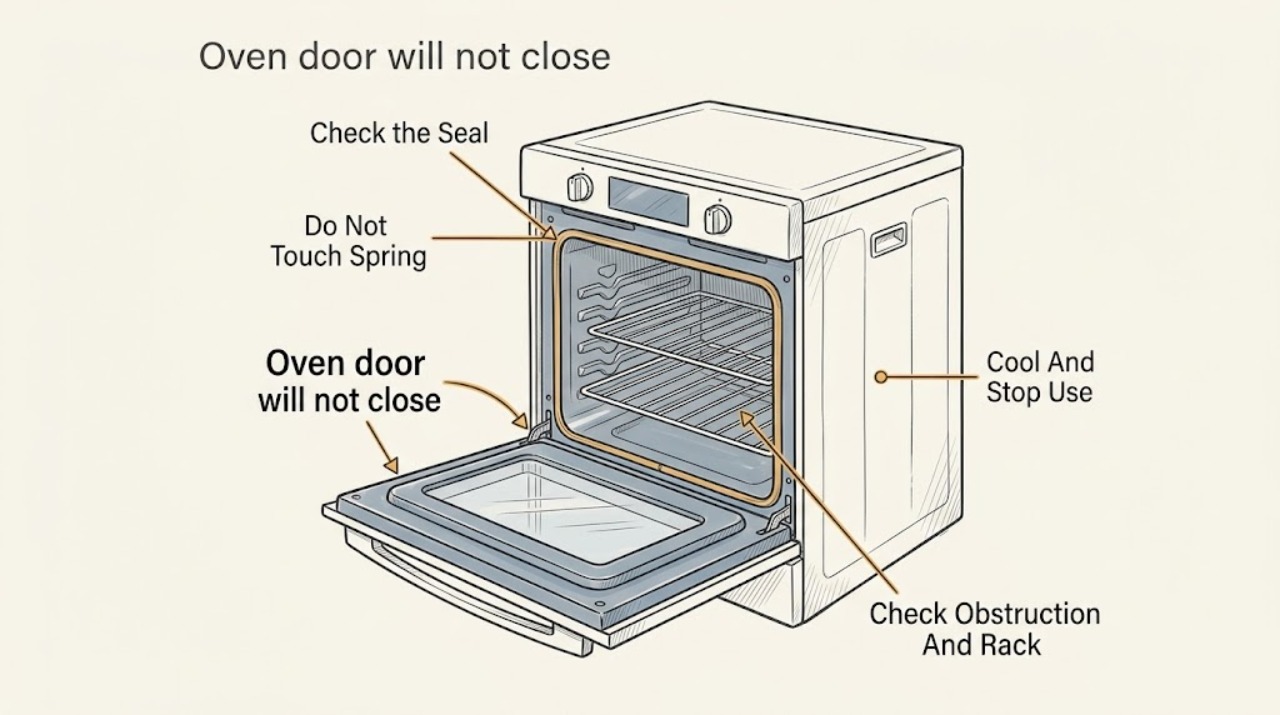
Bosch oven door will not close: What to Check and What to Do Next
Let the Bosch oven cool fully, turn its controls off, and do not force the door. Bosch's direct troubleshooting guidance starts with the door seal and hinges: check from the outside for a piece of food, rack, tray, foil, or hardened residue preventing the door from sitting correctly, then clean accessible seal and hinge areas with mild soapy water and a sponge.
-
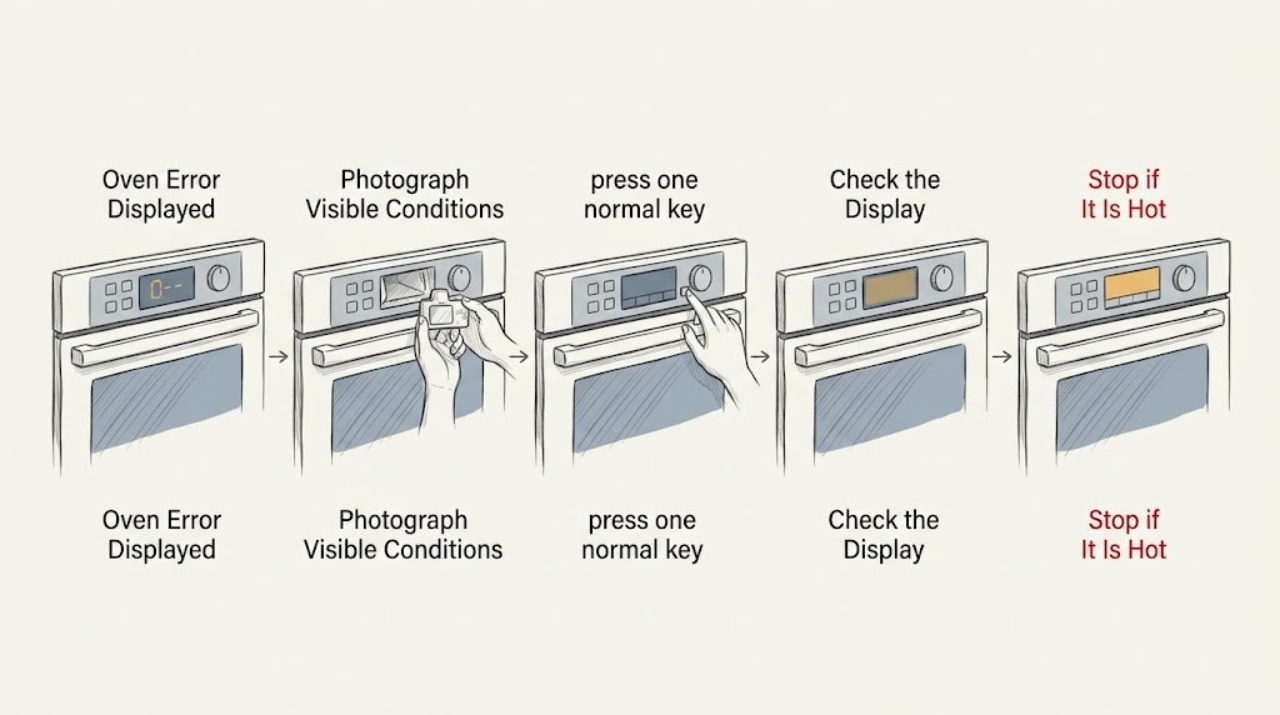
Bosch Oven Error Displayed
When a Bosch oven displays an error, write down the complete code and note whether the control is beeping or the keys are unresponsive. Press a key to stop the beeping if the panel permits it, then follow the reset procedure for the exact model in its owner information.
-
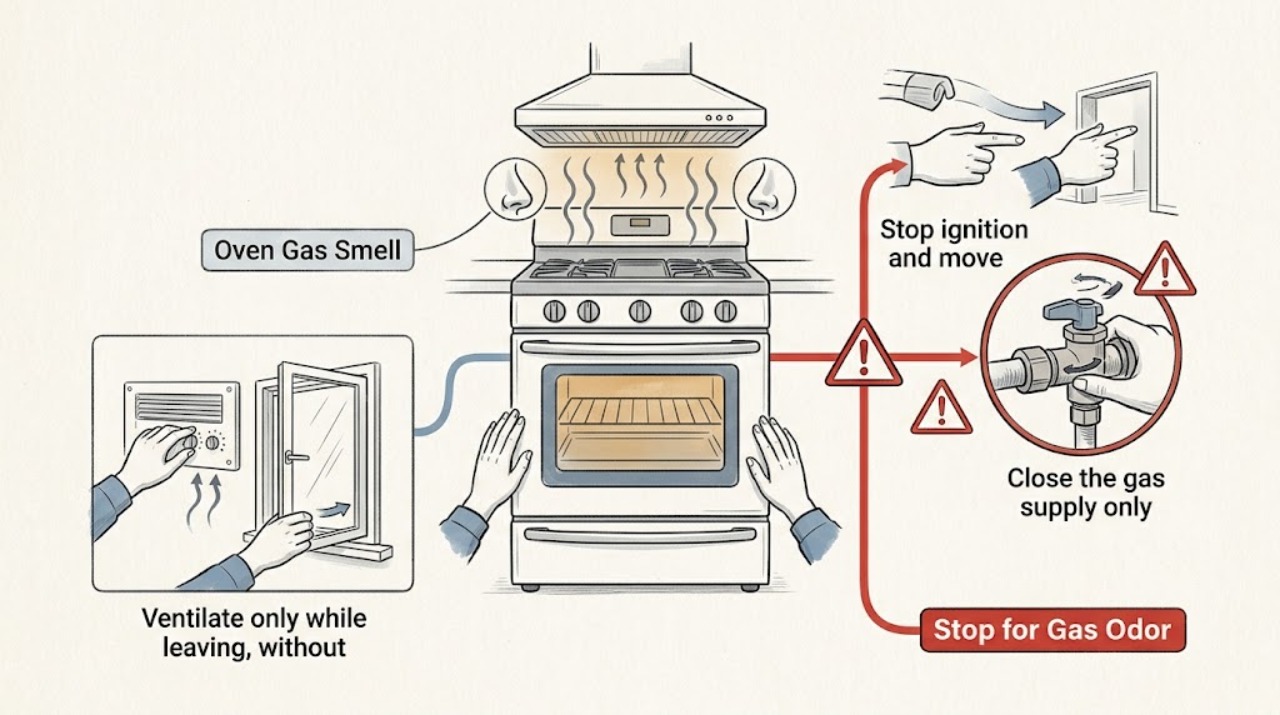
Bosch Oven Gas Smell: What to Do Safely
Treat a rotten-egg or sulfur-like smell from a Bosch gas oven as possible unburned gas, not as a routine cooking odor. Do not try to light the oven or burner, do not operate electrical switches, and do not use a phone inside.
-
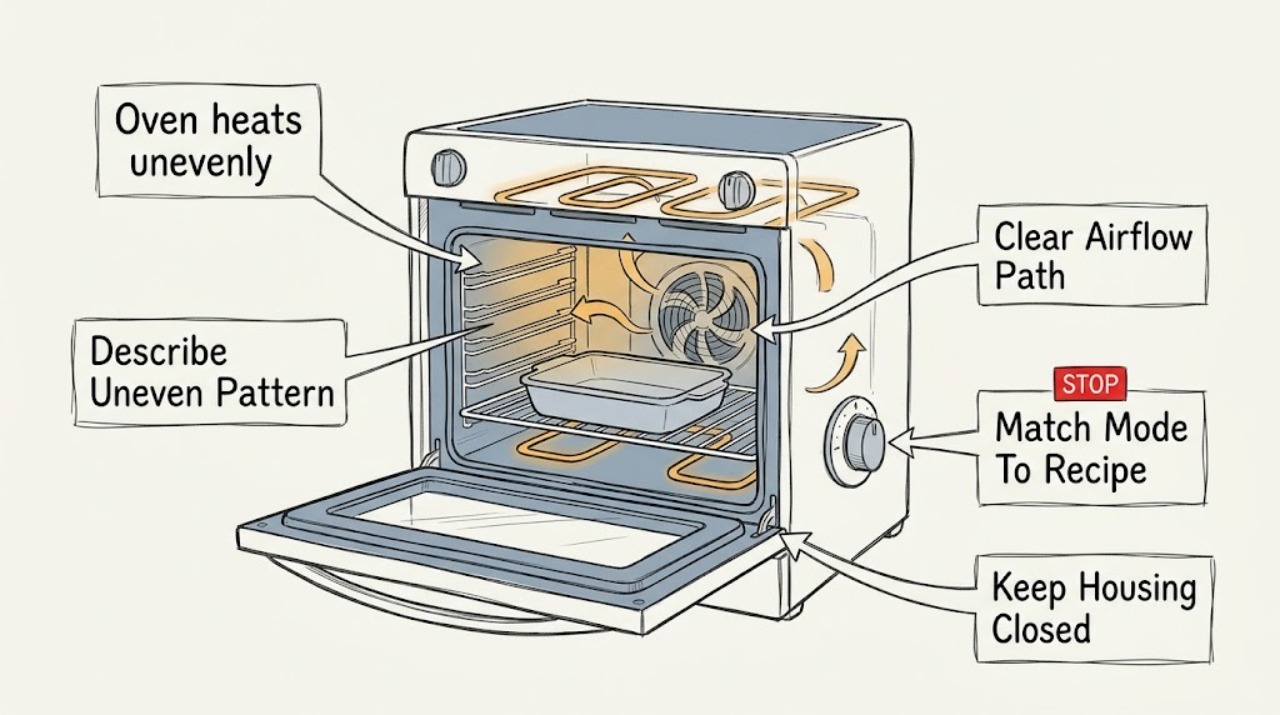
Bosch oven heats unevenly: What to Check and What to Do Next
First decide whether the uneven result follows the recipe, rack position, pan, or oven. Use the Bosch mode and rack positions in the exact manual, keep space around the shelf for air movement, avoid covering the shelf with foil or crowding the cavity, and center a single pan.
-
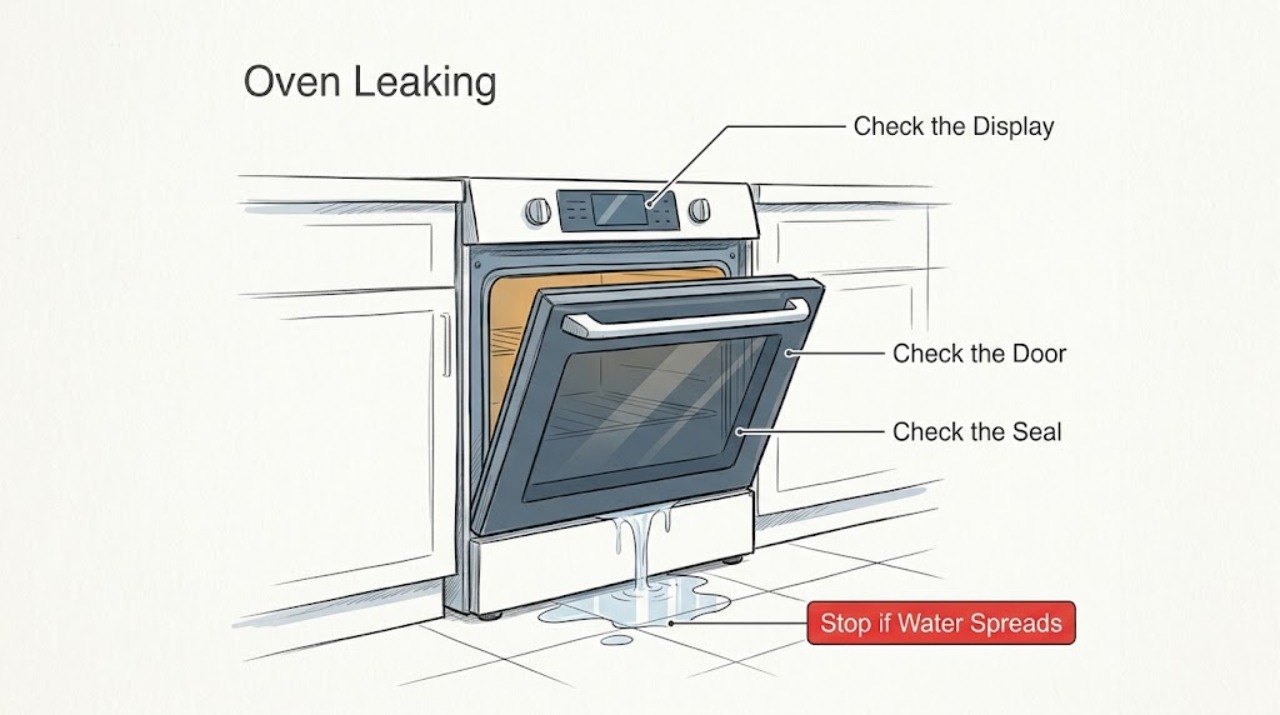
Bosch Oven Leaking: Check Condensation, Spillover, or the Steam System
A Bosch oven that appears to be leaking may be releasing normal condensation, overflowing a pan, or—on a steam model—leaking from the water tank or leaving too much water in the cooking compartment. Identify where the liquid starts and whether steam cooking was used.
-
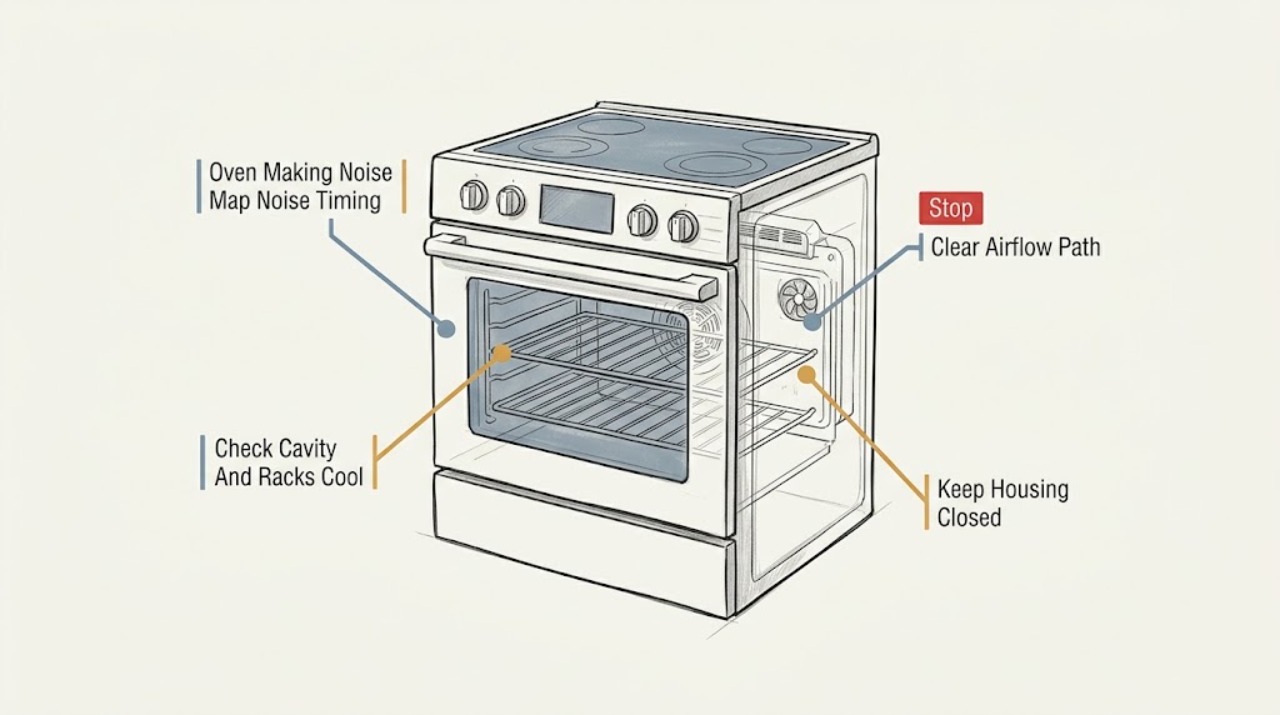
Bosch Oven Making Noise: Tell Normal Fan Operation from a Fault
Some Bosch oven fan sounds are expected: the convection fan may run during preheating or a convection mode, and a cooling fan may continue after the oven is turned off until the appliance cools. A new or unusually loud grinding, scraping, rattling, clicking, or high-pitched noise needs a pattern check before the oven is used again.
-
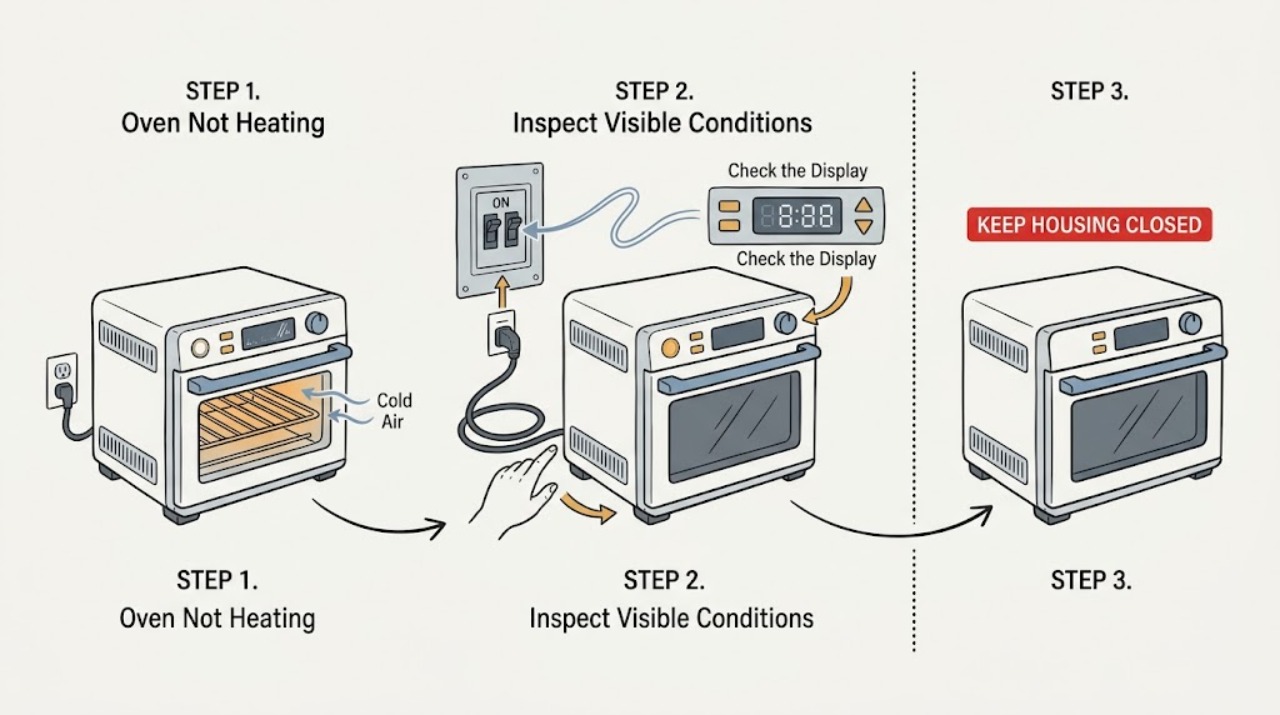
Bosch Oven Not Heating
If a Bosch oven is not heating, first check the external power supply and make sure an oven mode and temperature have actually been selected. A dark display or a tripped breaker points to a supply problem; a powered display with no heat after a valid Bake or other heating mode is selected points to a control, element, sensor, or other technical fault that needs service.
-
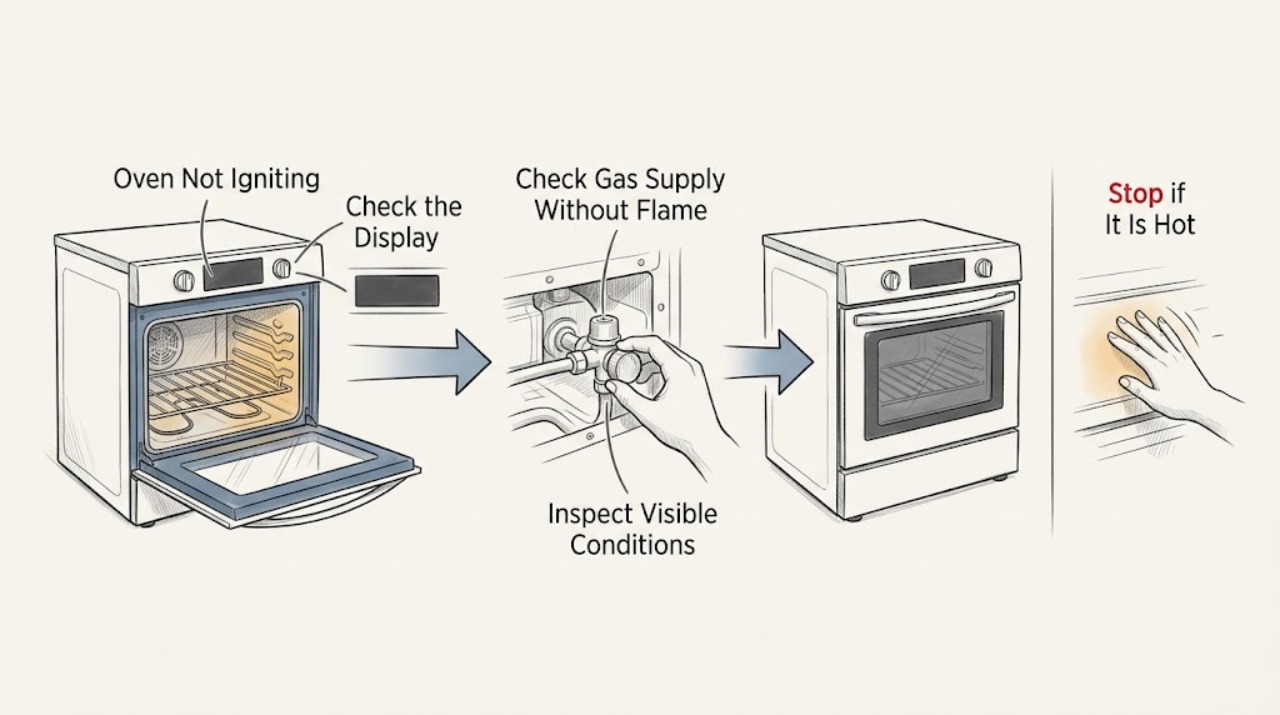
Bosch Oven Not Igniting: Safe Gas-Oven Checks
For a Bosch gas oven that is not igniting, first confirm the oven has electrical power, the control is set for the intended bake or broil operation, and the gas supply is available without testing with an open flame. During one model-correct start attempt, note whether you hear ignition sparking or see a burner flame.
-
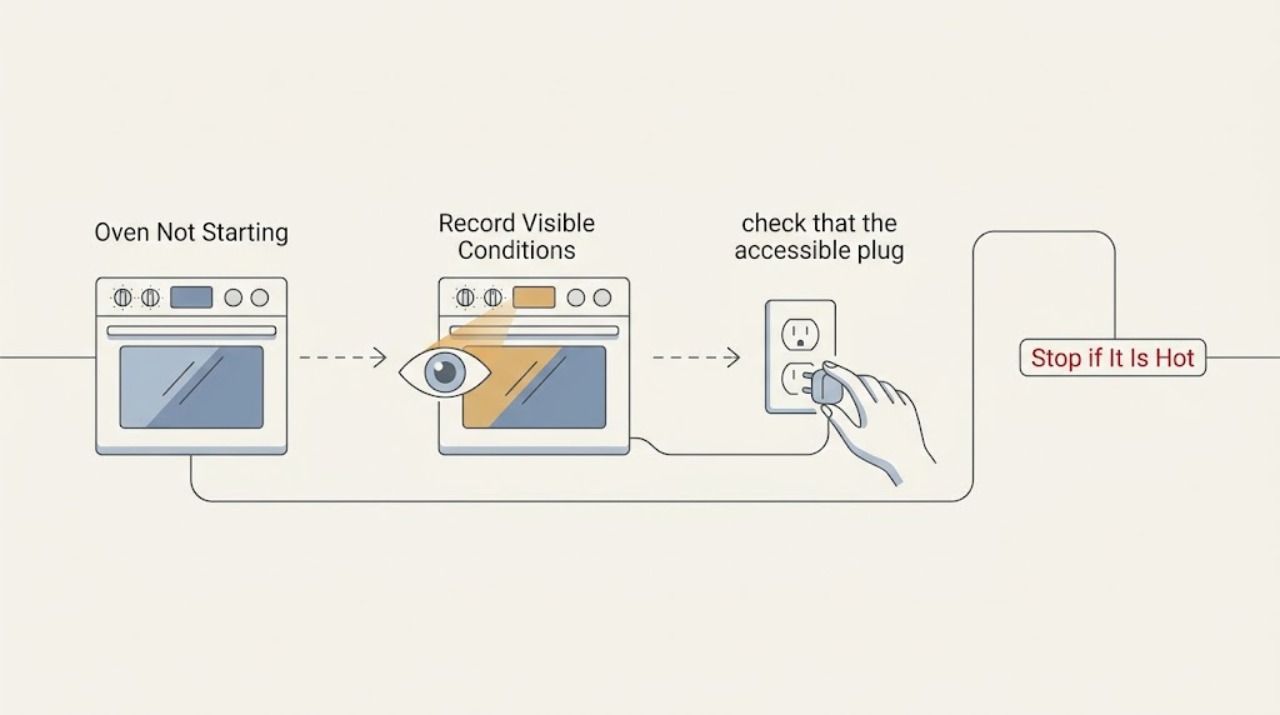
Bosch Oven Not Starting
If a Bosch oven will not start, first determine whether the display is completely dark or the display works but the oven will not begin heating. Check that the appliance is connected securely, the household breaker or fuse has not opened, and a cooking mode and temperature have actually been selected.
-
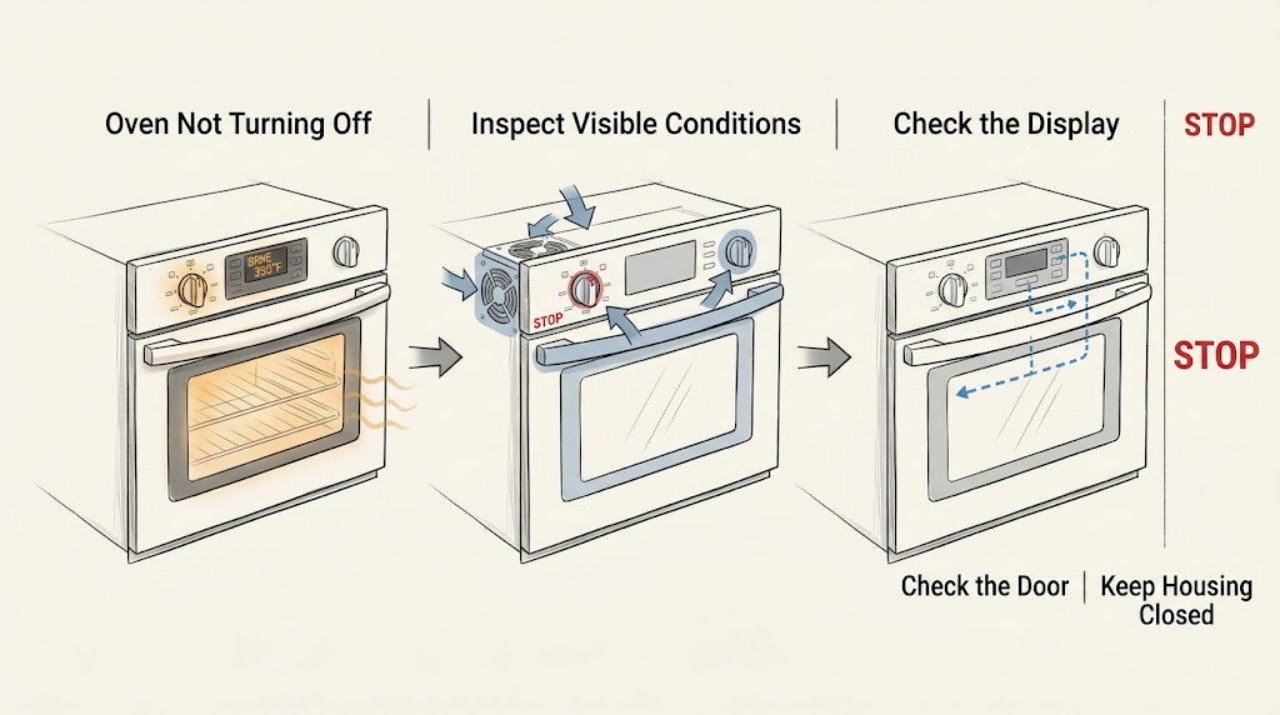
Bosch Oven Not Turning Off: Separate Normal Cooling From a Fault
First check whether the oven is still heating or whether only the light or cooling fan is running. Bosch's owner instructions say that after cooking the oven stops heating, while the cooling fan can continue until the appliance has cooled; setting the function selector to Off ends the operation.
-
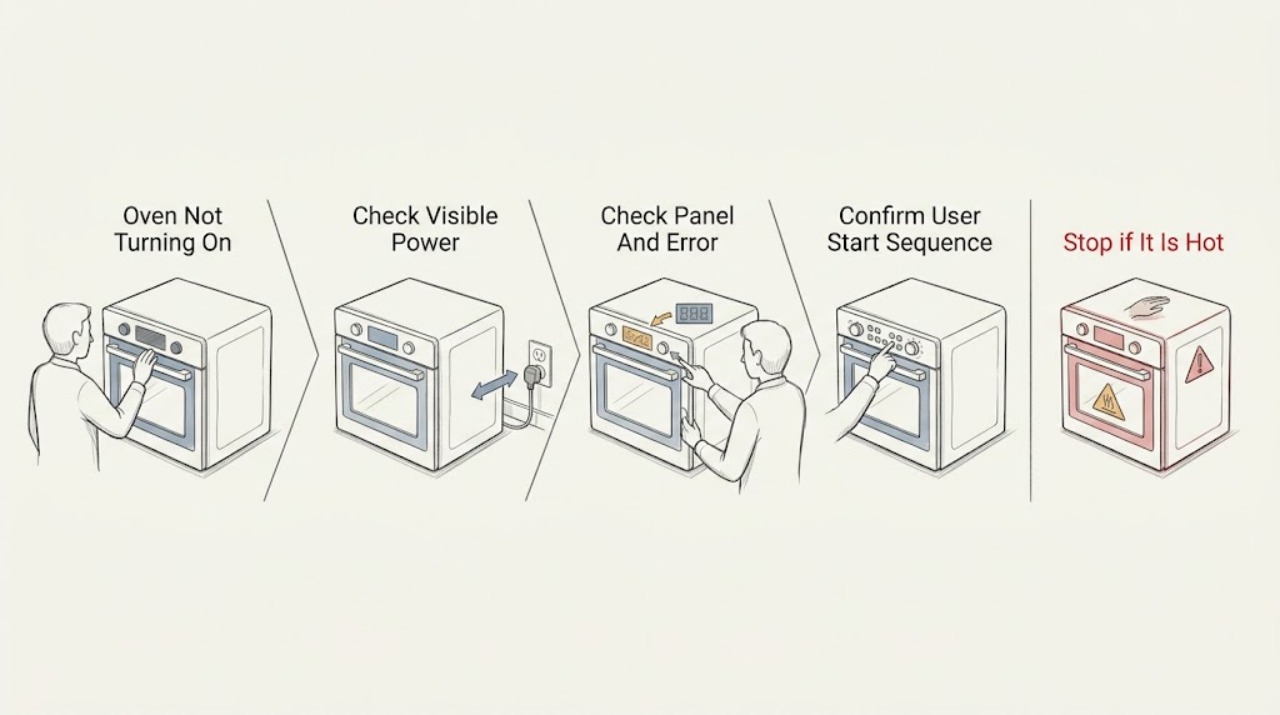
Bosch Oven Not Turning On: Check Power and the Control Panel
If a Bosch oven will not turn on, first determine whether the appliance has any electrical response. Check the dedicated circuit breaker or fuse and the oven's power connection without opening the appliance, then inspect the control panel for a displayed error or a damp, unresponsive keypad.
-
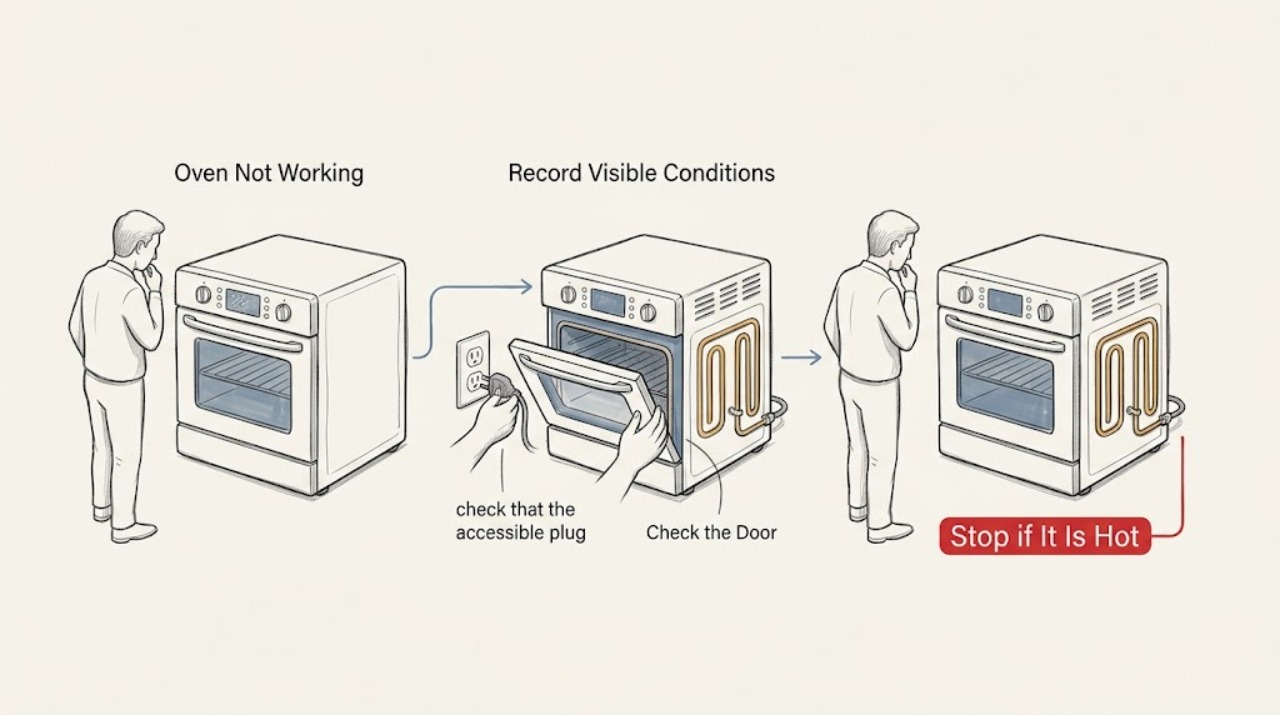
Bosch Oven Not Working
When a Bosch oven is not working, first identify whether the display is dark, the controls respond but a cooking mode will not start, the oven starts but does not heat, or an error message appears. Check the accessible plug and household breaker, confirm a mode and temperature are selected, and verify the door closes without a visible obstruction.
-
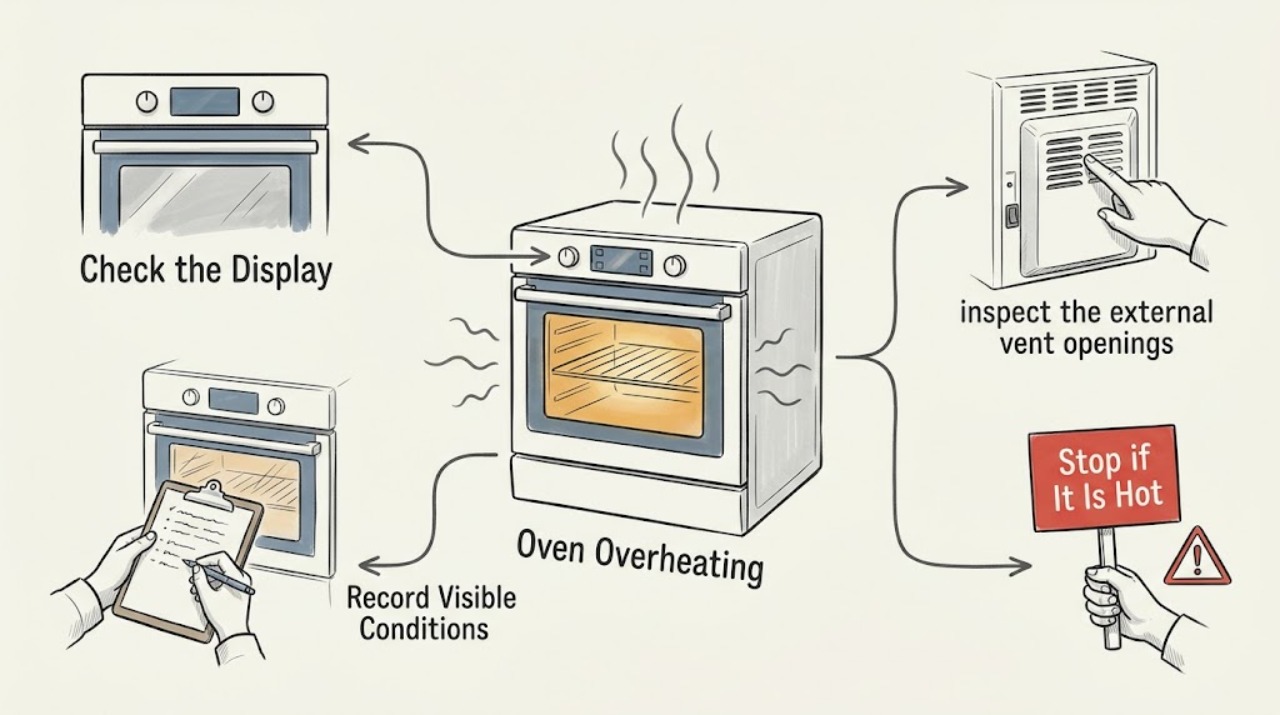
Bosch Oven Overheating
If your Bosch oven is hotter than the selected temperature, turn it off and let it cool before inspecting anything. Check that the oven is in the intended mode, that any documented temperature conversion or offset is understood, and that vents are clear and the shelves are not covered with foil.
-
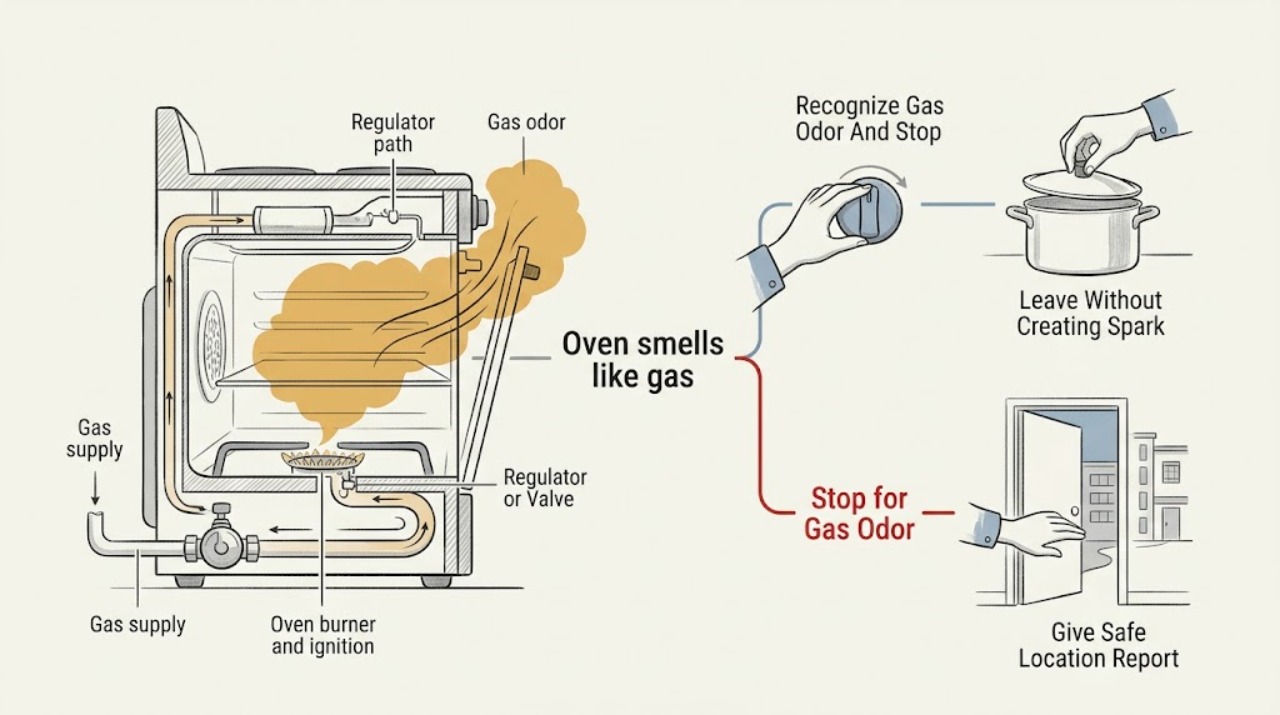
Bosch oven smells like gas: What to Do Safely
Treat a sulfur or rotten-egg smell, a persistent gas smell, hissing, delayed ignition, or an odor that returns after the oven is off as unburned gas. Do not keep testing the Bosch oven.
-
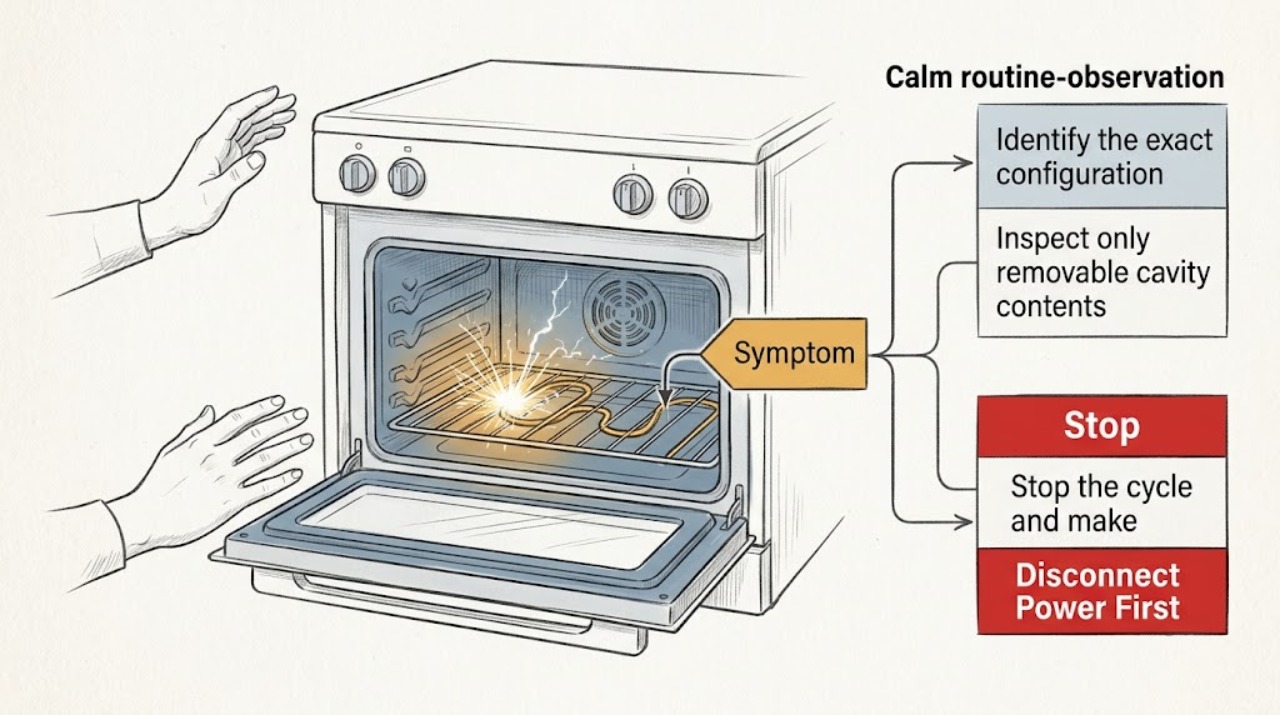
Bosch Oven Sparking
Turn the oven off and treat any continuing spark, smoke, flame outside the normal burner area, damaged cord, or gas odor as a stop condition. Once the oven is cool and isolated from power, record where and when the spark appears and check only for removable food, foil, or a visibly damaged element.