
On this page
Start here
Quick answer
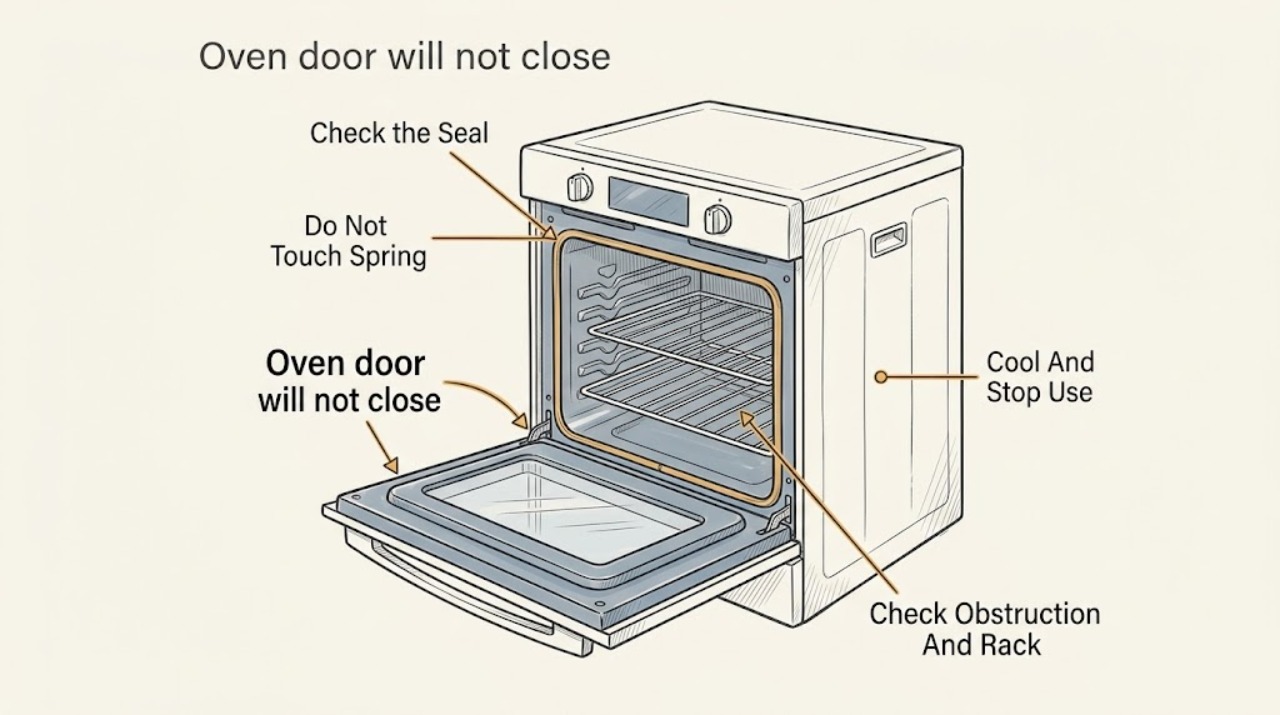
Let the Bosch oven cool fully, turn its controls off, and do not force the door. Bosch's direct troubleshooting guidance starts with the door seal and hinges: check from the outside for a piece of food, rack, tray, foil, or hardened residue preventing the door from sitting correctly, then clean accessible seal and hinge areas with mild soapy water and a sponge. If the door is sagging, the seal is torn or displaced, glass is damaged, a hinge appears bent or spring-loaded, the door was recently removed, or the latch does not align, stop using the oven and arrange qualified Bosch appliance service. A door that is not correctly engaged can let heat escape and make surrounding parts very hot; do not run the oven with a gap, bypass a latch, or disassemble the door unless the exact manual and a trained person make that safe.
Before you begin
Safety first
- This article supports cooling the oven, external inspection, removal of a clearly loose obstruction, and gentle cleaning of accessible seal or hinge areas only. A qualified professional should handle door removal, hinge locks, spring mechanisms, latch adjustment, glass or frame work, panels, wiring, and any hot, damaged, or gas appliance.
Work through in order
Diagnostic checks
Use only checks that match the exact appliance or system and its official guide.
-
Check 1
Turn the oven controls off and wait until the cavity, door, racks, and surrounding trim are fully cool before touching the door or checking its fit. Do not force the door closed or continue a cooking or cleaning cycle with a visible gap.
Expected result: Note whether the door is hot, partly open, sagging, tilted, rubbing one side, or held away from the frame; check for smoke, burning odor, gas odor if the appliance is gas, damaged glass, or an unusually hot area around the gap.
Next step: For smoke, fire, gas odor, or suspected carbon monoxide, leave the area as appropriate and contact local emergency or gas professionals from a safe location. For damaged glass, burning odor, or abnormal heat, keep the oven off and arrange qualified service after it is safe.
Stop if: Do not press the door shut against resistance, use the oven with a gap, reach near hot hinges, or restart to see whether heat makes the door close.
Why this matters
Why: Heat escaping through a misaligned door can make nearby parts very hot, and smoke, fire, gas, or damaged glass changes this from a fit check to an immediate safety stop.
-
Check 2
With the oven cool, open the door only as far as it moves freely and inspect the sill, frame, cavity edge, racks, trays, and visible hinge pockets for anything preventing the door from reaching the frame. Remove only a loose, ordinary obstruction that is clearly accessible without tools.
Expected result: Look for an extended rack, pan, foil edge, crumb, spill, hardened food, cleaning residue, or a loose trim piece that contacts the gasket, glass, frame, or hinge area. Note whether the door closes farther after the obstruction is removed or remains crooked or springy.
Next step: Remove the loose obstruction, close the door gently once, and reassess the fit. If any part is fixed, sharp, hot, broken, or trapped in the hinge area, leave it in place and arrange service.
Stop if: Do not pry debris from a hinge, pull on trim, remove screws, or use the door handle as leverage against an obstruction.
Why this matters
Why: A single accessible obstruction can explain a door that stops at the same point. A persistent gap, uneven contact, or contact at only one corner makes alignment, seal, hinge, latch, or frame damage more likely.
-
Check 3
Inspect the visible door seal and the mating frame for a displaced, folded, torn, hardened, or greasy section. If the seal and hinge areas are cool and the residue is accessible, clean gently with mild soapy water and a soft sponge, then dry the area.
Expected result: Record whether the seal lies evenly in its channel, whether one section is pulled out or folded into the closing path, and whether the door sits closer to the frame after cleaning. Do not pull out a seal or press a loose retaining clip back into place unless the exact Bosch manual explicitly covers that action.
Next step: If cleaning restores even contact and the door closes without resistance, keep the oven off until you have confirmed the seal is intact and the manual permits a normal use check. If the seal remains damaged or the gap persists, arrange qualified appliance service.
Stop if: Do not use sharp tools, abrasive chemicals, high heat, adhesive, or a makeshift seal; do not operate with a seal pulled out, torn, or pinched.
Why this matters
Why: Bosch specifically identifies dirty seals, dirty hinges, and something stuck as first checks. A torn, displaced, swollen, or uneven seal is a replacement or repair clue, not a reason to force the door.
-
Check 4
From outside the cool oven, compare the left and right hinge positions, door gaps, latch or catch alignment, and handle-to-frame angle. If the door was recently removed or a hinge moved, stop at visual inspection; do not try to reset a spring-loaded hinge by hand.
Expected result: Note a hinge that is visibly bent, not seated, locked at a different angle, or sprung forward; a door that is lower on one side; a latch that misses its receiver; or a hinge pocket or frame that appears damaged.
Next step: Keep the door supported without forcing it and arrange qualified Bosch appliance service. Tell the technician whether the issue began after cleaning, door removal, impact, a spill, or a self-clean cycle.
Stop if: Do not put fingers into a hinge, release a hinge lock, bend a hinge, tighten hidden hardware, remove the door, or force the latch into alignment.
Why this matters
Why: Unequal hinge position or a door that is visibly out of square points to alignment, hinge, latch, or frame work. Bosch manuals warn that hinges can snap and that incorrect engagement prevents proper closing.
-
Check 5
Inspect the door glass, inner panel, handle, gasket channel, and oven frame from a safe standing position with the appliance cool. Do not disassemble or remove glass to make this check.
Expected result: Look for a crack, shattered edge, loose panel, bowed frame, loose handle, displaced trim, or a piece that shifts when viewed but should be secured. Note whether the gap is uniform or limited to one corner.
Next step: Stop using the oven and arrange service for any damaged glass, loose panel, frame distortion, or loose hardware. Keep children away from damaged glass and do not tape or clamp the door shut.
Stop if: Do not use the oven with cracked glass, a loose inner panel, exposed sharp edges, or a door held closed by an improvised restraint.
Why this matters
Why: Damaged glass, panel hardware, frame, or trim can prevent a seal and create injury or heat-loss risk. A uniform gap after obstruction and seal checks is more consistent with door geometry or hinge/latch service than a cleaning issue.
-
Check 6
Find the Bosch owner's manual using the exact model number and compare its door-care and hinge instructions before any further work. If the door still will not close after the safe obstruction and cleaning checks, prepare a service handoff instead of testing the oven.
Expected result: Gather the model number, photographs of the door gap, seal, hinges, and latch, whether the door was recently removed, and whether the problem began after cleaning, impact, installation, or a hot cycle. Record whether the display shows a door or lock message and whether any heat or odor was noticed.
Next step: Arrange qualified Bosch appliance service and do not operate the oven until the door closes, latches, and seals normally. Tell the technician about any hinge movement, broken glass, obstruction, or cleaning attempt.
Stop if: Do not remove the door, glass, hinges, or latch based on a generic video or another model's instructions, and do not run a heating or self-clean cycle to test an unsafe door.
Why this matters
Why: Bosch door construction and hinge-lock steps vary by model. A manual mismatch or a persistent fit problem leaves insufficient evidence for a safe homeowner repair and points to trained diagnosis.
Use your observations
Decision map
Find the observation that best matches what you see, then follow the next safe action.
-
PATH 01Safety boundary
What you see
The oven is hot and the door is stuck open, or there is smoke, fire, gas odor, suspected carbon monoxide, burning odor, arcing, damaged glass, or uncontrolled heat around the door.
Do this next
Stop using the oven. Leave the area for active smoke, fire, gas odor, or suspected carbon monoxide and contact local emergency or gas professionals from a safe location. Keep the appliance off and arrange qualified service for damage or abnormal heat.
Why this path and its safety boundary
Why it matters: A heat, fire, combustion, electrical, or glass injury hazard overrides ordinary door troubleshooting.
Safety stop: Do not force the door, hold it shut, operate switches in a gas-odor area, reach near a hot hinge, or restart the oven to reproduce the event.
-
PATH 02Safety boundary
What you see
The oven is cool, the hinges and seal look intact, and removing a clearly accessible rack, tray, foil edge, crumb, spill, or residue allows the door to close evenly without force.
Do this next
Clean and dry the accessible area, confirm the gasket is intact and evenly seated, and follow the exact manual for one normal use check. Stop if the gap or resistance returns.
Why this path and its safety boundary
Why it matters: The obstruction was the most likely immediate cause, while the door's seal and alignment still need a gentle visual confirmation.
Safety stop: Do not use the oven if the door still has an uneven gap, the seal is damaged, or the obstruction was in a hinge or latch mechanism.
-
PATH 03Safety boundary
What you see
The door closes farther after gentle cleaning, but the gasket is folded, pulled out, torn, hardened, or no longer makes even contact.
Do this next
Keep the oven off if the seal is damaged or remains out of position. Use the model manual or qualified Bosch service to confirm the seal repair or replacement before reuse.
Why this path and its safety boundary
Why it matters: Residue may have contributed, but a displaced or damaged seal can still allow heat loss and is not safely corrected by pressure or improvised materials.
Safety stop: Do not glue, tape, cut, stretch, or remove the gasket without model-specific instructions.
-
PATH 04Safety boundary
What you see
The door is lower on one side, the gap is unequal, a hinge is visibly bent or differently positioned, the latch misses its receiver, or the issue began after door removal or impact.
Do this next
Do not operate the oven or manipulate the spring mechanism. Arrange qualified appliance service and provide photographs and the model number.
Why this path and its safety boundary
Why it matters: Alignment, hinge engagement, latch, or frame damage is more likely than a simple dirty seal. Bosch warns that incorrect hinge engagement can prevent closing and create excessive heat around the appliance.
Safety stop: Do not release hinge locks, put fingers into hinges, remove the door, bend hardware, or force the latch.
-
PATH 05Safety boundary
What you see
The glass, inner panel, handle, trim, gasket channel, or oven frame is cracked, loose, bowed, sharp, or visibly displaced.
Do this next
Keep the oven off, prevent contact with damaged glass, and arrange qualified Bosch appliance service. Do not clean or disassemble the door further.
Why this path and its safety boundary
Why it matters: A structural or glass problem can prevent sealing and can worsen with heat or pressure; an improvised closure is unsafe.
Safety stop: Do not tape, clamp, strike, sand, remove panels, or operate with cracked glass or a loose door panel.
-
PATH 06Safety boundary
What you see
The door still will not close after accessible cleaning and obstruction checks, the model manual is unavailable or mismatched, or the door shows a lock message while the physical fit is abnormal.
Do this next
Keep the oven off and arrange qualified Bosch appliance service. Provide the model, photographs, timing, and any recent cleaning, removal, impact, or overheating event.
Why this path and its safety boundary
Why it matters: The evidence is insufficient for a safe user repair; door construction, lock behavior, and hinge steps are model-specific.
Safety stop: Do not continue heating tests, follow another model's door-removal steps, bypass a lock, or order a part before diagnosis and fitment are confirmed.
Helpful context
Understand the symptom
A gap at the door changes the safety decision
A Bosch oven door that will not close can be blocked by residue or an object, but it can also reflect a displaced seal, bent hinge, misaligned latch, damaged glass, or a door that was not reinstalled correctly. Keep the oven off while the cavity and door are hot. Do not hold the door shut during cooking: Bosch notes that incorrect hinge engagement can let heat escape and make appliance parts very hot.
Start with external, low-risk checks
Once the oven is fully cool and inactive, look for a rack, tray, foil, crumb, spill, or hardened deposit at the sill, gasket, hinge pockets, or frame. Bosch's published first step is to check the seals and hinges for dirt or something stuck and to clean with soapy water and a sponge. Avoid sharp tools, abrasive cleaners, and any attempt to pry or reposition a spring-loaded hinge.
Door removal and hinge work are not generic DIY steps
Bosch manuals use model-specific hinge locks and engagement points, and their warnings describe heavy glass, spring force, pinch or cut risks, and damage from incorrect refitting. If the door was recently removed, sits crooked, or a hinge snapped, stop rather than repeating the procedure from memory. Give the model number and photographs to a qualified Bosch servicer; do not operate the oven until the door closes and seals normally.
Safety boundary
Stop conditions
- Stop using the oven for smoke, fire, gas odor, suspected carbon monoxide, burning electrical odor, arcing, uncontrolled heat, or a hot door that will not close.
- Stop for cracked or shattered glass, sharp exposed edges, a loose inner panel, a displaced frame, or a door that cannot latch and seal evenly.
- Do not force or clamp the door, bypass a latch or lock, release or manipulate a spring-loaded hinge, or reach into a hinge mechanism.
- Do not remove the door, glass, panels, or wiring based on generic instructions; use the exact Bosch manual and qualified service for model-specific work.
Only after diagnosis
Potential parts
- oven door gasket or seal
Consider this category only if the exact model inspection finds a torn, hardened, displaced, or otherwise failed seal and qualified diagnosis confirms it is the cause of the gap or heat loss.
Confirm the full Bosch model and manufacturer's fit information before ordering; do not substitute a generic seal or infer fit from appearance. - oven door hinge assembly
Consider this category only when a technician confirms a bent, broken, incorrectly engaged, or otherwise failed hinge after the door alignment symptoms are documented.
Hinges and locking mechanisms are model-specific and spring-loaded; verify exact model fit and use qualified installation. - oven door latch or lock assembly
Consider this category only if the door is aligned but the latch or lock does not engage and qualified diagnosis identifies that assembly as failed.
Confirm exact model compatibility and safe service instructions before ordering; never bypass the latch or lock. - oven door glass or frame hardware
Consider this category only when inspection confirms cracked glass, a loose panel, damaged trim, or a distorted frame that prevents safe sealing.
Glass and door hardware vary by model. Confirm the complete model and manufacturer's fit information, and use qualified service for broken or loose glass.
When checks do not resolve it
Need a professional?
Arrange qualified Bosch appliance service when the door remains open after accessible obstruction and gentle cleaning checks, sits crooked, has a damaged or displaced seal, shows a bent or misaligned hinge, misses the latch, displays a lock message with abnormal fit, or has damaged glass, trim, or frame. Do not operate the oven until the door closes and seals normally. For gas odor, suspected carbon monoxide, smoke, fire, or an electrical hazard, leave the area as appropriate and contact emergency, gas, or electrical professionals from a safe location.
Safety scope: This article supports cooling the oven, external inspection, removal of a clearly loose obstruction, and gentle cleaning of accessible seal or hinge areas only. A qualified professional should handle door removal, hinge locks, spring mechanisms, latch adjustment, glass or frame work, panels, wiring, and any hot, damaged, or gas appliance.
Common questions
FAQ
Can I keep using a Bosch oven if the door closes but leaves a small gap?
No. A visible gap means the door may not be sealing or engaging correctly, and Bosch warns that incorrect hinge engagement can let heat escape and make appliance parts very hot. Keep the oven off until the cause is corrected and the door closes evenly.
What should I check first when my Bosch oven door will not close?
After the oven is fully cool, check for an accessible rack, tray, foil, food, spill, or residue at the sill, frame, seal, or visible hinge area. Bosch's direct guidance says to check the seals and hinges for dirt or something stuck and clean gently with soapy water and a sponge.
Should I remove and reinstall the Bosch oven door myself?
Do not use generic removal instructions. Bosch manuals describe model-specific hinge locks and warn about heavy glass, spring-loaded hinges, injury, and incorrect engagement. If the door was recently removed or a hinge moved, use the exact manual and qualified service rather than forcing or resetting the hinge.
When does a Bosch oven door problem need service?
Arrange service if the door remains misaligned after safe cleaning and obstruction checks, the gasket is damaged, a hinge or latch is bent or loose, the glass or frame is damaged, the lock will not release or engage normally, or the door still leaves a gap. Stop immediately for smoke, gas odor, fire, arcing, or abnormal heat.
Read the exact guide
Official sources
- Trouble shootingBosch Home Appliances · Bosch oven door fitting, hinge engagement, and repair-safety instructions in the published manual
- Use and Care Manual HIS8655U, HIS8655CBosch Home Appliances · Bosch oven door, glass, hinge, and service safety warnings in a US use-and-care manual
- Bosch Wall Ovens & RangesBosch Home Appliances · Bosch oven owner support, manuals, service assistant, and authorized service resources
- Oven Troubleshooting: Oven door not closingBosch Home Appliances · Bosch oven door closure troubleshooting
Community feedback
Share a repair observation
Share a plain-text repair observation. Accepted observations are published automatically; this page may take a moment to update.