
On this page
Start here
Quick answer
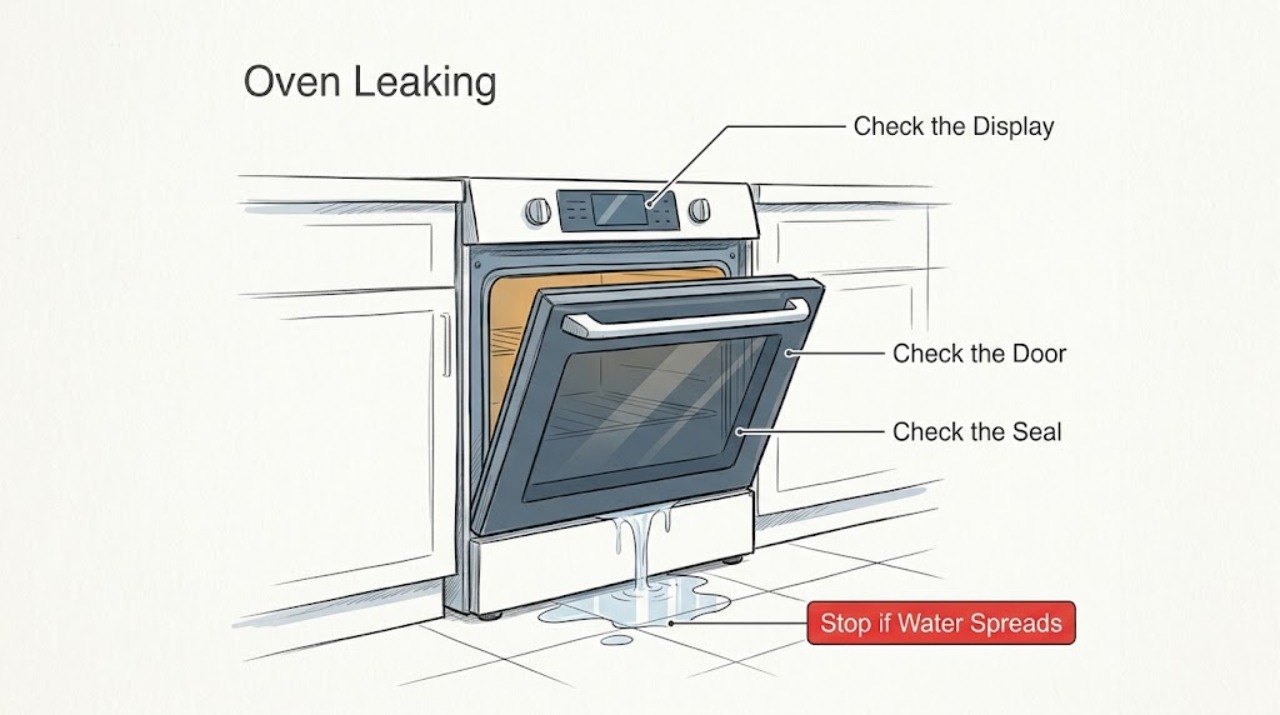
A Bosch oven that appears to be leaking may be releasing normal condensation, overflowing a pan, or—on a steam model—leaking from the water tank or leaving too much water in the cooking compartment. Identify where the liquid starts and whether steam cooking was used. Stop heating if water is on the cavity floor, let hot parts cool, wipe the water, and check the pan, door area, vent, water tank, and drip trough using the model manual. A tank that is visibly leaking, water that reaches controls or cabinetry, a damaged door or seal, repeated leakage after a correct setup, or any electrical symptom is a stop condition requiring qualified service.
Work through in order
Diagnostic checks
Use only checks that match the exact appliance or system and its official guide.
-
Check 1
With the oven switched off, identify where liquid first appears: inside on the cavity floor, at the door or below the door, from a vent or control area, under the appliance, or around a steam water tank. Note whether the oven was using steam, cooking moist food, or catching drips from a tray.
Expected result: The moisture is a thin film or droplets after moist cooking, a one-time food spill, or a steady/repeated leak from a tank, door, vent, or below the appliance.
Next step: If water is pooled on the cavity floor or is reaching controls or cabinetry, stop heating and let the oven cool. If the liquid is only condensation or a tray spill, continue with the pan and cavity checks.
Why this matters
Why: Condensation and food drips can be expected in some cooking situations, but a repeated source or liquid entering areas that are not intended to get wet points to a fault or incorrect setup.
-
Check 2
After the appliance has cooled, wipe away water from the cavity floor and inspect the cookware, baking tray, and universal pan for overfilling, a spill, a crack, or a position that lets liquid run toward the door. When roasting on a rack, confirm that the model's deeper pan is positioned as the manual directs to catch drips.
Expected result: The liquid matches food, fat, or condensation from a tray, or it reappears without an overflowing or damaged pan.
Next step: If the source is the cookware or food, clean the cool cavity and use the correct pan and position next time. If the liquid returns from an empty, cool cavity, continue to the door, vent, and steam-system checks.
Why this matters
Why: A cooking spill can look like an appliance leak. Bosch manuals describe a universal pan as an accessory for catching dripping liquids, while water that returns without a food source needs another branch.
-
Check 3
Inspect the cooled oven door area and accessible ventilation openings for a displaced obstruction, visible damage, or water tracking from above. Do not remove the door or gasket; compare the condition with the model manual and make sure ventilation slots are unobstructed.
Expected result: Condensation is on the door or nearby surface but the door and cavity are intact, or water is tracking through a damaged door area, blocked opening, or inaccessible location.
Next step: Wipe normal condensation after cooking and keep vents clear. If the door, seal, vent surround, or adjacent cabinetry is damaged or repeatedly wet, stop use and arrange service rather than trying to reseal or dismantle it.
Why this matters
Why: Bosch describes condensation on the door as possible during cooking and says ventilation openings must remain unobstructed. A damaged door or a leak from an inaccessible path is not a cleaning adjustment.
-
Check 4
If the Bosch model has steam assistance, wait until the water tank is cool, remove it as the manual describes, and inspect the lid, seal, tank body, and seating area. Refit the tank only as specified, making sure it is fully seated; do not fill it beyond the marked limit or use unapproved liquids.
Expected result: The tank lid or seal is not seated, the tank is not fully engaged, water is around the tank recess, or the tank itself is cracked or leaking.
Next step: Correct only a clearly mis-seated tank according to the model manual and wipe the area dry. If the tank, lid, or seal leaks again, stop using steam and arrange qualified service with the model details.
Why this matters
Why: Bosch steam manuals require the tank to be correctly closed and seated. A visibly leaking tank or a tank-related fault is a component/service issue, not a reason to keep running steam cycles.
-
Check 5
On a steam model, after the appliance is fully cool, inspect the accessible drip trough and cooking compartment for collected water, then empty or soak it up and dry the cavity exactly as the manual directs. Perform one supervised test only after the source has been corrected.
Expected result: Water is limited to the expected drip trough or cavity after steam cooking, or water returns under the appliance or from the steam system during the test.
Next step: Dry expected residual water and monitor normal operation. If water returns, reaches controls or cabinets, or appears with an error message, switch the oven off and arrange professional service.
Why this matters
Why: Bosch steam instructions include drying the drip trough and cooking compartment after operation. Water that escapes the intended collection area or returns after correct drying indicates a persistent leak or steam-system fault.
Use your observations
Decision map
Find the observation that best matches what you see, then follow the next safe action.
-
PATH 01Safety boundary
What you see
Moisture is only light condensation on the door or nearby surface after cooking moist food, and there is no steady source or water on the cavity floor.
Do this next
Wipe the condensation after cooking, keep the ventilation openings unobstructed, and monitor whether it remains limited to normal cooking periods.
Why this path and its safety boundary
Safety stop: Stop heating if water is pooled, running, or returning from a specific point, then inspect the cooled cavity and cookware.
-
PATH 02Safety boundary
What you see
The water matches an overfilled or incorrectly positioned pan, a food spill, or drips that the correct tray should catch.
Do this next
Clean the cool cavity, correct the pan size and position using the model manual, and wipe any water from the cavity floor before the next use.
Why this path and its safety boundary
Safety stop: Treat water from an empty cavity, door path, vent, or underside as an appliance leak and continue to the service boundary.
-
PATH 03Safety boundary
What you see
The oven has steam functions and water is around a tank, tank recess, drip trough, or cooking compartment after steaming.
Do this next
Let the tank and appliance cool, check seating and accessible seals, and dry the drip trough and cavity according to the exact manual. Do not continue steam cycles if the tank itself leaks.
Why this path and its safety boundary
Safety stop: For a conventional oven with recurring water, do not infer that condensation explains a steady leak; arrange an inspection if the source is not a food spill.
-
PATH 04Safety boundary
What you see
Water reaches controls, cabinetry, or the underside, a door or seal is damaged, an error appears, or leakage returns after the accessible checks.
Do this next
Stop using the oven and arrange qualified appliance service. Do not remove panels, dismantle the door, or attempt water-system or electrical repairs.
Why this path and its safety boundary
Safety stop: If the moisture has a clear condensation or cooking-spill explanation and does not recur after correction, resume normal use while following the model manual.
Helpful context
Understand the symptom
First separate water from steam. Moist foods can create condensation on the cooking compartment, door, control area, or nearby surfaces, and Bosch describes some condensation as normal. That is different from a steady stream, a puddle that returns after wiping, liquid escaping from a water tank, or water reaching the controls or cabinetry. The leak location and the cooking mode determine the next check.
Do not operate a Bosch oven with water on the cooking-compartment floor. Switch the appliance off and wait for the cavity and accessories to cool before wiping or inspecting them. Open a hot door carefully because steam and hot liquid can burn. Do not remove panels, dismantle the door, or attempt to repair a water circuit or electrical fault.
Bosch models differ: some are conventional ovens, while others have steam assistance, a water tank, or a drip trough. Use the owner's manual for the exact model whenever its tank, seal, cleaning programme, or drainage arrangement differs from this general sequence.
When checks do not resolve it
Need a professional?
Stop use for recurring leakage, a leaking steam tank, water near controls or cabinetry, a damaged door or seal, an error message, or any electrical symptom.
Have this ready
- Provide the oven model number, whether it has steam functions, where the liquid first appears, which cooking mode was active, whether the tank or pan was involved, and any displayed error message.
Common questions
FAQ
Is water on the Bosch oven door always a leak?
No. Bosch manuals say condensation can form in the cooking compartment and on the door during cooking, especially with moist food or steam. Wipe it after cooking and keep ventilation openings clear. A steady stream, water on the cavity floor, or moisture that reaches controls or cabinetry is not normal condensation.
What should I do if water is on the Bosch oven floor?
Switch the oven off, allow it to cool, and wipe away the water before operating it again. Check for a food spill, an overflowing or incorrectly positioned pan, or residual water after steam cooking. If water returns from an empty cavity, stop use and arrange qualified service.
Why is my Bosch steam oven leaking from the water tank?
The tank may not be fully seated or its lid and seal may not be closed correctly. Wait until it is cool, inspect the accessible seal and seating, and refit it only as the model manual directs. If the tank itself is cracked or still leaks, stop using steam and arrange service.
When should I stop using a leaking Bosch oven?
Stop when water reaches controls, cabinetry, or the underside; a door or seal is damaged; a steam tank leaks; an error appears; or the source persists after safe checks. Do not operate with water pooled on the cavity floor or attempt internal water, door, or electrical repairs.
Read the exact guide
Official sources
- User manual and installation instructions CSG656B.2BBosch Home Appliances · Official Bosch steam-oven manual for the covered model family; tank and controls vary by model.
- User manual and installation instructions HIJ557YS0MBosch Home Appliances · Official Bosch oven manual; exact controls and features vary by model.
- Get Support - Ovens & Ranges | Bosch Home AppliancesBosch Home Appliances · Bosch US oven and range support hub for model-specific manuals and authorized service resources.
- User manual and installation instructions HRG.32B.3Bosch Home Appliances · Official Bosch steam-assisted oven manual; use the exact model manual for controls and tank limits.
Community feedback
Share a repair observation
Share a plain-text repair observation. Accepted observations are published automatically; this page may take a moment to update.