
On this page
Start here
Quick answer
An Electrolux oven can appear to leak when roasting food that produces a lot of steam, when too much water is used in a roasting pan, or when a steam-clean cycle leaves normal moisture near the vent or door. First stop the oven if water is pooling, let hot surfaces cool, and identify whether moisture appears only during a moisture-heavy programme or also when the oven is idle. Check the visible door gasket, pan size and placement, and the model's cleaning instructions. Do not use the oven if the gasket, door glass, wiring, cabinet, or gas connection is damaged; persistent or unexplained water needs an authorized technician.
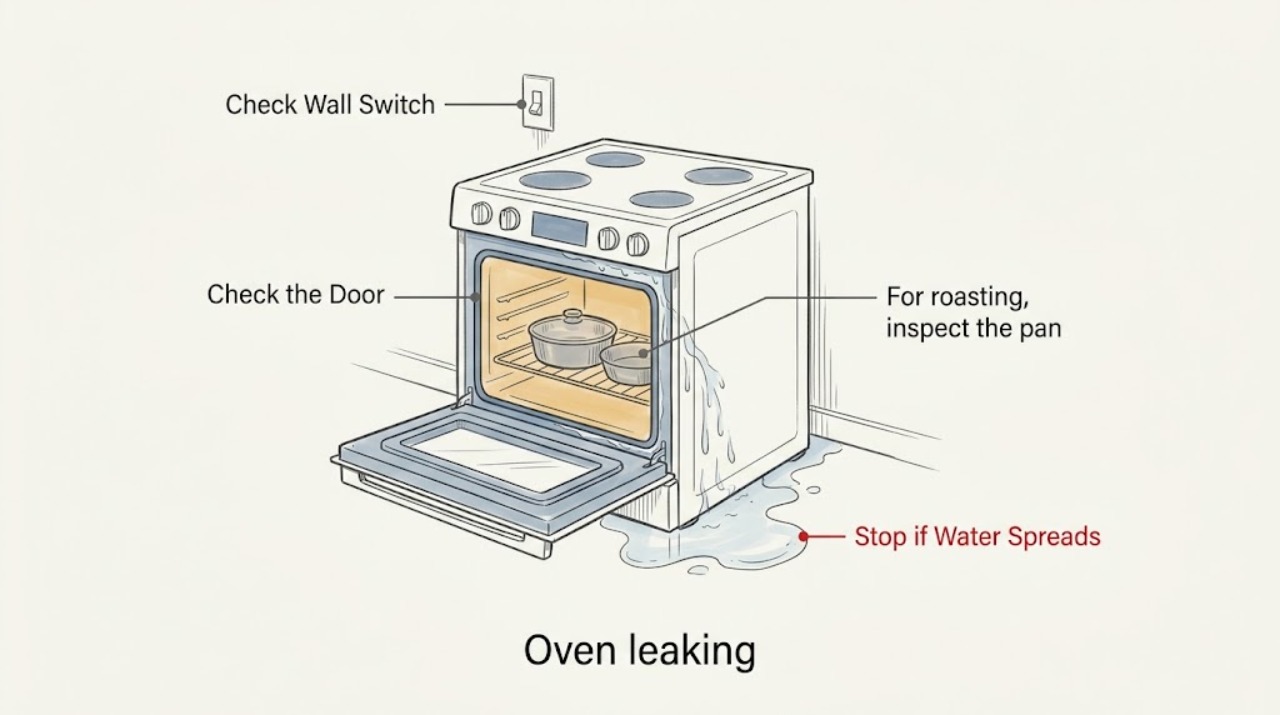
Work through in order
Diagnostic checks
Use only checks that match the exact appliance or system and its official guide.
-
Check 1
Stop the cooking or cleaning programme when water pools, switch the oven off, and let the cavity, door, and floor cool before wiping accessible moisture. If there is a gas smell, smoke, arcing, or water near electrical controls, leave the area and seek qualified help.
Expected result: The moisture dries and does not return after the appliance is cool, or water continues to appear without a running programme.
Next step: Record which programme was running and continue with the condensation and gasket checks only if the oven is dry and undamaged. Do not restart an oven with an active leak or a safety sign.
Why this matters
Why: Moisture that is limited to a hot or steam-producing cycle is more consistent with condensation; water appearing while idle needs a fault investigation.
-
Check 2
Identify when the water first appears: during roasting, hot-air cooking, a steam-clean cycle, after opening the door, or while the oven is cold and unused.
Expected result: Moisture during roasting or steam cleaning, especially near the vent or door, follows a moisture-producing process; a puddle that forms while idle does not follow that pattern.
Next step: For a programme-related pattern, check pan size, added water, and the cleaning instructions. For an idle or rapidly recurring puddle, skip repeated tests and arrange service.
Why this matters
Why: Electrolux describes condensation and water vapor near the vent or door as a normal possibility during steam clean and links floor water during roasting to condensation.
-
Check 3
For roasting, inspect the pan or ovenproof dish after the oven has cooled: use a vessel appropriate to the amount of food, place a dish under food on a rack to catch juices, and do not keep adding water during the roast.
Expected result: A large pan with a small roast, excess liquid, or juices running toward the door explains a wet floor; a suitable pan with only light moisture shifts attention to the door and vent.
Next step: Repeat the recipe with the pan sized to the food and the model's recommended cooking mode. If water still escapes from a dry, correctly loaded oven, stop using it and request service.
Why this matters
Why: Electrolux says too much water and a pan that is too large for a small amount of meat can evaporate quickly and create substantial condensation, with hot-air cooking producing more steam.
-
Check 4
With the oven cold, inspect the visible door gasket around the cavity frame and check that the door closes evenly without a trapped tray, food residue, damaged glass, or a distorted seal.
Expected result: A torn gasket, uneven closure, damaged glass, or a visible gap identifies a door sealing problem; an intact gasket and even closure make cookware and condensation more likely.
Next step: Clean only the accessible gasket and contact area with the manual-approved method. Do not remove a damaged gasket or door glass as a trial repair; arrange service for a seal or door fault.
Why this matters
Why: The Electrolux manual says to check the door gasket and to stop using the appliance and contact an authorized service center if the gasket is damaged.
-
Check 5
If the water followed a steam-clean or other moisture programme, follow the exact model instructions, wait until the cavity is cool, then wipe the cavity and bottom with a soft cloth and allow it to dry fully.
Expected result: A small amount of moisture near the vent or door during steam cleaning that disappears after the prescribed drying step is consistent with the programme; water returning after drying is not.
Next step: Use the function only as described in the model manual and do not improvise a water quantity or cleaning method. If moisture persists outside the programme, stop and request service.
Why this matters
Why: Electrolux notes that condensation or vapor can be normal during steam clean and instructs users to wipe the cavity and bottom when the cycle is complete.
-
Check 6
After the appliance is dry, inspect only the visible floor, door edge, vent area, and surrounding cabinet for a repeat trail; note whether the water is clear condensation, food liquid, or associated with a gas or electrical warning sign.
Expected result: A repeat trail from the same seam, water while idle, damaged cabinet, or a warning sign indicates more than normal cooking moisture; no repeat trail after a suitable pan and drying points to condensation.
Next step: Keep the oven out of use for a repeat, internal, or safety-related leak. Give the technician the model identifier, programme, leak location, and whether the appliance was hot or idle.
Why this matters
Why: The repeat pattern helps distinguish a recipe or programme effect from a door, cavity, installation, or internal fault that requires an authorized engineer.
Use your observations
Decision map
Find the observation that best matches what you see, then follow the next safe action.
-
PATH 01Safety boundary
What you see
Water appears only during roasting or another moisture-heavy cooking programme and disappears after the oven cools and dries.
Do this next
Use cookware suited to the food quantity, avoid excess added water, and choose the cooking mode recommended for the recipe and model.
Why this path and its safety boundary
Safety stop: Treat water while idle or persistent water as an appliance fault and move to the service boundary.
-
PATH 02Safety boundary
What you see
The water appears near the vent or door during the oven's steam-clean function.
Do this next
Follow the exact model instructions, let the oven cool, wipe the cavity and bottom, and allow it to dry. Do not add unapproved water or use the function if the door or cavity is damaged.
Why this path and its safety boundary
Safety stop: Continue with the pan, gasket, and repeat-trail checks.
-
PATH 03Safety boundary
What you see
The visible gasket is torn, the door does not close evenly, or the glass or cabinet is damaged.
Do this next
Stop using the oven and contact an authorized service center; do not attempt a door or gasket removal without model-specific instructions.
Why this path and its safety boundary
Safety stop: Continue only with the non-invasive cookware and moisture checks.
-
PATH 04Safety boundary
What you see
Water returns when the oven is cold or unused, reaches controls or wiring, or occurs with smoke, arcing, or a gas smell.
Do this next
Stop immediately, do not restart the appliance, and seek qualified appliance or gas-safety assistance from a safe location.
Why this path and its safety boundary
Safety stop: Monitor the next suitable cooking cycle for the same pattern and arrange service if the water returns.
Helpful context
Understand the symptom
Water under the oven is not automatically a failed water line. Moist food, a roasting pan that is too large for the amount of food, or a steam-clean function can create enough condensation to run toward the door and floor. A real leak is more likely when water appears while the oven is cool, keeps returning after the cavity is dry, or comes from a damaged door, cabinet, hose, or connection.
Treat an oven as hot and electrically or gas connected even when the visible water looks harmless. Stop using it if water reaches controls or wiring, if the door or glass is damaged, or if there is a gas smell. Let the appliance cool before wiping or inspecting accessible parts.
Only after diagnosis
Potential parts
- oven door gasket
Consider this only when the visible gasket is torn or deformed and a technician or model manual confirms that the seal is the leak path.
Confirm the complete Electrolux model identifier and the manufacturer's fit information before ordering any part. - oven door or hinge hardware
Consider this only when the door does not close evenly or a technician identifies hinge or door hardware as the cause of the gap.
Door hardware is model-specific; confirm fitment and use qualified installation when the door is heavy or integrated. - oven vent or moisture-path component
Consider this only when recurring water is traced to the vent or moisture path after cookware, programme, and gasket causes are excluded.
Have a technician identify the component and exact model fit before selecting a replacement.
When checks do not resolve it
Need a professional?
Stop and arrange authorized service for water that appears while the oven is idle, a leak that returns after safe cookware and drying checks, a damaged door gasket, glass, cabinet, wiring, or gas connection, water near controls, smoke or arcing, or any gas smell. Do not use the oven until the cause has been assessed.
Common questions
FAQ
Why is water coming out of my Electrolux oven during roasting?
Moist food, too much water, a pan that is too large for the amount of food, or hot-air cooking can create condensation that runs toward the door. Try cookware suited to the food quantity and do not keep adding water during the roast.
Is water near the door normal during Electrolux steam clean?
Some condensation or vapor near the vent or door can be normal during steam clean. Follow the exact model instructions, let the oven cool, wipe the cavity and bottom, and arrange service if water persists afterward.
Can I use an Electrolux oven with a damaged door gasket?
No. Stop using the oven and contact an authorized service center if the gasket is damaged or the door does not close evenly.
When is an oven leak an emergency?
Stop immediately for water near controls or wiring, smoke, arcing, a damaged cabinet or glass, or a gas smell. Leave the area when necessary and seek qualified appliance or gas-safety assistance from a safe location.
Read the exact guide
Official sources
- Water gets on the kitchen floor when using the ovenElectrolux · Electrolux oven and cooker water on the floor, condensation, cookware, and engineer guidance
- User ManualElectrolux · Electrolux built-in oven care, door gasket inspection, condensation reduction, and authorized service boundary
- Ovens - When and how do I use steam clean?Electrolux Owner Center · Electrolux oven steam-clean moisture, safe opening, wiping, and drying guidance
Community feedback
Share a repair observation
Share a plain-text repair observation. Accepted observations are published automatically; this page may take a moment to update.