
On this page
Start here
Quick answer
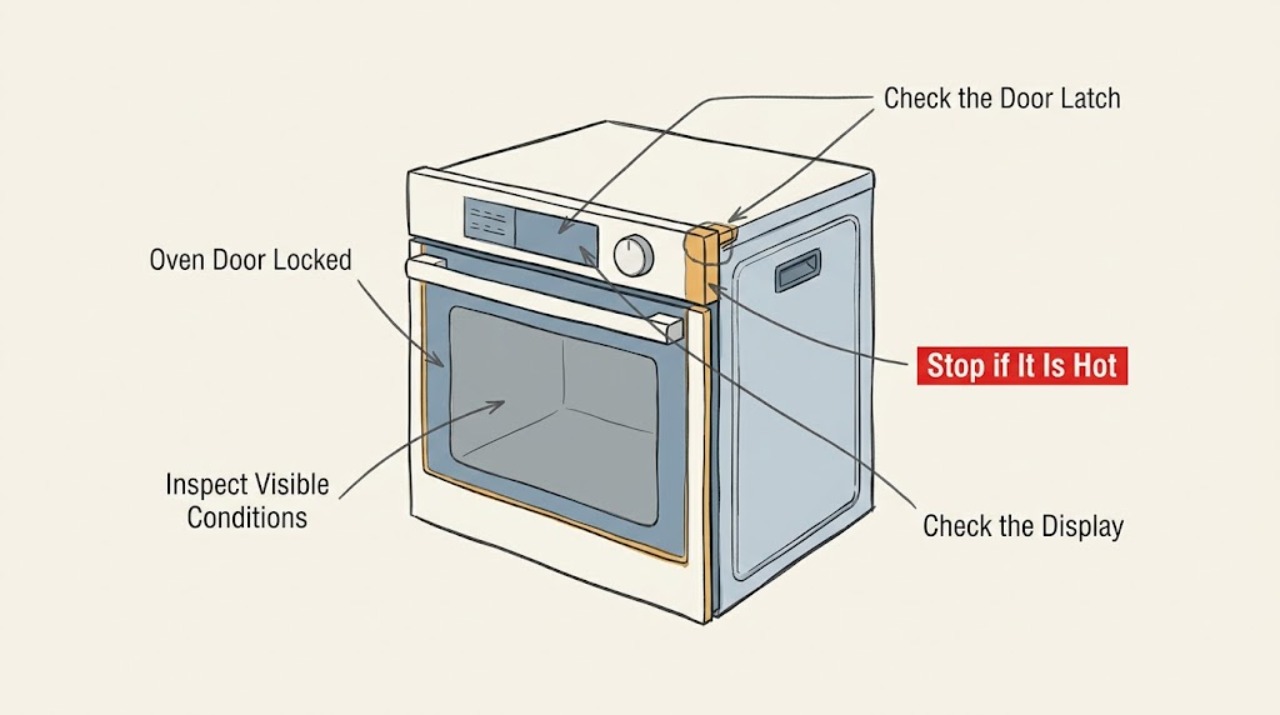
Do not pull or pry a locked Bosch oven door. First check whether the oven is still hot, whether Self Clean is active, and whether a door-lock code is displayed. A lock during Self Clean or while the oven is hot can be a protective state; allow the oven to cool and follow the model's normal cancel or unlock procedure. If the door is still locked after cooling, Bosch's owner guidance for a supported range says to switch the oven off at the circuit breaker for five minutes and restore power. If the lock returns, an error such as e126 persists, or the door will not unlock after the documented reset, stop using the oven and arrange authorized service rather than bypassing the interlock.
Before you begin
Safety first
- Never force a locked Bosch oven door or bypass its interlock. Do not remove the door, cabinet panels, lock assembly, wiring, or control board as an ordinary-user step. Any electrical, gas, high-heat, or interlock diagnosis belongs to a qualified technician using the model-specific service procedure.
Work through in order
Diagnostic checks
Use only checks that match the exact appliance or system and its official guide.
-
Check 1
Look at the control display and note whether Self Clean or another heating cycle is active, whether the oven is visibly hot or still giving off heat, and whether an error code or lock icon is shown. Record the message exactly before changing any setting.
Expected result: The oven is hot or Self Clean is active; the display shows a door-lock code such as e126; or the door is locked with no active cycle and no code.
Next step: If the oven is hot or Self Clean is active, keep the door closed and continue with the cooling and documented-cancel check. If a code is displayed, follow the matching model manual and do not clear it by repeatedly cycling power.
Why this matters
Why: Heat or Self Clean can keep the safety lock engaged. Bosch lists e126 as a door-lock malfunction on its freestanding-range error-code page; a lock with no active cycle or a code that returns needs a different branch from a normal hot-oven lock.
-
Check 2
If Self Clean is running or has just ended, use the model's normal Cancel, Clear/Off, or stop control once, then leave the oven undisturbed while it cools. Do not try to force the handle while the lock indicator remains on.
Expected result: The lock clears after the oven cools and the normal control sequence, or the oven is cool but the lock remains engaged or the error returns.
Next step: If the door unlocks, open it slowly and stop if the latch or door appears damaged. If it remains locked after cooling or e126 returns, proceed to the safe power-reset branch once and then arrange service if it persists.
Why this matters
Why: Bosch directs users with a door-lock malfunction to cancel Self Clean and wait until the door unlocks. A successful unlock after cooling is consistent with the intended protective sequence; a persistent lock is not resolved by force.
-
Check 3
When the oven is fully cool and the door is still locked, inspect only the visible door edge and control panel for an obvious loose item, spill residue, or a stuck button; do not insert anything into the latch and do not remove the door or cabinet.
Expected result: A loose, removable obstruction or dirty/stuck control is visible, or the visible area is clear but the latch does not release, the door is misaligned, or the glass, hinge, or latch is damaged.
Next step: Remove only a loose obstruction without tools and wipe the cool external control surface dry. Retry the model's normal unlock or cancel command once. If the lock remains, do not dismantle the door or bypass the interlock; prepare the model information for an authorized technician.
Why this matters
Why: A visible obstruction can prevent normal latch movement, but a damaged or inaccessible latch requires service. A clear visible area does not prove that the lock assembly is good or bad because the interlock and control wiring are behind the appliance panels.
-
Check 4
If the oven is cool and there is no smoke, leak, sparking, or other immediate hazard, switch the oven off at its circuit breaker, wait five minutes, and restore the breaker once, following Bosch's owner guidance. Do not do this if reaching the breaker requires contact with water or another hazard.
Expected result: The oven resets and the door becomes operable, or the lock/code remains after the five-minute power reset.
Next step: If it unlocks, do not immediately run Self Clean; inspect for visible damage and use the model manual before returning the oven to service. If it stays locked or the code returns, leave the oven off and arrange authorized service.
Why this matters
Why: Bosch documents this reset for an oven door that stays locked after cooling. A reset that does not clear the lock suggests that the door-lock mechanism, control, or a related safety condition needs model-specific diagnosis rather than another reset.
-
Check 5
Before requesting service, record the complete display message, whether Self Clean was selected, whether the oven had cooled, when the lock began, and the model and serial information from the appliance label or manual.
Expected result: The symptom history and appliance identity are available, or the oven has smoke, a burning odor, sparking, a cracked or distorted door, an uncontrolled gas or electrical concern, or repeated protective trips.
Next step: For a persistent non-urgent lock, keep the oven out of use and give the record to Bosch or an authorized service provider. For smoke, burning, sparking, gas odor, a damaged hot door, or repeated trips, leave the area and seek urgent professional help after isolating the appliance only if safe.
Why this matters
Why: The same locked-door symptom can involve a normal hot-state lock, a latch or interlock, or electronic control behavior. Hazard signs make continued troubleshooting unsafe and require immediate professional handling.
Use your observations
Decision map
Find the observation that best matches what you see, then follow the next safe action.
-
PATH 01Next step
What you see
The oven is hot, Self Clean is active, or the lock appeared during a high-heat cycle.
Do this next
Keep the door closed, cancel the cycle using the model's normal control if safe, and wait for the oven to cool and complete its unlock sequence. Do not force the door.
-
PATH 02Next step
What you see
The oven is cool but the door remains locked.
Do this next
Perform Bosch's documented five-minute circuit-breaker reset once when there is no hazard. If the door remains locked, stop and arrange authorized service.
-
PATH 03Next step
What you see
A door-lock code such as e126 returns, or the lock malfunctions again after a reset.
Do this next
Keep the oven out of use and provide the exact code and model information to Bosch or an authorized service provider; do not replace a part based only on the code.
-
PATH 04Next step
What you see
Smoke, burning odor, sparking, gas odor, a damaged door, uncontrolled heat, or repeated breaker trips are present.
Do this next
Stop immediately, leave the door closed, isolate power or gas only if it is safe to do so, leave the area if needed, and seek urgent professional help.
Helpful context
Understand the symptom
Why a Bosch oven door can stay locked
The lock can be intentional while the oven is hot or running a high-heat cleaning cycle. It can also remain engaged after a cycle if the control did not complete its unlock sequence or if the lock mechanism is reporting a fault. Bosch models differ in their displays and button sequences, so use the manual for the complete model-specific cancel or child-lock procedure. The checks below stay outside the cabinet and do not attempt to defeat the lock.
Before touching the controls
Keep the door closed if the oven is hot, steaming, or running Self Clean. Keep children away from the appliance and note the exact display message. Do not insert a tool around the seal or latch, and do not remove panels to reach the lock. If there is smoke, a burning smell, sparking, a damaged door, or repeated breaker tripping, stop and isolate power only when it can be done safely.
Use the result to choose the next branch
A door that unlocks after the oven cools is usually consistent with a protective temperature or cleaning-cycle state. A door that remains locked after cooling, a returning lock code, or a control that cannot cancel the cycle changes the situation to a service diagnosis. Do not assume the lock motor, latch, or control board is the failed part from the symptom alone.
Only after diagnosis
Potential parts
- oven door lock or interlock assembly
Consider this category only if the oven is cool, the normal unlock sequence and one documented reset fail, and a model-specific technician diagnosis confirms the lock mechanism.
Confirm the complete Bosch model and manufacturer's fit information before ordering; do not infer compatibility from a locked-door symptom or appearance. - door latch, hook, or hinge hardware
Consider this category only when a technician confirms visible or measured latch/hinge damage or misalignment after the oven is safely isolated and cool.
Match the exact model and revision using Bosch information; similar-looking hardware is not proof of fit. - oven control or temperature-sensing component
Consider this category only after a technician rules out a normal cooling delay and the lock mechanism, and confirms a related control or sensing fault.
Use model-specific diagnosis and fit information before ordering; do not replace electronic parts solely because the door is locked.
When checks do not resolve it
Need a professional?
Call Bosch or an authorized appliance technician when the door remains locked after the oven has cooled and the documented five-minute reset, a door-lock code returns, Self Clean cannot be cancelled normally, the latch or door is damaged, or the lock will not release without opening the cabinet. Provide the exact display message, cycle state, cooling state, reset result, and model information.
Common questions
FAQ
Can I pull open a Bosch oven door that is locked?
No. Keep it closed while the oven may be hot or Self Clean may be active. Wait for cooling and use the model's normal cancel or unlock procedure; if the lock persists, use the documented reset once and arrange service rather than prying it open.
Why is my Bosch oven door locked after Self Clean?
The lock can remain engaged while the oven is still hot. Bosch directs users with a door-lock malfunction to cancel Self Clean and wait for the door to unlock. If it remains locked after cooling, follow your model manual; Bosch owner guidance for a supported range documents a five-minute circuit-breaker reset, followed by service if the lock persists.
What does a Bosch e126 door-lock error mean?
Bosch's freestanding-range error-code page describes e126 as a door-lock malfunction. It says to cancel Self Clean, wait for the door to unlock, and contact Bosch support if the problem persists. Exact code behavior can vary by model, so use the manual for your oven.
Should I turn off the breaker when my Bosch oven door stays locked?
Only when the oven is cool and there is no smoke, water, gas, or other hazard. Bosch owner guidance for a supported oven says to switch the breaker off for five minutes and turn it back on. Perform that reset once; if the lock remains, leave the oven off and request authorized service.
Read the exact guide
Official sources
- SIR_GAS_IU_en-us_fr-caBosch Home Appliances · Bosch gas freestanding range oven troubleshooting, including a door that remains locked after cooling
- Bosch Freestanding Range Error CodesBosch Home Appliances · Bosch US electric and gas freestanding ranges, including e126 door-lock malfunction guidance
- Get Support - Ovens & Ranges | Bosch Home AppliancesBosch Home Appliances · Bosch US wall ovens and ranges, including model-specific Service Assistant, owner manuals, and authorized service support
Community feedback
Share a repair observation
Share a plain-text repair observation. Accepted observations are published automatically; this page may take a moment to update.