
On this page
Start here
Quick answer
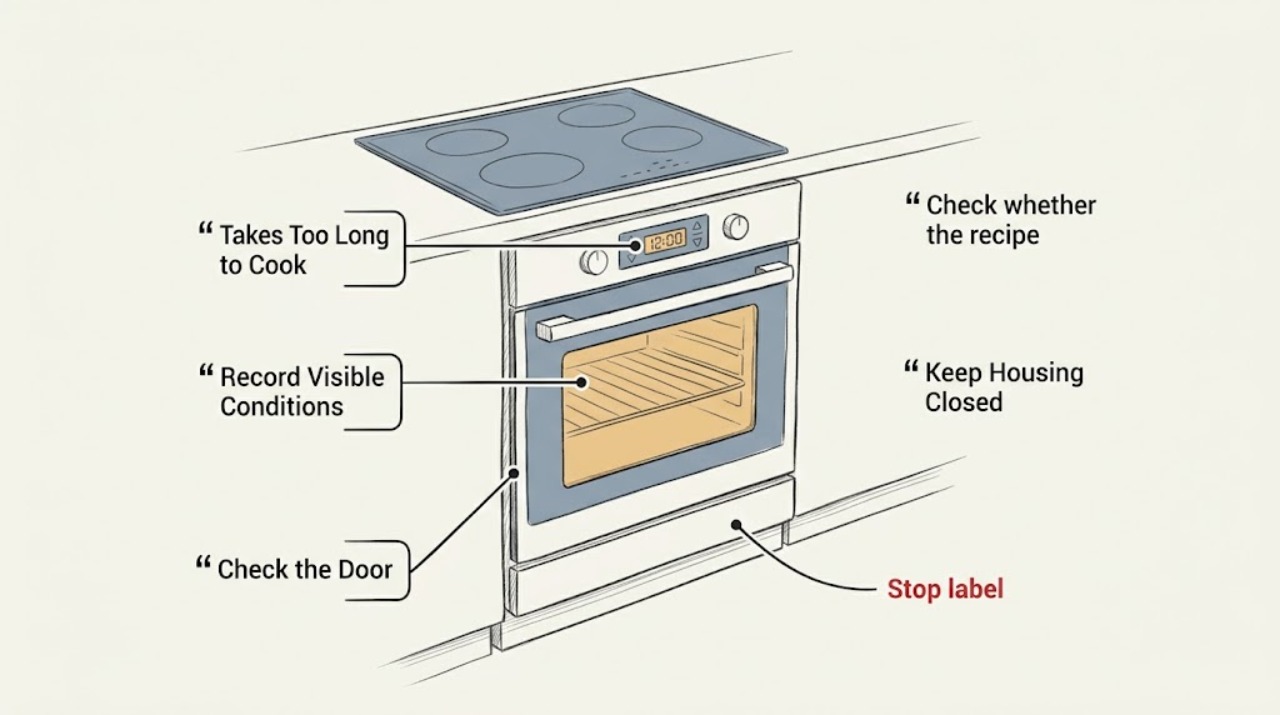
For a Bosch HII8057C, a longer-than-expected cook time should first be separated into preheat time, oven-mode conversion, cookware and rack placement, and a possible temperature or heating problem. Confirm the complete suffix and market because Bosch publishes HII8057C/05, /06, and /07 service pages and the shared manual says not all features are available on every covered model. For baking, wait for the preheat indication; Bosch says most recipe times assume a preheated oven and that unused racks and frequent door opening affect preheat or cooking time. If using Conv Bake or Conv Multi-Rack, apply the manual's 25°F reduction only when auto convection conversion is not doing it for you. If food remains consistently underdone after correct preheat, mode, rack, pan, and door practice, document the pattern and arrange Bosch service. The induction cooktop is a separate heating system; normal cooktop performance does not prove or repair an oven heating issue. Do not enter calibration/service mode, open panels, or perform live tests.
Before you begin
Safety first
- Owner checks are limited to confirming the exact model suffix and market, observing the preheat indication, using documented oven modes and conversion, matching rack and bakeware setup, and recording consistent results. Do not enter service/calibration mode, open the range, probe live circuits, remove heating elements, alter wiring, or use the induction cooktop as a substitute temperature test.
Work through in order
Diagnostic checks
Use only checks that match the exact appliance or system and its official guide.
-
Check 1
Read the rating plate and record the complete Bosch model suffix, such as HII8057C/05, /06, or /07, together with the market. Note the oven mode, set temperature, rack position, pan type, whether preheat was completed, and the food result.
Expected result: The full suffix and market are confirmed, or only HII8057C is known; the oven mode and preheat state are documented or uncertain.
Next step: Use the matching Bosch service page and manual before changing settings. If the suffix is unknown, keep the troubleshooting at general observation level and do not enter calibration or service menus.
Stop if: Do not remove panels or use a control-panel layout to infer the exact model or market.
Why this matters
Why: Bosch maintains separate HII8057C service pages by suffix and the shared manual warns that features vary across covered models. An incomplete identity can lead to the wrong option, conversion rule, or service procedure.
-
Check 2
For Bake, Conv Bake, or another recipe that calls for preheating, start the oven empty with the documented mode and temperature and wait for the Bosch preheat indication before placing the food inside. Remove unused racks if the exact manual permits and keep the door closed during the comparison.
Expected result: The preheat bar reaches the set temperature before the food goes in, preheat takes unusually long, or food was previously placed before preheat completed.
Next step: Repeat one comparable recipe only after the preheat indication, using the same mode and rack. If preheat itself is persistently slow or never completes, stop comparing recipes and arrange Bosch service.
Stop if: Do not leave the oven unattended during an abnormal heat or smell event, and do not open panels to inspect heating elements.
Why this matters
Why: Bosch says recipe cooking times generally assume a preheated oven and that preheat time depends on the set temperature and number of racks. Putting food in early can make the total elapsed time look long without proving a fault.
-
Check 3
Check whether the recipe and oven mode match. For Conv Bake or Conv Multi-Rack, verify the 25°F conversion rule in the HII8057C manual and whether Auto Convection Conversion is active; do not apply both a manual reduction and an automatic reduction.
Expected result: The recipe is being run in Bake, Conv Bake, or Conv Multi-Rack, and the entered temperature is manually reduced, automatically converted, or neither.
Next step: Use the exact manual's single conversion method for one controlled comparison. If the mode and temperature are correct but the food is still consistently slow, proceed to rack/pan and temperature-pattern documentation rather than changing service settings.
Stop if: Do not alter hidden calibration values or use a different model's convection conversion rule.
Why this matters
Why: Bosch states that Conv Bake and Conv Multi-Rack require a 25°F reduction and that Auto Convection Conversion can reduce the entered temperature automatically. A mismatch changes the actual setpoint and can make comparisons with package directions misleading.
-
Check 4
Compare rack position, pan material, pan spacing, and door-opening frequency with the recipe and Bosch guidance. Keep at least the manual's recommended clearance around bakeware and do not place an extra empty pan in the oven during the comparison.
Expected result: The pan is dark or glass rather than the recipe's recommended pan, pans are crowded or stacked directly above one another, the rack is in a different position, or the door is opened repeatedly.
Next step: Correct only the visible placement or bakeware mismatch and repeat one comparable recipe after full preheat. If the result remains slow across appropriate settings and different foods, document it for service.
Why this matters
Why: Bosch says rack position, bakeware type, spacing, and door opening affect browning, heat circulation, and cooking time. These observations can explain a slow or uneven result without identifying a defective heater or sensor.
-
Check 5
Record whether the slowness is consistent across several foods and modes, whether the food is evenly but slowly cooked or remains pale/raw, and whether the oven display reaches and holds the selected temperature. Do not use the induction zones as an oven-temperature test and do not enter calibration/service mode.
Expected result: Only one recipe or pan is affected, all comparable foods are slow, the display never completes preheat, heating is absent or uneven, or a code, smoke, burning odor, abnormal heat, or breaker trip appears.
Next step: Arrange Bosch service for persistent whole-oven slowness, incomplete preheat, absent/uneven heat, or a recurring code. Give the exact suffix, modes, temperatures, preheat behavior, food results, and any safety symptoms.
Stop if: Stop using the oven for smoke, gas odor, sparks, uncontrolled heat, damaged wiring, or repeated breaker trips; do not continue testing or open the range.
Why this matters
Why: A single recipe or pan points more toward method, pan, or placement. Consistent slow cooking or incomplete preheat after correct setup supports an oven-side temperature, heating, sensing, or control issue, but Bosch's manual does not authorize the owner to name the failed part from this observation.
Use your observations
Decision map
Find the observation that best matches what you see, then follow the next safe action.
-
PATH 01Next step
What you see
The food was placed before the preheat indication, the oven door was opened often, or unused racks and a heavy pan increased the warm-up load.
Do this next
Repeat one comparable recipe after full preheat with the recommended rack and bakeware, minimizing door openings. Escalate if preheat itself remains unusually slow or incomplete.
Why this path and its safety boundary
Why it matters: The longer elapsed time can be explained by preheat and heat-loss conditions rather than a confirmed oven fault.
-
PATH 02Next step
What you see
The recipe temperature is being used in Conv Bake or Conv Multi-Rack without the manual's 25°F reduction, or both manual and automatic conversion are being applied.
Do this next
Use one conversion method specified by the exact HII8057C manual and compare a preheated cycle. Do not change calibration settings to compensate for a conversion error.
Why this path and its safety boundary
Why it matters: The mode/temperature conversion is mismatched, so the displayed or effective setpoint is not being compared with the recipe as intended.
-
PATH 03Next step
What you see
Only one recipe, pan, rack position, or food shape is slow, while other comparable foods cook normally after full preheat.
Do this next
Follow the recipe's rack and bakeware guidance, leave space for air circulation, and repeat once under matched conditions. Do not order an oven part from a single slow result.
Why this path and its safety boundary
Why it matters: A recipe, cookware, loading, or placement difference is more likely than a whole-oven heating fault; Bosch notes that bakeware and rack position change results.
-
PATH 04Next step
What you see
Several foods remain slow or underdone after full preheat, correct mode conversion, matched rack/pan setup, and minimal door opening, or preheat never completes.
Do this next
Stop using the affected oven function and arrange Bosch-authorized service with the exact suffix, settings, preheat behavior, and comparison results. Do not enter service mode or open the range.
Why this path and its safety boundary
Why it matters: A persistent oven-side temperature, heating, sensor, or control issue is possible, but the user observations cannot identify which component is at fault. The induction cooktop remains a separate system.
-
PATH 05Next step
What you see
The cooktop heats pans normally but the oven cooks slowly, or the oven is slow while the cooktop is not being used.
Do this next
Troubleshoot the oven using preheat, mode, rack, pan, and temperature-result observations. Arrange oven service if the pattern persists; do not alter induction settings or wiring.
Why this path and its safety boundary
Why it matters: This pattern does not transfer a cooktop diagnosis to the oven; Bosch documents separate induction elements and oven heating modes in the HII8057C range.
-
PATH 06Next step
What you see
The event includes smoke, gas odor, sparks, uncontrolled or excessive heat, a damaged cord, or a tripped breaker.
Do this next
Stop using the range, isolate power only if safe from a dry accessible control, leave an active-danger area, and obtain qualified appliance, electrical, or emergency help. Do not restart to test cooking time.
Why this path and its safety boundary
Why it matters: The cooking-time question has crossed an appliance, electrical, or fire-safety boundary.
Helpful context
Understand the symptom
The HII8057C is an induction range, but the oven and cooktop are different heating systems. Bosch's HII8057C specification lists oven modes such as Bake, Conv Bake, Conv Multi-Rack, Conv Roast, Pizza, and Fast Preheat alongside separate induction elements. A pan that heats normally on the cooktop does not establish that the oven is reaching temperature, and an oven that cooks slowly does not by itself indicate an induction-cooktop fault.
Before suspecting a hardware problem, compare like with like: the same food, recipe temperature, heating mode, rack position, pan, and preheat state. Bosch's manual says most recipe times are written for a preheated oven, that opening the door lowers oven temperature, and that pan material and spacing change cooking behavior. Persistent slowness after those checks is a service question, not a reason to enter calibration settings or open the range.
When checks do not resolve it
Need a professional?
Contact Bosch service for incomplete or unusually slow preheat, persistent whole-oven slow cooking after matched comparisons, absent or uneven heating, recurring fault messages, or any abnormal electrical or thermal symptom. Use qualified electrical or emergency help for smoke, sparks, damaged wiring, uncontrolled heat, gas odor, or repeated trips.
Safety scope: Owner checks are limited to confirming the exact model suffix and market, observing the preheat indication, using documented oven modes and conversion, matching rack and bakeware setup, and recording consistent results. Do not enter service/calibration mode, open the range, probe live circuits, remove heating elements, alter wiring, or use the induction cooktop as a substitute temperature test.
Have this ready
- Provide the complete HII8057C suffix and market, recipe and food, oven mode, entered temperature, conversion setting, rack position, pan material and spacing, preheat indication and elapsed time, door-opening pattern, comparison results, and any code or safety symptom.
Common questions
FAQ
Why does my Bosch HII8057C take longer than the recipe says?
First check whether the recipe assumes a fully preheated oven, whether the selected mode uses the correct convection conversion, and whether rack position, pan material, spacing, or door opening changed. Bosch says these factors affect cooking time. Persistent slowness across comparable foods needs service rather than a guessed part.
Should I reduce the temperature when using Conv Bake on the HII8057C?
Bosch's manual says Conv Bake and Conv Multi-Rack require a 25°F reduction when Auto Convection Conversion is not active. Use either the documented automatic conversion or the manual reduction, not both, and follow the exact variant's manual.
Does a normally heating induction cooktop prove the HII8057C oven is working correctly?
No. The HII8057C specification lists separate induction cooktop elements and oven heating modes. A normal pan-heating result does not certify oven preheat, temperature sensing, or oven heating performance.
Can I recalibrate the Bosch HII8057C because food is slow?
Do not enter service or calibration mode to compensate for one slow recipe. Document a consistent pattern only after matching preheat, mode, conversion, rack, pan, and door conditions, then contact Bosch service if the oven remains slow or never reaches preheat.
Read the exact guide
Official sources
- Service Page - Induction Slide-in Range | HII8057C/07Bosch Home Appliances Canada · Directly confirms an HII8057C/07 Canadian 800 Series induction slide-in range variant and its separate support portal; it establishes market/suffix variation, not a universal instruction.
- 30-inch Induction Slide-in Range HII8057CBosch Home Appliances / BSH · Directly identifies the HII8057C range and lists its separate oven modes and induction cooktop elements; dimensions and electrical specifications are not used as repair instructions.
- Service Assistance - HII8057C/05Bosch Home Appliances US · Directly confirms an HII8057C/05 US variant and routes its manuals, parts, and support; it is not used to generalize the suffix to every market.
- Use and Care Manual HII8057U, HII8057C, HII8047UBosch Home Appliances · Directly includes HII8057C in the manual title and supports preheat, conversion, rack, bakeware, temperature-result, and safety guidance; Bosch warns that not all features are available on every covered model.
Community feedback
Share a repair observation
Share a plain-text repair observation. Accepted observations are published automatically; this page may take a moment to update.