
On this page
Start here
Quick answer
First confirm whether the Kenmore oven is gas or electric and identify the smell. A small, temporary odor or light smoke can occur during the first few uses as new parts, insulation, protective oil, or shipping material heats, but a lingering odor is not typical. Food or cleaner residue, foil that traps spills, melted plastic, or recent paint can create a separate odor. Let the oven cool and use the exact Kenmore manual's approved cleaning method. Stop immediately for a sharp burning or electrical smell, smoke, sparks, arcing, melted plastic, abnormal heat, or an unexplained gas or exhaust odor. If gas is suspected, leave without operating switches, flames, or phones in the area and contact the gas utility or emergency service from a safe location.
Work through in order
Diagnostic checks
Use only checks that match the exact appliance or system and its official guide.
-
Check 1
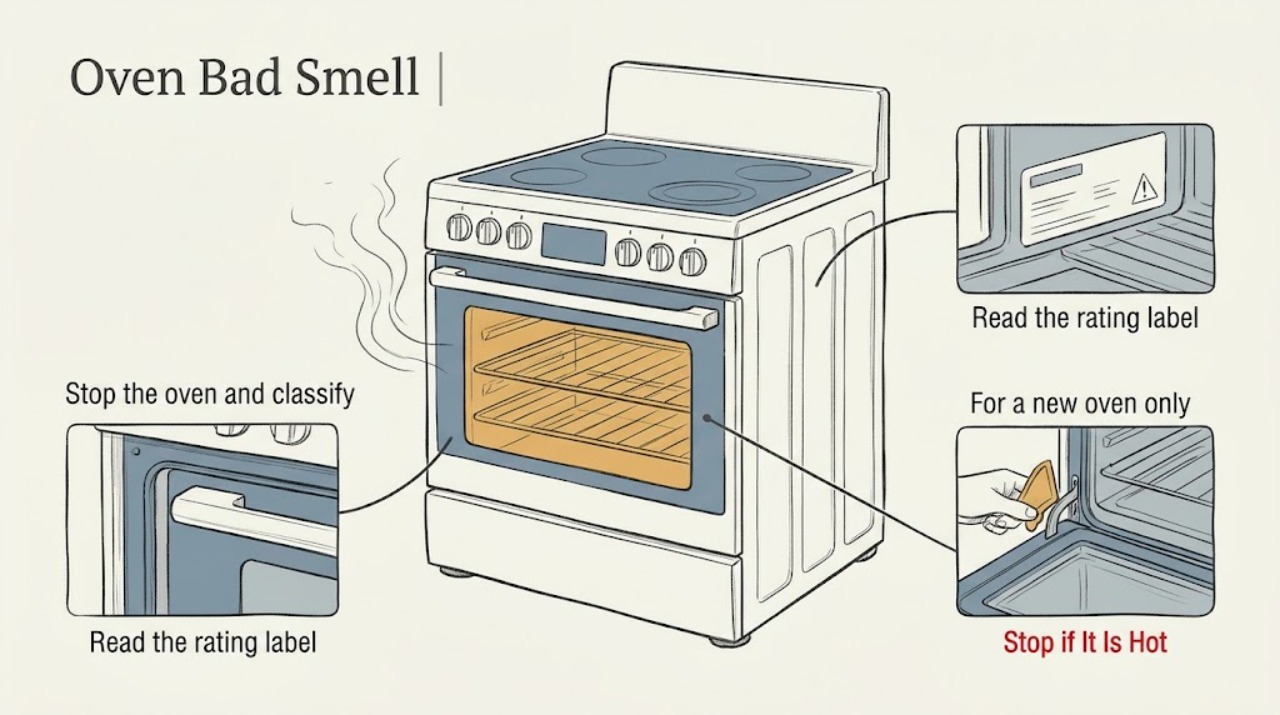
Stop the oven and classify the smell from a safe position. Note whether it is new insulation or oil, food or grease, cleaner or paint, melted plastic, hot wiring, gas, or exhaust, and whether there is smoke, an abnormal flame, sparks, arcing, excessive heat, a cracked panel, or a tripped breaker.
Expected result: The odor is mild and tied to a new installation or visible residue, or it is sharp, worsening, persistent, or accompanied by smoke, heat, damage, electrical symptoms, or gas/exhaust symptoms.
Next step: For gas/exhaust, smoke, spark, arc, sharp burning, melted-plastic, or hot-electrical symptoms, keep the oven off and follow the relevant safety branch. Otherwise confirm the model and fuel type.
Stop if: Do not restart the oven or open the door to investigate a sharp burning smell, smoke, spark, arc, abnormal heat, damaged glass, or gas/exhaust odor.
Why this matters
Why: A limited new-oven or residue path can be handled only with the model instructions. Smoke, electrical symptoms, damaged glass, abnormal heat, and suspected gas are stop conditions.
-
Check 2
Read the Kenmore rating label and retrieve the exact owner manual from Kenmore's official manual library. Confirm gas or electric operation, whether the oven is new or recently moved, and the correct first-use, cleaning, vent, and self-clean instructions. Do not move a gas appliance or remove any cover.
Expected result: The model manual identifies a first-use procedure or a specific cleaning path, or the appliance is not new and the odor has no documented explanation.
Next step: Follow the exact manual only for a clearly matching low-risk condition. If the model cannot be identified or the odor is persistent, keep the oven off and arrange qualified service.
Stop if: Do not substitute a procedure from another Kenmore model or treat a gas odor as a first-use odor.
Why this matters
Why: Kenmore says the model number is needed to locate the correct manual, and manufacturer guidance differs by fuel type and feature set. A generic oven procedure cannot establish that an unexplained smell is safe.
-
Check 3
For a new oven only, inspect the cool cavity for remaining packaging, tape, or shipping material. If the exact manual permits a first-use burn-in, ventilate the room, keep people and sensitive animals away as the manual directs, run the stated empty cycle once while present, and stop if odor becomes sharp or smoke is abnormal.
Expected result: The mild odor fades after the approved first-use cycle, or it remains after the first uses, intensifies, transfers to food, or appears with smoke or abnormal heat.
Next step: If the odor fades with no safety symptom, resume cooking under the manual. If it persists or changes character, stop testing and arrange service instead of repeating high-heat cycles.
Stop if: Do not run this branch for an established oven with a new burning odor, gas odor, electrical odor, smoke, sparks, arcing, or melted plastic.
Why this matters
Why: Official manufacturer guidance describes temporary odor or light smoke from new parts, insulation, protective oil, or shipping material. A lingering smell is not explained by that normal first-use condition.
-
Check 4
If the smell is food, grease, cleaner, or plastic, let the oven cool completely and inspect the cavity, racks, floor, door area, and visible vent for a spill or foreign material. Remove only loose, accessible residue using the exact manual's approved method; do not heat residue to burn it away and do not use unapproved chemicals or liners.
Expected result: A visible spill or residue is removed and the odor is gone, or the cavity is clean and the smell returns whenever the oven heats.
Next step: If approved cleaning resolves the odor and the oven is undamaged, monitor normal use. If it returns, keep the oven off and arrange qualified service; do not dismantle the door, liner, or control panel.
Stop if: Stop cleaning if the cavity is hot, wet near controls, smoking, sparking, cracked, or coated with material that cannot be safely removed by the manual procedure.
Why this matters
Why: Stuck food and grease can create unpleasant odors when heated, while foil or liners can trap debris. A recurring smell without visible residue may involve a component, wiring, vent, or burner that needs service.
-
Check 5
For a gas Kenmore oven, determine whether the smell is present when the controls are off or persists after the burner should have ignited. Without relighting, moving the appliance, or loosening a connector, note only safe external clues such as hissing, soot, abnormal flame color, delayed ignition, or an odor spreading through the room.
Expected result: Gas or exhaust odor remains with controls off, or there is hissing, soot, abnormal flame, delayed ignition, headache, dizziness, or a carbon-monoxide alarm; or there was only a brief ignition odor with normal operation and no residual smell.
Next step: For any suspected gas or exhaust concern, leave immediately and use the emergency gas branch. If the odor was brief and normal operation otherwise returned, follow the exact model manual and arrange service if it recurs.
Stop if: Do not light a burner, operate switches, use a phone in the building, move the oven, or inspect a gas connector when a leak is suspected.
Why this matters
Why: A brief ignition odor may occur in some gas ovens, but gas odor while off or combustion symptoms require emergency handling. Carbon monoxide cannot be detected by smell, so an alarm or symptoms are not a DIY diagnostic.
-
Check 6
For an electric Kenmore oven, or any oven with a sharp burning/electrical odor, inspect only from a safe position for smoke, sparks, arcing, melted plastic, a hot or damaged plug or cord, scorch marks, repeated breaker trips, or odor localized near controls. Do not open the appliance or repeat a heating test.
Expected result: An electrical warning sign or persistent odor is present, or the smell disappears after approved cleaning and there was no safety event.
Next step: For any electrical warning sign or persistent odor, keep the oven off and arrange qualified appliance or electrical service. Resume use only after a known residue is removed and the manual's normal conditions are satisfied.
Stop if: Do not reset a repeatedly tripping breaker, touch a hot or damaged connection, bypass a safety device, or perform electrical testing.
Why this matters
Why: Electrical warning signs require qualified assessment even when the oven still appears to work. A clean, cool, undamaged cavity with a resolved food odor is a different outcome.
-
Check 7
If the smell remains after the applicable low-risk path, record the model, gas or electric type, mode and temperature, when the smell starts, whether food was present, the odor character, cleaning performed, and all visible symptoms. Arrange qualified Kenmore appliance service for internal wiring, controls, igniters, burners, regulators, insulation, vents, or damaged glass.
Expected result: The symptom is repeatable or unexplained, or it has completely disappeared after the exact manual's first-use or cleaning procedure with no safety symptom.
Next step: Keep the oven off for the persistent or hazardous outcome and provide the symptom record to qualified service. Do not continue test cycles to reproduce an internal fault.
Stop if: Do not replace an unconfirmed component, dismantle the oven, bypass a lock or sensor, or work on gas or live electrical parts.
Why this matters
Why: Persistent or unexplained odor cannot be safely localized by repeated oven use. A documented resolved residue or first-use odor can be monitored under the manual.
Use your observations
Decision map
Find the observation that best matches what you see, then follow the next safe action.
-
PATH 01Safety boundary
What you see
The oven is new and has only a slight temporary odor or light smoke, with no gas, electrical, smoke-escalation, damage, or abnormal-heat symptom.
Do this next
Follow the exact model's limited first-use procedure once, with ventilation and supervision, and stop if the odor changes or persists.
Why this path and its safety boundary
Safety stop: Do not normalize the smell; use the residue, gas, electrical, or service branch that matches the observations.
-
PATH 02Safety boundary
What you see
The smell follows food, grease, cleaner, foil, liner, plastic, or visible residue in a cool cavity.
Do this next
Remove the cause with the exact manual-approved method and do not heat the oven until all residue and cleaner are gone.
Why this path and its safety boundary
Safety stop: A persistent odor without visible residue requires qualified diagnosis.
-
PATH 03Safety boundary
What you see
A gas oven smells like gas while off, after controls are off, or has hissing, soot, abnormal flame, delayed ignition, or combustion symptoms.
Do this next
Leave immediately, avoid flames, switches, and phones in the area, and contact the gas utility or emergency service from a safe location.
Why this path and its safety boundary
Safety stop: For only a brief ignition odor with normal operation, follow the exact manual and arrange service if it recurs or lingers.
-
PATH 04Safety boundary
What you see
There is smoke, sparks, arcing, melted plastic, a sharp electrical or burning odor, abnormal heat, a hot connection, scorch marks, or repeated breaker trips.
Do this next
Stop use, isolate power only from a safe position if possible without approaching the hazard, and arrange qualified service.
Why this path and its safety boundary
Safety stop: Continue only with cool, manual-approved cleaning or model-specific first-use checks.
-
PATH 05Safety boundary
What you see
A carbon-monoxide alarm sounds or people have headache, dizziness, nausea, or unusual fatigue while a fuel-burning oven is in use.
Do this next
Move outside to fresh air, contact emergency services, and do not operate the oven until trained personnel have serviced it.
Why this path and its safety boundary
Safety stop: Continue only with the gas-odor and model-manual decision path; remember that carbon monoxide itself has no smell.
-
PATH 06Safety boundary
What you see
The smell is gone after the approved cleaning or first-use procedure and no safety symptom returns.
Do this next
Document what corrected it and monitor normal cooking under the manual without adding unapproved cleaners or liners.
Why this path and its safety boundary
Safety stop: Keep the oven off and arrange qualified service rather than repeating high-heat tests.
Helpful context
Understand the symptom
The word "smell" is not enough to choose a repair. A new oven can briefly smell while its new materials heat, and a dirty cavity can smell when old food or grease reheats. Gas odor when the controls are off, however, is a safety issue; so are smoke, arcing, melted plastic, and a hot electrical connection.
Kenmore's official manual library requires the model number because controls, fuel type, self-clean behavior, vents, and approved cleaners vary. Use that manual for the exact cycle and cleaning procedure. Keep user checks to the cool cavity, racks, visible residue, controls, and accessible vent area; do not remove panels or work on burners, igniters, wiring, or gas connections.
Do not cover the oven floor with foil or liners unless the exact manual explicitly permits it. Foil can trap spills and debris and interfere with airflow. If a self-clean cycle is appropriate for the model, follow its safety instructions and keep the area ventilated; never use self-cleaning as a test for an unexplained burning or electrical smell.
When checks do not resolve it
Need a professional?
Provide the model and fuel type, odor description, mode and temperature, when the smell starts, whether the oven is new, recent cleaning or installation details, visible residue, vent observations, burner behavior, and any smoke, spark, heat, breaker, alarm, or gas symptom. Treat a suspected gas or carbon-monoxide event as an emergency.
Have this ready
- Have the rating-label information, exact manual used, first-use or cleaning steps completed, affected mode and load, odor timing, and every visible or health-related safety symptom ready for the service provider.
Common questions
FAQ
Is a smell from a new Kenmore oven normal?
A small temporary odor or light smoke can occur during the first uses as new parts, insulation, protective oil, or shipping material heats. It should dissipate. Use the exact Kenmore manual, ventilate as directed, and arrange service for a lingering smell or any sharp burning, electrical, gas, smoke, spark, or abnormal-heat symptom.
Why does my Kenmore oven smell like food or grease?
Stuck-on food and grease can create odors when heated. Let the oven cool, remove accessible residue with the exact manual-approved method, and avoid foil or liners that trap spills. If the smell returns after cleaning, stop using the oven and arrange service.
What should I do if my Kenmore gas oven smells like gas?
If the odor persists when the controls are off or you suspect a leak, leave immediately. Do not use a flame, light switch, electrical device, or phone in the area, and do not move the oven or loosen its connector. Contact the gas utility or emergency service from a safe location.
Should I use self-clean to remove a Kenmore oven smell?
Only use self-clean if the exact model manual says it is appropriate for the residue and gives the procedure. Self-clean can produce substantial heat, odor, and smoke, so it is not a test for an unexplained burning, electrical, gas, or smoke symptom. Keep the oven off and arrange service for those symptoms.
When is a Kenmore oven smell unsafe?
Stop for a sharp burning or electrical smell, smoke, sparks, arcing, melted plastic, abnormal heat, a hot or damaged connection, repeated breaker trips, abnormal gas flame, persistent gas or exhaust odor, or a carbon-monoxide alarm or related symptoms. Keep the oven off and arrange qualified service, using emergency gas or CO steps when applicable.
Read the exact guide
Official sources
- Why Does My Oven Smell Like Gas?Whirlpool · Official manufacturer gas-oven guidance used to distinguish a brief ignition odor from a leak concern; exact Kenmore fuel and model instructions control.
- CPSC Guide to Home Wiring HazardsU.S. Consumer Product Safety Commission · Government electrical-safety guidance for smoke, sparks, heat, damaged cords, and other warning signs around an oven.
- How to clean an oven inside and outWhirlpool · Official manufacturer cleaning guidance used for food and grease odor mechanisms; use the exact Kenmore manual for approved products and cycles.
- Find Your Manual | Kenmore Appliance Manuals & GuidesKenmore · Official Kenmore manual library; the exact model manual controls fuel-specific operation, cleaning, vent, and self-clean instructions.
- Certain Older Gas Connectors May Be DangerousU.S. Consumer Product Safety Commission · Government safety guidance for suspected gas leaks at a gas oven; local emergency instructions also apply.
- Odors and Smells of Newly Installed Range or OvenWhirlpool Product Help · Official manufacturer guidance used for general mechanisms; the Kenmore model manual controls the actual procedure.
- Carbon-Monoxide-Questions-and-AnswersU.S. Consumer Product Safety Commission · Government CO safety guidance relevant to suspected combustion or exhaust problems from a fuel-burning oven.
- Range & Wall Oven - Smoke and Odor from a New OvenGE Appliances · Official manufacturer guidance used for the general first-use branch; exact Kenmore model instructions control.
Community feedback
Share a repair observation
Share a plain-text repair observation. Accepted observations are published automatically; this page may take a moment to update.