
On this page
Start here
Quick answer
If a Beko washing-machine door will not close, first remove a few items if the drum is overfilled and check that no sock, fabric edge, or other object is caught between the door and rubber gasket. Close the door firmly without slamming and listen for the normal locking engagement. If the latch does not align with the frame, the door sags, the gasket is folded or damaged, or the door still will not close with the drum empty, stop forcing it and consult the exact model manual or arrange authorized service. Do not bypass the door lock or run a cycle with a door that is not properly latched, because the machine may not start or may leak.
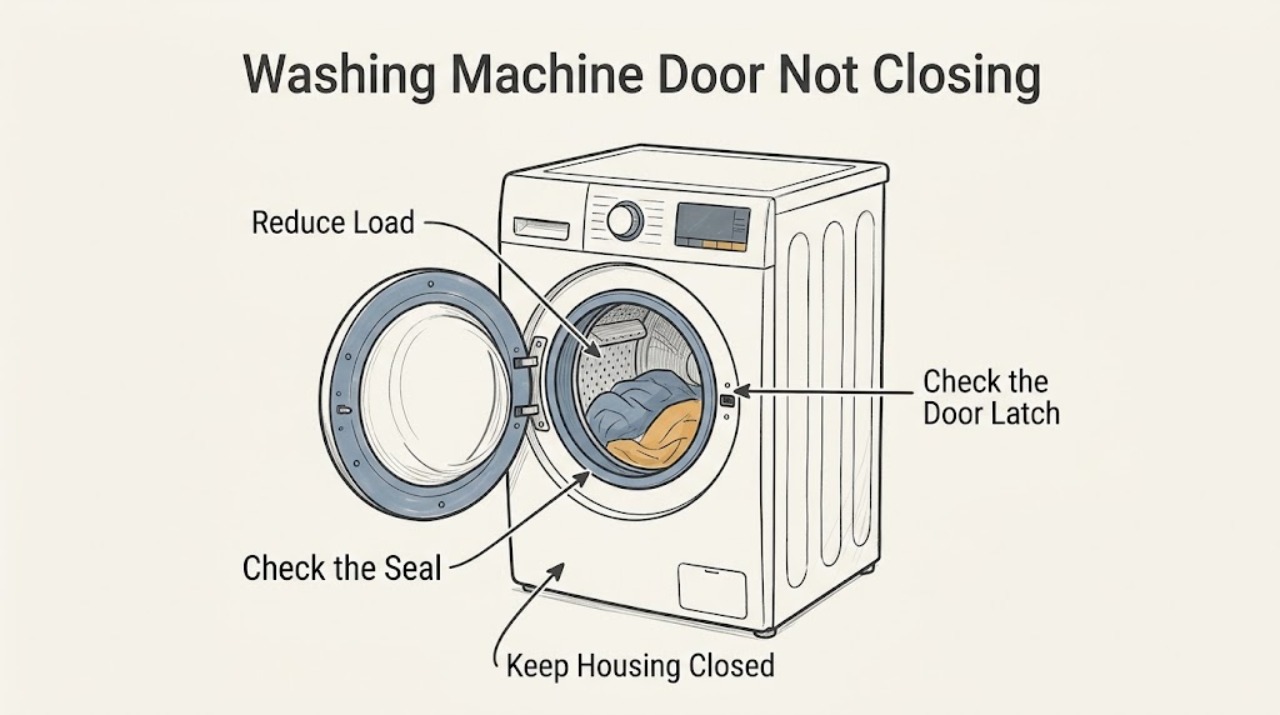
Work through in order
Diagnostic checks
Use only checks that match the exact appliance or system and its official guide.
-
Check 1
Open the door normally and inspect whether the drum is packed tightly against the opening. Remove a few items if the load is excessive, then spread the remaining laundry away from the gasket before trying the door again.
Expected result: The door closes and latches after reducing the load, or it still stops with the drum opening clear.
Next step: Keep the load within the model's programme limit and continue only if the door closes without force. If the door still will not close, inspect the gasket and latch area.
Stop if: Stop if the door must be pushed hard, the drum is damaged, or removing the load exposes broken glass, sharp metal, or another injury hazard.
Why this matters
Why: An immediate improvement supports overload as the physical obstruction. A repeatable stop with less laundry moves the check to fabric caught at the gasket, latch alignment, or door hardware.
-
Check 2
With the door open, inspect the full rubber gasket and the door edge for socks, fabric edges, labels, coins, or other objects. Remove only accessible items, wipe away loose debris, and check that the gasket is not folded into the opening.
Expected result: An object is trapped between the door and gasket, the gasket is folded but intact, or the path is clear and the door still stops.
Next step: Close the door gently once after restoring the gasket's normal position. If the gasket is torn, pulled out, or will not stay seated, stop and arrange model-specific service.
Stop if: Stop if the gasket is torn, the door glass is cracked, an object is frozen or wedged, or removal requires tools or force.
Why this matters
Why: A trapped object can prevent the door from closing securely and can create a leak. A clear path with a persistent stop makes the latch, hinge, door, or gasket fit more likely than the load itself.
-
Check 3
Observe the latch tongue or hook and the matching frame opening while closing the empty door slowly. Check whether the latch meets the frame squarely and whether the door is visibly low, high, or shifted; do not remove hinge hardware.
Expected result: The latch aligns and engages, the latch misses the frame, or the door sags/rubs against the cabinet.
Next step: If the latch is misaligned or the door sags, leave the washer out of use and use the exact model manual or authorized service. Do not bend the latch or adjust hinges without model-specific instructions.
Stop if: Stop if the hinge is loose, the door is unstable, the latch is broken, or the cabinet or frame is distorted.
Why this matters
Why: Correct alignment supports a normal latch path. A miss, sag, or rubbing contact suggests a latch, hinge, door, or cabinet alignment problem that cannot be identified by pushing harder.
-
Check 4
After the door closes naturally, select a programme and press Start/Pause once as the model manual shows. Do not run a cycle unless the door visibly latches and the machine recognizes it as closed.
Expected result: The programme begins normally, or the washer remains idle and behaves as if the door is open.
Next step: Stop if the washer will not recognize the closed door and arrange authorized service. Do not bypass the interlock or repeatedly slam the door to trigger it.
Stop if: Stop immediately for a leak, clicking without latch engagement, a hot or damaged cord, sparks, smoke, or any electrical or water hazard.
Why this matters
Why: A normal start after latching supports a resolved physical obstruction. If the door looks closed but the washer does not recognize it, the latch or door-lock circuit may still be at fault.
-
Check 5
If the door was previously locked or the machine stopped with water inside, do not pull the door open or force it closed. Confirm the cycle has ended and use only the model's documented pump or drain procedure before handling the door area.
Expected result: Water remains in the drum, the lock indicator remains active, or the drum is empty and the door still will not close.
Next step: If water remains or the lock does not release according to the manual, arrange service. If the drum is empty, continue only with the visual door-path checks and stop if alignment is abnormal.
Stop if: Stop if water could spill, the door is under pressure, the pump or filter requires inaccessible work, or the machine has an electrical fault.
Why this matters
Why: A water level or active cycle can keep the safety lock engaged; it does not explain a door that physically misses the frame. An empty drum with a physical fit problem returns to obstruction, gasket, or alignment checks.
-
Check 6
If the load and gasket path are clear but the Beko door still will not latch, or if the gasket, latch, hinge, door, or cabinet is damaged, leave the appliance out of use and arrange authorized service. Record the model number, where the door stops, and whether the lock indicator reacts.
Expected result: The fault persists after safe checks, returns after a temporary correction, or the washer cannot be safely sealed.
Next step: Provide the model/manual information and the exact observed gap or latch behavior to the technician. Keep the washer unused until the door can close and lock normally.
Stop if: Do not operate the washer with a door that will not latch, do not remove panels, and do not bypass the door-lock safety circuit.
Why this matters
Why: A persistent problem may involve the door latch, interlock, hinge, gasket fit, door, cabinet, or control circuit. The symptom does not establish a compatible replacement part or justify a bypass.
Use your observations
Decision map
Find the observation that best matches what you see, then follow the next safe action.
-
PATH 01Next step
What you see
The drum is overfilled and the door presses against the load.
Do this next
Remove a few items, redistribute the load, and retry the door gently. If it still will not close, inspect the gasket and latch path.
-
PATH 02Next step
What you see
Fabric or another object is caught between the door and rubber gasket.
Do this next
Remove only the accessible obstruction and restore the gasket without force. A torn, displaced, or repeatedly folding gasket needs service.
-
PATH 03Next step
What you see
The latch does not meet the frame, or the door sags, rubs, or sits unevenly.
Do this next
Stop forcing the door and consult the exact manual or arrange authorized service for model-specific latch/hinge diagnosis.
-
PATH 04Next step
What you see
The door appears closed but the washer behaves as if it is open or will not start.
Do this next
Press Start/Pause once with the programme selected. If the lock is not recognized, leave the washer unused and arrange service; never bypass the interlock.
-
PATH 05Next step
What you see
The door area is under an active lock or water remains in the drum.
Do this next
Do not force the door. Follow only the model-specific drain/unlock instructions and arrange service if the lock or water condition persists.
Helpful context
Understand the symptom
Start with the obstruction, not the latch
Beko's door-not-closing guidance starts with excess laundry and items caught between the door and rubber gasket. Those checks can change the fit immediately. If the opening is clear but the latch still misses the frame, the useful observation is the location of the misalignment—not how hard the door can be pushed.
A closed door must also be safely latched
The door should close firmly and engage its lock without force. A door that looks closed but will not lock can stop the programme from starting. Keep the door and gasket free of fabric and do not tape, wedge, or bypass the interlock to make the machine run.
Safety boundary
Stop conditions
- Do not slam, pry, wedge, tape, glue, or force the loading door against the gasket or frame.
- Do not bypass the door lock, remove hinges or panels, or operate the washer with a door that will not latch.
- Do not force access when water remains in the drum or when the door, latch, hinge, gasket, or cabinet is damaged.
When checks do not resolve it
Need a professional?
Arrange authorized Beko service when the load and gasket path are clear but the latch misses, the door sags or rubs, the gasket is damaged, or the washer does not recognize a properly closed door., Use the model manual before any hinge, lock, or emergency-release procedure; do not select a replacement latch or gasket from the symptom alone., Stop immediately for leaks, cracked glass, sharp metal, damaged wiring, smoke, sparks, or any injury, electrical, or water hazard.
Common questions
FAQ
Why will my Beko washing-machine door not close?
Check for an overloaded drum and for fabric or an object caught between the door and rubber gasket. If the opening is clear but the latch still misses, the door, gasket, latch, hinge, or frame may need model-specific service.
Can overloading stop a Beko washing-machine door from closing?
Yes. Beko's troubleshooting guidance says excess laundry can make the door difficult to close; remove a few items and make sure the door closes properly before starting a programme.
What if a sock is caught in the Beko door gasket?
Remove the accessible fabric gently and check that the rubber gasket is not folded or damaged. Close the door once without force; if it still will not latch or the gasket will not stay seated, arrange service.
Why does my Beko washer door look closed but the programme will not start?
The lock may not be engaging. Confirm the door is firmly closed, select the programme, and press Start/Pause once. If the washer still treats the door as open, do not bypass the lock; contact authorized service.
Should I force open or close a Beko washing-machine door with water inside?
No. Water or an active cycle can keep the door lock engaged. Follow only the exact model drain/unlock instructions and arrange service if the lock or water condition persists.
Read the exact guide
Official sources
- How to fix a washing machine that won’t start a programBeko · Beko washing-machine door closure, lock recognition, and authorized-service guidance
- how to solve washing machine door not closing?Beko · Beko washing-machine door obstruction, overload, gasket, and latch guidance
- TroubleshootingBeko · Beko washing-machine troubleshooting for programme start, overload, door lock, water, and drain conditions
Community feedback
Share a repair observation
Share a plain-text repair observation. Accepted observations are published automatically; this page may take a moment to update.