
On this page
Start here
Quick answer
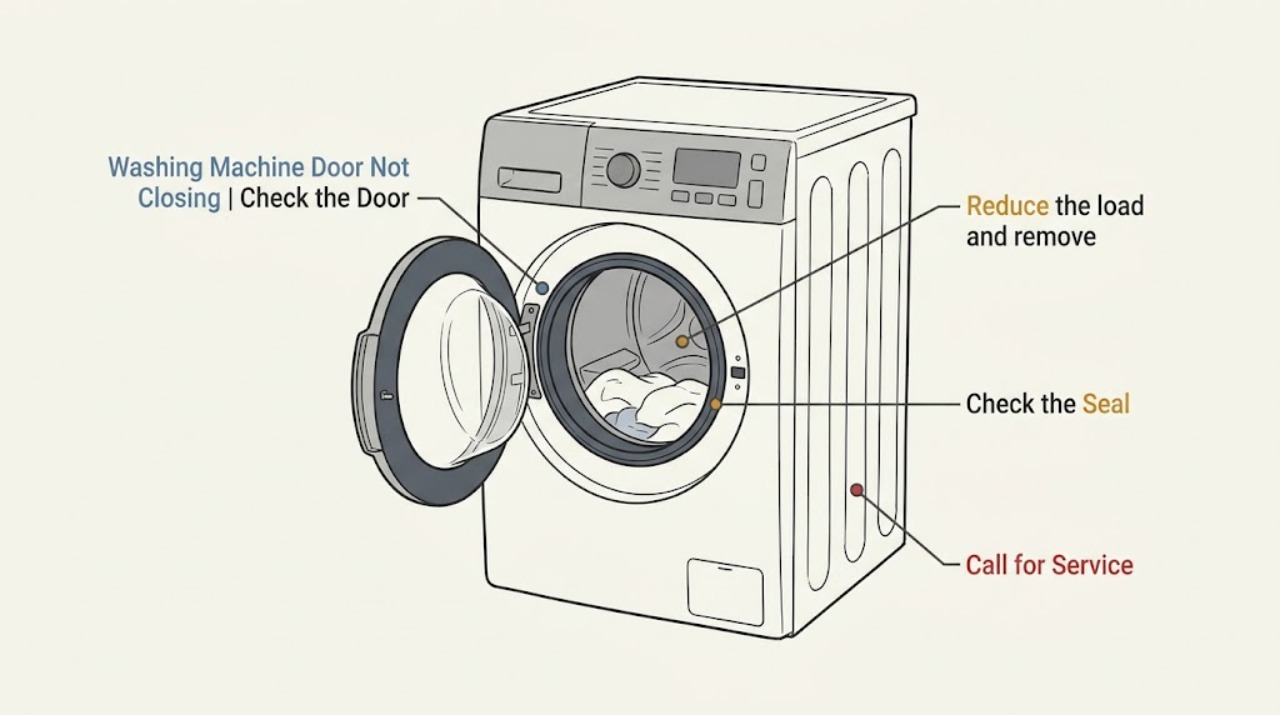
Do not force a Blomberg washing machine door that will not close. Stop the programme, remove or redistribute bulky laundry, and check that no fabric or debris is caught between the glass and the rubber seal. With the machine safely isolated, clean the accessible seal fold and inspect the latch and hinges for visible damage or misalignment without removing panels. If the door still will not sit flush or will not lock and start a programme, stop using the washer and arrange qualified Blomberg service.
Work through in order
Diagnostic checks
Use only checks that match the exact appliance or system and its official guide.
-
Stop the programme and make the door safe to inspect
Press Start/Pause if the controls respond, wait until the drum stops, and turn the washer off. If the door is locked, wait for the lock indicator to release rather than pulling the handle. Keep clear if water is high in the drum, the door is under pressure, or the machine has an electrical or water leak.
Expected result: The door may become available after the programme and lock delay, or it may remain locked because water is still present or an error has occurred. A door that is physically open but will not close is a different condition from a door that is locked shut.
Next step: Once the door can be handled safely and the drum is still, continue with the load and seal checks. If water remains or the lock does not release, follow the model manual's drain and lock guidance or arrange service.
Why this matters
Why: An active cycle, unsuitable water level, or safety lock can prevent access; forcing the handle can damage the interlock and does not diagnose a door that will not close.
-
Reduce the load and remove trapped fabric
Open the door only when it is unlocked. Remove bulky items or some laundry, then look around the door rim and the glass for fabric caught between the door and the rubber seal. Reposition the remaining load so nothing projects into the sealing path, and gently bring the door toward the latch without slamming it.
Expected result: The door sits flush and the latch reaches the lock switch after reducing or repositioning the load, or it still stops short even with an empty drum and a clear rim.
Next step: If the empty door closes normally, use a smaller, evenly distributed load within the model's capacity. If it still will not close, leave the washer unused and inspect the seal and visible hardware without forcing anything.
Why this matters
Why: An overloaded drum or large item can make the loading door difficult to close. If an empty, unobstructed door still does not align, the cause is more likely the seal, latch, hinges, or door alignment.
-
Inspect and clean the rubber door seal
Switch the washer off and disconnect it from mains power only when the area is dry and the plug can be handled safely. Gently look into the rubber seal fold and wipe away lint, hair, detergent residue, or a small object with a soft cloth. Do not use harsh chemicals and do not lift or detach the seal from the metal cabinet.
Expected result: Debris or buildup is present and the door becomes flush after cleaning, or the seal has a cut, split, permanent distortion, or a section pulled out of position.
Next step: Dry the seal and try the door gently once. If the seal is damaged, displaced, or the door still will not close, do not run a cycle; have the correct model-specific seal inspected or replaced by a qualified technician.
Why this matters
Why: An obstruction can hold the door away from the latch, while a damaged or displaced seal can prevent a reliable closure and may later leak. Cleaning cannot repair a torn or distorted seal.
-
Check the latch and hinges from the outside
With the washer off, compare the door to the cabinet opening. Look for a loose or visibly bent hinge, a cracked latch or strike, a sagging door, or a latch that no longer lines up with the lock opening. Touch only accessible hardware to see whether it is obviously loose; do not remove panels, dismantle the lock, or bypass the safety switch.
Expected result: The door is level, the latch aligns, and it closes smoothly, or the door sags, scrapes, springs back, or the latch is damaged or misaligned.
Next step: If alignment is visibly wrong or hardware is damaged, keep the washer out of service and arrange qualified Blomberg repair. Do not test the washer with a bypassed lock or with the door held shut.
Why this matters
Why: A correctly aligned door should reach the lock switch without force. Sagging, scraping, a broken strike, or a damaged latch indicates a mechanical repair rather than a loading or cleaning issue.
-
If it closes, check the lock and programme response
Only if the door now closes flush without force, turn the washer on and select the intended programme. Check the display for a lock symbol or error, make sure the programme is not paused, and press Start/Pause once as specified by the model manual. Do not repeat start attempts if the door opens again, the lock clicks abnormally, or water appears.
Expected result: The door locks and the programme starts, or it closes but will not lock or the programme refuses to start despite the latch appearing aligned.
Next step: Record any displayed error and consult the exact model manual. If the door remains unlocked or the programme will not start after the single safe check, stop using the appliance and arrange service rather than bypassing the lock.
Why this matters
Why: A clean mechanical closure with no lock engagement points to the door lock, control setting, or another safety-interlock fault. Blomberg guidance treats a properly closed and aligned door as a prerequisite for starting.
Use your observations
Decision map
Find the observation that best matches what you see, then follow the next safe action.
-
PATH 01Next step
What you see
A bulky item or fabric is caught in the door and the door closes after the load is reduced or repositioned.
Do this next
Keep loads within the model's capacity and make sure no fabric projects into the seal. If the door becomes difficult to close again with a normal load, stop using the washer and have the alignment checked.
-
PATH 02Next step
What you see
Debris is found in the rubber seal, but the seal is intact and the door closes after gentle cleaning.
Do this next
Dry the seal and monitor for a leak on a short supervised cycle only when there is no other safety concern. Do not pull the seal away from the metal; persistent obstruction or a leak needs service.
-
PATH 03Safety boundary
What you see
The seal is torn or distorted, the door sags, or the latch and hinge do not align.
Do this next
Do not force, tape, tie, or bypass the door. Leave the washer unplugged when safe and arrange qualified repair with the complete model identification available.
Why this path and its safety boundary
Safety stop: True
-
PATH 04Next step
What you see
The door closes flush but does not lock or the programme will not start.
Do this next
Check the display, childproof-lock setting, selected programme, and Start/Pause instruction in the exact model manual once. If the lock still will not engage, stop using the washer and request service for the interlock or control system.
-
PATH 05Safety boundary
What you see
Water is present, the door is locked, an electrical part is wet, or the door needs force to move.
Do this next
Stop immediately. Do not reach into the drum or touch wet electrical equipment; keep the water supply closed when appropriate and arrange qualified appliance service using the model manual only for safe draining guidance.
Why this path and its safety boundary
Safety stop: True
Helpful context
Understand the symptom
Do not force the door
A washing machine door is part of the safety interlock. Stop pressing or pulling if the handle, latch, glass, seal, or hinge feels stressed. If a cycle is active, wait for it to finish and for the lock indicator to release; do not bypass the lock or reach into a moving drum. If water is visible at the door or the cabinet, isolate the water supply and use the model manual for any draining procedure before inspecting the door.
Start with the load and the sealing surface
A large item or fabric caught in the door can keep the loading door from closing squarely. Empty the drum or remove a few items, then inspect the rubber seal fold and the door rim for lint, coins, clips, or other debris. Clean only the accessible surface with a soft cloth; do not pull the seal away from the metal.
Separate a physical problem from a lock problem
If the door cannot sit flush, the clue is mechanical: load, seal, latch, hinge, or alignment. If it closes flush but the washer will not lock or start, check the display and programme controls according to the model manual. A recurring failure after the safe checks is a repair decision, not a reason to force the door or remove the cabinet.
Only after diagnosis
Potential parts
- washing machine door seal
Consider this only if the seal is visibly torn, permanently distorted, or displaced after the door and seal are inspected.
Confirm the complete Blomberg model and the manufacturer's fit information before ordering; similar-looking seals are not necessarily interchangeable. - washing machine door latch or lock assembly
Consider this only when the door aligns and closes without force but the safety lock does not engage, after the model-specific checks are complete.
Have a qualified technician confirm the exact Blomberg model, lock configuration, and wiring before replacement.
When checks do not resolve it
Need a professional?
A technician is needed for persistent door misalignment, a damaged seal or latch, a sagging hinge, a door that closes but will not lock, or any lock or water-safety condition that cannot be resolved by the accessible checks.
Common questions
FAQ
Why will my Blomberg washing machine door not close?
A bulky load, fabric or debris caught in the seal, or a misaligned seal, latch, hinge, or door can keep the loading door from closing. Empty or reduce the load and clean the accessible seal gently; do not force the door. A persistent physical misalignment needs service.
What should I do if the Blomberg washer door closes but will not lock?
Confirm that the door is flush and aligned with the lock switch, check for an obstruction, and verify the programme and Start/Pause instruction in the model manual. If it still will not lock, stop using the washer and arrange service; never bypass the safety interlock.
Can I clean the Blomberg washing machine door seal myself?
Yes, an intact accessible seal can be wiped with a soft cloth and mild detergent or the cleaning mixture described by Blomberg. Clean the crevices, wipe away residue, and dry it, but do not lift the seal from the metal. A cut or distorted seal needs repair.
Should I run the washer if the door does not close properly?
No. Do not hold the door shut, tape it, or bypass the lock. Stop using the washer if the door needs force, the latch or hinge is damaged, water is present, or the door will not lock after the safe checks, and arrange qualified service.
Read the exact guide
Official sources
- My washing machine door will not release, what can I do?Blomberg · Blomberg washing machine door lock safety, active cycles, remaining water, reset limits, visible lock obstruction, and service escalation
- FAQBlomberg Appliances · Blomberg washing machine door not closing, door alignment with the lock switch, bulky items obstructing the door, and programme start checks
- Washing Machine User's ManualBlomberg · Blomberg washing machine loading door not closing, excessive loading, door lock safety, Start/Pause operation, and model manual troubleshooting
- How do I clean the seal on my washing machine?Blomberg · Blomberg washing machine door seal cleaning, debris removal, safe cloth cleaning, and seal damage inspection
- My Blomberg washing machine has stopped working, what should I do?Blomberg · Blomberg washing machine door not closing, door latch obstruction or damage, control checks, and professional repair escalation
Community feedback
Share a repair observation
Share a plain-text repair observation. Accepted observations are published automatically; this page may take a moment to update.