
On this page
Start here
Quick answer
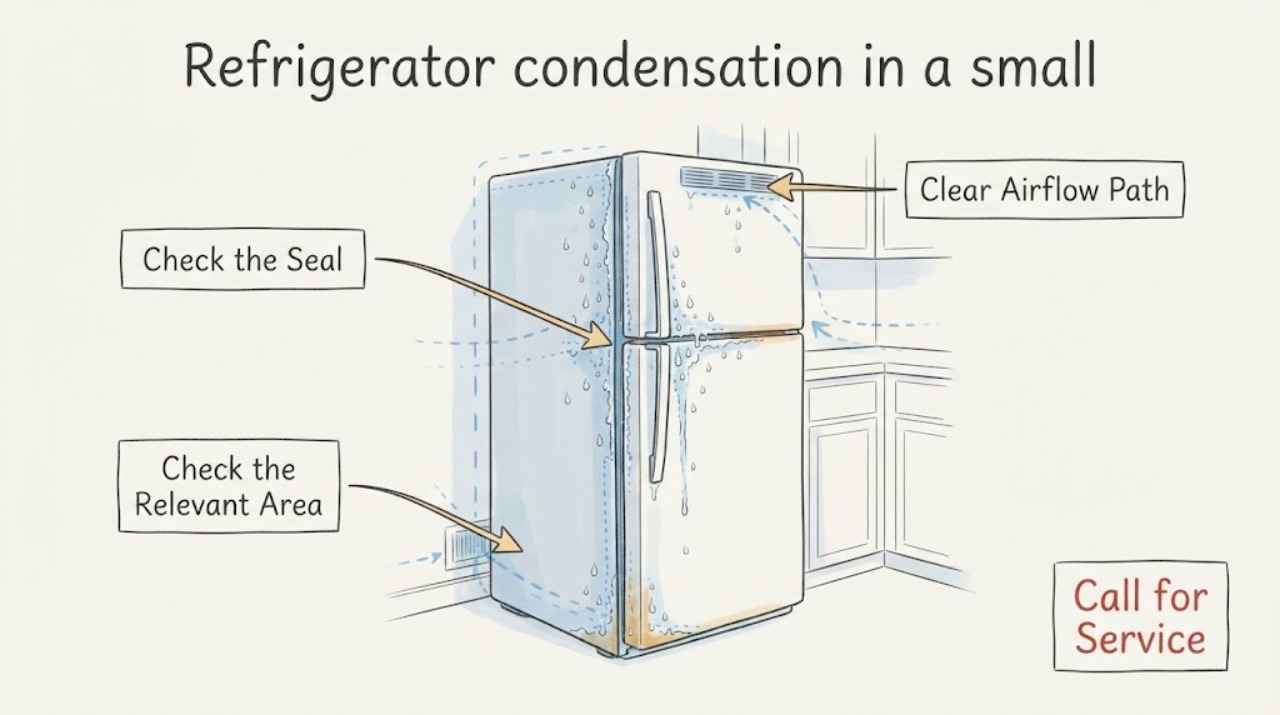
Some moisture can be normal, but persistent or excessive condensation in a Blomberg refrigerator should be narrowed by location and by the external conditions first. Blomberg's official guidance links interior condensation with hot or humid conditions, frequent or prolonged door opening, an ajar door, uncovered liquid foods, blocked airflow and an unsuitable temperature setting; exterior or between-door moisture can also follow humid room air. In a small apartment, check that packages are not preventing a full seal, inspect and clean the visible door gasket, keep vents clear, cover liquid foods, reduce unnecessary door openings, and use the exact model's temperature guidance. Do not remove panels or infer a failed cooling or defrost part. If the door will not seal, food is warming, water reaches electrical areas, or the condensation remains constant after these checks, protect the food and arrange authorized service.
Work through in order
Diagnostic checks
Use only checks that match the exact appliance or system and its official guide.
-
Check 1
Map the condensation before wiping it: note whether it is on the inside rear wall, around the door seal, on the outside surface, between doors, or pooling on a shelf or floor.
Expected result: Moisture is a light intermittent film or a few rear-wall droplets, or it is constant, dripping, pooling, or accompanied by frost and warm food.
Next step: Use the location to choose the door, humidity, airflow and temperature checks below; protect exposed food if the compartment is not staying cold.
Stop if: Stop and arrange service if water reaches the electrical cord, outlet, controls or other electrical area.
Why this matters
Why: Blomberg describes some rear-wall and humid-weather exterior condensation as normal. Constant dripping, pooling, widespread frost or warming food needs more than a normal-moisture explanation.
-
Check 2
Close each door slowly and inspect the visible gasket around its full perimeter. Remove only food packages or shelves that visibly prevent closure, and wipe the gasket with a clean, non-abrasive damp cloth before drying it.
Expected result: The door closes evenly and the gasket contacts the cabinet, or there is a gap, fold, tear, dirt, or a package preventing a seal.
Next step: Correct the visible obstruction or clean the gasket, then observe after normal closed-door operation. If the gasket is torn, loose or still does not seal, obtain the exact model documentation and arrange service rather than forcing an adjustment.
Stop if: Do not remove the door, alter hinges, or pull the gasket from its channel without model-specific instructions.
Why this matters
Why: A door that is ajar or a damaged/loose gasket lets warm humid air enter and can increase condensation; a complete seal makes that explanation less likely but does not diagnose an internal part.
-
Check 3
Check the small-apartment environment and interior loading: keep containers with liquids covered, do not place hot food inside, avoid holding the door open, and leave the manufacturer's vents and air paths unobstructed.
Expected result: The room is humid or warm, the door is opened often, uncovered liquid or hot food is present, or items block an interior air path; or none of these conditions is present.
Next step: Reduce the identified load on the external conditions and allow the refrigerator to stabilize with doors closed. Do not modify the cabinet, add an unverified fan, or move the appliance in a way that strains the cord or pipes.
Stop if: Stop if the appliance is wet from a spill, the cord or outlet is damaged, or moving it would expose pipes or electrical covers.
Why this matters
Why: Blomberg links humidity, frequent/prolonged opening, uncovered liquids, hot food and blocked airflow with condensation or longer cooling demand. If these conditions are absent, the cause is not established by the opened user guidance.
-
Check 4
Read the current temperature setting and compare it only with the exact model's user manual. Do not turn the control to its coldest setting as a guess; record whether the compartment temperature is actually stable and whether food is warming.
Expected result: The setting is unusually cold or high for the model, the actual compartment is warming, or the setting and temperature appear normal.
Next step: Use the model-matched control guidance and allow the appliance to stabilize. If the temperature remains unsafe or the condensation stays constant, stop troubleshooting and arrange service.
Stop if: Do not remove a control panel or test a thermostat, heater, fan or compressor electrically.
Why this matters
Why: Blomberg's official guidance says an unsuitable setting can contribute to condensation and that temperature fluctuations can accompany door or control problems. A setting check cannot prove a thermostat, defrost, fan or sealed-system failure.
-
Check 5
After the external checks, reassess the amount of water and the food condition without opening service covers or using tools inside the cooling system.
Expected result: Condensation has reduced and the refrigerator is cold, or moisture remains excessive/constant, food is warming, or visible damage is present.
Next step: If persistent, protect perishable food and contact Blomberg or authorized service with the model label, condensation location, room conditions, gasket result and temperature observations.
Stop if: Unplug and seek service when safe if water reaches electrical parts, the cord is damaged, cooling fails, or the refrigerant/cooling pipes appear damaged. Do not puncture, bend or open the cooling system.
Why this matters
Why: Improvement supports an environmental or sealing contributor. Persistence, temperature loss or visible damage requires diagnosis beyond the opened user guidance and may risk food spoilage or electrical damage.
Use your observations
Decision map
Find the observation that best matches what you see, then follow the next safe action.
-
PATH 01Next step
What you see
A few droplets appear on the internal rear wall during hot or humid weather, while the door seals and the refrigerator remains cold.
Do this next
Keep the door closed as much as practical, cover liquid foods, keep air paths clear and monitor whether the moisture dissipates as the environment stabilizes.
Why this path and its safety boundary
Why it matters: Blomberg describes hot or humid conditions and normal defrost-related rear-wall droplets as possible normal behavior.
-
PATH 02Next step
What you see
Condensation collects around the door opening or between doors and the gasket has a visible gap, tear, fold or obstruction.
Do this next
Remove the visible obstruction and clean the gasket, then request model-specific service or replacement guidance if it still will not seal. Do not force the door or remove the gasket without that guidance.
Why this path and its safety boundary
Why it matters: Warm humid air may be entering through an incomplete seal; the opened sources do not establish whether the gasket, hinge or another internal feature is responsible.
-
PATH 03Next step
What you see
The small apartment is humid or warm, the door is opened frequently, uncovered liquids or hot food are present, or interior vents are blocked.
Do this next
Reduce the identified humidity and airflow load, close the door, cover foods and allow the appliance to stabilize before judging the result.
Why this path and its safety boundary
Why it matters: These external conditions are documented contributors to condensation or longer cooling demand and can coexist with a correctly operating refrigerator.
-
PATH 04Next step
What you see
Condensation remains constant after external checks, the compartment is warming, water reaches electrical areas, or the cord, cooling pipes or cabinet are damaged.
Do this next
Protect perishable food, isolate power only when safe, and contact authorized service. Keep covers closed and do not puncture or manipulate cooling pipes.
Why this path and its safety boundary
Why it matters: The opened Blomberg guidance does not support an owner diagnosis of a defrost, refrigeration, fan or thermostat component, and continued operation can create food or electrical risk.
Helpful context
Understand the symptom
First separate normal moisture from a persistent problem
Record where the water appears: on the internal rear wall, around the door opening, on the exterior, or between doors. Blomberg's guidance treats some rear-wall droplets and humid-weather exterior moisture as normal, but constant or excessive water calls for checking the door seal, airflow and temperature environment. A small apartment can make room humidity and limited clearance more noticeable, but the supplied topic has no model number, so model-specific temperature values and hidden components should not be assumed.
Keep the checks outside the cabinet
Blomberg's opened manual warns about electrical parts behind the electronic-board and compressor covers and says that persistent problems should go to authorized service. The useful owner-level work here is limited to the visible gasket, door closure, food placement, airflow, room conditions and the exact model's controls. It is not a basis for diagnosing a defrost heater, thermostat, fan, refrigerant circuit or other internal part.
When checks do not resolve it
Need a professional?
Contact authorized service if the gasket remains damaged or the door will not close, condensation is constant or pooling, food is warming, or any internal cooling or electrical access would be required. Isolate the appliance when safe for water near electrical parts or damaged cooling pipes.
Common questions
FAQ
Is condensation on a Blomberg refrigerator always a fault?
No. Blomberg says hot or humid conditions, normal defrost behavior, frequent door opening and some exterior humid-weather moisture can produce condensation. Constant dripping, pooling, warming food or a failed door seal needs service-level attention.
What should I check in a small apartment first?
Check the visible gasket and door closure, packages blocking the door, room humidity and heat, uncovered liquids or hot food, blocked interior air paths, and the model-matched temperature setting. Do not change the cabinet or open service covers.
Can condensation alone prove a bad defrost heater or thermostat?
No. Blomberg's user guidance lists several environmental, loading, door-seal and setting causes. A specific cooling or defrost component requires the exact model and an authorized diagnosis.
When should I stop using the refrigerator?
Stop and seek service for warming food, water near electrical areas, a damaged cord or cooling pipe, a door that cannot seal, or condensation that remains excessive after the safe external checks. Protect perishable food while service is arranged.
Read the exact guide
Official sources
- Why are there droplets of water or ice on the fridge rear wall?Blomberg · Opened the official Blomberg support FAQ. It is used for family-level external checks because the assigned topic has no model number; it is not used to claim a model-specific part or repair procedure.
- Blomberg Refrigerator User Manual (SND 9700 family PDF)Blomberg Appliances · Opened the official Blomberg-hosted refrigerator manual PDF. The PDF is a family/model-specific manual and the assigned topic has no model; only its clearly general condensation and safety statements are used. Temperature values, component locations and service procedures are not generalized.
Community feedback
Share a repair observation
Share a plain-text repair observation. Accepted observations are published automatically; this page may take a moment to update.