
On this page
Start here
Quick answer
A Bosch 800 Series dishwasher is not expected to be silent: Bosch's US 800 Series page currently advertises just 42 decibels, and a current 800 Series model page lists 42 dBA, but those figures are model and test-context references rather than a promise that every sound in every installation will measure the same. Water circulation, a short drain hum or buzz, and some filling sounds can be normal. A new harsh grinding, repeated metal-like knock, sound that changes with the racks or cabinet, a leak, or an electrical or burning odor is not something to diagnose by opening the machine. First confirm the complete E-Nr/model and market, note whether the sound occurs during fill, wash, drain, or drying, then check only safe visible loading, spray-arm clearance, door/cabinet contact, and external installation conditions. If the noise is severe, worsening, accompanied by water or an electrical warning, or remains after one safe external correction, stop the dishwasher and arrange qualified Bosch service.
Before you begin
Safety first
- Do not open panels, remove the pump cover, reach into the sump, bypass the door, move a built-in dishwasher, perform live electrical measurements, or keep operating after a fire, electrical, water, or severe mechanical warning.
Work through in order
Diagnostic checks
Use only checks that match the exact appliance or system and its official guide.
-
Check 1
Stop the cycle with the normal control and remain outside the appliance. From a dry, safe position, note any smoke, burning or electrical odor, active leak, hot or damaged cord or outlet, sparks, severe cabinet vibration, or breaker trip. Photograph the rating label or record the complete Bosch E-Nr/model, market, and the 800 Series variant without moving the installed dishwasher or opening panels.
Expected result: The model is complete and readable, the installation is dry and stable, and the sound is only audible; or the model is incomplete, the unit is contacting cabinetry, or a hazard is present.
Next step: Match the complete E-Nr/model to Bosch's manual and product information. If any hazard is present, keep the dishwasher off and obtain qualified appliance, electrical, or plumbing help as appropriate.
Stop if: Do not touch a wet plug, cord, or outlet; do not move the dishwasher, remove panels, defeat a door interlock, or restart it to reproduce a hazardous noise.
Why this matters
Why: A family name cannot select the correct manual or dBA specification. Smoke, water near power, electrical odor, severe vibration, or a damaged connection is a stop-use condition rather than a noise-comparison exercise.
-
Check 2
On one safe observation, record when the sound starts and stops: water entering, wash circulation, a spray-arm pass, draining, or the end of a program. Describe the sound as a soft water rush, steady hum, intermittent buzz, clicking, rattling/knocking, scraping, or harsh grinding, and note whether it changes when the cycle changes stage. Do not open the door during active spraying just to listen closer.
Expected result: The sound follows water circulation, appears briefly during drain, occurs at fill, happens once per spray-arm rotation, or continues as a harsh sound independent of stage.
Next step: Use the stage and character to choose the visible loading, installation, or service branch. Record a short sound description for the Bosch technician rather than naming a pump, motor, or bearing from sound alone.
Stop if: Stop the cycle for severe grinding, scraping, smoke, burning odor, a leak, violent movement, or a noise accompanied by a power event.
Why this matters
Why: Bosch identifies water-circulation sound as normal and describes drain grinding or buzzing as a possible ordinary sound, while a stage-independent harsh or newly worsening sound is not explained by a normal cycle transition alone.
-
Check 3
After the cycle has ended and the tub and dishes are cool, inspect only the loading area. Look for a tall dish, utensil, loose lightweight item, or nested dishes touching another item or the visible spray-arm path. With the racks extended and the machine idle, confirm only by ordinary visual clearance that the accessible spray arm is not obstructed; do not force it, probe nozzles, or reach into the sump.
Expected result: The sound is a periodic knock or rattle that matches one rack, a specific item, or a spray-arm position; the load is evenly supported and no visible contact is found; or the arm is cracked or cannot move without force.
Next step: Reposition or secure only the visibly contacting item and make one comparison with a normal load. If the arm is damaged, remains obstructed, or the sound persists with clear loading, stop part-swapping and request Bosch service.
Stop if: Do not use a knife or wire, drill spray holes, force a rack or spray arm, operate with a cracked arm, or reach into a hot, sharp, or inaccessible area.
Why this matters
Why: Bosch says dish placement can change noise, that spray arms can strike utensils, that a small load can make jets strike the tub, and that light dishes can move. Those observations support a loading/coverage explanation but do not prove an internal wash-motor fault.
-
Check 4
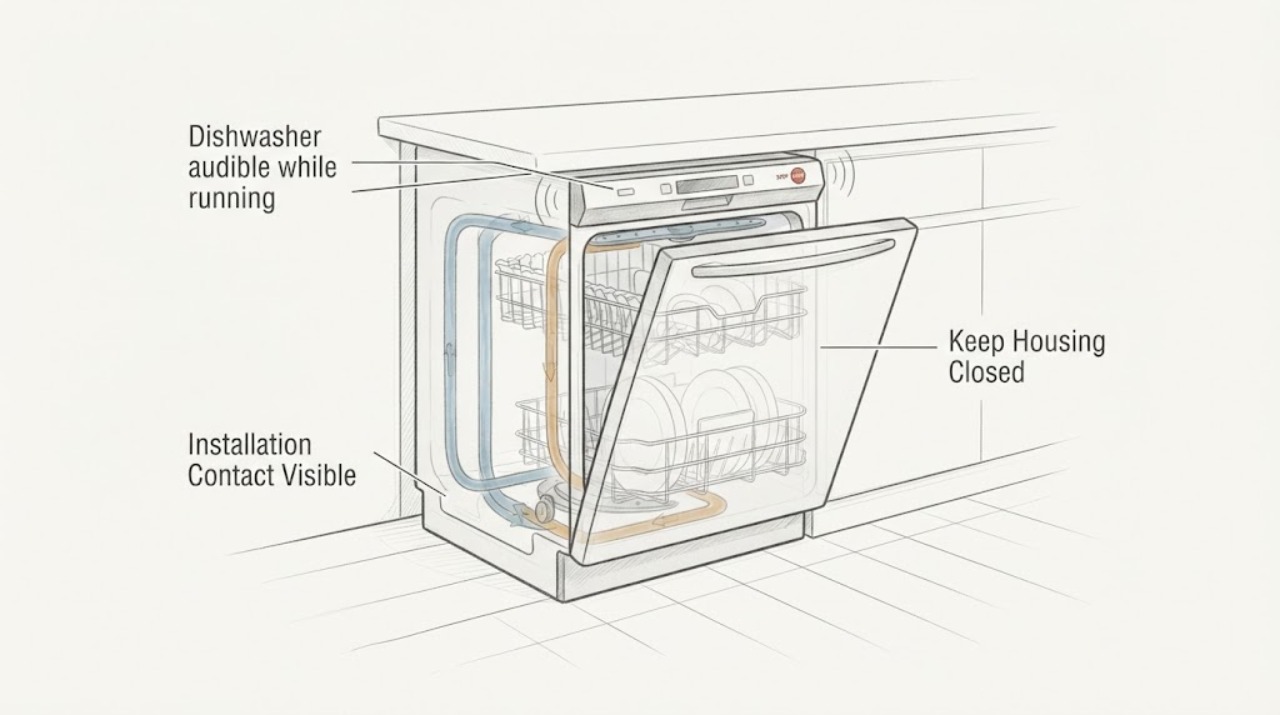
With the dishwasher idle, cool, and dry, inspect from outside for a door, fascia, handle, adjacent cabinet, worktop, or visible hose/holder that is touching or pressing the appliance. Check that the door closes without unusual resistance and that the dishwasher has not shifted. Do not pull out a built-in unit or loosen mounting and leveling hardware as a sound test.
Expected result: The sound is transmitted as a cabinet vibration, the door/decor knocks against nearby surfaces, the rear installation appears pressed, or the installation has no visible contact and the sound is internal or stage-specific.
Next step: Remove only a plainly visible loose item or correct loading that touches the door. For a shifted, tight, leaking, or inaccessible installation, leave the unit in place and arrange qualified installation or appliance service rather than adjusting it by guesswork.
Stop if: Stop for a leaking connection, a door that cannot latch, a hot connection, exposed wiring, or any check that requires moving the dishwasher or accessing the rear.
Why this matters
Why: Bosch's manual attributes some knocking valve sounds to domestic installation and says door or attached parts should not knock against nearby cabinetry; installation contact can amplify an otherwise ordinary vibration without identifying a failed component.
-
Check 5
Without opening the cabinet or accessing the pump, compare one model-approved cycle from a safe distance only after the floor is dry, the door closes normally, and the visible load path is clear. Note whether the dishwasher fills, washes, drains, and ends normally; whether any standing water, leak, error, or control interruption appears; and whether the sound is improving, unchanged, or worsening. Compare the exact model's published dBA only after confirming its E-Nr, not against a phone reading inside the kitchen.
Expected result: The sound is unchanged but the cycle completes with no hazard, improves after visible loading/contact correction, becomes louder or harsher, or is accompanied by standing water, a leak, an error, or a power symptom.
Next step: Keep the observation record and contact qualified Bosch service for a persistent or worsening sound. Include the complete model, stage, sound character, load and installation observations, and any water or electrical symptom.
Stop if: Stop immediately for smoke, sparks, burning odor, water near power, severe grinding, violent vibration, repeated breaker trips, or a hot/damaged connection; do not run unattended or perform live tests.
Why this matters
Why: Improvement after a visible correction supports loading or installation contact. A repeat harsh sound, incomplete drain, leak, error, or electrical symptom requires diagnosis beyond a sound description; 42 dBA cannot identify the cause of a particular noise.
Use your observations
Decision map
Find the observation that best matches what you see, then follow the next safe action.
-
PATH 01Next step
What you see
A soft water rush or circulation hum occurs only during washing, the cycle completes, there is no leak or error, and the sound is not harsh or worsening.
Do this next
Confirm the exact model's published sound rating and continue ordinary use while monitoring for a new change in character, stage, or cycle performance.
Why this path and its safety boundary
Why it matters: Bosch describes water-circulation sound during a wash cycle as normal. The presence of an audible sound alone does not show that an 800 Series dishwasher exceeds its specification.
-
PATH 02Next step
What you see
A periodic knock or rattle occurs when the spray arm reaches a particular position, or the sound changes after a tall utensil, light item, or crowded rack is repositioned.
Do this next
Secure or redistribute the visibly contacting load and make one safe comparison. Escalate if the noise remains with clear loading or the arm is damaged.
Why this path and its safety boundary
Why it matters: This pattern is more consistent with dish-to-dish, dish-to-arm, or light-load contact than with a confirmed motor or pump failure.
-
PATH 03Next step
What you see
A knock is strongest at fill, the door/decor or cabinet vibrates, or the rear of the appliance appears pressed by a hose holder, outlet, or adjacent installation.
Do this next
Do not pull out or re-level the built-in unit as a user sound test. Arrange qualified installation or appliance service to inspect the contact and installation safely.
Why this path and its safety boundary
Why it matters: Bosch identifies domestic installation as a possible source of filling-valve knocking and says adjacent cabinetry or an installation method can cause contact noise without proving an appliance part failure.
-
PATH 04Safety boundary
What you see
Grinding or buzzing is very loud, persists across stages, becomes harsher or louder, or appears with standing water, a drain problem, an error, or incomplete operation.
Do this next
Stop using the dishwasher, keep water away from electricity, and arrange qualified Bosch service. Provide the exact model, stage, sound recording or description, water level, and error history.
Why this path and its safety boundary
Why it matters: Bosch's noise guidance notes that grinding or buzzing can occur during draining, but an unusually loud or persistent sound needs a pump/drain and appliance diagnosis; the sound does not select a replacement part by itself.
Safety stop: Do not remove the pump cover, reach into the sump, run without filters, or use a live test to identify the source.
-
PATH 05Safety boundary
What you see
The sound is accompanied by smoke, sparks, burning or electrical odor, a hot or damaged cord/outlet, active leaking near power, violent movement, or repeated breaker trips.
Do this next
Stop the dishwasher from a safe position and keep clear. Obtain emergency help for active fire or dangerous smoke, and qualified appliance/electrical/plumbing service for other hazards.
Why this path and its safety boundary
Why it matters: This is an immediate electrical, fire, water, or mechanical safety branch, not a normal-sound comparison.
Safety stop: No restart, breaker cycling, panel removal, cabinet movement, or live measurement.
Helpful context
Understand the symptom
Judge a dishwasher sound by its timing and character, not by the fact that it is audible. Bosch's official material separates ordinary water-circulation sound from rattling caused by dish placement and from louder grinding or buzzing during drain. A sound that appears only when the valve fills, the spray arm turns, or the drain pump runs can have a different next check than a constant vibration through the cabinet.
Because 800 Series contains multiple models and regional variants, record the complete E-Nr/model and market before comparing dBA or using a manual. The 42 dBA figure shown on Bosch's US pages is useful context for a matching model, not a universal pass/fail threshold for an unknown unit or a reason to measure inside the cabinet.
When checks do not resolve it
Need a professional?
Contact Bosch or a qualified dishwasher technician for a persistent, newly changed, very loud, or stage-independent noise; incomplete draining or cycling; a recurring error; a leak; or any need to access internal parts or move the installed unit.
Safety scope: Do not open panels, remove the pump cover, reach into the sump, bypass the door, move a built-in dishwasher, perform live electrical measurements, or keep operating after a fire, electrical, water, or severe mechanical warning.
Have this ready
- Provide the complete E-Nr/model and market, 800 Series variant, cycle and stage, sound character and timing, whether the noise changes with loading, visible installation contact, dBA specification if matched, water level, leaks, error indications, and any power or odor symptom.
Common questions
FAQ
Is every Bosch 800 Series dishwasher supposed to be 42 dBA?
Do not assume that from the series name alone. Bosch's US 800 Series page currently says just 42 decibels, and a current 800 Series product page lists 42 dBA for that named model. Confirm the complete E-Nr/model, market, and specification before treating the number as applicable; it is not a pass/fail threshold for one sound in one kitchen.
Is a humming or buzzing sound always a pump failure?
No. Bosch describes water circulation as normal and says grinding or buzzing can occur when water is forced down the drain. A very loud, harsh, persistent, or worsening sound—especially with standing water or an incomplete cycle—needs qualified diagnosis rather than a guessed pump replacement.
Why does the dishwasher rattle only with certain loads?
Bosch links variable noise to how dishes are loaded, spray-arm contact, small loads, and light items moving during the wash. After the appliance is cool and idle, look for visible contact or an item that protrudes into the spray path; do not force the arm or reach into the sump.
Can I pull out the built-in dishwasher to find the noise?
Not as a user sound test. Bosch documentation identifies installation and nearby cabinetry as possible noise sources, but moving an installed unit can disturb water, drain, electrical, leveling, or anti-tip connections. Record the visible contact and arrange qualified installation or appliance service.
Read the exact guide
Official sources
- Bosch Dishwasher Troubleshooting & Repair GuideBosch Home Appliances · Official Bosch US owner-support page; used for safe external symptom triage and service escalation, not as proof of an internal part failure or a universal sound threshold.
- Use and Care Manual SHX5AEM4NBosch Home Appliances · Official Bosch dishwasher manual for SHX5AEM4N, not the unknown 800 Series unit; used only for general sound distinctions and to emphasize that the exact model manual controls.
- SHP78CM6N Dishwasher | BOSCH USBosch Home Appliances · Official product page for SHP78CM6N, one 800 Series model; used only as an example of model-specific 42 dBA documentation and not as proof for an unknown 800 Series model.
- Dishwasher is making noiseBosch Home Appliances · Official Bosch support page from the Qatar site; used as general Bosch guidance only, not as a region-specific 800 Series specification or exact-model repair instruction.
- Bosch 800 Series DishwashersBosch Home Appliances · Official Bosch US family page; used for the series-level advertised 42-decibel context, not as a universal specification for every regional or historical 800 Series model.
Community feedback
Share a repair observation
Share a plain-text repair observation. Accepted observations are published automatically; this page may take a moment to update.