
On this page
Start here
Quick answer
Do not use the Bosch SHX78B75UC as a chlorine-disinfection device and do not assume that changing its water-softener setting protects it from shock water. The exact Bosch manual documents a salt-based softener and model settings, while Minnesota Department of Health guidance says to bypass water-treatment devices and appliances that cannot tolerate bleach, follow each manufacturer's instructions, flush the system until chlorine is absent, and test the well before normal drinking or cooking use. Keep the dishwasher out of service during the chlorinated phase unless Bosch gives an appliance-specific procedure.
Before you begin
Safety first
- Do not dose the dishwasher, add bleach or other sanitizer to the salt reservoir, mix chemicals, open energized wiring, disconnect internal plumbing or use a cycle to distribute or neutralize shock water.
Work through in order
Diagnostic checks
Use only checks that match the exact appliance or system and its official guide.
-
Check 1
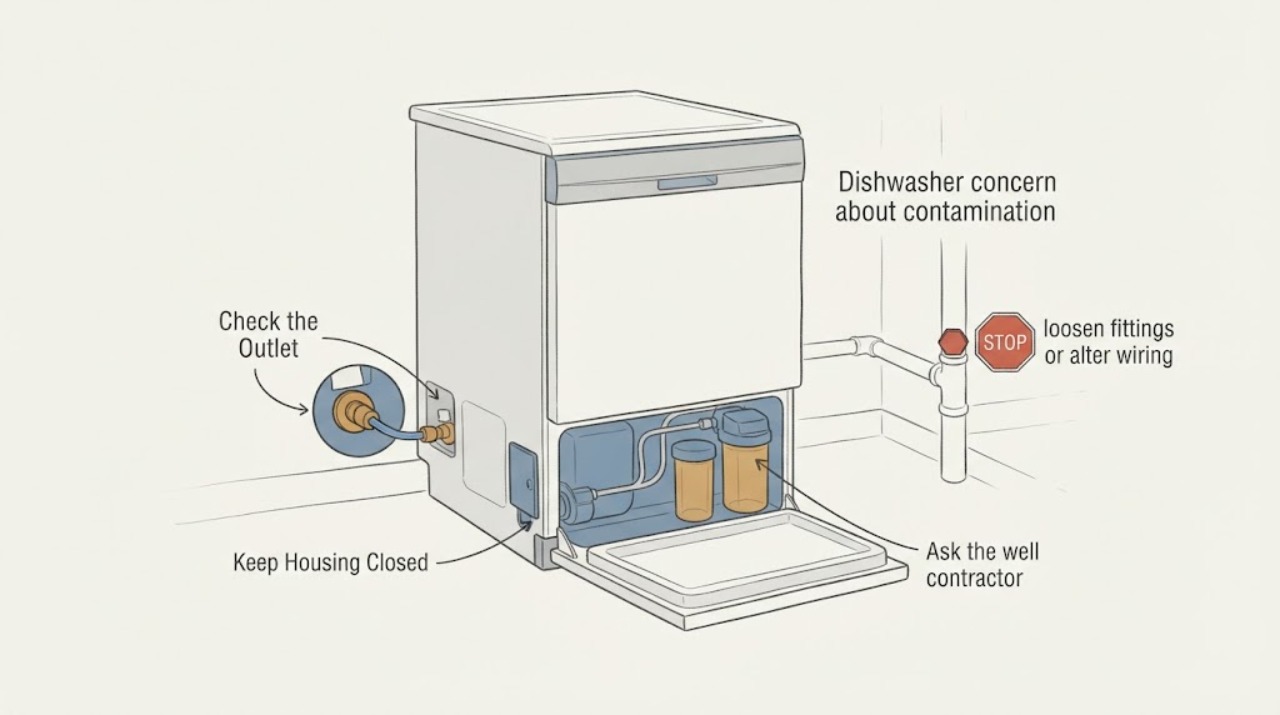
Do not start the SHX78B75UC or intentionally route chlorinated shock water into it. Record whether the dishwasher inlet has an accessible appliance shutoff or bypass arrangement only from the normal cabinet opening; do not remove panels, loosen fittings or alter wiring.
Expected result: The dishwasher can remain isolated through an existing known shutoff or bypass, or isolation would require plumbing work or moving the appliance.
Next step: Use the existing isolation only if its operation is known and safe. Otherwise ask a licensed plumber, well contractor or Bosch-authorized service provider to isolate the appliance.
Why this matters
Why: An existing isolation point can keep unapproved chlorinated water out; the H:00 softener setting is not a substitute for physical water-path isolation.
-
Check 2
Ask the well contractor or local health department which devices and appliances must be bypassed during the planned shock, and give them the exact Bosch model. Do not choose a chlorine concentration, contact time or appliance route from a generic internet recipe.
Expected result: The water professional provides an appliance-specific isolation/flush plan, or no one has confirmed how the Bosch dishwasher and softener should be handled.
Next step: Keep the dishwasher out of service and obtain written or model-specific guidance before reconnecting it to treated water.
Why this matters
Why: Well chemistry, plumbing volume and appliance materials vary; an absent Bosch procedure leaves the exposure question unresolved rather than making a sanitizer cycle appropriate.
-
Check 3
During the well flush, use an appropriate chlorine test strip or the contractor's test method at the designated outside discharge and fixtures. Do not discharge chlorinated water into a septic system, landscaping or a water body, and do not use the dishwasher as a flush outlet.
Expected result: Chlorine remains detectable, chlorine is absent at the designated fixture, or flow drops or the water remains discolored.
Next step: Continue only under the well professional's plan. Keep the dishwasher isolated until the relevant fixture is chlorine-free and the authority's test conditions are met.
Why this matters
Why: Detectable chlorine means the treated water is not yet cleared for the appliance; reduced flow or persistent discoloration needs the well professional's assessment.
-
Check 4
After flushing, arrange accredited testing for total coliform and any contaminants identified by the original laboratory result. Keep drinking, cooking and baby-bottle use on a known-safe alternative until the results and local health guidance clear the water.
Expected result: The laboratory result is negative and the authority permits normal use, or coliform/other contamination remains or the test is pending.
Next step: If pending or positive, keep the dishwasher isolated and contact the health department or qualified well contractor. If cleared, proceed to the Bosch manual's normal operating instructions rather than a guessed chemical-cleaning cycle.
Why this matters
Why: A clear chlorine smell is not the same as a negative contamination test; a pending or positive result leaves the water-safety question open.
-
Check 5
Once the water authority clears the system, verify the SHX78B75UC water-hardness setting and salt reservoir only as the Bosch manual specifies. Use only special dishwasher salt when the manual calls for it; do not add bleach, table salt, well chemicals or detergent to the softener.
Expected result: The hardness measurement and H setting agree with the manual, the salt indicator is normal, or the softener has an error, unknown setting or chemical exposure history.
Next step: Use Bosch support for an unknown setting or suspected exposure. Do not run repeated cycles to consume salt or attempt to neutralize chlorine inside the appliance.
Why this matters
Why: Correct hardness and salt setup protects washing performance from limescale; it does not certify water safety or reverse chemical damage.
Use your observations
Decision map
Find the observation that best matches what you see, then follow the next safe action.
-
PATH 01Next step
What you see
The well-disinfection plan still sends measurable chlorine to the dishwasher inlet or no appliance bypass has been confirmed.
Do this next
Keep the dishwasher off and isolated; ask the well contractor and Bosch service to define the safe reconnection point.
Why this path and its safety boundary
Why it matters: The dishwasher and its water-softening components may be exposed to an unapproved chemical concentration, and the water is not yet cleared for routine appliance use.
-
PATH 02Next step
What you see
The homeowner changes the dishwasher to H:00 or turns off the softener in the app and assumes the appliance is protected.
Do this next
Leave the dishwasher isolated during shock and use Bosch's exact manual or service guidance for any softener setting change.
Why this path and its safety boundary
Why it matters: H:00 is a Bosch water-hardness/softener configuration, not a documented chlorine bypass or decontamination procedure.
-
PATH 03Next step
What you see
Flushing has ended, chlorine tests are clear, and accredited testing plus local guidance confirms the well is safe.
Do this next
Reconnect or resume the dishwasher only according to the well professional's and Bosch's directions, then follow the normal SHX78B75UC manual; stop if odor, leaks or abnormal operation appears.
Why this path and its safety boundary
Why it matters: The water-system emergency has reached the point at which normal appliance operation can be considered, but no source establishes that chlorine shock itself disinfected the dishwasher.
-
PATH 04Next step
What you see
Coliform or another contaminant remains positive, the water test is pending, or the dishwasher was exposed to concentrated bleach or unknown chemicals.
Do this next
Keep the dishwasher out of service and contact the health department, qualified well contractor and Bosch service. Do not run sanitizer cycles or attempt chemical neutralization.
Why this path and its safety boundary
Why it matters: The water is not cleared for drinking/cooking and possible appliance material or filter damage cannot be inferred from a normal-looking cycle.
Helpful context
Understand the symptom
The exact question is about water safety and appliance exposure
The exact Reddit post describes a new Bosch 800 Series SHX78B75UC, a positive or concerning well-water result after pipe work, planned well shock treatment and concern about sending chlorinated water through the dishwasher's softener. The thread has no Bosch-confirmed disinfection procedure and no verified appliance outcome. Treat the well treatment as a water-system project and protect the dishwasher from an unapproved chemical exposure.
Do not confuse H:00 with a chlorine bypass
The exact Bosch manual describes measuring water hardness, selecting an H setting and using special dishwasher salt. It permits switching the softener off only for the manual's stated hardness and detergent conditions. That setting changes softener operation; it does not prove that chlorine will avoid the appliance's inlet, hoses, filters or other wetted parts. Do not add bleach, well-shock chemicals, detergent or table salt to the salt reservoir.
Follow the well authority's isolation and flush sequence
Minnesota Department of Health guidance says to bypass water softeners and appliances that cannot tolerate bleach, remove filters, keep people from using the water during disinfection, and follow each appliance manufacturer's directions. After the contact period, it calls for flushing the well and fixtures until chlorine is absent and recommends laboratory testing before drinking or cooking. Do not invent a bleach dose or use a dishwasher cycle to distribute or remove shock water.
Resume only after clean-water and test conditions are met
When the well professional or local health authority says the system is ready, confirm that no chlorine remains at the relevant fixture and that accredited testing supports safe use. Then use the SHX78B75UC manual for normal salt, hardness and cycle instructions. If Bosch cannot provide a model-specific appliance-disinfection method or if contamination returns, keep the dishwasher out of service and use Bosch service plus a qualified well or water-treatment professional.
When checks do not resolve it
Need a professional?
Use a licensed well contractor or local health department for shock-disinfection planning, testing and discharge questions. Use Bosch-authorized service if the SHX78B75UC was exposed to chlorinated or unknown water, if the softener setting is unclear, or if leaks, odor, corrosion or abnormal cycles appear after reconnection.
Safety scope: Do not dose the dishwasher, add bleach or other sanitizer to the salt reservoir, mix chemicals, open energized wiring, disconnect internal plumbing or use a cycle to distribute or neutralize shock water.
Have this ready
- Provide the SHX78B75UC model and suffix, the laboratory report, pipe-work date, well-treatment plan, chlorine test results, isolation/bypass arrangement and any evidence of chemical exposure.
Common questions
FAQ
Can I run chlorinated well water through the Bosch dishwasher to disinfect it?
No procedure in the opened Bosch sources authorizes that. Isolate or bypass the appliance if it cannot tolerate bleach, follow the exact Bosch instructions, flush the house water until chlorine is absent and wait for water-safety testing before normal use.
Will turning off the SHX78B75UC water softener protect it?
Not by itself. Bosch documents H settings as water-hardness/softener configuration. It does not establish that H:00 isolates the inlet or protects the appliance from chlorinated water.
Should I add bleach or another sanitizer to the dishwasher salt compartment?
No. Bosch says the softener dispenser is for special dishwasher salt, and the well guidance warns against mixing bleach with other chemicals. Do not use the salt compartment for shock treatment.
When can the dishwasher be used again?
Only after the well professional or health authority's flush conditions are met, chlorine is absent at the relevant fixture, and accredited testing supports safe water use. Then follow the normal SHX78B75UC manual; a clear chlorine smell alone is not an appliance-disinfection certificate.
Read the exact guide
Official sources
- Shocking our Well / Bosch 800 Series Dishwasher with Water SoftenerReddit r/Appliances · Exact Reddit post for the assigned model and contamination concern; supports the reported question and unresolved status only, not a verified Bosch procedure or outcome.
- Use and Care Manual SHX78B75UCBSH Home Appliances Corporation · Exact Bosch use-and-care manual; used for initial setup, water-softening settings, special-salt restrictions and normal operation. It does not provide a well-shock or chlorine-exposure procedure.
- Protect Your Home's WaterU.S. Environmental Protection Agency · Official EPA guidance used for testing after plumbing/well changes or water-quality changes and for involving certified laboratories and public-health authorities; it does not define a Bosch dishwasher procedure.
- Do I Need Dishwasher Salt?BSH Home Appliances Corporation · Official Bosch guidance used for the general salt/softener boundary; the exact SHX78B75UC manual controls model-specific settings.
- Well DisinfectionMinnesota Department of Health · Official state health guidance used for chemical/electrical safety, bypassing appliances that cannot tolerate bleach, flushing/testing and manufacturer-specific appliance instructions; it is not Bosch-specific.
- Service Assistance - SHX78B75UC/51BSH Home Appliances Corporation · Exact Bosch US service page for the assigned model family; used for model identity, exact manuals and support/service routing.
Community feedback
Share a repair observation
Share a plain-text repair observation. Accepted observations are published automatically; this page may take a moment to update.