
On this page
Start here
Quick answer
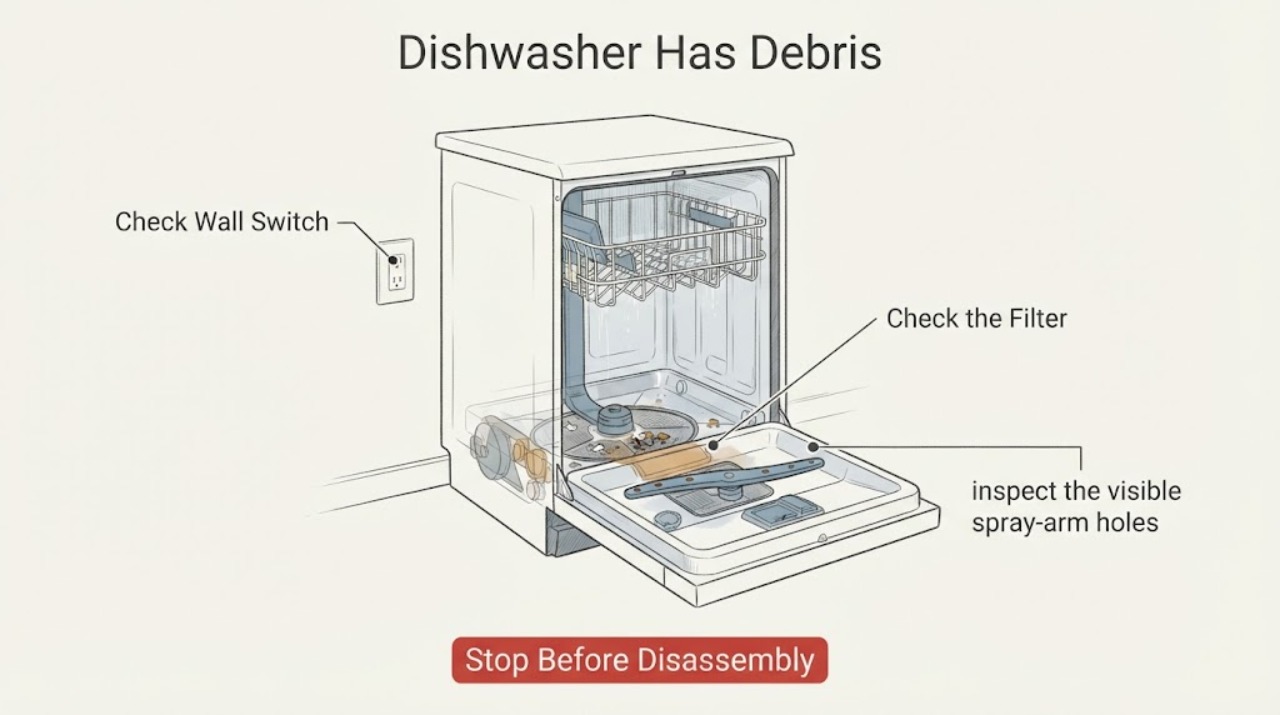
Do not replace a Bosch dishwasher or assume its pump is bad from debris in the rinse water and incomplete drainage alone. With the dishwasher switched off, document whether water remains after the cycle, then clean and correctly reinstall the filter, inspect the visible spray-arm path, and check the user-accessible drain path for debris or a kinked hose as the Bosch guidance for this family allows. Bosch identifies the filter as the place that catches food particles and protects the pump, and identifies blocked filters, pumps or drain paths as possible reasons for incomplete draining. If debris or standing water persists after these external checks, or there is a leak, burning or electrical sign, stop using the dishwasher and arrange model-specific service rather than opening the pump or replacing a part by guesswork.
Work through in order
Diagnostic checks
Use only checks that match the exact appliance or system and its official guide.
-
Check 1
Stop the program and switch the Bosch dishwasher off before opening it. Note whether the rinse water contains loose or finely ground debris, whether water remains in the tub after the cycle, and whether there is a leak, unusual continuous running or an electrical or burning sign.
Expected result: There is standing water, a leak, an electrical or burning sign, continuous operation, or only debris with no water left behind.
Next step: If there is a leak, electrical or burning sign, or the appliance will not stop safely, keep it off and arrange qualified service. Otherwise continue with the power-off filter and visible-path checks.
Why this matters
Why: Standing water or a hazard changes this from a cleaning observation to a drain or safety issue. Debris without retained water still does not identify its source.
-
Check 2
Remove the lower rack and follow the exact Bosch manual for the dishwasher's filter layout. Remove the filter only as that manual shows, wash it under running water with mild soap and a soft brush, and inspect the mesh and filter seat for food particles or fragments before reinstalling it securely.
Expected result: The filter is packed with debris, damaged or not seated securely, or it is clean and intact.
Next step: Remove only loose accessible debris, replace or service a damaged filter through a model-matched path, and do not run the dishwasher with the filter missing or loose. If the filter is clean and secure, continue to the spray-arm and drain-path checks.
Why this matters
Why: A loaded or poorly seated filter can allow debris and restrict performance; Bosch describes the filter as protecting the pump and clearing dishwater. A clean filter does not prove that the pump or another internal part is healthy.
-
Check 3
With the dishwasher off, inspect the visible spray-arm holes and their path for food, glass or another loose object. Make sure tall items are not blocking an arm, rinse the spray arms if the exact manual permits removal, and use only a soft non-damaging method to clear accessible holes.
Expected result: A spray-arm hole or path is visibly blocked, a load item contacts the arm, or the arms and visible path are clear.
Next step: Remove or reposition only the safely reachable obstruction and reinstall any user-removable arm as documented. If the path is clear but debris and incomplete drainage continue, do not dismantle the wash system; proceed to the drain-path check and service branch.
Why this matters
Why: A blocked arm or loading obstruction can redistribute food residue and impair washing, but a clear arm does not rule in a pump or drain failure and does not prove the debris source.
-
Check 4
For a dishwasher that leaves water behind, use Bosch's family guidance to inspect the user-accessible area below the filter for visible debris and standing water only when the matching manual shows that access. Also inspect the external drain hose for a kink or obvious obstruction without opening the appliance cabinet or disconnecting plumbing.
Expected result: Visible debris is present below the filter, the drain hose is kinked or obstructed, or these areas are clear.
Next step: Clear only loose visible debris and correct an obvious external hose-routing problem according to the installation/manual instructions. If the path is clear or the symptom returns, stop repeated cycles and provide the exact model, debris description and water-level observation to qualified Bosch service.
Why this matters
Why: A visible blockage or kink can explain incomplete drainage and may also leave residue to be recirculated. A clear external path does not prove a failed drain pump, check valve or other component.
-
Check 5
After the power-off filter, spray-arm and external drain checks, compare the exact model label with the matching Bosch manual before any further procedure. Do not open the pump housing, access wiring, replace a pump or assume a disposal connection is the source solely because the debris is finely ground.
Expected result: The exact manual supports an additional user-level check, or the model is still unknown and the debris or incomplete drainage persists.
Next step: Use only the matching manual's additional user checks. Otherwise leave the dishwasher off and arrange qualified service, especially if standing water, leakage or an electrical sign returns.
Why this matters
Why: Bosch layouts and permitted access vary by model. Persistence after external cleaning is an unresolved internal or installation diagnosis, not evidence for a specific replacement part.
Use your observations
Decision map
Find the observation that best matches what you see, then follow the next safe action.
-
PATH 01Next step
What you see
The filter contains substantial food debris or fragments, the filter can be cleaned and seated securely, and drainage improves afterward.
Do this next
Monitor the next normal cycle for returning debris or retained water. If either returns, stop repeated cycles and arrange model-specific service.
Why this path and its safety boundary
Why it matters: The filter or a restricted visible path was a plausible contributor to the debris and incomplete drainage, but the result does not prove that it was the original source or that any pump was damaged.
-
PATH 02Next step
What you see
The filter and spray-arm path are clean and secure, but water remains after the cycle or debris continues to appear in the rinse water.
Do this next
Stop using the dishwasher and arrange qualified Bosch service with the model, cycle phase, water level and debris description; do not guess a pump, valve or disposal diagnosis.
Why this path and its safety boundary
Why it matters: The remaining pattern is not safely distinguishable between an internal wash/drain issue, an installation restriction or another source from the no-model external checks.
-
PATH 03Next step
What you see
A visible drain hose kink or debris below the filter is found and can be corrected without opening the appliance.
Do this next
Correct only the safe external obstruction according to the installation instructions, then observe whether both drainage and debris improve. Escalate if either symptom persists.
Why this path and its safety boundary
Why it matters: The visible drain path can account for incomplete pump-out, but it does not establish why debris was present in the rinse water or whether another restriction remains.
-
PATH 04Next step
What you see
There is leaking, an electrical or burning sign, severe standing water, continuous operation that cannot be stopped normally, or visible broken glass that cannot be safely removed.
Do this next
Keep power and water off when safe, avoid reaching into the pump or running another cycle, and contact qualified appliance service. Use emergency help for smoke or fire.
Why this path and its safety boundary
Why it matters: The dishwasher has crossed the ordinary owner-cleaning boundary and continued operation could increase water, electrical or injury risk.
Helpful context
Understand the symptom
Treat the debris and drainage as linked clues, not a confirmed part failure
The assigned topic has a Bosch dishwasher but no model. Bosch says the dishwasher filter catches food particles, helps protect the pump and keeps debris from returning to dishes. Its drain guidance also lists a blocked filter, blocked pump or obstructed drain path as possible reasons water is not removed completely. That supports checking the visible filtration and drain path first; it does not establish whether the reported finely ground debris came from the pump, a drain connection, the filter or the load.
Stay within the no-model user-check boundary
Bosch's family guidance tells the owner to consult the exact manual for filter removal, wash the filter under running water with mild soap and a soft brush, and keep spray-arm holes clear. Its maintenance page describes clearing visible debris below the filter when standing water is accumulating, while the no-drain page says to check the external drain hose. Because the model is not supplied, use only the layout and pump-cover access shown by the matching manual and do not infer an internal pump or valve diagnosis.
Record what changes after a clean filter
A clean, correctly seated filter followed by normal drainage would make retained food debris or a restricted visible path more plausible, but it would not identify the original source. If the rinse water still contains debris or the dishwasher still leaves water behind, preserve the observations, the exact model label and the cycle phase for service. Repeated cycles, pump-cover removal beyond the matching manual or part replacement would go beyond the evidence available for this unmodeled appliance.
Common questions
FAQ
Does debris in the rinse water prove that the Bosch dishwasher drain pump is bad?
No. Bosch's guidance identifies the filter as a food-particle trap and lists blocked filters, pumps or drain paths as possible reasons for incomplete drainage, but the symptom does not identify a failed pump or the original debris source. Clean and seat the filter, inspect the visible spray-arm and drain path, then use model-specific service if the symptom persists.
What should I check first when a Bosch dishwasher leaves debris and water behind?
Switch it off, record whether water remains, then clean and correctly reinstall the filter using the exact manual. Inspect accessible spray-arm holes and loading, followed by the visible pump/filter area and external drain hose where the model's guidance permits. Do not open the pump or cabinet based only on the symptom.
Can I keep running the dishwasher to see whether the debris clears?
Do not repeat cycles when there is a leak, electrical or burning sign, severe standing water, continuous operation or unsafe glass. For a non-hazardous case, complete the power-off external checks first and stop if the debris or incomplete drainage returns.
Does Bosch's filter and pump guidance apply to every dishwasher model?
The opened Bosch pages support family-level filter, spray-arm and drain-path checks, but no exact model was supplied. Confirm the model label and use its matching manual for filter, pump-cover or hose access before doing anything beyond the visible checks.
Read the exact guide
Official sources
- How to Clean & Descale Bosch Dishwashers: A Complete Guide | Bosch – Maintenance TipsBosch · Opened Bosch US maintenance page. It recommends periodic filter cleaning, checking spray-arm holes, and, when standing water accumulates, clearing visible debris below the filter as the model instructions allow; it directs owners to Bosch service when troubleshooting does not resolve the issue.
- Dishwasher is not drainingBosch · Opened Bosch South Africa customer-service page. It identifies blocked filters or pumps and foreign objects such as glass, food or dirt as possible causes of incomplete drainage, then gives filter, visible pump-area and drain-hose checks. Because no model was supplied, the article uses only the external family-level checks and preserves the model-manual boundary.
- How to Properly Clean Your Dishwasher FilterBosch · Opened Bosch US owner-support page. It says the filter catches food particles, protects the pump and helps clear dishwater; it directs the owner to the model manual for removal and gives running-water, mild-soap and soft-brush cleaning steps.
- Dishwasher Troubleshooting: Dishwasher Not Cleaning DishesBosch · Opened Bosch US troubleshooting page. It supports cleaning the filter, keeping tall items from blocking spray arms, scraping food rather than pre-rinsing, and clearing spray-arm holes with a non-damaging method.
Community feedback
Share a repair observation
Share a plain-text repair observation. Accepted observations are published automatically; this page may take a moment to update.