
On this page
Start here
Quick answer
Do not force the panel door open immediately after a Bosch SHV46C13UC/46 cycle. First confirm that the cycle has actually ended, then wait until water sounds and hot steam have subsided before trying the normal handle gently. Bosch warns that hot water or steam may escape after a cycle; if the door is still difficult to open once the machine is cool and quiet, or it rubs the cabinetry, stays latched, or needs force, stop using the dishwasher and arrange service. Do not pry the door, remove hinges or springs, alter the built-in installation, or test it with live electrical access.
Before you begin
Safety first
- Do not pry the panel door, defeat the interlock, remove hinges or springs, loosen built-in mounting hardware, pull the dishwasher out by the door, or perform live electrical testing. Do not keep running cycles to reproduce a stuck door.
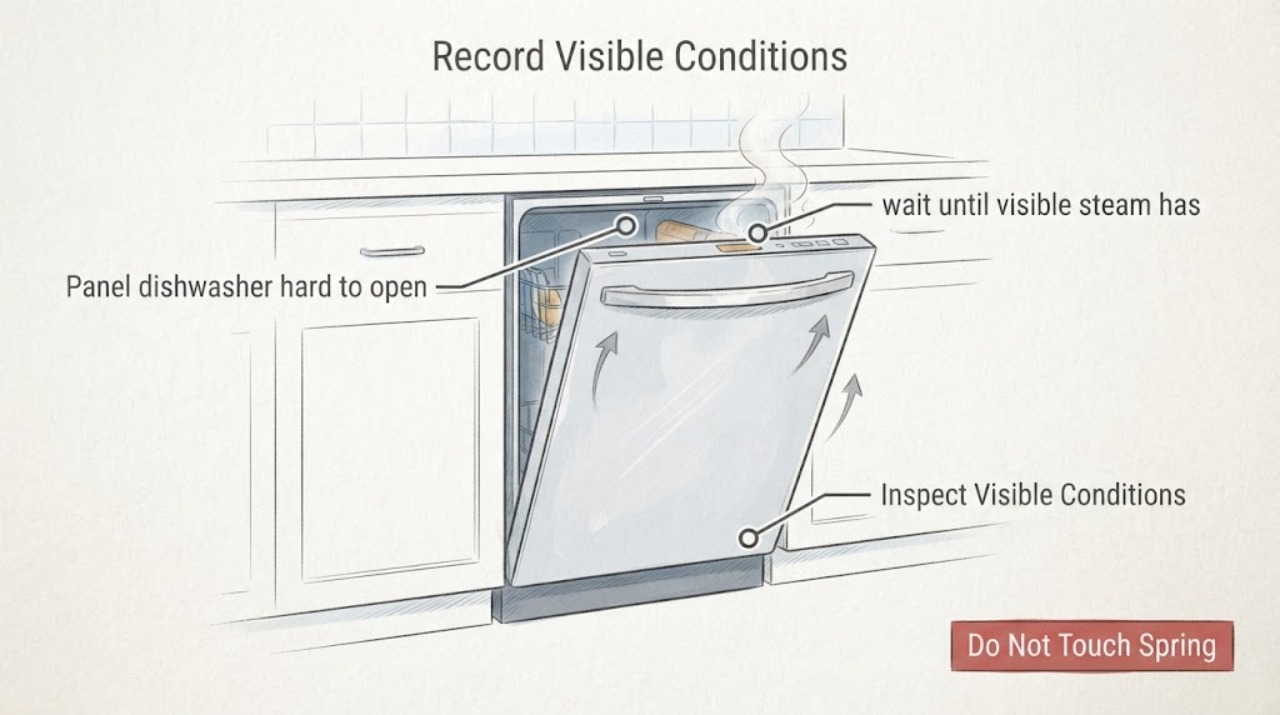
Work through in order
Diagnostic checks
Use only checks that match the exact appliance or system and its official guide.
-
Check 1
Record the display and cycle state before pulling the handle. Confirm that the cycle-end indication is present and that the dishwasher is not still washing, draining, or showing an active control-lock state; if water is still running or the display shows a program in progress, leave the door closed and wait.
Expected result: The cycle-end indication is present and water sounds have stopped, or the display still shows a running/locked state or the machine is making water noises.
Next step: Wait for the cycle to end and the water sounds to stop. If the display never reaches the expected end state, record the exact display and arrange Bosch service instead of repeatedly opening and closing the door.
Stop if: Do not pull hard against an active latch or use an object to defeat the lock.
Why this matters
Why: A door can remain intentionally secured while a cycle or control state is active. Water or a running program also means opening the door can expose the user to hot water or steam.
-
Check 2
Once the cycle is ended, wait until visible steam has dissipated and the water noises have stopped. Open the panel only with the normal handle and only with gentle, even pressure; do not yank, wedge, or pry it.
Expected result: The door opens normally after cooling, releases only after a delay, or remains firmly stuck despite the machine being quiet and no longer hot.
Next step: If it opens normally, note how long cooling took and monitor without forcing it. If it remains stuck or needs more than normal handle force, stop using the dishwasher and arrange qualified Bosch service.
Stop if: Do not fully open the door while steam or water noises remain, and do not force a door that does not release gently.
Why this matters
Why: A delay that disappears as heat and steam subside can be a post-cycle operating condition. Continued resistance after cooling is not explained by the safety warning alone and makes a latch, seal, hinge, or installation issue more likely.
-
Check 3
With the dishwasher cool and the door still closed or only normally open, inspect the accessible edges for a folded seal, attached-panel edge, cabinet trim, nearby screw, or countertop contact. Look for a repeatable rub point without loosening any installation hardware.
Expected result: The panel or seal visibly rubs the cabinetry, a screw or trim touches the door, the appliance appears tilted, or the visible clearance is even.
Next step: Remove only a clearly loose external obstruction if it can be lifted away without tools. Leave any attached panel, cabinet, leveling, hinge, or mounting adjustment to a qualified installer or Bosch technician.
Stop if: Do not pull the dishwasher out by the door, loosen mounting screws, adjust hinges or springs, or bend the panel to gain clearance.
Why this matters
Why: A built-in clearance or alignment problem can hold the door against the cabinet after the cycle, while even clearance shifts attention toward the latch, seal, or hinge mechanism.
-
Check 4
After the dishwasher is cool, note whether the door handle moves normally, whether the latch releases without a catch, and whether the door opens evenly on both sides. Inspect only for visible damage to the handle, latch area, seal, hinge cover, or custom panel; do not remove a cover or reach into the latch.
Expected result: The handle is loose or damaged, the latch catches or will not release, one side drops or binds, the seal is displaced, or the door moves evenly.
Next step: Keep the dishwasher out of service for persistent binding, damaged hardware, or a door that cannot release normally. Give service the exact model, display state, cycle, temperature/steam timing, and what part of the movement felt abnormal.
Stop if: Do not pry the latch, remove the door, dismantle the hinge or spring assembly, or hold the latch open with a tool.
Why this matters
Why: A latch, hinge, seal, or panel alignment fault is more likely when resistance persists after cooling or the door moves unevenly. An even, undamaged door with a one-time post-cycle delay is less suggestive of a mechanical failure.
-
Check 5
Check for a safety escalation before any further use: look from a safe position for leaking water, an unusual amount of escaping steam, a cracked seal or panel, scorching, or an electrical smell. Do not touch hot water or exposed wiring.
Expected result: There is no leak, damage, or abnormal odor, or there is water escaping, unusual steam, visible damage, or an electrical smell.
Next step: For any leak or damage, stop the dishwasher, keep clear, and arrange qualified service; if there is smoke or an electrical emergency, isolate power only from a safe location and seek emergency help. Do not operate it again to reproduce the symptom.
Stop if: Do not touch hot water, use the dishwasher with a damaged seal or panel, or restore power after an electrical sign without professional inspection.
Why this matters
Why: A stuck door with leakage, thermal damage, or an electrical sign is not a handle-adjustment problem and can involve burn, water, or shock hazards.
Use your observations
Decision map
Find the observation that best matches what you see, then follow the next safe action.
-
PATH 01Next step
What you see
The door releases normally after the cycle-end indication appears and the water sounds and steam have subsided, with no rubbing, leak, damage, or unusual odor.
Do this next
Use the normal handle without force and record the timing. Arrange service if the delay becomes longer, repeats while the machine is cool, or the door begins to bind.
Why this path and its safety boundary
Why it matters: The timing is consistent with Bosch's post-cycle hot-water and steam caution rather than proof of a broken latch.
-
PATH 02Next step
What you see
The machine is cool and quiet but the door remains firmly latched, needs force, catches on one side, or the handle or latch feels damaged.
Do this next
Stop using the dishwasher and arrange qualified Bosch service. Do not pry, defeat the interlock, or dismantle the door hardware.
Why this path and its safety boundary
Why it matters: A latch, hinge, seal, handle, or panel alignment fault is more likely than residual steam; the existing door-closing guidance does not make it safe to force the release.
-
PATH 03Next step
What you see
The custom panel or door rubs a cabinet edge, countertop, nearby screw, trim, or seal, or the unit appears tilted.
Do this next
Leave the dishwasher unused and have Bosch or a qualified installer check the mounting, leveling, panel clearance, and hinge geometry. Do not loosen built-in hardware yourself.
Why this path and its safety boundary
Why it matters: Built-in installation clearance or alignment is more likely than a control fault, and the resistance may worsen as the door moves.
-
PATH 04Next step
What you see
The display does not show a completed cycle, water is still moving, or the door is difficult to open together with leakage, unusual steam, scorching, or an electrical smell.
Do this next
Do not force the door or restart the dishwasher. Keep clear, isolate power and water only from a safe location when appropriate, and contact qualified service; seek emergency help for smoke, fire, or an electrical emergency.
Why this path and its safety boundary
Why it matters: The appliance may still be in an active cycle or has a water, thermal, or electrical safety issue; opening it by force could increase the hazard.
Helpful context
Understand the symptom
Why a post-cycle door needs a different first check
A door that is hard to open only at the end of a hot cycle is not the same decision as a door that cannot close around a rack or dish. Cooling and steam release come first. If the resistance remains after the machine is cool and quiet, treat it as a door, seal, latch, hinge, or installation problem rather than increasing force.
When checks do not resolve it
Need a professional?
Arrange Bosch or qualified appliance service when the SHV46C13UC/46 door remains hard to open after the dishwasher is cool and quiet, needs force, rubs the cabinet or custom panel, has a damaged seal, latch, hinge, or handle, or is associated with leakage, unusual steam, scorching, or an electrical smell.
Safety scope: Do not pry the panel door, defeat the interlock, remove hinges or springs, loosen built-in mounting hardware, pull the dishwasher out by the door, or perform live electrical testing. Do not keep running cycles to reproduce a stuck door.
Common questions
FAQ
Is a hard-to-open door immediately after a hot cycle always a failed latch?
No. First confirm that the cycle ended and wait until water sounds and steam have subsided. If the door remains hard to open when cool and quiet, treat that as a service symptom rather than increasing force.
Can I adjust the hinge or spring to make the panel door open?
Do not adjust hinges, springs, mounting hardware, or the custom panel as a homeowner troubleshooting step. Built-in alignment and door hardware need the exact installation information and qualified service when visible clearance checks do not explain the resistance.
What should I document before calling service?
Record the exact E-Nr, cycle and display state, whether steam or water sounds remained, the cooling delay, the direction of resistance, and any contact with the cabinet, panel, seal, or handle. Do not pry the door open just to inspect the latch.
Read the exact guide
Official sources
- IMPORTANT SAFETY INSTRUCTIONSBosch · Supports the no-force, no-bypass, no-live-test, and stop-for-leak/damage boundaries.
- Service Assistance - SHV46C13UC/46 | BOSCH USBosch · Exact model identity and service-resource routing; the page itself does not establish a door mechanism diagnosis.
- Operating the DishwasherBosch · Supports the cool-and-quiet first check and safe opening boundary; it is not asserted as the exact SHV46C13UC/46 manual.
- Bosch Dishwasher Troubleshooting & Repair Guide | Bosch – Fix Common Dishwasher ProblemsBosch · Supports external clearance and visible hardware checks only; does not authorize altering built-in installation or replacing parts.
Community feedback
Share a repair observation
Share a plain-text repair observation. Accepted observations are published automatically; this page may take a moment to update.