
On this page
Start here
Quick answer
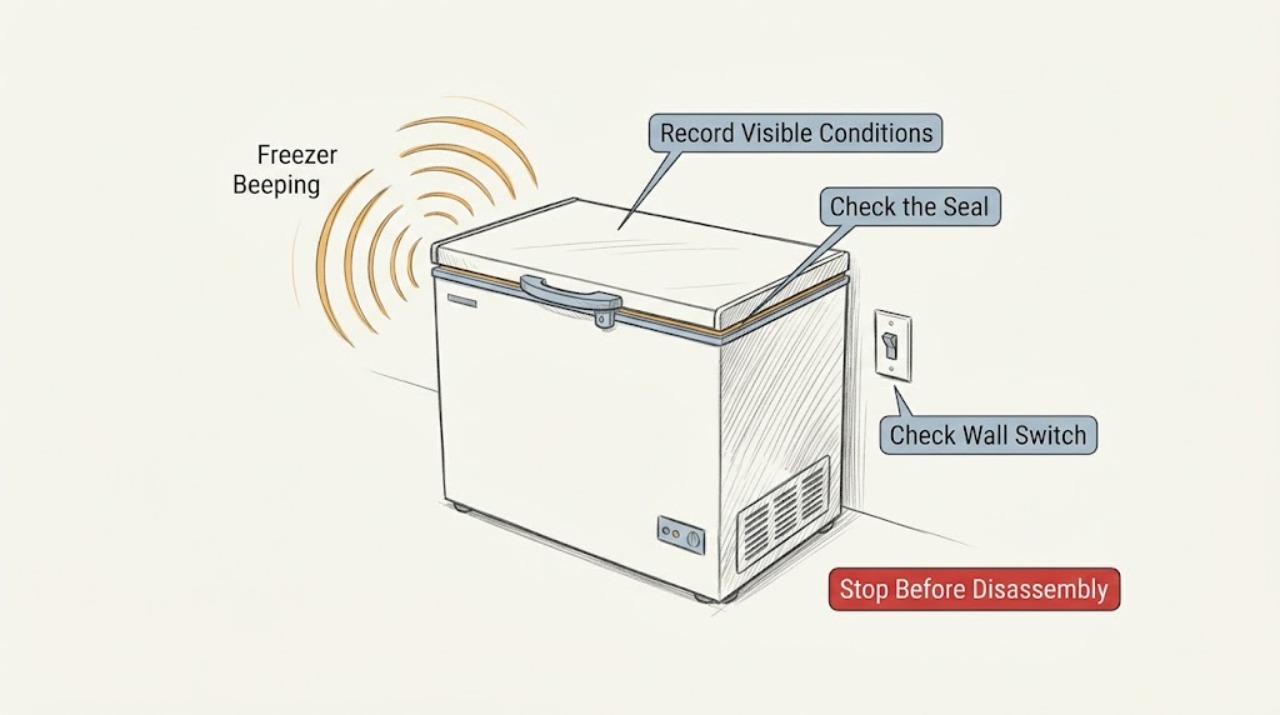
A beeping Bosch freezer usually has either a door alarm or a temperature alarm, and the sound alone does not identify a failed part. A continuous tone with the door open points first to the door not closing; an intermittent tone with a flashing temperature display points to a freezer that is too warm, which can happen after startup, a long-open door, a large fresh load, or a power interruption. Close the door, make sure food or ice is not obstructing the seal, and check whether the freezer is actually cooling. Press the alarm control only to acknowledge the warning after recording what the display shows. If the alarm returns with a warm compartment, food thawing, a water or ice leak, repeated power loss, burning odor, or no cooling, protect the food and arrange qualified appliance service.
Work through in order
Diagnostic checks
Use only checks that match the exact appliance or system and its official guide.
-
Check 1
Listen to the pattern and record the display: check whether the sound is continuous with the door open, intermittent with a flashing temperature display, or accompanied by another symbol or no display at all.
Expected result: The sound stops when the door closes, the temperature display flashes, or the indication does not match either description.
Next step: Close the door and continue with the matching door or temperature check. Save a photo of any code or symbol before pressing the alarm control; escalate an unlisted indication if it returns.
Why this matters
Why: A door-linked continuous tone points to the door alarm, while a temperature-linked tone points to a warm compartment. A different or unlisted indication requires the exact model manual rather than a guessed diagnosis.
-
Check 2
For a door alarm, close the freezer door firmly and inspect the visible seal and door edge for a package, ice, or other obstruction that prevents full closure; do not chip ice with a sharp tool or force the door.
Expected result: The door now closes fully and the sound stops, or it springs open, does not seal, or the alarm continues with the door apparently closed.
Next step: Remove only a loose visible obstruction and close the door once. If the seal is torn, the door is misaligned, or the alarm persists, keep the door closed, limit food exposure, and arrange qualified service.
Why this matters
Why: A closure obstruction can keep the door alarm active and allow the compartment to warm. A door that cannot seal or an alarm that continues after closure points to alignment, seal, switch, or control diagnosis.
-
Check 3
For a temperature alarm, note whether the appliance was just switched on, the door was open for a long time, or a large quantity of fresh food was recently loaded; check that food is not blocking the visible air openings or preventing the door from closing.
Expected result: One of those temporary conditions applies and the freezer begins cooling with the door closed, or the compartment remains warm without one of those conditions.
Next step: Keep the door closed and avoid adding more fresh food while the temperature recovers. If the freezer remains warm, the alarm returns, or food has thawed, do not refreeze thawed food and arrange service or follow local food-safety guidance.
Why this matters
Why: Bosch identifies startup, a long-open door, and a large fresh load as situations that can trigger an alarm without the same implication as a persistent cooling fault. Continued warmth after the cause has passed is more concerning.
-
Check 4
Check from the normal user access points that the appliance has power, the plug is seated if the area is dry, and the visible ventilation openings are not covered by food or objects; do not remove panels or move a loaded freezer.
Expected result: Power was interrupted, an opening was covered, or the power and visible airflow conditions are normal while the alarm and warmth continue.
Next step: Restore only an obvious safe power connection or clear a loose visible obstruction. If power is absent, a breaker trips, or the freezer remains warm with normal supply and airflow, stop experimenting and arrange qualified service.
Why this matters
Why: A power interruption or blocked ventilation can explain a warm-compartment warning, but normal external conditions with continued warmth leave a cooling-system or control fault possible.
-
Check 5
After recording the symptom and correcting one visible cause, press the model's alarm control once to acknowledge the warning, then monitor whether the display stops flashing and whether the freezer continues cooling without reopening the door repeatedly.
Expected result: The warning clears and cooling resumes, or the warning returns, the display remains abnormal, or the compartment stays warm.
Next step: If the alarm returns or food is thawing, stop relying on the alarm control, keep the door closed, protect the food if possible, and arrange qualified appliance service. Do not open the cabinet or test live cooling components.
Why this matters
Why: Silencing the sound only acknowledges the alarm; it does not confirm a safe temperature. A returning warning or persistent warmth means the cause has not been resolved.
Use your observations
Decision map
Find the observation that best matches what you see, then follow the next safe action.
-
PATH 01Safety boundary
What you see
The tone is continuous and linked to the freezer door being open.
Do this next
Close the door and check only the visible seal and door edge for an obstruction. If the tone continues or the door cannot seal, arrange service.
Why this path and its safety boundary
Safety stop: Use the temperature-alarm branch.
-
PATH 02Safety boundary
What you see
The temperature warning follows startup, a long-open door, or a large fresh load.
Do this next
Keep the door closed, avoid adding food, and monitor recovery using the display and the manual's alarm behavior. Do not refreeze thawing or thawed food.
Why this path and its safety boundary
Safety stop: Treat persistent warmth as a cooling or control fault after the external checks.
-
PATH 03Safety boundary
What you see
Power was interrupted or a visible ventilation opening is covered.
Do this next
Restore only the safe visible condition and keep the door closed while the compartment recovers. Stop if a breaker trips or the alarm returns.
Why this path and its safety boundary
Safety stop: Continue to the persistent-warmth branch rather than repeatedly acknowledging the alarm.
-
PATH 04Safety boundary
What you see
The temperature display remains in a warning state or food is thawing or has thawed.
Do this next
Limit door opening, do not refreeze thawing or thawed food, and use the manual's food-safety warning while arranging service or other safe storage.
Why this path and its safety boundary
Safety stop: Monitor one recovery period and stop if the alarm returns.
-
PATH 05Safety boundary
What you see
The beeping returns after the door is closed and one visible correction or acknowledgement.
Do this next
Stop muting the alarm, keep the freezer closed, record the display and food condition, and arrange qualified appliance service.
Why this path and its safety boundary
Safety stop: A cleared warning supports a temporary condition; continue to watch for warmth or another warning on normal use.
Helpful context
Understand the symptom
First identify which alarm is sounding
A continuous sound that stops when the door closes is a door alarm. An intermittent sound with a flashing temperature display is a temperature warning. Some models use an alarm button or another symbol, so record the display and use the exact manual for the controls rather than assuming every Bosch freezer has the same interface.
A warm freezer needs a food-safety decision
A temperature alarm is more important than the noise: it indicates that the compartment may be too warm and the frozen food may be at risk. Avoid opening the door unnecessarily while you check the cause. Do not refreeze thawing or thawed food; follow the food-safety directions in the appliance manual.
Muting the sound does not fix the cause
The alarm control can silence or acknowledge a warning, but it does not prove that the freezer has returned to a safe condition. Note whether the temperature display continues to flash, whether the compartment is cooling, and whether the alarm returns after the door is closed.
Safety boundary
Stop conditions
- Stop and arrange service if the freezer remains warm, food is thawing, the alarm returns repeatedly, or the display shows an unlisted fault.
- Do not refreeze thawing or thawed food; follow the appliance manual's food-safety warning and local food-safety guidance.
- Do not chip ice with a sharp tool, force the door, or remove panels to investigate a beeping freezer.
- Stop for smoke, burning odor, a damaged cord, a repeated breaker trip, water around electrical parts, or unusual heat at the appliance.
- Do not keep acknowledging the alarm while the compartment is warm; keep the door closed and arrange qualified service.
When checks do not resolve it
Need a professional?
Arrange qualified appliance service when the beeping persists after the door and visible airflow checks, the freezer remains too warm, food is thawing, an unlisted display appears, the door will not seal, or there is a leak, electrical odor, damaged cord, repeated power trip, or unusual heat.
Common questions
FAQ
Why is my Bosch freezer beeping continuously?
A continuous tone commonly indicates that the door has remained open. Close it firmly and inspect only the visible seal and door edge for a loose obstruction. If the alarm continues or the door will not seal, arrange service.
Why does my Bosch freezer beep even when the door is closed?
A temperature alarm may be active because the compartment is too warm, including after startup, a long-open door, a large fresh load, or a power interruption. Check cooling and the display; do not keep muting a returning alarm.
Can I press the alarm button to stop the beeping?
Yes, use the model's alarm control only to acknowledge the warning after recording the display. Silencing the sound does not prove that the freezer has reached a safe temperature; arrange service if the warning returns or the compartment stays warm.
What should I do if food in the freezer has started thawing?
Limit door opening and follow the food-safety warning in the manual. Do not refreeze thawing or thawed food; arrange service if the freezer remains warm or the alarm returns.
When should a beeping Bosch freezer be professionally checked?
Request service for persistent beeping, continuing warmth, an unlisted display, a door that will not seal, food at risk, or smoke, burning odor, damaged cord, water near electrics, unusual heat, or repeated power trips.
Read the exact guide
Official sources
- Temperature alarmBosch Home Appliances · Bosch freezer temperature-alarm guidance
- Instructions for UseBosch · Bosch freezer operating and alarm guidance
Community feedback
Share a repair observation
Share a plain-text repair observation. Accepted observations are published automatically; this page may take a moment to update.