
On this page
Start here
Quick answer
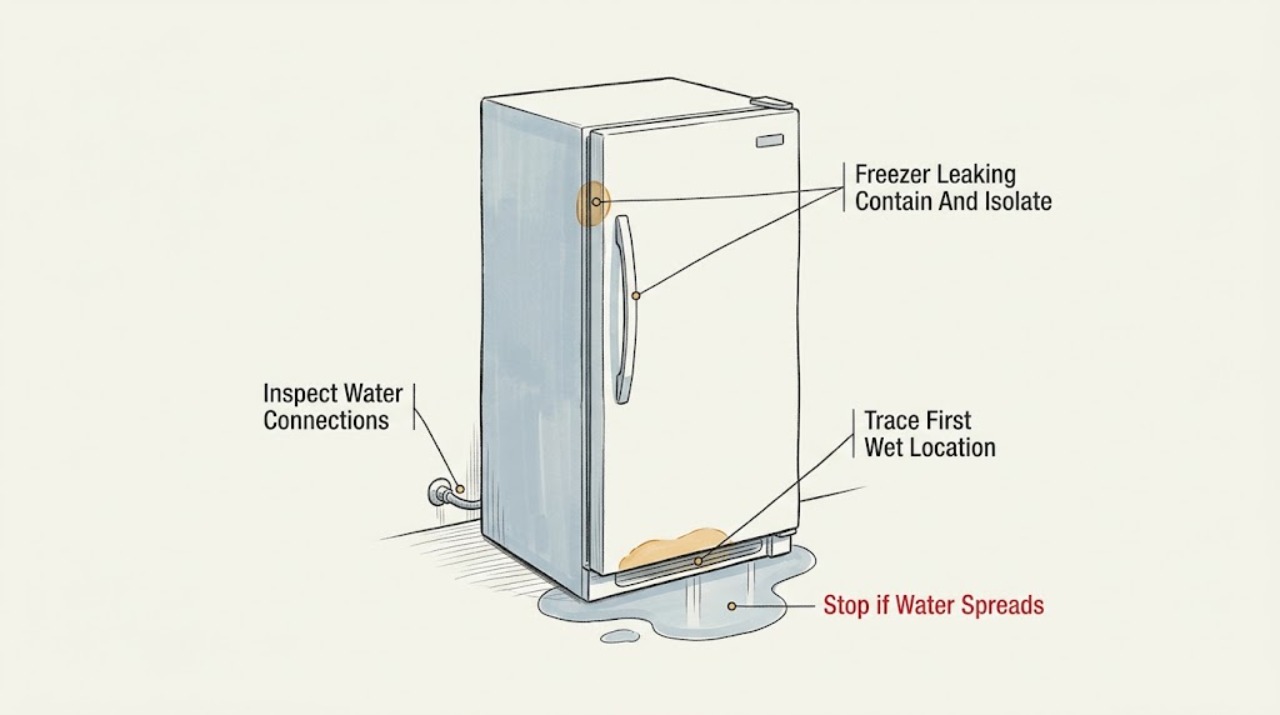
If your Bosch freezer is leaking, first protect the floor and keep water away from electrical parts. If it has an ice maker or water dispenser, check the accessible supply connections and drip tray; otherwise look for excessive frost, a door that is not sealing, or water collecting inside or beneath the appliance. Clean only the accessible tray or surface described by your model manual. Stop and arrange qualified service for a damaged hose, leak from the cabinet or rear, a wet electrical area, rising freezer temperature, or a leak that returns.
Work through in order
Diagnostic checks
Use only checks that match the exact appliance or system and its official guide.
-
Check 1
Place an absorbent towel or shallow container at the first wet spot, keep water away from outlets and controls, and switch the freezer off or disconnect it only if doing so is safe; for a plumbed model, close the accessible water shutoff.
Expected result: The leak stops when the water supply is closed, continues without a water connection, or water is present near electrical parts.
Next step: Keep the appliance closed and continue only with a dry, safe exterior inspection. Arrange service if water has reached electrical components or the leak does not stop.
Stop if: Do not touch wet plugs, outlets, wiring, or the rear cabinet; stop if the floor is unsafe or the appliance is unstable.
Why this matters
Why: A leak that stops with the supply closed is more consistent with the water or ice system. Water near electrical parts creates a safety boundary regardless of the original source.
-
Check 2
With the freezer closed as much as possible, trace the water to its highest visible point: under a drawer or on the compartment floor, around the door seal, at a dispenser tray, behind the appliance, or at a supply connection.
Expected result: Water begins inside with frost, at the front dispenser area, around a hose connection, or beneath/behind the cabinet; the source remains hidden.
Next step: Use the matching branch below and photograph the dry-to-wet path for service if the source is hidden.
Stop if: Do not pull out a built-in freezer, remove panels, or chip ice to expose a suspected drain or pipe.
Why this matters
Why: The location separates a frost or door-seal path from a water-system path. Water that emerges from the cabinet or an inaccessible area cannot be safely diagnosed by wiping the floor alone.
-
Check 3
If the freezer has an ice maker or water dispenser, inspect the accessible water hose and connection for looseness, a kink, or visible damage without disconnecting a pressurized line.
Expected result: A connection is loose, the hose is damaged or kinked, or the connection is dry and the leak appears elsewhere.
Next step: Close the water supply and arrange model-specific service for a damaged hose or connection. Do not substitute a hose or alter the water circuit without the correct model information.
Stop if: Stop for a split hose, a spray or steady flow, water near electricity, or a connection that cannot be isolated safely.
Why this matters
Why: Bosch identifies an untight water connection or damaged hose as a leak cause on water-connected freezer models. A dry connection shifts attention to the drip tray, frost, seal, or an internal fault.
-
Check 4
Check the owner's manual for a user-accessible drip or evaporation tray and, only if your model specifically describes it, inspect the tray for overflow and the freezer compartment for excessive frost; wipe or sponge accessible water as directed.
Expected result: The tray is full, the manual links the leak to frost and defrosting, or the tray and frost level do not explain the water.
Next step: Follow the exact model defrost or tray-cleaning procedure. If the appliance is a frost-free design, the tray is inaccessible, or water returns after the permitted procedure, arrange service.
Stop if: Do not use sharp tools, heat, chemicals, or force to remove ice, and stop if food is thawing rapidly or the water source is hidden behind panels.
Why this matters
Why: Bosch documents model-specific cases in which excessive frost can overflow an evaporation pan during defrosting, while other models identify an overflowing drip tray. These instructions are not interchangeable across freezer models.
-
Check 5
Inspect the entire door gasket and frame for a fold, gap, food or ice obstruction, and unusually heavy frost; close the door gently and check whether the gasket contacts the frame evenly.
Expected result: The gasket is displaced or dirty, the door does not close evenly, or frost is concentrated around the opening; alternatively the seal and frost pattern look normal.
Next step: Remove only loose surface debris with a soft cloth and follow the model manual for gasket care. If the seal is torn, the door is misaligned, or frost returns quickly, call service.
Stop if: Do not stretch, cut, glue, or heat the gasket, and do not force a frozen door open.
Why this matters
Why: Bosch advises checking proper door closure when frost is excessive. A poor seal can admit humid air and increase frost, but a visual check cannot prove that the gasket or hinge is sound.
-
Check 6
After the safe checks, record whether the leak is intermittent or continuous, whether the freezer temperature or alarm changed, and whether the leak returns after the water supply is closed or the permitted tray procedure is completed.
Expected result: The leak persists, returns from an unknown location, is accompanied by a warm compartment or alarm, or is associated with cabinet, tubing, or electrical damage.
Next step: Keep the freezer closed, preserve the leak photos and model number, and arrange qualified Bosch or appliance service.
Stop if: Stop immediately for refrigerant-tube damage, a strong electrical smell, smoke, active spray, a flooded floor, or food that is no longer safely frozen.
Why this matters
Why: A persistent or hidden leak is beyond a surface cleanup. Bosch directs owners to professional help when common checks do not resolve a freezer problem, and water-system or cabinet work is model-specific.
Use your observations
Decision map
Find the observation that best matches what you see, then follow the next safe action.
-
PATH 01Next step
What you see
The leak stops after the water supply to an ice maker or dispenser is closed, and a hose or connection is visibly wet or damaged.
Do this next
Leave the supply closed and arrange qualified service for the connection or hose; do not run the ice or water system.
Why this path and its safety boundary
Why it matters: The water connection is the leading source.
-
PATH 02Next step
What you see
Water is concentrated in or under a dispenser drip tray, or ice residue is visible around the chute.
Do this next
Clean only the accessible tray or loose ice residue as the model manual permits. If dripping continues, request service.
Why this path and its safety boundary
Why it matters: The dispenser tray or ice path may be overflowing or allowing meltwater to escape.
-
PATH 03Next step
What you see
The leak starts inside after heavy frost, and the model manual describes an evaporation pan or manual defrost procedure.
Do this next
Follow that exact model's defrost and tray procedure; do not apply it to a different frost-free model without manual confirmation.
Why this path and its safety boundary
Why it matters: Defrost water may have exceeded the model's evaporation or collection path.
-
PATH 04Next step
What you see
Frost is concentrated around a door that does not close evenly or a gasket with a visible gap.
Do this next
Clean only the surface as directed and arrange service for a torn gasket, misalignment, or frost that returns.
Why this path and its safety boundary
Why it matters: Warm humid air may be entering through a sealing problem.
-
PATH 05Next step
What you see
The leak comes from beneath or behind the cabinet, from an inaccessible drain, or continues after the accessible checks.
Do this next
Keep the appliance safe and arrange qualified service; do not remove rear panels or move a built-in unit to chase the leak.
Why this path and its safety boundary
Why it matters: An internal drain, tray, hose, or cabinet fault is possible.
-
PATH 06Next step
What you see
Water reaches electrical parts, the freezer is warming, there is smoke or an electrical smell, or the floor is flooding.
Do this next
Stop using the appliance, keep clear of wet electrical areas, and obtain qualified urgent service. Protect food only if it can be moved without entering the hazard.
Why this path and its safety boundary
Why it matters: This is an immediate safety boundary.
Helpful context
Understand the symptom
Start with the leak location
Water at the front, inside the freezer, beneath the appliance, and around a dispenser do not point to the same cause. Bosch manuals distinguish water-hose or connection leaks from an overflowing drip tray and from frost-related defrost water, so identify where the first wet spot appears before moving parts.
Model differences matter
Some Bosch freezers are not connected to a water supply, some have an ice maker or dispenser, and some freezer compartments require a model-specific defrost procedure. A fully automatic frost-free model should not be manually dismantled or defrosted just because another model's manual describes an evaporation pan.
Protect food and the appliance
Open the door as little as possible while you contain the leak. If food is warming, the door cannot seal, or water is reaching the outlet, controls, or wiring, treat the situation as a service issue rather than continuing to troubleshoot.
Safety boundary
Stop conditions
- Do not remove cabinet or rear panels, access refrigerant tubing, or work around wet electrical components.
- Do not chip ice with sharp tools, heat the cabinet, stretch the gasket, or force a frozen door.
- Do not leave a water-connected freezer supplied when a hose or connection is actively leaking.
Only after diagnosis
Potential parts
- freezer door gasket
Consider this only if the gasket is torn or remains unable to seal after surface cleaning and correct door alignment are confirmed.
Gasket profiles vary by model; confirm the complete appliance model and Bosch fit information before selecting a replacement. - water supply hose or connection component
Consider this only for a water-connected freezer when the hose or connection is visibly damaged and a qualified diagnosis confirms it as the leak source.
Water-system parts vary by model and installation; verify the complete model and approved part information before replacement. - drip or evaporation tray
Consider this only when the model manual identifies an accessible tray and the tray is cracked, overflowing after the correct procedure, or otherwise confirmed faulty.
Tray designs and access differ by model; do not infer compatibility from appearance.
When checks do not resolve it
Need a professional?
Arrange service for a leak from behind or beneath the cabinet, an inaccessible drain or tray, or any leak that returns after the model-approved surface check., Call a qualified technician for a damaged water hose, torn gasket, misaligned door, active dispenser leak, or a freezer that is warming or alarming., Stop using the appliance and seek urgent qualified help for water near electrical parts, smoke, an electrical smell, refrigerant-tube damage, or flooding.
Common questions
FAQ
Why is my Bosch freezer leaking water?
The likely path depends on where the water first appears: a water connection or dispenser tray on plumbed models, excessive frost and defrost collection on some models, or a door-seal problem that allows extra frost. A hidden or persistent leak needs service.
Can frost make a Bosch freezer leak?
On some Bosch models, the manual links excessive frost in a freezer compartment with an evaporation pan overflowing during defrosting. Use only the defrost procedure for your exact model; a frost-free appliance may require service instead.
What should I check on a Bosch freezer with an ice maker?
Check the accessible water connection and hose for looseness, damage, or a kink, and inspect the dispenser drip tray if your model has one. Close the water supply and arrange service for an active or damaged connection.
Can a bad freezer door seal cause water?
A poor seal can allow humid air in and increase frost. Bosch advises checking that the door closes properly when frost is excessive; a torn seal, uneven door, or returning frost should be assessed by a technician.
When should I stop cleaning and call for service?
Stop for water near electrical parts, an active spray, a damaged hose or cabinet, smoke, an electrical smell, flooding, a warming freezer, or a leak that persists after the model-approved accessible check.
Read the exact guide
Official sources
- Information for Use KFD96.. | BoschBosch Home Appliances · Bosch KFD96 freezer water connection, hose, drip tray, and dispenser guidance
- Freezer problems | Common Freezer ProblemsBosch Home Appliances · Bosch freezer frost, door closure, temperature, and service guidance
- Information for Use CST18..., CST20..., CST22... | BoschBosch Home Appliances · Bosch CST18, CST20, and CST22 freezer-compartment leak and defrost guidance
- Refrigerator-freezerBosch Home Appliances · Bosch refrigerator-freezer water connection, door, and safety guidance
Community feedback
Share a repair observation
Share a plain-text repair observation. Accepted observations are published automatically; this page may take a moment to update.