
On this page
Start here
Quick answer
First locate the liquid: inside the cabinet, on the outer walls, or on the floor underneath. Keep the freezer closed while you inspect, and stop immediately if water reaches the plug, socket, damaged cord, or another electrical area. Inside liquid can come from an unwrapped or damaged food package, a blocked drainage outlet, or excess frost that cannot drain correctly; remove only accessible spilled food and follow the Beko manual for any model-specific drain or defrost procedure. A wet floor under the appliance can involve the drip tray or another service-level leak, so only inspect a dry, unplugged, cool, accessible tray when the plug and socket can be handled safely. Do not use knives, hairdryers, heaters, forced tools, or cabinet disassembly. If the leak persists, the freezer is warming, the seal is damaged, the cabinet or refrigerant circuit is damaged, or electrical parts are wet, stop using it and arrange qualified appliance service.
Before you begin
Safety first
- User checks are limited to locating the liquid, removing a clear food spill, inspecting an accessible seal, following the exact manual's user drain or defrost method, and viewing a dry accessible tray after safe shutdown. Electrical areas, hot or sealed components, refrigerant, wiring, hidden drains, panels, and recurring or warming leaks require qualified service.
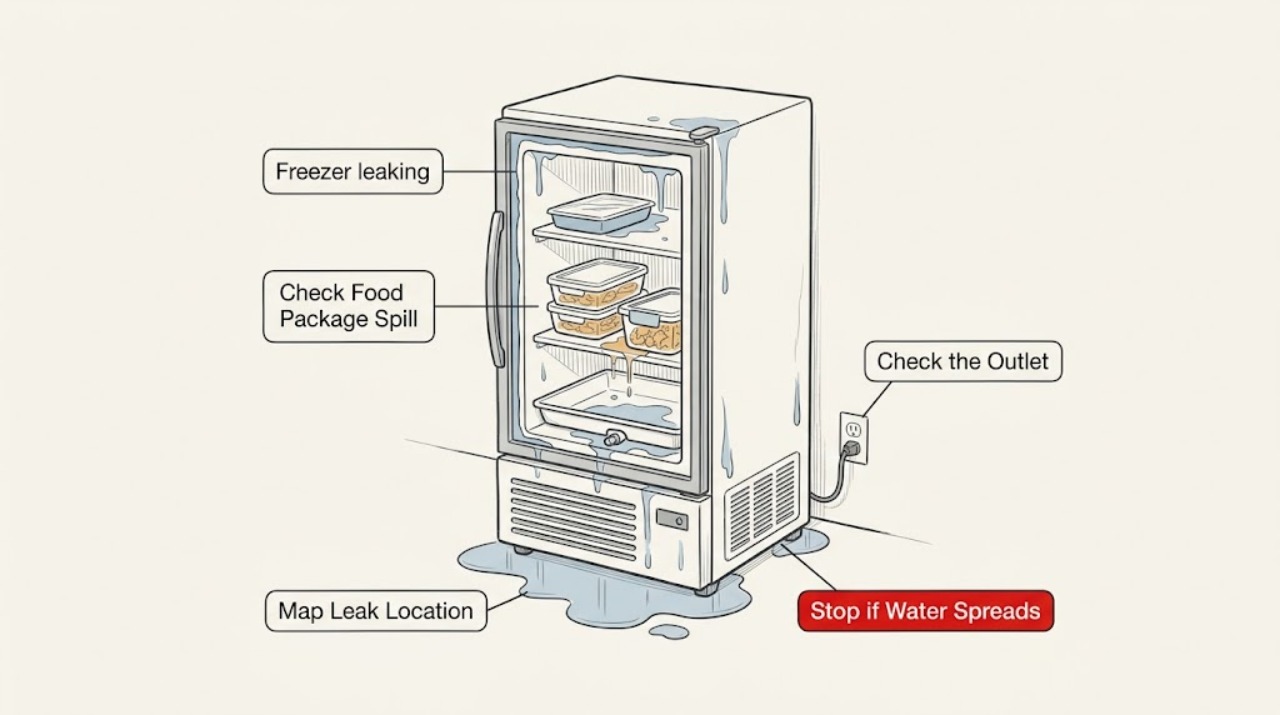
Work through in order
Diagnostic checks
Use only checks that match the exact appliance or system and its official guide.
-
Check 1
Do not add water or keep the door open while inspecting. From a dry, safe position, identify whether the liquid is inside the freezer, on the outer walls, at the front or rear floor area, or near the cord and socket. Note whether the freezer is still cold and whether the leak appeared after defrosting, a power interruption, moving the appliance, or a food spill.
Expected result: Liquid is only inside; the outside wall is damp in a cold or unheated room; water is under the appliance; or water is near the cord, socket, controls, or a damaged cabinet.
Next step: Continue only with the matching safe visible check if the appliance and floor are dry around the electrical supply. For water near electrical parts, cabinet damage, or an unsafe floor, stop using the freezer and arrange qualified service.
Stop if: Stop immediately if liquid reaches the cord or socket, the cabinet is damaged, or the floor is unsafe.
Why this matters
Why: An inside spill or defrost-drain pattern is different from a floor leak or exterior condensation. Water near electrical parts or a damaged cabinet is a safety boundary, not a normal cleaning branch.
-
Check 2
With the freezer kept as closed as practical, check containers, bags, bottles, and packages for a split seam, open lid, thawed food, or liquid pooled directly beneath one item. Move only intact, manageable food to a dry container or other safe cold-storage location, wipe the accessible interior with a cloth, and keep acidic or salty foods sealed; do not scrape bonded ice or remove an interior panel.
Expected result: A damaged package sits directly over the liquid; no package is leaking; the liquid has reached a metal or plastic surface; or food has thawed and the freezer is no longer maintaining cold.
Next step: Discard or handle food according to local food-safety guidance, clean and dry only accessible surfaces, and observe whether liquid returns. If there is no package source or the appliance is warming, continue only with the frost and seal observation and prepare for service.
Stop if: Do not handle thawed food if its safety is uncertain, and do not scrape ice with metal or sharp tools.
Why this matters
Why: Beko warns that fluids from unwrapped or damaged food can corrode metal, warp plastic, and reduce hygiene. A clean area with no source, or a warming freezer, makes a drainage, door-seal, or cooling fault more relevant.
-
Check 3
If the Beko manual for this exact model identifies an accessible interior drain outlet or supplied drain tool, inspect the outlet only after the area is dry and the freezer is safely switched off as the manual requires. Use only the supplied or manual-approved method, without pushing a sharp object into the drain, and do not remove fixed panels or plumbing.
Expected result: The outlet is visibly blocked; the manual-approved cleaning clears the outlet and water drains; the outlet is clear but water remains; or the model has no user-accessible drain procedure.
Next step: Refit only the user-removable cover or plug named by the manual and monitor a small amount of meltwater. If the drain remains blocked, water returns, or access requires a panel, stop and arrange qualified Beko appliance service.
Stop if: Do not probe the drain with metal, remove fixed panels, or continue if water contacts electrical parts.
Why this matters
Why: A blocked condensation or defrost outlet can leave water inside, but the correct access and tool vary by Beko model. A clear outlet with continuing water or no user procedure points to a service-level drain, frost, seal, or cabinet issue.
-
Check 4
Inspect the door or lid seal, frame, and accessible frost without forcing the closure. Look for a torn or displaced seal, packages holding the door or lid open, frost preventing a full seal, or a heavy ice layer. Do not chip ice with a knife or other sharp object; if manual defrosting is allowed, follow the exact Beko manual and use only its recommended method.
Expected result: The seal is visibly damaged; frost prevents the door or lid from closing; the freezer is overfilled or a package obstructs closure; or the seal and closure appear normal.
Next step: Remove only an obvious package obstruction and close the door or lid normally. If the seal is damaged, frost returns, or a manual defrost is needed, follow the manual and arrange service if the leak or warming persists.
Stop if: Do not force the door or lid, peel off a bonded seal, or use a knife, hairdryer, heater, or other electrical appliance to remove ice.
Why this matters
Why: Beko links excessive frost, prolonged opening, overfilling, and damaged seals with poor closure and incorrect drainage or condensation behavior. A normal seal and closure make a food spill, drain, tray, or internal fault more relevant.
-
Check 5
If the leak is on the floor and the cord, socket, floor, and hands are dry, switch the appliance off and disconnect it only as the Beko guidance permits. Wait for hot surfaces to cool, then inspect only the visible drip tray at the rear if it can be seen without moving the appliance or removing a cover. Look for a tray that is displaced, damaged, or visibly full; do not touch condenser wires or the sealed cooling circuit.
Expected result: The visible tray is securely seated and dry; it is displaced or damaged; it contains liquid; or the rear area is hot, inaccessible, wet, or damaged.
Next step: Only wipe an accessible tray in place as the manual permits, refit nothing that does not seat normally, and reconnect only when the appliance and supply area are dry. Arrange service for a damaged, inaccessible, repeatedly filling, or unknown leak.
Stop if: Do not move the appliance, remove rear covers, touch hot or sharp components, or handle a wet plug or socket.
Why this matters
Why: Beko identifies a drip tray above the compressor as one possible source of water under a fridge-freezer, but rear components can be hot and model layouts differ. An inaccessible or damaged rear area needs service rather than movement or disassembly.
-
Check 6
After the safe visible checks, record the Beko model from its rating label, the exact leak location, whether the liquid is clear or food-related, frost and seal condition, drain or plug observation, floor and rear-area condition, cooling performance, recent defrost or movement, and whether the leak returns after cleaning. Do not order a seal, drain part, tray, or control from the symptom alone.
Expected result: The leak stops after a confirmed package spill is removed; water returns without a new spill; the freezer is warming; the seal or cabinet is damaged; or the source remains inaccessible.
Next step: Keep the freezer closed and limit use if it is warming or leaking. Give the record and photographs taken from a dry safe position to qualified Beko appliance service; do not continue with internal disassembly.
Stop if: Stop using the appliance and arrange service for recurrence, warming, electrical moisture, cabinet or cord damage, or any need to open the cabinet or sealed system.
Why this matters
Why: A one-time food spill can be local, but recurrence, warming, damage, or an unknown source can involve drainage, door sealing, defrost control, tray, insulation, or sealed-system work that cannot be identified safely from the outside.
Use your observations
Decision map
Find the observation that best matches what you see, then follow the next safe action.
-
PATH 01Next step
What you see
Liquid is directly under a split, unwrapped, or damaged food package and the freezer remains cold.
Do this next
Remove the source safely, clean and dry accessible surfaces, keep food sealed, and monitor. Arrange service if liquid returns without another spill or if cooling changes.
Why this path and its safety boundary
Why it matters: The immediate source is likely a food spill rather than a confirmed appliance leak, but leaked food can damage or contaminate surfaces.
-
PATH 02Next step
What you see
Liquid collects inside without a leaking package and the model has a user-accessible drain outlet identified in its manual.
Do this next
Use only the manual-approved drain method after safe shutdown and drying. Stop and arrange service if the outlet stays blocked, the water returns, or access requires a panel.
Why this path and its safety boundary
Why it matters: A blocked condensation or defrost path is plausible, but model-specific access and tools matter.
-
PATH 03Next step
What you see
Frost prevents the door or lid from closing, packages obstruct closure, or the seal is torn or displaced.
Do this next
Remove only an obvious obstruction and follow the exact manual for any defrost. Arrange service for a damaged seal, recurring frost, persistent leak, or warming freezer.
Why this path and its safety boundary
Why it matters: Warm air entry and excess frost can interfere with normal drainage and leave meltwater, while a damaged seal may need replacement matched to the exact model.
-
PATH 04Next step
What you see
Water is under the appliance, the supply area is dry, and a visible rear drip tray is displaced, damaged, or holding liquid.
Do this next
Only clean or reseat an accessible tray if the model guidance permits and it can be done without moving or opening the appliance. Arrange service for damage, recurrence, or an inaccessible tray.
Why this path and its safety boundary
Why it matters: A drip-tray issue is possible, but rear components may be hot and the exact arrangement differs by model.
-
PATH 05Next step
What you see
The outside of a chest freezer is damp in an unheated garage or other cold, humid space, with no pooling and normal cooling.
Do this next
Wipe the exterior dry, maintain the installation clearances in the manual, and monitor. Arrange service if moisture pools, enters electrical areas, or cooling changes.
Why this path and its safety boundary
Why it matters: Beko documents exterior condensation in cold or unheated areas as potentially normal, but this does not explain a continuing floor leak or warming appliance.
-
PATH 06Next step
What you see
Water reaches the plug, socket, control area, cord, cabinet damage, or a rear electrical component, or the floor is unsafe.
Do this next
Stop using the freezer, keep people away from the wet area, and arrange qualified appliance or electrical help from a dry safe position. Do not handle a wet plug, move the appliance, or remove covers.
Why this path and its safety boundary
Why it matters: Shock, fire, and further appliance damage are possible; normal cleaning and leak checks are no longer appropriate.
-
PATH 07Next step
What you see
The leak returns without a food spill, the freezer is warming, the seal remains damaged, or the source is not accessible after the safe checks.
Do this next
Keep the door or lid closed, document the pattern, and arrange qualified Beko appliance service. Do not remove internal panels or attempt sealed-system work.
Why this path and its safety boundary
Why it matters: A drain, defrost, seal, tray, insulation, or sealed-system fault may be involved and cannot be identified from symptom alone.
Helpful context
Understand the symptom
Start with where the liquid appears
A spill inside a Beko freezer is not the same symptom as water under the cabinet. Unwrapped or damaged food can release liquid that corrodes or warps surfaces. A blocked drain or frost buildup can leave water in the cabinet after defrosting. A floor leak can involve the drain tray or a hidden appliance fault. Exterior moisture in a cold garage may be condensation rather than a component failure, but pooled or recurring water still needs investigation.
Keep electrical and sealed-system work out of a user check
Keep hands dry and do not handle a plug or socket surrounded by water. Do not remove the rear cover, pierce ice, touch refrigerant pipes, open the sealed cooling circuit, or use a hairdryer, heater, knife, or other electrical appliance to accelerate defrosting. If the cord, socket, cabinet, or compressor area is wet or damaged, stop and arrange qualified service from a safe, dry position.
A leak that returns changes the decision
If removing a leaking package and cleaning an accessible surface ends the problem, keep food sealed and monitor. If water returns without a new spill, frost prevents the door or lid from closing, the drain does not clear using the method named in the manual, or the freezer temperature rises, the leak is not proven repaired. Record the location and timing for service rather than guessing at a replacement part.
Safety boundary
Stop conditions
- Stop immediately if water reaches the cord, plug, socket, controls, rear electrical area, damaged cabinet, or an unsafe floor; do not handle a wet electrical supply.
- Do not use knives, metal tools, hairdryers, heaters, or other electrical appliances to remove ice or speed defrosting, and do not pierce ice or touch refrigerant pipes.
- Do not remove rear or interior panels, move a heavy appliance, open the sealed cooling circuit, or attempt compressor, refrigerant, wiring, or hidden-drain repair.
- Arrange qualified appliance service when liquid returns without a food spill, the freezer is warming, a seal or cabinet is damaged, a drip tray is inaccessible or repeatedly fills, or the leak persists after the manual-approved user checks.
Only after diagnosis
Potential parts
- freezer door or lid gasket
Consider this only if the exact model's seal is visibly torn, displaced, or unable to close evenly and the frost or condensation pattern supports a sealing problem.
Confirm the exact Beko model and the manual's fit information before ordering; a gasket will not correct a blocked drain, tray fault, cabinet damage, or sealed-system problem.
When checks do not resolve it
Need a professional?
Call promptly for water near the plug or socket, cord or cabinet damage, warming food, recurring liquid without a spill, a damaged seal, persistent frost, an inaccessible or repeatedly filling tray, or any work requiring panels, wiring, refrigerant, or hidden drainage.
Safety scope: User checks are limited to locating the liquid, removing a clear food spill, inspecting an accessible seal, following the exact manual's user drain or defrost method, and viewing a dry accessible tray after safe shutdown. Electrical areas, hot or sealed components, refrigerant, wiring, hidden drains, panels, and recurring or warming leaks require qualified service.
Have this ready
- Provide the exact Beko model, leak location, liquid appearance, package and frost observations, seal and closure condition, drain or tray result, cooling performance, recent defrost or movement, and dry-position photographs.
Common questions
FAQ
Why is my Beko freezer leaking water inside?
Check first for a split or unwrapped food package. If there is no spill, a blocked condensation or defrost outlet, excess frost, or a door or lid seal that is not closing can be involved. Follow only the exact model manual's drain or defrost method and arrange service if water returns or the freezer warms.
Why is water leaking onto the floor under my Beko freezer?
If the floor and electrical supply are dry, a visible drip tray may be displaced, damaged, or holding liquid. Do not move the appliance or remove rear covers. Inspect only an accessible tray after safe shutdown and cooling; arrange service for a recurring, inaccessible, or unexplained floor leak.
Can frost or a bad Beko freezer seal cause leaking?
Excess frost or a damaged seal can prevent proper closure and interfere with normal drainage or condensation behavior. Remove only an obvious package obstruction, follow the model manual for defrosting, and do not chip ice with a sharp tool. A torn seal or recurring frost needs model-matched service or replacement guidance.
Can I use a hairdryer or knife to remove ice from a leaking Beko freezer?
No. Beko's chest-freezer safety instructions prohibit sharp tools and electrical appliances for accelerating defrosting. Use only the defrost procedure in the exact user manual; if the ice cannot be removed safely or the leak persists, arrange qualified service.
Is condensation on the outside of a Beko freezer normal?
Beko documents exterior condensation as possible in cold or unheated areas. Wipe it dry and monitor only if cooling is normal and there is no pooling. Persistent or pooled water, moisture near electrical parts, or a warming freezer requires service.
Read the exact guide
Official sources
- Why is the bottom of the inside of my fridge wet?Beko UK · Manufacturer guidance for water inside a Beko refrigeration cabinet, blocked condensation drainage, frost buildup, door seals, and water under the appliance at the drip tray.
- Chest Freezer: Instruction of useBeko · Beko chest-freezer manual guidance on food-package leaks, exterior condensation in unheated areas, lid closure, drain-plug defrosting, sharp-tool and electrical-heater prohibitions, and cooling-circuit safety.
Community feedback
Share a repair observation
Share a plain-text repair observation. Accepted observations are published automatically; this page may take a moment to update.