
On this page
Start here
Quick answer
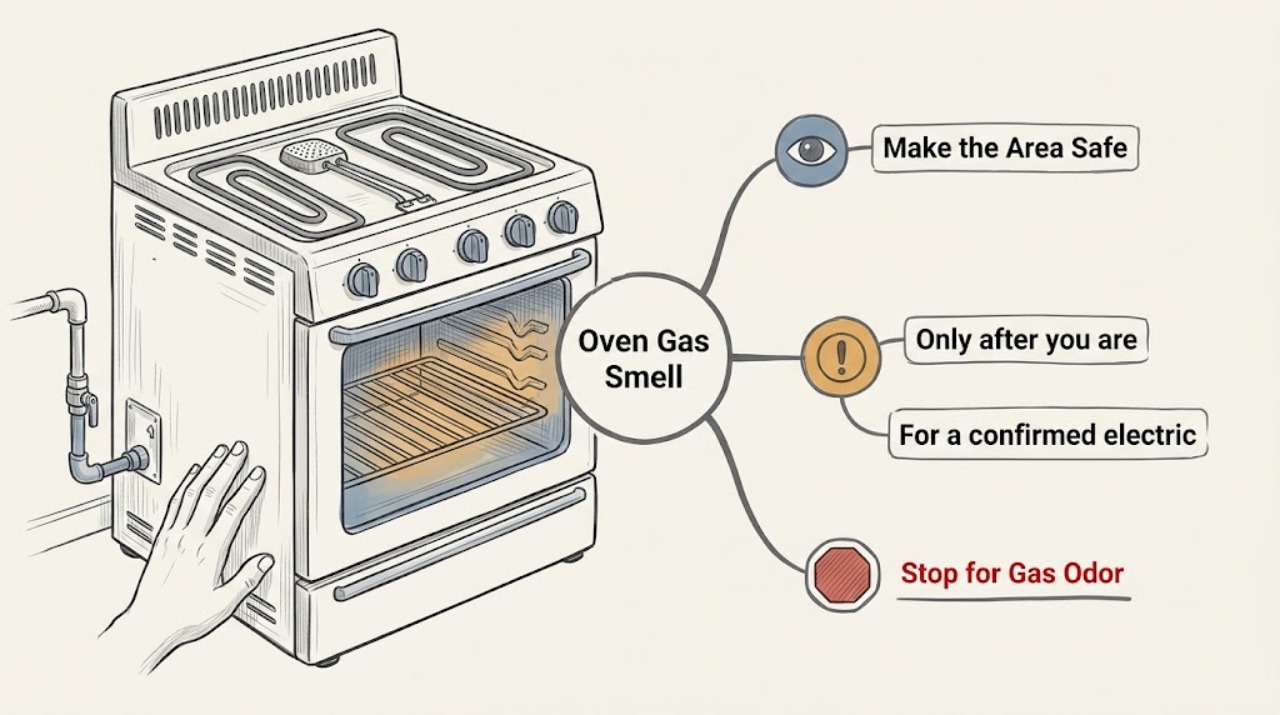
Treat a gas-like or rotten-egg odor as a possible leak until a qualified professional or the gas utility says otherwise. Do not light the oven, relight a pilot, adjust appliance controls, use switches, or use a phone in the odor area. If the smell is strong, spreading, or the fuel type is uncertain, leave immediately with everyone else and call your local gas utility or emergency service from a safe location. Many DeLonghi countertop ovens are electric: their manual describes a temporary new-appliance smell and smoke during first use after packing is removed, but that does not make a gas odor safe to ignore. Once the area is confirmed safe, identify the exact model and whether it is electric before any limited cleaning or service discussion.
Work through in order
Diagnostic checks
Use only checks that match the exact appliance or system and its official guide.
-
Check 1
If any gas-like odor is present now, stop cooking and do not touch the oven controls, light switches, plugs, fans, or phones in the odor area. Move people and pets away; if the odor is strong or you are unsure, leave the building immediately.
Expected result: The odor is strong, spreading, accompanied by hissing, or still present after the oven is no longer being used; or the odor is no longer detectable from a safe location.
Next step: From outside or another safe location, call the local gas utility or emergency service. Do not return or turn gas back on until the responsible utility or qualified professional says it is safe.
Why this matters
Why: A persistent or strong odor can indicate an active gas release, and an ignition spark from a switch or appliance can create a fire or explosion hazard. The absence of odor after leaving does not prove that the appliance is safe.
-
Check 2
Only after you are in a safe location, identify the exact DeLonghi model from its rating plate or manual and determine whether it is a mains-powered countertop oven or an appliance with a gas connection. Do not move the appliance or remove a cover to find out.
Expected result: The manual and rating information describe an electric oven with a power cord and no gas connection, or the installation has a gas pipe, cylinder, burner, pilot, or other fuel connection, or the fuel type cannot be confirmed.
Next step: For a gas-connected or uncertain installation, keep the appliance off and obtain a qualified gas-appliance inspection. For a confirmed electric model, continue only after the odor source has been cleared as a safety issue.
Why this matters
Why: The DeLonghi manual opened for this research describes plug-in heating elements and first-use packing removal, while a gas-connected or uncertain installation needs gas-safety handling. A gas odor must not be explained away as an electric appliance smell without confirming the appliance and surrounding installation.
-
Check 3
For a confirmed electric DeLonghi oven that is new or being used for the first time, check from a cold, unplugged appliance that all protective cardboard, plastic, bags, and booklets have been removed, and that ventilation openings are unobstructed. Do not inspect internal wiring or heating elements.
Expected result: Packing material is found, the oven is new and the odor is a temporary manufacturing smell without a fuel-gas character, or the cavity is clear but the odor smells like gas, burning insulation, or overheated plastic.
Next step: Remove only loose external packing described by the manual and keep the oven unplugged until the odor is gone and the model instructions permit use. If the odor is gas-like, electrical-burning, or unexplained, stop and arrange qualified service rather than running a burn-off cycle.
Why this matters
Why: DeLonghi states that a new smell and some smoke can occur during the specified first-use preparation of the referenced electric model. Packing left inside, blocked ventilation, or a damaged electrical appliance can create a different risk; a gas-like or electrical-burning odor is not a normal first-use result.
-
Check 4
Check whether anyone has headache, dizziness, confusion, nausea, faintness, breathing difficulty, or whether a carbon-monoxide alarm has sounded. Do this from fresh air and do not re-enter to investigate symptoms.
Expected result: Anyone has symptoms or the alarm has sounded, or no one has symptoms and no alarm has sounded.
Next step: Get everyone to fresh air and seek emergency medical help, explaining possible carbon-monoxide exposure. Have fuel-burning appliances inspected by a qualified technician before use; do not rely on a detector as a substitute for inspection.
Why this matters
Why: Carbon monoxide cannot be seen or smelled and can be produced by malfunctioning fuel-burning appliances. Symptoms or an alarm make this a health and emergency issue, not a routine oven-odor check.
-
Check 5
After the gas utility or qualified professional has cleared the area and the exact appliance is confirmed, document when the odor occurs, whether it follows ignition or preheating, the model number, fuel type, and any alarm, flame, smoke, or visible damage. Do not reproduce the odor for a test.
Expected result: The odor is linked to a gas connection, burner or pilot, venting, electrical heating, packing, food residue, or remains unexplained after the safety inspection.
Next step: Follow the utility or technician's written instructions and keep the oven out of service until the recommended repair and safety check are complete. Do not bypass an interlock or relight a pilot yourself.
Why this matters
Why: Timing can help the qualified technician separate an installation or fuel-control issue from an electric appliance or residue issue, but it cannot prove that a gas appliance is safe for continued use.
Use your observations
Decision map
Find the observation that best matches what you see, then follow the next safe action.
-
PATH 01Next step
What you see
The odor is strong, spreading, or the fuel type cannot be confirmed.
Do this next
Evacuate immediately, keep others away, and contact local gas emergency or emergency services from a safe location. Do not operate controls, switches, phones, or other equipment in the odor area.
-
PATH 02Next step
What you see
A gas-connected oven or surrounding gas installation is involved, even if the odor stops after the oven is turned off.
Do this next
Do not use or relight it. Have the gas utility or a properly qualified gas engineer inspect the appliance and installation before anyone restores service.
-
PATH 03Next step
What you see
The exact DeLonghi model is a confirmed electric countertop oven and the odor occurs only during the documented first-use preparation without a gas or burning-electrical smell.
Do this next
Follow that model's instructions for removing packing and ventilating the room, while supervising the first use. Stop if the smell is not the expected new-appliance odor or if smoke persists.
-
PATH 04Next step
What you see
The odor resembles burning insulation or plastic, the cord or receptacle is hot or damaged, the appliance sparks, or the breaker trips.
Do this next
Stop using the appliance and disconnect power only if it is safe to do so without entering a gas-odor area. Arrange qualified electrical or appliance service; do not operate it again to confirm the fault.
-
PATH 05Next step
What you see
A carbon-monoxide alarm sounds or anyone develops possible exposure symptoms.
Do this next
Leave for fresh air immediately and seek emergency medical help. Keep the appliance off and have the fuel-burning system inspected before re-entry or use.
-
PATH 06Next step
What you see
No source is confirmed after the safety response.
Do this next
Keep the DeLonghi oven out of service and provide the technician with the model, fuel type, odor timing, installation details, and any alarm or symptom information. Do not keep experimenting with heat or ignition.
Helpful context
Understand the symptom
Safety comes before diagnosis
A smell near an oven cannot be safely diagnosed by smell alone. Natural gas is odorized to make a leak noticeable, and a faint odor can still matter. Do not test a suspected leak with a flame, do not search behind the oven, and do not keep preheating to see whether the smell disappears. Leave the area and contact the local gas utility or emergency service from outside or another safe location when a gas leak is possible.
Do not confuse a new-appliance odor with fuel gas
The opened DeLonghi oven safeguards describe removing protective packing before first use and a supervised empty first-use cycle to clear a temporary new smell and smoke. That guidance applies to the exact electric model described by the manual; it is not permission to operate an oven that is connected to fuel gas or that has a rotten-egg odor, combustion symptoms, or an unknown installation.
When checks do not resolve it
Need a professional?
Use qualified gas-appliance service for any gas-connected or uncertain installation, and qualified appliance or electrical service for an unexplained odor from a confirmed electric DeLonghi oven.
Common questions
FAQ
Is a gas smell from a DeLonghi oven safe if it disappears after preheating?
No. If the appliance is gas-connected or the fuel type is uncertain, keep it off and have the gas utility or a qualified professional inspect it. Never keep preheating to see whether an odor goes away.
Can a new electric DeLonghi oven smell during first use?
The opened DeLonghi safeguards describe a temporary new smell and some smoke during the specified first-use preparation after protective materials are removed and ventilation is provided. That does not describe a rotten-egg gas odor or an electrical-burning smell.
What should I do if I smell gas near the oven right now?
Do not operate controls, switches, lights, phones, or other equipment in the odor area. Leave with everyone else if the odor is strong or uncertain, then contact the local gas utility or emergency service from a safe location.
Could a gas smell be carbon monoxide?
Carbon monoxide itself cannot be seen or smelled. A malfunctioning fuel-burning appliance can produce it, so symptoms or a carbon-monoxide alarm require fresh air and emergency medical help, followed by qualified inspection before reuse.
Read the exact guide
Official sources
- Protect Your Family and Yourself from Carbon Monoxide PoisoningU.S. Environmental Protection Agency · General carbon-monoxide safety for homes with fuel-burning appliances, including gas ranges and ovens.
- IMPORTANT SAFEGUARDSDe’Longhi · Use only when the exact DeLonghi oven model and electric design match the manual; it does not authorize operation of a gas-connected or uncertain appliance.
- Gas safety - Home ownersHealth and Safety Executive · General domestic gas-safety guidance; use the local equivalent qualified gas professional and emergency contact for the appliance location.
- What To Do If You Smell Natural GasConnecticut Public Utilities Regulatory Authority · General gas-odor response for any home appliance, including an oven; local emergency and utility procedures may vary.
Community feedback
Share a repair observation
Share a plain-text repair observation. Accepted observations are published automatically; this page may take a moment to update.