
On this page
Start here
Quick answer
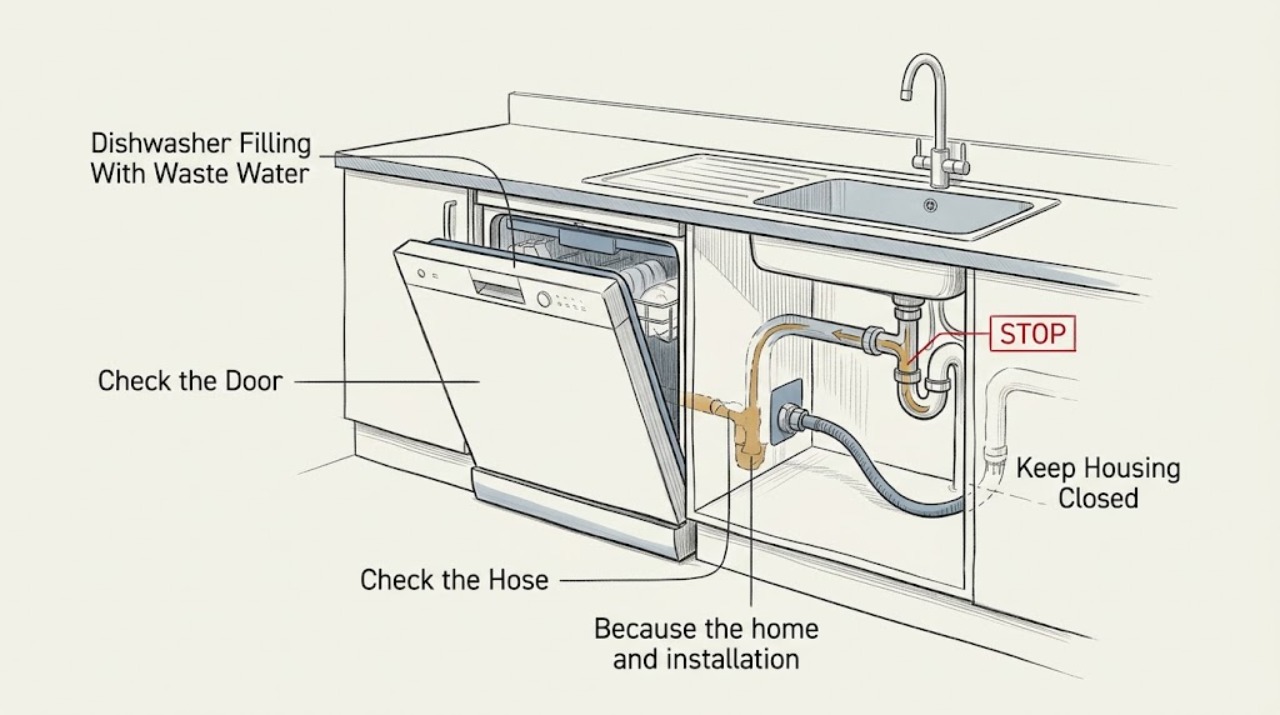
Do not run the Electrolux KEAF7100L or handle the water if it may be waste water. Close the dishwasher's water tap, keep the door closed, and isolate the plug only from a dry, safe position. Because this is a new UK installation, ask the installer to verify the sink or siphon-trap connection, removal of any blanking plug, and the drain hose routing before anyone assumes an internal dishwasher part has failed. Electrolux's UK guidance identifies drain-hose installation as a cause of water flowing back, and its exact-model manual requires qualified installation and says not to use the appliance until a problem is fixed.
Work through in order
Diagnostic checks
Use only checks that match the exact appliance or system and its official guide.
-
Check 1
Stop the dishwasher and keep the door closed if the water looks or smells like waste water. Close the dishwasher's water tap. From a dry, safe position, unplug it if the plug is accessible without touching wet areas; otherwise leave the electrical isolation to a qualified person.
Expected result: The water level stops rising after the tap is closed, or it continues to rise; there is a sewage smell, visible contamination, floor leakage, or water near electrical parts.
Next step: Do not run a cycle, bail out the water, touch the sump, or reconnect power. Keep people and pets away and contact the new-build installer and authorised appliance service, reporting any floor or electrical-area water.
Stop if: Do not handle suspected waste water, open wet electrical areas, tilt the dishwasher, or repeat a cycle as a test.
Why this matters
Why: A rising level with the tap closed points away from normal programmed filling and makes backflow, retained water, or another plumbing condition more important to establish. Contamination, a leak, or wet electrics is a hygiene and safety stop rather than a user test.
-
Check 2
Without moving the integrated dishwasher, inspect only the visible drain hose route under the sink or at the accessible service opening. Look for a kink, twist, crushing, damage, or a hose that drops before its connection; have the installer measure the drain inlet point and overall hose length against the Electrolux guidance.
Expected result: The hose is kinked, damaged, or twisted; the drain inlet is not between 40 and 85 cm above the floor; the hose exceeds 400 cm; or the route appears correct.
Next step: Photograph the accessible route and ask the installer to correct any measured defect. Do not pull the appliance forward, unfasten the hose, or make a temporary bucket or floor-drain connection.
Stop if: Do not remove cabinetry, disconnect a pressurised or contaminated hose, or alter the built-in installation as a home test.
Why this matters
Why: A wrong height, excessive length, or restricted route can allow drainage or backflow problems and is an installation finding, not proof of a failed pump or valve. A correct visible route does not rule out a concealed connection or internal fault.
-
Check 3
Because the home and installation are new, ask the installer to inspect the sink spigot or siphon-trap branch where the dishwasher drain connects and confirm that its blanking plug was removed. Do this as an installer handoff rather than reaching into the waste connection yourself.
Expected result: The dishwasher was recently installed or moved and the blanking plug is still present, the hose is connected to the wrong waste branch, or the connection is confirmed clear and correctly made.
Next step: Have the installer correct the waste connection and document the change. Do not start a verification cycle while contaminated water remains or until the installer and service provider say the appliance is safe to use.
Stop if: Do not insert hands into the trap, remove contaminated plumbing, or use drain chemicals or a homemade flush.
Why this matters
Why: Electrolux specifically adds blanking-plug removal as a check for a recently installed or moved dishwasher. A blocked or incorrectly prepared sink connection can explain a new-build symptom without identifying an appliance component; a confirmed plumbing connection shifts the case to appliance service if water still returns.
-
Check 4
Record when the water appears without operating the dishwasher: after the sink drains, after another appliance discharges, immediately after installation, or gradually while the dishwasher is switched off. Also record the exact KEAF7100L rating-plate model, PNC, any indicator pattern, and whether the water is clean-looking or contaminated.
Expected result: Water returns after sink discharge or another drain event; water remains or rises while the sink is idle and the dishwasher is off; or the timing cannot be established safely.
Next step: Give the timeline, photos, model/PNC, installation date, and any floor-water details to the installer or authorised service centre. Do not run another cycle to distinguish the paths.
Stop if: Do not open panels, test a valve, force a drain, or reconnect the appliance to reproduce the symptom.
Why this matters
Why: A drain-event relationship keeps plumbing backflow and hose routing high on the list. Water entering while the appliance is off matches Electrolux's separate service path for unwanted filling and must not be treated as a reason to replace a valve without diagnosis. An unknown timeline is still enough to keep the appliance out of service.
Use your observations
Decision map
Find the observation that best matches what you see, then follow the next safe action.
-
PATH 01Next step
What you see
The first occurrence was during or immediately after a new-build installation, and the accessible hose route or sink connection has not been signed off.
Do this next
Keep the appliance unused and have the installer verify the waste connection, hose height, hose length, and leak-free installation. Escalate to authorised Electrolux service if the plumbing is confirmed correct or the water remains contaminated.
Why this path and its safety boundary
Why it matters: Installation preparation is the highest-value next distinction: a blanking plug, incorrect siphon-trap branch, low or restricted hose route, or poor connection can cause returning waste water without proving an internal fault.
-
PATH 02Next step
What you see
Water returns after the sink or another connected drain discharges, while the dishwasher's tap is closed and its electrical power is isolated.
Do this next
Stop using the connected appliances as a test, keep the dishwasher closed, and have a qualified installer or appliance technician correct or diagnose the drain path.
Why this path and its safety boundary
Why it matters: The timing makes a shared waste route or drain-hose backflow more likely than a programmed fill. It does not identify a check valve, pump, or other part without inspection.
-
PATH 03Next step
What you see
Water enters or rises while the dishwasher is switched off and the sink is idle, or the water level keeps increasing after the tap is closed.
Do this next
Leave the water tap closed and the appliance unplugged if safely accessible. Arrange authorised service and tell the installer that this is a new-build installation; do not order a valve or other part from the symptom alone.
Why this path and its safety boundary
Why it matters: Electrolux treats filling while switched off as a service issue and warns against use until fixed. A continued rise can also indicate retained water or a plumbing restriction; neither pattern is safe for a user to separate by running a cycle.
-
PATH 04Next step
What you see
The anti-flood indicator or an unusually high-water indication appears, there is floor leakage, or water is near electrical connections.
Do this next
Keep the tap closed, isolate power only from a dry safe position, keep clear of the water, and contact authorised service and the new-build installer. Do not tilt, pull out, or reset the dishwasher.
Why this path and its safety boundary
Why it matters: This is a stop-use condition. The exact-model manual directs the user to close the water tap for anti-flood and high-water conditions, while electrical or contaminated water requires controlled professional handling.
Helpful context
Understand the symptom
Why the new-build timing matters
A first-use or newly installed backflow symptom changes the first check: the sink spigot or siphon-trap connection, its blanking plug, and the drain hose route must be verified before a pump, valve, or control fault is assumed. Do not pull out the integrated appliance to inspect hidden plumbing; make the installer or an authorised technician responsible for the connection and any contaminated-water cleanup.
Keep waste water contained
Treat standing or returning water as contaminated. Keep children and pets away, avoid touching it, and do not add chemicals or try another cycle to flush it. If water is near a socket or other electrical area, stay clear and arrange qualified help from a dry, safe location.
When checks do not resolve it
Need a professional?
The user-facing boundary is limited to stopping use, closing the appliance water tap, safe external observation, and documenting the installation. Sink-trap changes, contaminated-water removal, moving the integrated dishwasher, leak-protection diagnosis, and any internal valve, pump, hose, or electrical work belong to the installer or an authorised technician.
Common questions
FAQ
Could the dishwasher be filling from the sink drain rather than taking in fresh water?
Yes, the timing can distinguish a drain-event backflow path from unwanted filling while the appliance is off, but it cannot prove a specific internal part. Record whether the water appears after sink discharge, keep the dishwasher out of service, and have the drain route and connection checked.
Should I run a rinse cycle to see whether the water clears?
No. Do not run the KEAF7100L while suspected waste water is present or the drain installation is unresolved. Close the water tap and arrange installer or authorised service review.
Read the exact guide
Official sources
- Water is being filled into the dishwasher even when it is turned offElectrolux UK · Electrolux UK integrated and freestanding dishwashers; unwanted filling while switched off
- Dishwasher displays error code I20, C2, F2 or AL6, or beeps twice, not drainingElectrolux UK · Electrolux UK integrated and freestanding dishwashers; drain troubleshooting and recent-installation siphon-trap check
- Water is flowing back into the dishwasherElectrolux UK · Electrolux UK integrated and freestanding dishwashers; waste-water backflow and drain-hose installation
- Dishwasher Hose LengthElectrolux UK · Electrolux UK dishwashers; drain-hose length, condition, and drain-inlet height guidance
- KEAF7100L EN Dishwasher User ManualElectrolux · Electrolux KEAF7100L dishwasher exact model manual; installation, safety, troubleshooting, and rating-plate identity
Community feedback
Share a repair observation
Share a plain-text repair observation. Accepted observations are published automatically; this page may take a moment to update.